Data show widespread trucking abuse of Canada’s Temporary Foreign Worker program

Abuse of Canada’s Temporary Foreign Worker (TFW) program in the trucking industry is rampant, with the trucking industry accounting for more than 10% of violations and most monetary penalties going unpaid.
Those are the findings of a trucknews.com analysis of Government of Canada data on TFW program violations. We found there were 821 total violations of the program between 2020 and year-to-date 2025, with trucking companies accounting for 83 of those – slightly more than 10%.

There have been 17 violations so far this year, already matching last year’s total and on pace to surpass the 30 trucking violations seen in 2023. More than $2.481 million in monetary penalties have been levied against Canadian trucking companies for violations, but $1.277 million of that has been unpaid, with those carriers deemed ineligible to participate in the program.

That means 51.5% of the monetary penalties (by dollar value) have not been paid, while only 25 violators paid their penalties and 47 (65%) did not. The payment status of another 11 is unclear, as they were also handed lengthy bans.
Trucking companies in B.C. led with 26 violations, with Alberta on their heels with 25. By far, the most common violation was ‘The employer didn’t give the inspector the documents they asked for.’ However, collectively, trucking companies were guilty of 12 different violations under the program.
Some of the penalties are significant. The biggest penalty to a trucking company was a $258,000 fine and five-year ban assigned to a numbered Manitoba company. Brampton, Ont.-based Samhil Logistics was fined $100,000 and faced a 10-year ban from the program. A numbered Alberta company that operated as Bhau Transport was fined $152,250 and received a five-year ban. And Delta, B.C.-based Trans Empire Logistics was fined $135,000 and banned for 10 years.
The findings, according to Canadian Trucking Alliance (CTA) president Stephen Laskowski, underscore the need to refine the program.
“The whole system needs to be overhauled,” he said, when asked to respond to trucknews.com’s findings. “It doesn’t need to be ended; it needs to be overhauled.”
He wants to see vetting of carriers before they’re allowed to participate in the program, followed by ongoing audits (paid for by the carriers themselves) and an escalating scale of enforcement. Egregious violations should not only cause a carrier to lose its eligibility for the program, but the right to operate entirely, Laskowski added.
“How the heck are they allowed to continue to operate a commercial vehicle on our roads?” he blasted. “The government should be concerned. Everyone who sticks up for labor rights – including all unions – should be concerned about this. And the next question is, why are we allowing these companies to operate, period?”

Laskowski worries about knee-jerk reactions from lawmakers that could kill the TFW program outright, when it’s needed by the industry to attract longhaul drivers in times of labor shortages. “We need to fix it,” he said of the program, “because there are many fine fleets who rely on this program.”
Kentville, N.S.-based Eassons Transport is one of those fleets. Trevor Bent, CEO of Eassons, told trucknews.com the company began using the program – and other foreign worker programs – in 2012. The company has about 500 employees and 300 trucks operating across North America.
It has focused its sights on places like Europe, Jamaica, Trinidad and Tobago, and Dubai. In addition to developing a pipeline of foreign drivers, the program has allowed Eassons to diversify, providing many of the recruited foreign drivers with the chance to set down roots in Canada and become permanent residents. Some of those drivers have gone on to become owner-operators and business owners. In fact, three of the first four foreign workers Eassons brought to Canada in 2012 are still with the company today.
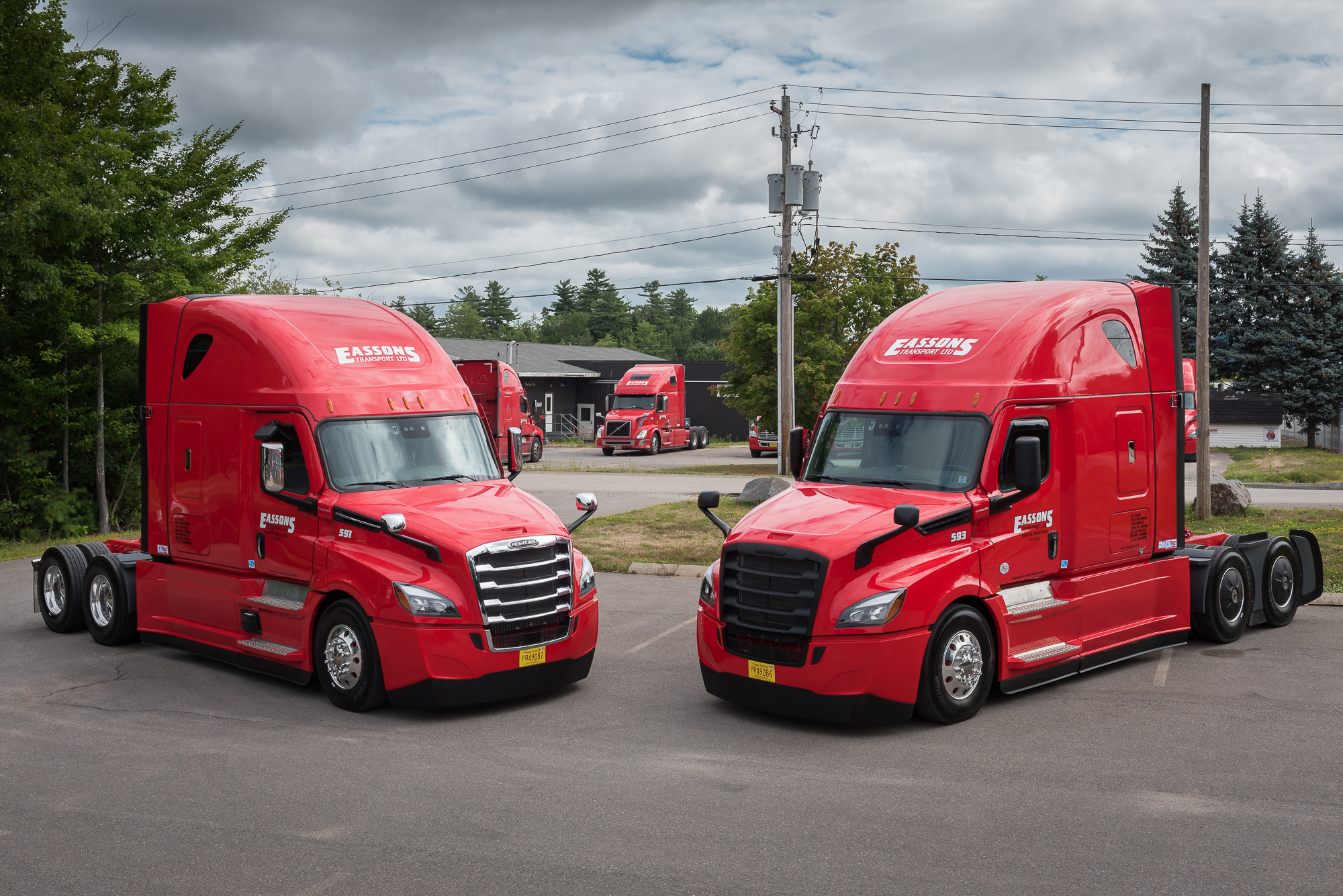
“It’s been a pretty rewarding experience in a lot of ways,” Bent said, noting about 70% of its drivers were recruited as foreign workers. However, Eassons takes a unique approach to the program. Rather than relying on sometimes-shady immigration consultants, it has its own team that visits the destinations from which it recruits in person. It conducts road tests and interviews in their home country, to determine their English language proficiency and driving aptitude.
Its boots-on-the-ground approach has also protected the company from fraudulent actions by applicants, who online can sometimes have someone else speaking on their behalf.
“We rent trucks in the country that we are visiting for driving tests. We do biometrics. We do everything right in the country and there are a lot of companies that don’t do that,” he said.
Charging for LMIAs
Employers must complete a Labour Market Impact Assessment (LMIA) before they’re able to recruit under the TFW program.
“I think it’s about $1,000 today, which we pay as a company,” Bent said. “But there are companies that are bringing folks over and charging them $50,000 for that LMIA and forcing them to work that off over time. To hear of folks taking advantage of human beings in that way and trying to capitalize on their misfortune is really discouraging.”
Bent supports the CTA’s position that would call for the vetting of participating carriers and ongoing oversight, with tougher penalties for violators. “I think there needs to be higher standards in the program,” he said, adding immigration consultants should also be vetted.
The need for reforms is universally touted among industry spokespeople. Angela Splinter, CEO of Trucking HR Canada, said “When used ethically and legally, the [TFW] program can be effective. Violations that lead to the abuse of employees hurt the individuals involved, but it also hurts the industry as a whole and undermines the program’s intent.”
Approved employer programs
Mike Millian, president of the Private Motor Truck Council of Canada (PMTC), noted private fleets are less likely to use the TFW program, as they don’t deal with the same driver turnover challenges faced by for-hire carriers.
“The program is used sparingly by private fleets,” Millian said. However, he said the program is needed at times of high driver demand, such as the period following the Covid-19 pandemic when there were not enough drivers to haul freight, putting tremendous strain on Canada’s supply chain. Laskowski agrees the TFW program isn’t just a trucking ask – it benefits and solidifies the entire Canadian supply chain.
Millian acknowledges there is widespread abuse of the program, citing a recent report from Manitoba showing 40% of carriers that used the LMIA process between 2019 and 2023 have since shut down. “This situation is repeated in jurisdictions across the country,” he said.
Like the CTA, PMTC would like to see an “approved employer” initiatives that would give only vetted carriers access to foreign labor programs.
“Companies that want to access the program would first submit to the regulator and be preapproved to access temporary foreign workers and utilize LMIAs,” he said. “This would include checks to verify the fleet size, areas of operation, distance traveled, safety rating profiles, pay fair wages, and checks to ensure they’re in compliance with all labor laws.”
There is a template for this. Millian pointed out the Trucking Human Resource Sector Council Atlantic has created a “preferred employer” program in partnership with the province of Nova Scotia. While it’s not mandatory, companies that complete the program are given priority when accessing the program.
Such scrutiny would eliminate the most egregious forms of violations, Laskowski agreed, where “people are not only shorting foreign workers’ wages over time, and in some cases significantly, but using it purposely to design a modern-day slavery program within their truck fleet to serve as their labor business model.”

Explanation of violations:
2. The employer didn’t keep documents that showed they met the conditions of employing a foreign national, for a period of 6 years, starting on the first day the foreign national worked for them.
4. The employer couldn’t show that the description they gave for the job on the Labour Market Impact Assessment application was true, for a period of 6 years, starting on the first day the foreign national worked for them.
5. The employer didn’t show up for a meeting with the inspector, to answer questions and give documents the inspector asked for.
6. The employer didn’t give the inspector the documents they asked for.
7. The employer didn’t show up for an inspection, and didn’t help or give information to the inspector when asked to.
8. The employer broke federal, provincial or territorial laws for hiring and recruiting employees in the province or territory where the foreign national worked.
9. The pay or working conditions didn’t match, or were not better than, what was listed on the offer of employment, or the job was not the same as what was listed on the offer of employment.
15. The employer was not actively engaged in the business that the foreign national was hired to work for (aside from live-in caregivers).
17. The employer didn’t put in enough effort to make sure the workplace was free of any of the following: physical abuse; sexual abuse; psychological abuse; financial abuse; reprisal.
20. The employer didn’t provide wages to the foreign national that were substantially the same as those set out in the offer of employment, during the period the foreign national was required to isolate or quarantine themselves on entry into Canada.
25. The employer didn’t provide the foreign national with information on their rights in Canada, in their chosen official language, on or before their first day of work.
26. The employer didn’t make the information on the foreign national’s rights in Canada available in both official languages.
Have your say
This is a moderated forum. Comments will no longer be published unless they are accompanied by a first and last name and a verifiable email address. (Today's Trucking will not publish or share the email address.) Profane language and content deemed to be libelous, racist, or threatening in nature will not be published under any circumstances.
Before I retired, I worked for a company that only had white middle aged drivers. I asked the owner how? I don’t advertise. I hire by word of mouth from my drivers. We had extremely low insurance rates, excellent CVORs and no MTO violations.
From: Canadian Skilled Truckers Alliance,
Re: TFWP
“LIMA” or “Labour Market Impact Assessment” is for companies to get hold of TFWs and bypass Canadian Drivers. The “Employment and Social Development Canada,” or “ESDC,” decides whether these companies have exhausted all avenues and were unsuccessful in finding Canadian drivers or workers to do that job.
A negative outcome means that the company was deemed by the “ESDC,” or “Employment and Social Development Canada,” that a Canadian or Permanent Resident driver can fill the position, but they were unable to get the position filled.
It is also done when “NO” qualified Canadian drivers are available to fill that position. In that case, they can then go to “IMP” or “International Mobility Program” where they no longer need to look for any Canadian Drivers. It goes a bit deep than the explanation I have given, but you get the gist of it.
Sincerely
Stephen
-
Those companies don’t want to pay the wages qualified Canadian drivers are worth!
-
That is part of the reason why this industry continues to fail.
-
Wow! Shortage of drivers… they have to be kidding. Try and get a job or a better job than the one you are lucky enough to have right now and see if you can. Now you know why! So , let’s think about it for a moment: program doesn’t need to be suspended just overhauled? Says who? The alphabet soup that is pushing papers? Eassons? I bet if I call them and inquire about an 0/0 or driving job they will tell me they are NOT HIRING. It happens to me frequently in the past couple of years. We truly have the best government money can buy
-
I friend of mine with 30 yrs experience good record sent out over 200 applications did not get one job offer over $27 per hour . Despite the facts many of these companies said paying $32 to $38 per hour in their job bank adds to be able to bring in foreign workers
We need to limit te programs to mechanics and refrigeration trade people only with the employees getting housing and not within 100 kms of the GTA or Vancouver .
I this had been said before but it is a culture problem not a trucking problem. This program should be shutdown
For as long as I can remember I have heard farmers saying” We cannot get canadians to do these jobs”. Eventually this was the same line recited by the canadian trucking industry. I’m sure that the men and women working in the oil patch Don’t get on planes every few weeks and leave their family because they like the weather in Alberta. Large corporations of all types raise their prices when their inputs increase, This is a basic principle of capitalism. This principle should also apply to trucking companies. When you have.
To pay more for labor you have to raise your rates. To say that you cannot find people to do.These jobs is a fallacy.People will do almost any job for the right money. Why should capitalism only work for some people. I’m sure for many people from third world countries or war-torn Eastern European countries,$50000. Is a fair trade off for spending weeks at a time on the road maybe even in Substandard equipment and perhaps a boss who takes advantage of their status. Those of us who were raised in canada during prosperous decades have developed a certain standard of living. Maybe a couple cars in the driveway a couple of weeks vacation every dear with our family and perhaps saving some money to help your kids education cost. I believe that there is a war on labor and it is not only in our industry. I don’t believe that there are politicians of any stripe that seem willing to stand up and fight for working Canadians. It seems to me.They are more interested in large corporations
growing profits year after year for the shareholder. I have absolutely no ill will towards any truck driver from any country or any religion. I will always try and do my best to help these guys when they require help. My argument is with the politicians who are allowing these types of policies to suppress wages.
Great article! This identifies the high degree of fraud prevalent in these types of programs; when there’s free money, people will lie, cheat, and steal to get it. What you don’t touch on are the quality of foreign workers, especially important when pushing 45 tons of steel and cargo down the highway at 100kmh. And how many “foreign” driving schools have been identified as fly-by-night operations to grab money from these foreign workers to provide poor training? We welcome those who want to work hard and get a fresh start in our country, but we need to protect them as well.
-
I seen pushback when health care workers said the industry needed paid sick days and better options than staying the truck during 34 or 36 hour resets on the road. I have and others pushed to have a program to insure and train new truck drivers from Canada and other higher wage countries that speak English. It is one thing to bring in.Agr workers with out their families from.Apr to Nov where the farmers must supply and pay for temporary housing. I think.a plan to take some the more qualified people from that program after a 8 month program that have a certain skill set as a mechanic or skilled trade is a good idea. CANADA has a labour shortage because of higher housing costs that has resulted in smaller family sizes . We need to address that issue and why truck drivers are paid much less than in 1980 in Ontario or much less than in United States or Australia
I agree all truck drivers should make a min of $28 cd per hour on payroll if not here on a 8 month April to Nov contract for a session contract plus the employer paying for their housing on top of the wage
I still think we need a medical care and insurance for all cross border truck and bus drivers that go into the United States. I think Maybe we should limit the numbers of mechanic s and truck drivers to 120% of the ave wage on payroll to the higher wage streams and the fed gov should offer to work with and audit every trucking company that brings in foreign truck drivers or mechanics I want to hear a better idea please.
This is an excellent article. The abuse of the TFW program has gone on far too long. I fully support the call for an ‘approved employer’ framework and stricter enforcement – including removing the right to operate for carriers who abuse the system.
I’ve had the privilege of working for a company where we traveled to Europe and Jamaica to interview and hire TFW’s. At that time, the program not only provided life-changing opportunities for individuals seeking a better future in Canada – it also helped us fill critical gaps in our driver workforce.
I want to give a shoutout to Mr. Bent at Eassons for being the kind of employer who uses the TFW program the way it was meant to be used. Some of the best drivers I’ve worked with came through that program. A lot of them are now proud Canadian citizens, who have built a great life for themselves and their families. Getting to be a part of their journey was honestly one of the best parts of my career.
When the program is abused, it’s not just a policy issue – it’s deeply personal. The ones who suffer most are those who’ve sold everything for a chance at a better life, only to be misled, exploited, and sent home with nothing. That’s not the Canada we should be.
James-O.M.G. when will the government intervene, too much carnage on our highways and accidents happening daily!
The TFWP is a necessity. Because many companies don’t pay very well or lie, drivers seek employment elsewhere. I think the need to get it under control is very important.
Finding or figuring out those who continue to fire back up under a different management scheme, and go under a new name period, the Ontario government needs to step up and figure a way to find and audit these groups to the point of closure.
Failure to find Canadian workers is paramount, and find work for them first…

When i and others said this 3 years i was called ra–st and much worst i and a partner that stood and exposed a number of people and companies doing bad things had about 22 000 sg feet of building full of equipment and other items burned to ground .