ECONOMIC TRUCKING TRENDS: Vocational truck buyers line up, and trailer orders get a bounce

Trucking conditions in October turned positive for just the third month this year, but FTR projects they’ll stay consistently positive from Q2 2025 right through 2026, at least.
Trailer orders received a much-needed bounce in November, but the overall market remains weak. Vocational truck demand is another story, with buyers seemingly lining up to get ahead of expensive EPA27 emissions standards.
And it was a tough week on the spot market, though par for the course for the period immediately following U.S. Thanksgiving.
Trucking conditions turn positive
Trucking conditions improved to positive territory in October, jumping from a -2.49 reading in September to 0.48, according to the latest FTR Trucking Conditions Index.

The index combines five metrics that affect overall for-hire trucking conditions. The jump was attributed to stronger utilization, falling capital costs, and less challenging freight rates.
FTR projects the index to turn consistently positive in the second quarter of 2025 and to stay there through at least 2026.
“FTR’s outlook for the trucking market has not changed significantly since last month. Our forecast for freight volume next year is a bit weaker than it was previously, but we also have tightened our capacity assumption a bit based on preliminary government data regarding trucking employment,” said Avery Vise, FTR’s vice president of trucking.
“We still anticipate a modest increase in freight rates that might be just strong enough to disappoint both carriers and shippers. Tariffs on goods imported from Mexico and Canada announced by President-elect Trump could yield some volatility in truck freight demand, but volume likely would balance out over the course of 2025.”

Trailer orders get much-needed bounce
Trailer orders jumped 42% in November and were up 6% year over year, at 22,745 units, according to preliminary data from FTR. That’s the highest net order total since December 2023, but the industry forecaster warns that 2025 order intakes are projected to be well below expectations.
This, due to a still sluggish freight market and weakness around the opening of 2025 order boards.
Total trailer net orders for the 2025 order season, which runs from September to November, are down 42% year over year, averaging 16,884 units per month. Trailer makers have responded by cutting production, which now sits 41% below the five-year average for November and at the lowest monthly production levels since 2010.
ACT Research, for its part, reported 20,500 orders in its preliminary count, down 4% year over year.
“Since we’re still in the early stages of the traditional start to the order season, this month’s uptick was expected. It’s also no surprise that the data is below the November 2023 intake, given the softer demand recorded throughout this year,” said Jennifer McNealy, director commercial vehicle market research and publications at ACT Research.
“That said, and with the caution that one data point does not make a trend, perhaps November data are bearing witness to the anecdotal information about increased quotation activity that we have been hearing the past few months.”
She added: “Despite the order improvement, ACT’s expectations for weak trailer demand relative to recent performance remain, as continuing weak for-hire truck market fundamentals, low used equipment valuations, relatively full dealer inventories, and high interest rates impede stronger activity, especially into early 2025. An order uptick showcasing demand, or the lack thereof, depends not just on the first few months of the new order cycle, but at least on order volumes through Q1 2025.”
Vocational truck orders surge
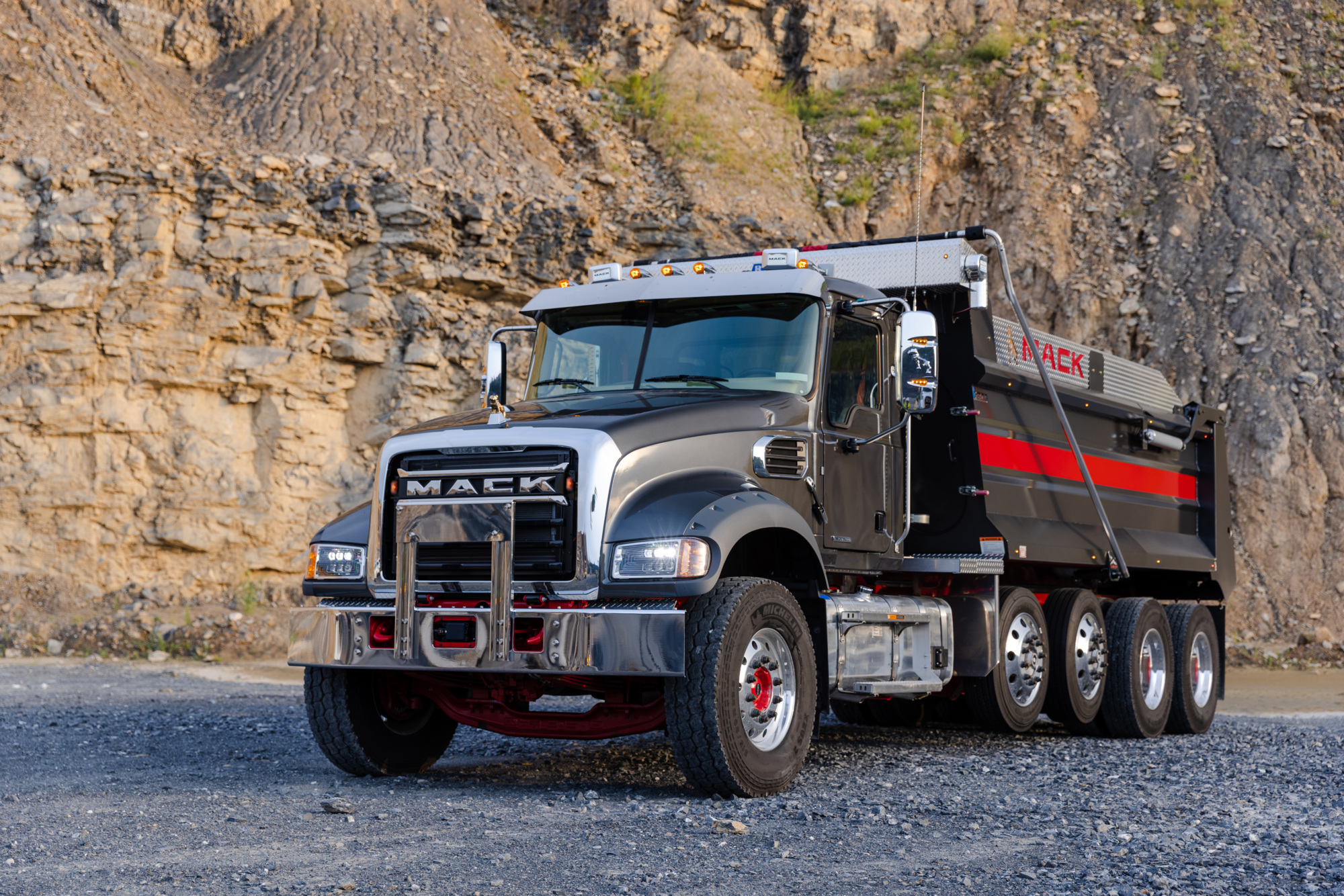
If you’re looking for more positive news on equipment orders, turn your attention to the vocational segment. ACT Research reported 20,000 heavy vocational truck orders in September, followed by 9,500 orders in October.
“Last month, we boosted our vocational truck outlook for the 2025 and 2026 on solid fundamentals: US industrial policy and infrastructure spending stimulus plans have manufacturing and private construction expenditures running at record levels,” explained Kenny Vieth, ACT’s president and senior analyst.
“And much of the ~$2 trillion in stimulus (CHIPS, IRA, IIJA) put in place in 2021 and 2022 continues to be deployed into the economy, providing healthy tailwinds. To date, only around 40% of that money has been deployed. With well supported end markets and technology forcing regs on the horizon, vocational truck buyers not only have a willingness to get a head start on refreshing their fleets, but clearly, the ability as well.”
Vieth went on to suggest higher vocational truck orders may point to vocational buyers moving to get orders in before costly EPA27 emissions regulations kick in.
“With tractor demand suspect, vocational truck production appears to be well supported into 2025,” Vieth said.

Spot rates decline, as expected
Spot market rates for the week ended Dec. 13 fell as expected due to seasonal headwinds, according to Truckstop and FTR Transportation Intelligence.
Reefer rates were hit hardest, which isn’t uncommon following the U.S. Thanksgiving holiday. Dry van rates fell too, though by the smallest amount for that week since 2008. Flatbed rates also declined in line with seasonal expectations.
More spot market rate declines may be coming, the companies warn, as the week before Christmas usually sees dry van and reefer rate declines.
“The decline in load postings, coupled with the sharpest increase in truck postings in 13 weeks, resulted in a decrease of the Market Demand Index to 62.9, which is down from the previous week’s elevated level but otherwise the highest in more than a month,” Truckstop reported.

Have your say
This is a moderated forum. Comments will no longer be published unless they are accompanied by a first and last name and a verifiable email address. (Today's Trucking will not publish or share the email address.) Profane language and content deemed to be libelous, racist, or threatening in nature will not be published under any circumstances.