DTNA focuses on emissions, jobsite safety and upfit efficiency

Daimler Truck North America (DTNA) is positioning its next generation of engines, safety technologies and upfit solutions to meet evolving emissions standards and operational demands, with a focus on minimizing disruption for fleets and body builders.
At the recent Work Truck Week in Indianapolis, Ind., a company official outlined a three-part strategy centered on compliance with upcoming emissions regulations, improved jobsite safety and simplifying truck upfitting.
A key component is the Detroit Gen 6 engine platform, designed to meet U.S. Environmental Protection Agency (EPA) 2027 low nitrogen oxide (NOx) requirements while maintaining existing vehicle packaging and architecture.
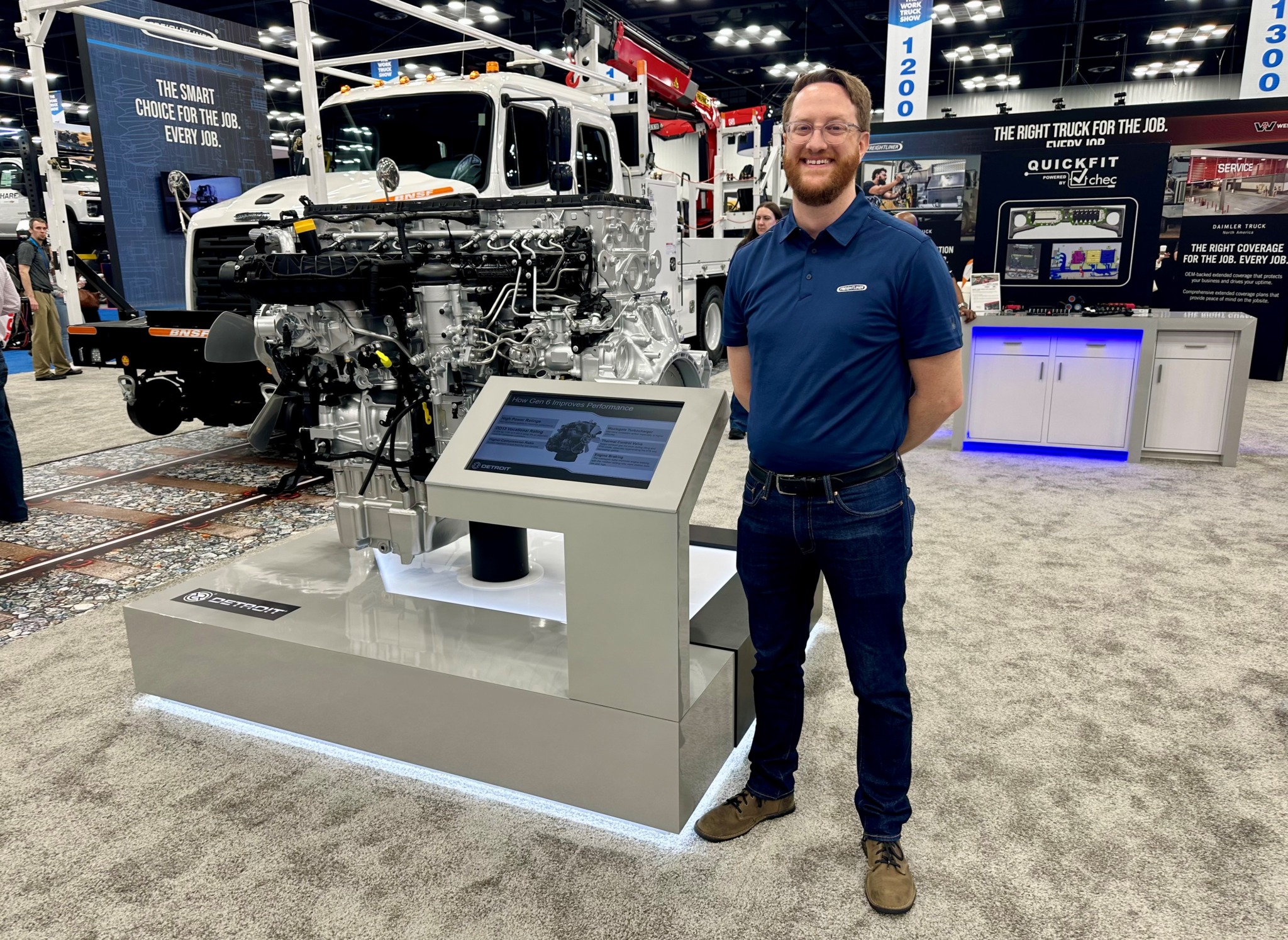
Kevin Otzenberger, product marketing manager at DTNA, said the updated Detroit DD13, DD15 and DD16 engines incorporate changes aimed at reducing emissions without requiring major redesigns.
“We were able to keep aftertreatment packaging under the cab, with no back-of-cab impacts,” he said.
The company also avoided transitioning to a 48-volt electrical system, instead introducing a pre-selective catalytic reduction (pre-SCR) system positioned above the existing aftertreatment setup to maintain exhaust temperatures without additional heating components.
NOx requirements
Otzenberger noted that while some greenhouse gas provisions tied to EPA 2027 may change, the low NOx requirements remain in place, making compliance a priority for engine manufacturers.
The result, he said, is an engine platform that meets ultra-low NOx targets while minimizing changes for fleets and upfitters.
DTNA is also adjusting its broader engine lineup, including integrating Cummins engines in certain applications. These changes could affect customers accustomed to specific engine configurations, particularly where legacy models are being replaced or consolidated.
Expanded visibility systems
In addition to emissions, DTNA is emphasizing jobsite safety with expanded visibility systems. The company is offering factory-installed exterior camera systems that provide a 360-degree view around the vehicle.
The system includes cameras mounted on both sides of the cab, in the grille and at the rear of the frame. Unlike aftermarket installations, the factory-integrated setup is covered under warranty and avoids the need for additional wiring or modifications.
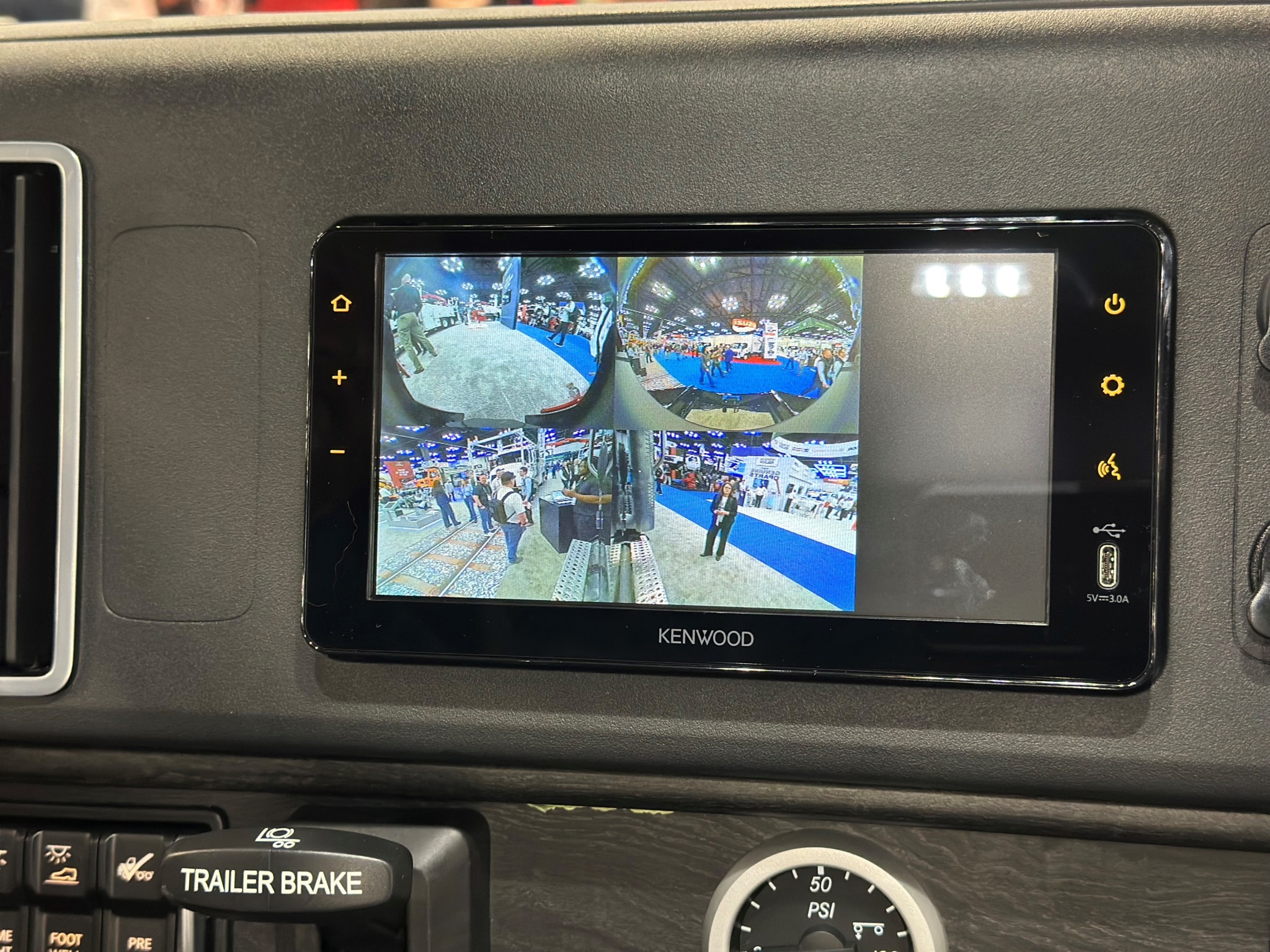
Otzenberger said the system is designed to address blind spots that remain even with improved cab design and visibility features.
“Having the cameras helps compensate for areas the driver can’t see, especially across different body types,” he said.
The camera system is separate from DTNA’s Detroit Assurance active safety suite, which uses radar and camera sensors primarily for on-highway applications such as collision mitigation. On jobsites, where those systems may be less effective or intentionally disabled, the camera system provides an alternative layer of visibility.
Pre-wiring for custom setups
The cameras can be configured in multiple ways, including factory installation or pre-wiring for custom setups. DTNA has added flexibility for upfitters by allowing camera repositioning and providing additional cable length for rear-mounted units, which are often obstructed by equipment.
The company said the system does not require recalibration when cameras are repositioned, simplifying installation and maintenance.
The third area of focus is upfit efficiency, led by DTNA’s QuickFit platform. The system is designed to streamline the integration of bodies and equipment by reducing the need for custom wiring and hardware modifications.
QuickFit includes programmable modules
QuickFit includes programmable modules mounted behind the cab, which connect to switch banks in the dashboard and provide centralized control of electrical and air systems.
This approach allows upfitters to avoid point-to-point wiring and reduces the need to cut into the cab or chassis during installation.
“It’s a platform dedicated to electrical and air supply for body equipment controls,” Otzenberger said.
The system enables customization through programmable switches, allowing users to configure controls without physical rewiring. Switch layouts can also be adjusted after installation, offering flexibility for both upfitters and end users.
Reducing installation time
DTNA said the platform can reduce installation time by several hours or more, depending on the complexity of the build.
While the system is designed to handle most control functions, it remains compatible with specialized equipment requiring dedicated controls, such as joysticks or auxiliary interfaces.
The company also highlighted integration between QuickFit and its programming tools, which allow upfitters to create custom logic, automate functions and implement safety interlocks.
This capability is intended to improve both efficiency and operational safety by enabling tailored configurations for specific applications.
Expanding powertrain offerings
In the medium-duty segment, DTNA is expanding its powertrain offerings with the introduction of a gasoline-powered Cummins B6.7 Octane engine in the Freightliner M2 106 Plus.
The engine delivers 300 horsepower and can be paired with Allison or ZF transmissions. DTNA said it was able to package the gasoline system without relocating the fuel tank into the cab, maintaining conventional chassis layout.
The company said the addition provides another option for customers evaluating alternatives to diesel in certain applications.
Across its product updates, DTNA emphasized maintaining consistency in vehicle design while adapting to regulatory and operational changes.
“We’ve tried to minimize our footprint in terms of what had to change,” Otzenberger said. The goal is to reduce the impact of new technologies on customers by preserving familiar configurations and simplifying transitions.

Have your say
This is a moderated forum. Comments will no longer be published unless they are accompanied by a first and last name and a verifiable email address. (Today's Trucking will not publish or share the email address.) Profane language and content deemed to be libelous, racist, or threatening in nature will not be published under any circumstances.