Volvo applies $3,500 tariff surcharge, still not enough to cover entire cost

A new Volvo truck will come with a US$3,500 tariff surcharge, and that doesn’t even cover the entire cost the truck maker incurs.
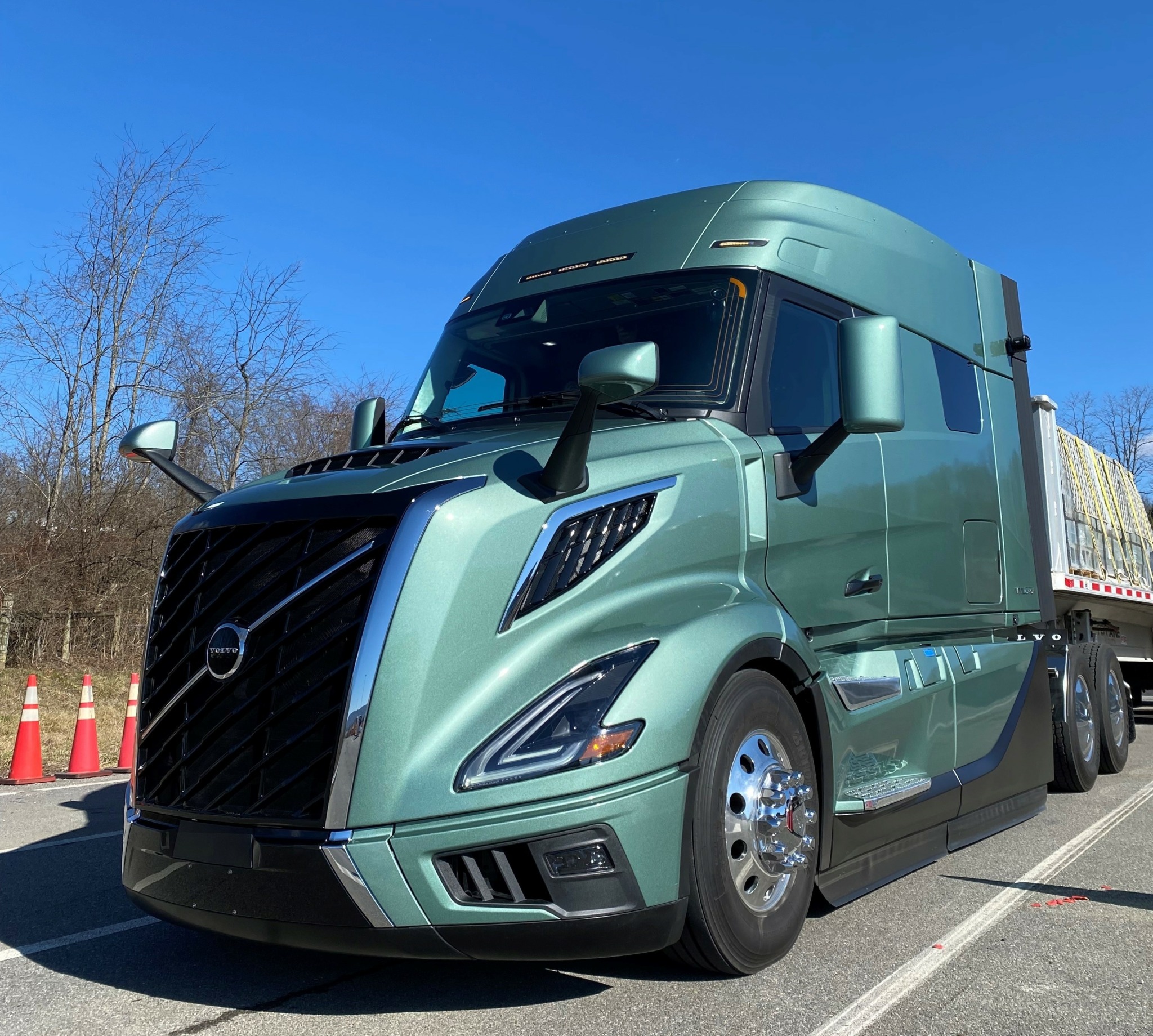
Peter Voorhoeve, president of Volvo Trucks North America, shared that number with trucknews.com in a one-on-one interview this week during a Volvo press event showcasing its new VNL.
“That doesn’t really cover all the cost [of the tariffs], but that’s all we can do for the moment. It puts pressure on margins as well, by the way, which you will see in the industry at large,” he said of tariffs on foreign-sourced components as well as steel and aluminum.
Ironically, said Voorhoeve, Volvo is being disproportionately affected by tariffs despite the fact it currently builds all its trucks in the U.S.
“They’re impacting us a little bit harder than other manufacturers,” he said.
“We’re a 100% U.S. manufacturer. “What happens right now is, of all the trucks that we build, we pay tariffs on all the components that we buy if they’re eligible [for tariffs]. But USMCA [U.S.-Mexico-Canada trade agreement] components don’t get a tariff. So, for instance, engine blocks are not USMCA-compliant. Cylinder heads are not USMCA-compliant. We buy those components out of Mexico because there are no forges in the U.S. that make these components. So, we pay the full tariff over all these components for 100% of our trucks. If we would have built the trucks in Mexico, then we would not pay a tariff on engine blocks and components. If I put them in a truck and make a truck out of it and I export it to the U.S., then it’s USMCA-compliant and I don’t pay tariffs on the truck.”
He said it’s an “unintended consequence” of U.S. tariff policies. To mitigate the cost, Volvo is attempting to source USMCA-compliant components where possible. “It doesn’t work for all components and it’s a lot of work as well,” he said.
Volvo is proceeding with construction of a Mexican plant that will supplement its U.S. production. Those plans haven’t changed in light of the volatile trade environment within North America.
“The building is pretty much done by now,” Voorhoeve said of the Monterrey, Mexico facility. “The outside of the building is done.”
Volvo has always been capacity-constrained in North America, and after investing US$2-billion into its new VNL platform, it feels it has the truck with which it can grow share. The company will continue to be predominantly a U.S. manufacturer, but the Mexico plant will remove any limits on the company’s future capacity.
“We’ve seen in the past that whenever the market takes off, we’re not really able to follow the market, we would run out of capacity,” explained Voorhoeve. “We not only hope for, we also plan on higher sales and a better share in the market, so, of course, you need to make sure that we can deliver. We need additional capacity. Then when you start looking at it from a logistical point of view, from a supply chain point of view, supply resilience point of view, it made more sense to build that factory in Mexico. But we will always remain predominantly a U.S. manufacturer.”
As for the new VNL launch, Voorhoeve said about 16,000 units have been produced since it entered production in January. Reports from the field are positive, Voorhoeve said.
“We said this will drive at least US$20,000 to the bottom line of a transport company over the lifetime of a truck,” he said. “What we see right now is that we actually underpromised a little bit. The additional value is higher than that. And the fuel efficiency is at least 10% [better], if not more, and we see that now.”
Still, orders across the industry remain muted as fleets struggle with a soft economy, persistent freight recession, and uncertainty over the impact of tariffs. But Voorhoeve warned that sitting on the sidelines for too long could prove counterproductive.
“We are basically in the third year of a freight recession, their earnings are under pressure, there is uncertainty around tariffs, and uncertainty around emissions, and all these factors together make the transport companies postpone their purchases,” he said.
“My message would be, I don’t think that the cost of new trucks will ever be lower than where it is right now. I believe the tariffs will continue to increase the cost of the trucks and I think we will see something around emissions regulations that will make the technology more expensive. If you combine that with the fact the trucks are getting older and you’re getting a higher maintenance costs, I think if you’re smart, you start buying now.”

Have your say
This is a moderated forum. Comments will no longer be published unless they are accompanied by a first and last name and a verifiable email address. (Today's Trucking will not publish or share the email address.) Profane language and content deemed to be libelous, racist, or threatening in nature will not be published under any circumstances.