Truck drivers at breaking point as report details widespread wage theft

Truck drivers across Canada are reaching a breaking point and no longer see trucking as a sustainable career, according to a labor advocate responding to a new national report that documents widespread wage theft, unpaid work and systemic exploitation in the industry.
Navi Aujla, executive director of Labour Community Services of Peel in Brampton, Ont., said many drivers feel financially insecure and undervalued after years or decades in the industry. She said drivers increasingly believe the problem is not a shortage of workers but a shortage of decent working conditions.

Drivers who participated in the report “Running on Empty: Truck drivers in Canada are underpaid and overworked” echoed that frustration, with several saying they are actively trying to leave trucking altogether.
One longhaul, cross-border driver told trucknews.com that truckers are “fed up” and under immense stress, adding that unreliable pay, unpaid border delays and uncompensated safety work have made the job untenable. Another driver said the pressure has affected his mental health and family life, leaving him searching for a way out of the industry.
Those experiences are detailed in a new report based on a 2025 survey of 404 truck drivers across Canada, most of them longhaul. The report was commissioned by Justice for Truck Drivers and the West Coast Trucking Association, with support from Labour Community Services of Peel and Parkdale Community Legal Services, and includes responses from both federally and provincially regulated drivers.
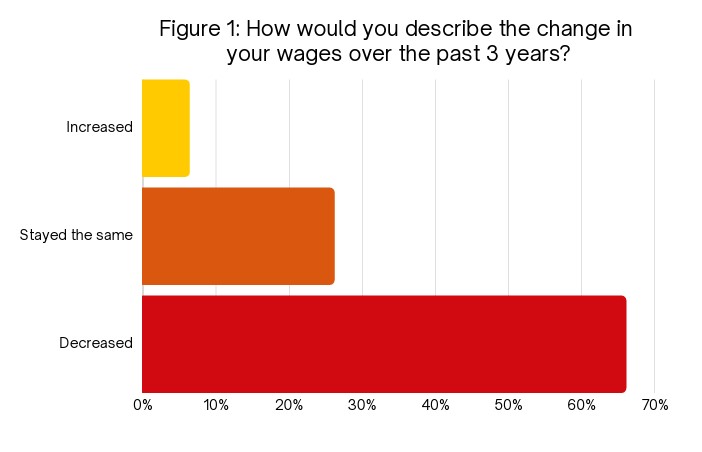
According to the report, nearly 70% of drivers said their wages are inadequate, while about two-thirds reported their pay has declined or remained flat over the past three years. Only 6% said their pay had increased. Drivers reported wide variations in pay structures, with rates changing from trip to trip and often without explanation.
Many drivers said they must work extended days to earn enough income, often without being paid for significant portions of their time. Most respondents said they are paid by mileage or estimated hours rather than actual time worked, leaving activities such as waiting at shippers and receivers, border crossings, inspections, loading and unloading, and traffic delays unpaid.
Almost three-quarters of federally regulated drivers surveyed said they are not paid for all hours worked. Among provincially regulated drivers, more than two-thirds reported unpaid time. For drivers paid by the mile, more than half of federally regulated respondents said they are not paid for the actual distance driven, with compensation calculated using theoretical routes that do not account for congestion, construction or weather.
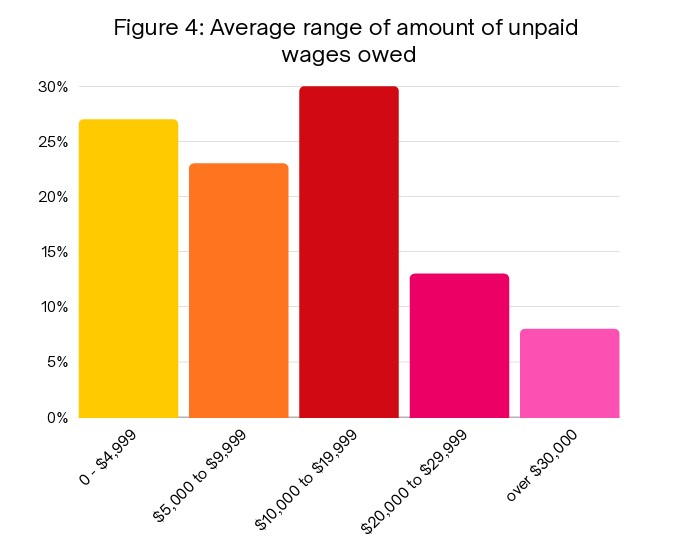
The report describes these practices as systemic wage theft rather than isolated incidents. Sixty-three per cent of drivers reported experiencing at least one form of wage theft, including unpaid wages, illegal deductions or late pay. Among those affected, the average amount owed was about $10,000, with many reporting losses well above that figure.
The report argues that deregulation and weak enforcement have allowed these practices to persist. It says brokers and shippers use competitive bidding to drive freight rates down, while carriers pass those pressures on to drivers through pay systems that leave essential work unpaid.
To address the problem, drivers identified three core demands. They are calling on governments to establish minimum pay rates for both employee drivers and owner-operators, regardless of whether compensation is hourly or mileage-based. Drivers also want to be paid for all work time, including non-driving tasks and delays beyond their control.
Finally, drivers are seeking stronger enforcement of labor standards, with faster complaint processes and penalties significant enough to deter violations. The report says long delays, low success rates for complaints and limited consequences for employers have allowed abusive practices to continue.
Wages withheld
Drivers said wages are often withheld when they start a job, delayed for weeks or months, or deducted for damages or insurance. Some said payment is postponed until a driver quits or is dismissed, leaving workers with little leverage to recover what they are owed.
Late pay was also common. More than one-third of drivers said their wages are paid late, while fewer than half said they are consistently paid on their regular payday. Drivers said delayed or partial pay makes it difficult to cover basic expenses, including rent or mortgage payments, especially for those supporting families.
Misclassification of drivers — commonly referred to as Driver Inc. — was identified in the report as a central tool used by employers to avoid labor standards. Forty-two per cent of drivers said they are currently misclassified as independent contractors, while another 25% said they were misclassified in a previous job. Many drivers said they were required to set up their own corporations and invoice carriers despite working under conditions similar to employees.
Driver Inc.
The report notes that misclassification allows companies to avoid minimum wage requirements, overtime pay, vacation pay, public holiday pay, and contributions to employment insurance and pension programs. Industry estimates cited in the report suggest companies can save tens of thousands of dollars per driver each year by misclassifying workers.
Drivers said misclassification also limits their ability to seek redress when wages go unpaid, as labor boards may decline to hear complaints from workers deemed to be contractors rather than employees.
Owner-operators reported facing similar pressures, along with rising equipment, fuel and maintenance costs. Many said contracts are one-sided and leave little ability to negotiate rates or refuse low-paying loads without risking lost work or retaliation through reduced dispatches.
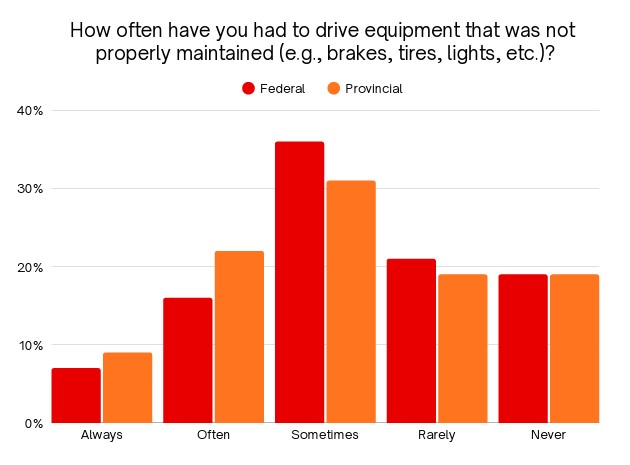
Beyond wages, drivers linked economic pressure to safety risks. Many reported being pushed to work long hours, operate poorly maintained equipment or drive in unsafe conditions to meet delivery schedules. A shortage of safe truck parking and rest areas was also cited as a factor that undermines compliance with hours-of-service rules.
A driver described spending hours waiting for repairs after defects were found during mandatory inspections, without being paid for that time. Another said border delays lasting several hours are routine and entirely uncompensated.
Prioritizing cost-cutting over safety
Labour Community Services of Peel’s Aujla said these conditions place drivers in difficult positions where refusing unsafe work can mean losing income or access to loads. She said responsibility is often placed on individual drivers rather than on systemic industry practices that prioritize cost-cutting over safety.
She added that many drivers feel disrespected after being praised as essential workers during the Covid pandemic, only to feel ignored by governments since. According to Aujla, drivers believe authorities are aware of the issues through complaints and reports but have failed to act, eroding trust in the system.
Have your say
This is a moderated forum. Comments will no longer be published unless they are accompanied by a first and last name and a verifiable email address. (Today's Trucking will not publish or share the email address.) Profane language and content deemed to be libelous, racist, or threatening in nature will not be published under any circumstances.
-
your are so right this did not start the last few years
paid by the mile should be no longer in use back in the older days you could not track the driver but now the gps sadlite can track the driver the places he stops so now everyone should be paid by the hour then the trucks would not be speeding and passing when it is not safe we need better labour laws for truck driver not more driver from the asian countrys
I have always wondered why a driver stays at a company that doesn’t pay properly, and on time.
If a driver isn’t treated right they should resign, and move to another employer. There are plenty of good companies, looking for good, professional drivers.
These companies are the ones with high hiring standards and expectations.
Our drivers are paid for all hours worked, including overtime. Paid by EFT every second Friday for the previous 2 weeks up to the prior Wednesday. Medical, Health and Welfare and pension all 100% paid by the company.
-
What company is that?

The industry wages have not been where they should be, for decades, then you introduce speed limiters to slow things down, eld’s to cap daily workflows that are kicking the s**t out of circadian rhythm, and a flood of [new Canadians] people into Canada that have been cheating since they got here. Now there’s a massive bottleneck that no one wants to address.