Eassons Transport takes aim at reefer run time. And the savings add up.

Eassons Transport of Kentville, N.S., got its start hauling apples around the province in 1945. Starting with a single truck, William and Phillip Easson soon expanded the business, serving all of Atlantic Canada and eventually the Eastern United States.
Having weathered many ups and downs over the decades, and grown organically and through mergers and acquisitions, the roster now stands at more than 300 trucks and 550 trailers. Any fleet that’s been around that long is doing something right.
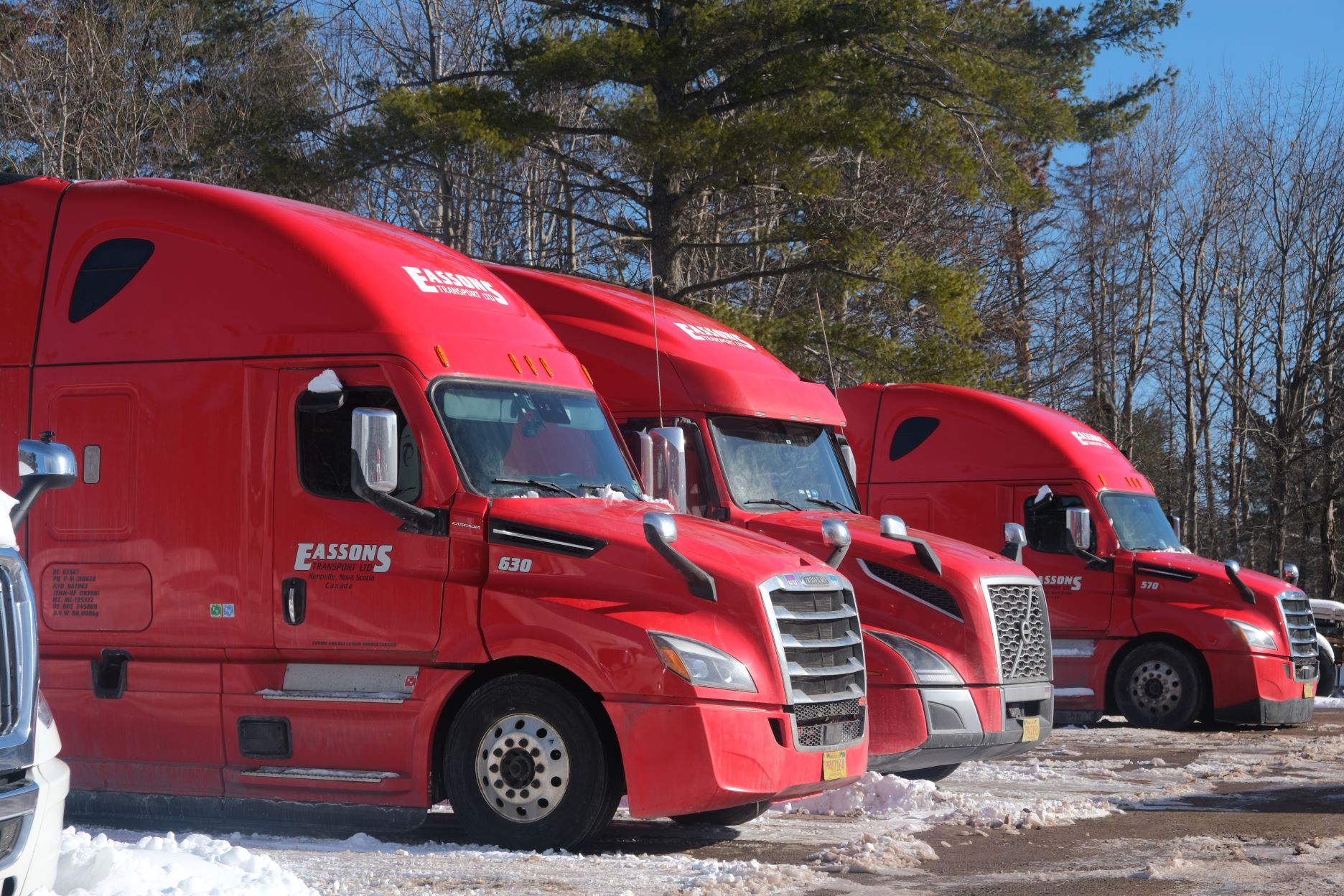
CEO Trevor Bent and his leadership team continue that tradition by constantly exploring ways to optimize fleet efficiency.
Currently, having recently adopted Isaac Instruments’ fleet management platform, they are closely monitoring a series of performance metrics, including driver idle time and overall fuel efficiency. The company hired a full-time staff member to do driver performance coaching. At about 18 months in, Bent is already seeing results.
“It’s going well,” he told trucknews.com during a recent visit to the fleet. “I think we’ve got a lot of room to grow to get into the top quartile in Isaacs’ performance metrics. They benchmark us against a lot of fleets.”
Everyone in the company is challenged to come up with ideas to move the operation forward. They have a Lean Six Sigma team leader on staff who runs continuous improvement brainstorming sessions once a month. Tracking the progress of such projects has added accountability for staff, but it has also made results more visible. That has allowed for better recognition of individual efforts.
Trimming reefer run time
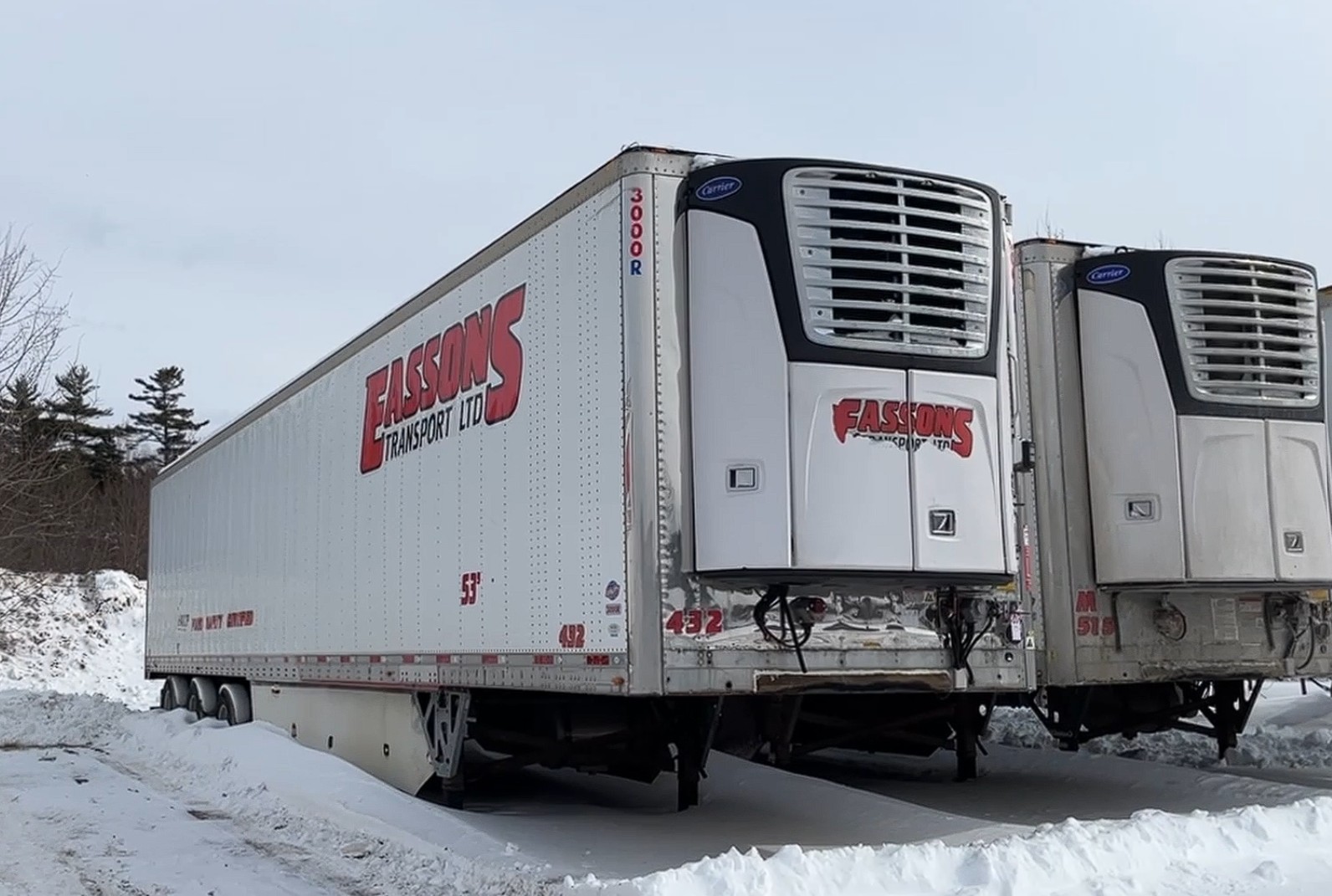
One of the projects to emerge from those brainstorming sessions was a plan to cut run time on the refrigeration units without compromising the cargo. Bent and his vice president of equipment, Jeremy Silver, reckon it’s possible to reduce the amount of engine-on time by about 10% using the auto-start/stop settings on the TRU (trailer refrigeration unit).
“With a fresh load, produce, for example, you want to keep the engine running to maintain the temperature with as little variance as possible,” Silver points out. “Frozen loads aren’t as sensitive to minor temperature swings, so we don’t need to run the unit constantly.”
Between maintenance and fuel costs, the reefer cost is about $5.50/hr. With 550 trailers running about 145 hours each per month, a 10% reduction in run time becomes significant. About $45,000 per month, significant.
“Those are just back-of-the-envelope calculations, sitting here talking, but they aren’t far off,” Silver admits. “Forty-five thousand dollars is a pretty lofty goal, but I still be very happy with half of that.”
At an average of 145 hours of run time per month for a single trailer, the fleet collectively burns about 300,000 liters of fuel per month, producing about 804 metric tons of CO2. A 10% reduction could cut the fleet’s GHG emissions by 80 metric tons.
Helping drivers save fuel
Bent says Eassons offer several driver-centric fuel-saving initiatives, from which drivers can fatten their performance bonuses. They now have a fuel economy metric in a driver scoring system, which encourages fuel savings, and they are trying to get buy-in from the workforce with achievable targets.
While the fleet does not use APUs for cab climate control, the trucks are equipped with the optimized idle feature.
This runs the engine until the in-cab temperature set point is reached, then shuts it off. When this feature is active, the low oil pressure and low air pressure warning buzzers do not activate at engine start-up.
The sound of the engine starting and stopping would hardly be noticed by drivers with a refrigeration unit running a few feet above their sleeping quarters.
Most trucks are also fitted with diesel-fired bunk heaters.
The company has recently begun installing shore power stanchions at some terminals so drivers can plug in to run their inverters, heaters, etc., without idling. These are proving popular with drivers looking for a quiet night’s sleep.
Getting drivers to use their cruise control has historically been a challenge. Using cruise control unlocks several other safety and fuel-saving features normally unavailable.
“Until we made the switch, we saw around 30% cruise time across the fleet,” Silver says. “We recently set a target of 50% and adjusted the speed controls so that drivers would get an extra two miles per hour while using cruise. That has actually taken our cruise time from 30% to up over 70%.”
That tactic provided a one-time improvement in fleet fuel efficiency. Drivers are used to it now and the fuel curve has flattened out again.
Aero, gears and tires
The cornerstone of most fleets’ fuel savings programs is the truck itself. Silver says Eassons’ 12-month average in 2025 for the longhaul fleet was a respectable 8.7 mpg Imp. (7.24 US or 3.08 km/L).
The trucks are all spec’d with tall gears and mostly automated manual transmissions for optimum drivetrain efficiency.
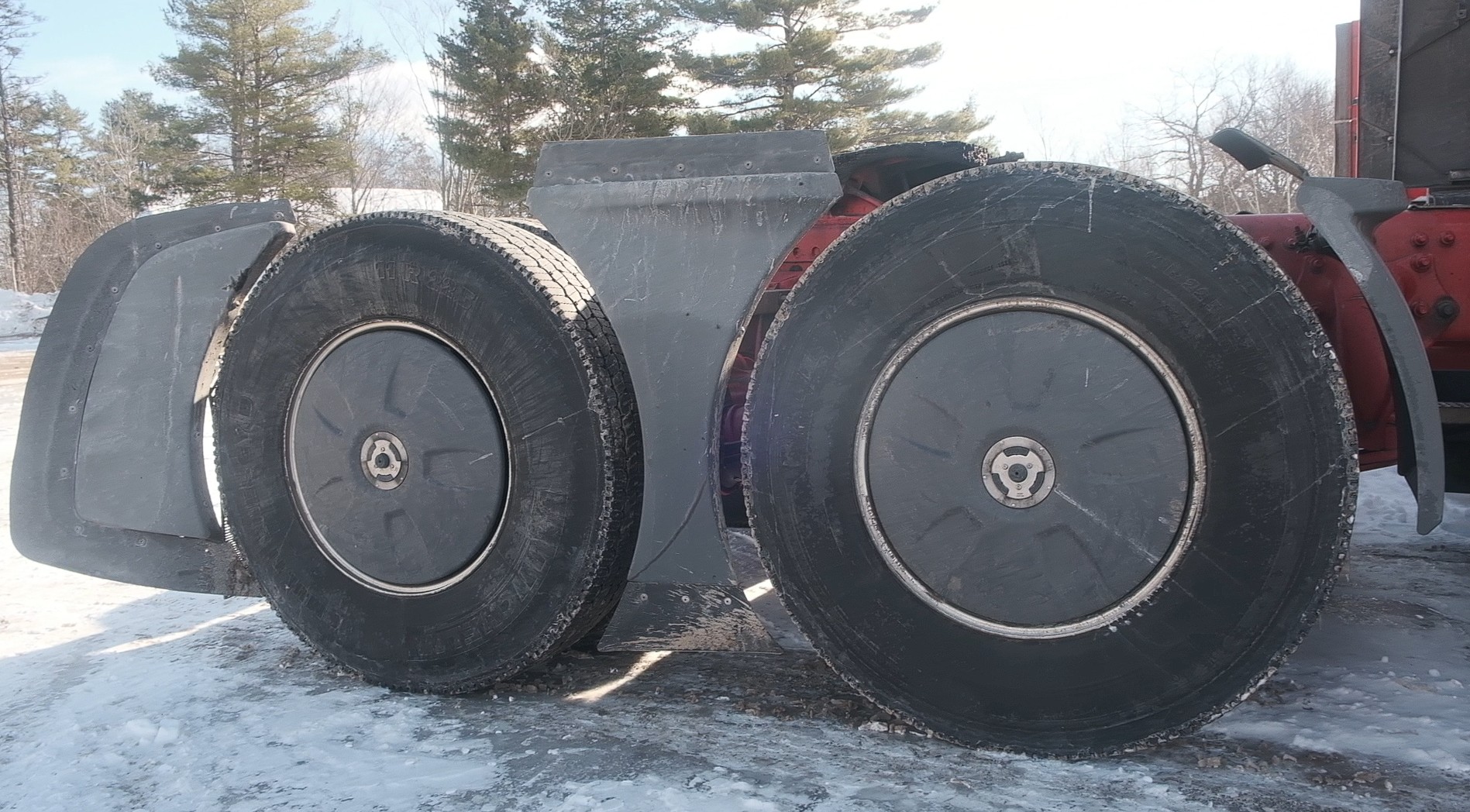
Many of the fleet’s Freightliner Cascadias are equipped with FlowBelow drive axle fairings and wheel covers, along with slotted aero mudflaps. Silver noted that while the add-ons are effective, when damaged, the replacement costs are prohibitive and can significantly skew the ROI on the product.
It ran into a similar situation with trailer tails. Many are still in service, but maintenance costs are higher than originally anticipated.
“We were 100% [trailer tails] in the back, and they had pretty good results, but the company that built them has stopped selling replacement parts,” Silver said. “We’re doing what we can to keep them together, but we’re moving to the lower maintenance Michelin trailer end fairings. They are lower maintenance and drivers don’t have to fight with them.”
Low rolling resistance tires are the standard fleet spec’. They just added a new tire to the fleet, an LRR tire specifically designed for tridem axle configurations. It is now evaluating Michelin’s newest offering, the X Line Grip D, with its distinctive V-grove tread pattern.
Bent notes that Eassons is moving to bulk buys of consumables such as diesel exhaust fluid and windshield washer, to, as he says, reduce costs and keep those darn plastic jugs out of landfill.
“Green has two meanings at Eassons,” Bent emphasizes. “We want to be a sustainable company. We’ve been in business for 80 years, and that’s come by good management and looking at ways to save money, but also, we want to be good environmental stewards and look at sustainable environmental practices. We’re EPA SmartWay certified, and we want to be here for another 80 years, contributing in a sustainable way to both the business and the environment.”

Have your say
This is a moderated forum. Comments will no longer be published unless they are accompanied by a first and last name and a verifiable email address. (Today's Trucking will not publish or share the email address.) Profane language and content deemed to be libelous, racist, or threatening in nature will not be published under any circumstances.