NACFE study shows fleets balancing cost, infrastructure and emissions goals

The North American Council for Freight Efficiency (NACFE) has found that no single powertrain technology is likely to dominate longhaul trucking in the near term, with fleets instead moving through what it calls a “messy middle” of overlapping technologies, infrastructure constraints and evolving economics.
Those findings come from NACFE’s 2025 Run on Less – Messy Middle demonstration, a three-week program that tracked 14 Class 8 trucks across 13 fleets using diesel and renewable diesel, natural gas and renewable natural gas, battery-electric, and hydrogen fuel-cell-electric powertrains. The goal was to assess how different technologies perform in real-world longhaul and return-to-base operations rather than controlled test environments
Longhaul trucking represents a smaller share of overall truck movements but accounts for a disproportionate share of freight emissions, NACFE said. As a result, understanding realistic decarbonization pathways for this segment is critical.
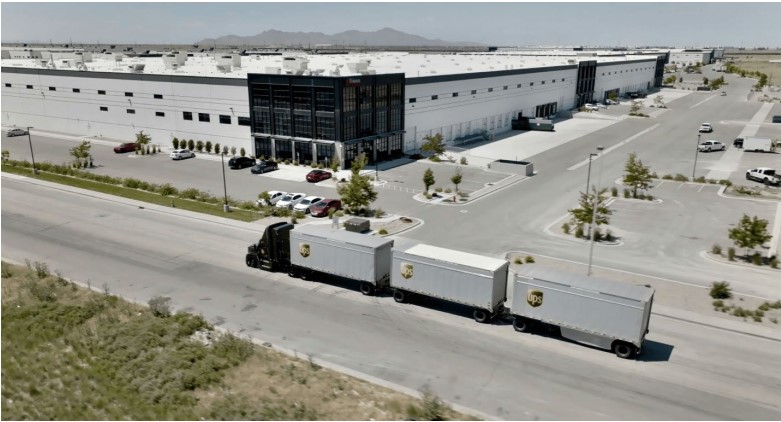
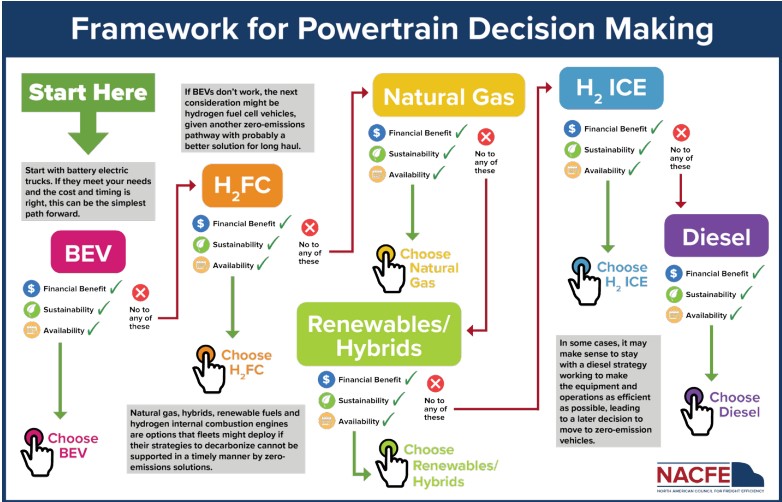
The organization concluded that most fleets will transition in phases, improving diesel efficiency first, then incorporating renewable fuels or natural gas before potentially adopting battery-electric or hydrogen trucks where duty cycles and infrastructure allow.
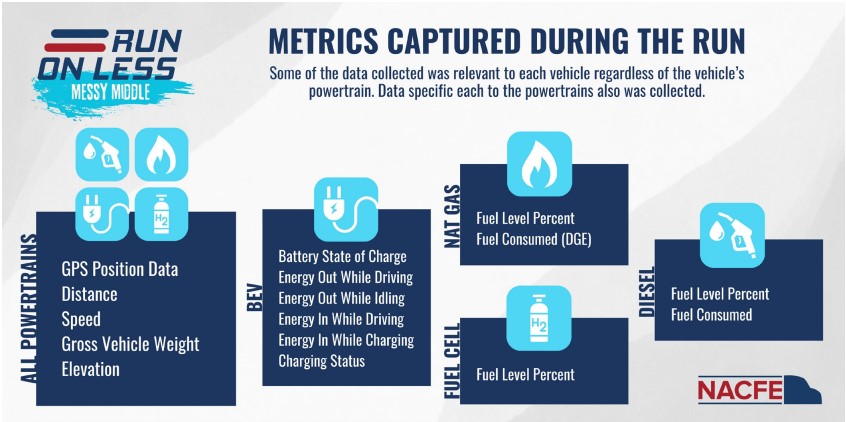
The demonstration included sleeper and day cab operations across the United States and Canada, with fleets operating in California, Texas, Arizona, Kansas, Utah, New York, and Alberta. Vehicles were monitored using Geotab telematics devices that captured data such as GPS location, distance traveled, speed, elevation, gross vehicle weight, ignition status, and fuel or energy consumption.
Powertrain-specific data — including battery state of charge, charging activity, and hydrogen or natural gas fuel levels — were also collected and displayed on public dashboards during the run.
NACFE said the data showed steady progress across all powertrain options, but also highlighted persistent challenges.
Natural gas trucks demonstrated diesel-like range, torque and fast refueling, while newer battery-electric trucks showed improved range, weight and cost competitiveness in certain duty cycles.
Hydrogen fuel cell trucks, though still early in commercialization, showed potential for specific applications. At the same time, fueling and charging infrastructure, vehicle weight penalties and high upfront costs remain barriers, particularly for irregular over-the-road routes.
The organization also noted that while renewable diesel and renewable natural gas supplies are growing, production volumes remain well below what would be required for widespread fleet adoption.
Fleets face increasing complexity as original equipment manufacturers offer more segmented powertrain choices, requiring closer alignment between equipment selection, customer needs and route characteristics.
NACFE emphasized that driver participation was central to the study. Drivers operated the trucks in normal revenue service while allowing their shifts to be closely tracked and documented, providing operational context that cannot be replicated in laboratory testing.
Next steps include deeper analysis of the dataset. NACFE plans to host a data workshop in February in which participating companies will share independent analyses with a panel of fleet executives. The organization also plans to publish four additional reports in 2026 covering operations, emissions footprints, total cost of ownership implications, and final findings that may refine the initial conclusions from the Messy Middle demonstration.

Have your say
This is a moderated forum. Comments will no longer be published unless they are accompanied by a first and last name and a verifiable email address. (Today's Trucking will not publish or share the email address.) Profane language and content deemed to be libelous, racist, or threatening in nature will not be published under any circumstances.