Study follows Martin Brower Class 8 EV deployments, shedding light on foodservice logistics challenges in electrification

While battery-electric Class 8 trucks delivered clear environmental benefits during real-world testing, deployment within foodservice logistics highlighted the operational hurdles fleets must overcome before electrification can scale beyond pilot projects.
That was among the key findings from Transport Canada’s Zero-Emission Trucking Program testing conducted with Martin Brower of Canada, a major supply-chain partner serving restaurant networks such as McDonald’s across North America.
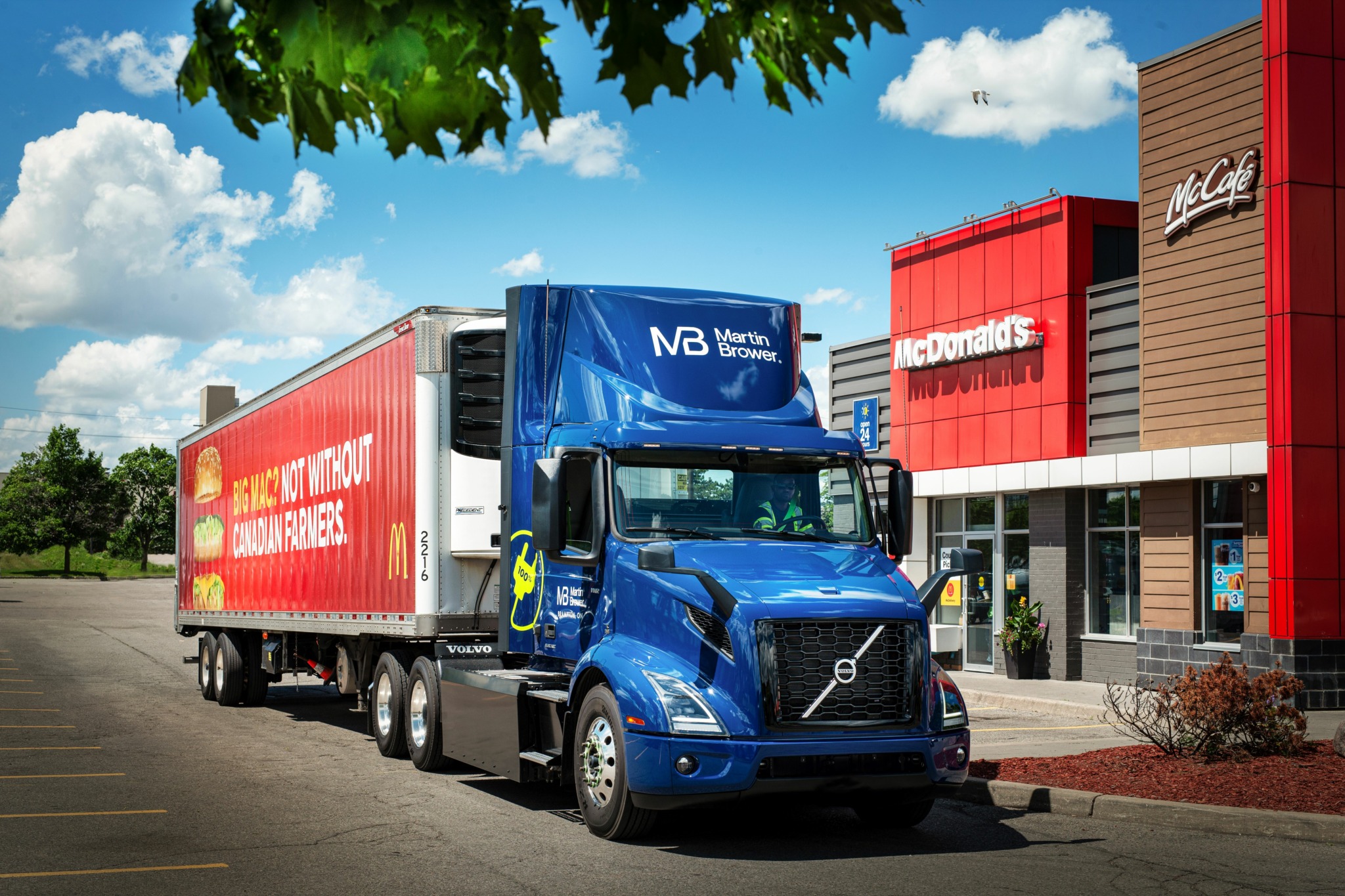
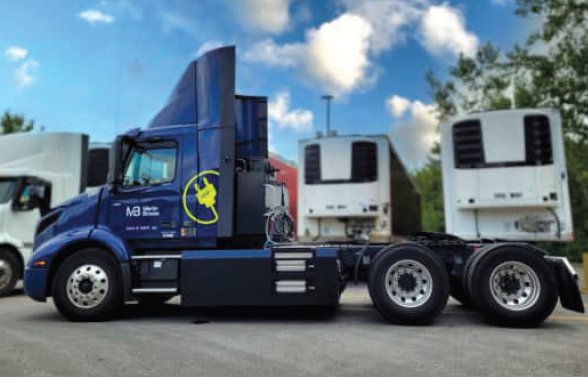
The Montreal-area study, conducted by Quebec research organization FPInnovations’ PIT Group, monitored battery-electric tractors operating in day-to-day commercial service alongside diesel equivalents over a 12-month period, generating more than 200,000 kilometers (124,274 miles) of operational data across participating fleets.
While electric trucks proved technically capable, researchers found foodservice distribution presents a more demanding test case than many early electrification applications.
More complex duty cycles challenge utilization
Unlike predictable retail distribution routes, Martin Brower’s operations involved variable payload weights, multi-stop deliveries and tightly scheduled restaurant supply runs — all factors that complicated energy management.
The study noted that route characteristics, terrain and seasonal operating conditions had a measurable impact on energy consumption, making range forecasting more difficult than under controlled testing conditions.
Researchers observed that operational uncertainty often led dispatchers to use trucks conservatively.
Electric vehicles typically operated between 150 and 200 km (93-124 miles) per day — well below their advertised range — largely due to uncertainty around route distance, charging availability and changing delivery conditions.
The report noted that “range anxiety, limited public charging infrastructure, uncertainty about route distances, variability of loads and terrain, and variation in seasonal energy consumption” all influenced how the trucks were dispatched in commercial service.
For foodservice fleets operating under strict delivery windows, predictability proved more important than maximizing vehicle utilization.
Downtime exposes service ecosystem gaps
Maintenance readiness emerged as one of the most significant operational challenges identified during the Martin Brower deployment.
Although electric trucks generally require fewer routine maintenance interventions, the study found that when service was required, vehicles remained out of operation longer than comparable diesel units.
Researchers reported electric trucks “experienced more downtime than their diesel counterparts,” adding that repairs and service events “took longer to enact and complete compared to diesel vehicles.”
The delays were largely attributed to limited technician familiarity, diagnostic complexity and parts availability — common issues associated with early-stage technology adoption.
In an interview with trucknews.com, Maxime Tanguay-Laflèche, a senior researcher, telematics and advanced data, noted some of the trucks were early versions, deployed in 2023, and more problematic than currently available editions.
“In some cases, parts availability was a problem for some battery-electric trucks,” Tanguay- Laflèche said. “Granted, we’ve also been told that it’s an issue also for the diesel trucks. We’ve also been told that for some BEV trucks, they are still fairly new, so the repair process takes a little longer as there’s a learning curve to figure out what those issues are. The repair process can also be a little bit more document-heavy.”
For foodservice logistics providers operating time-sensitive distribution networks, extended downtime introduces operational risk that fleets must account for when planning equipment deployment.
Charging becomes an operational discipline
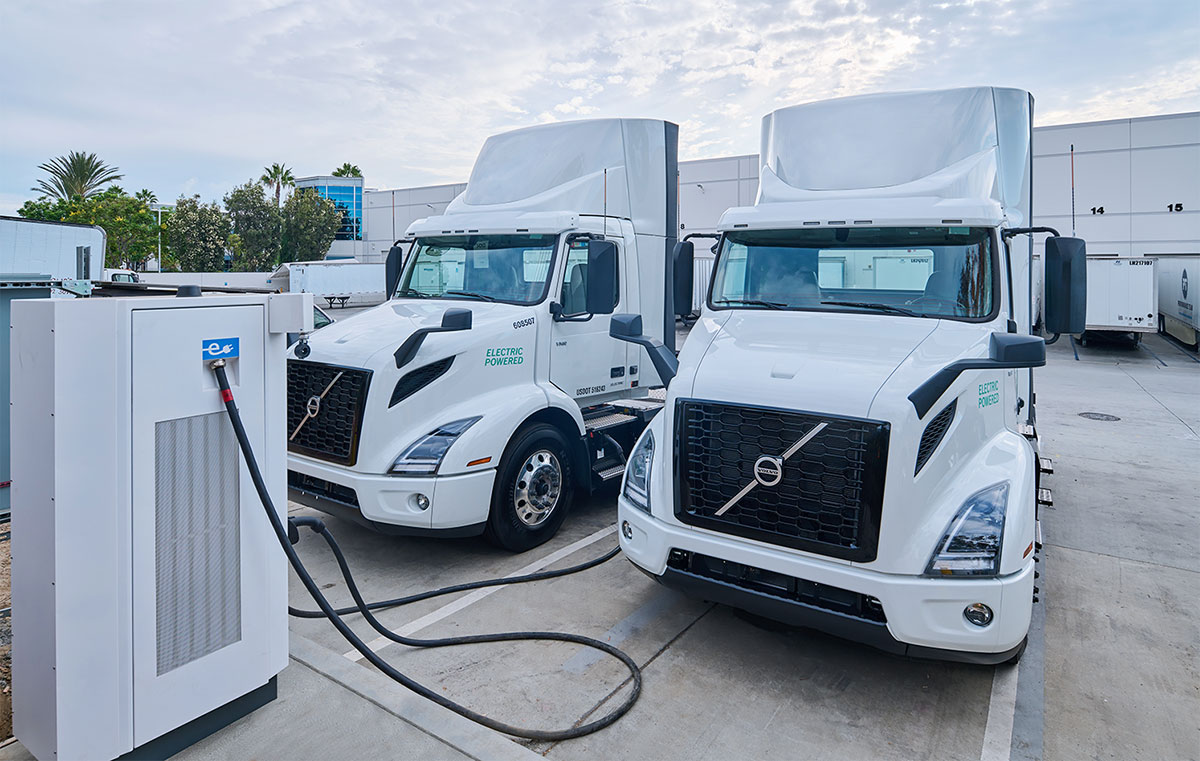
Charging infrastructure management also emerged as a critical factor.
Unlike diesel refueling, which occurs quickly and almost anywhere, electric truck charging required coordinated scheduling between dispatchers, drivers and facility managers.
The study found successful operations depended heavily on depot-based charging strategies and careful planning to avoid bottlenecks or missed delivery windows.
Researchers emphasized that electrification introduces new planning requirements extending beyond fleet maintenance departments into dispatch and operations management.
In effect, energy management becomes part of daily logistics planning.
Environmental performance remains compelling
Despite operational challenges, environmental performance gains were substantial.
Across the deployment, battery-electric trucks consumed more than 60% less energy and produced at least 80% less greenhouse-gas emissions than diesel equivalents operating comparable routes.
Driver feedback also remained overwhelmingly positive.
Operators cited quieter operation, smoother acceleration and reduced fatigue — benefits researchers noted contributed to strong driver acceptance even when operational limitations were encountered.
The report states electric trucks “performed well under load and were preferred by drivers in many ways,” while also noting that additional driver and dispatcher training could further improve efficiency.
Electrification requires operational redesign
Perhaps the most important takeaway for foodservice fleets is that electric trucks cannot yet be treated as direct diesel replacements.
Instead, researchers concluded successful deployment depends on adapting fleet workflows, dispatch planning and training practices to align with electric vehicle characteristics.
Return-to-base freight operations remain the most viable near-term application, but complex logistics environments — such as restaurant distribution — require deeper operational adjustments.
Under the test conditions, electric Class 8 trucks proved capable of supporting commercial delivery operations, but the study makes clear that adoption will hinge as much on organizational readiness as vehicle technology.
For foodservice logistics providers, electrification appears achievable — but only through careful integration rather than simple substitution.

Have your say
This is a moderated forum. Comments will no longer be published unless they are accompanied by a first and last name and a verifiable email address. (Today's Trucking will not publish or share the email address.) Profane language and content deemed to be libelous, racist, or threatening in nature will not be published under any circumstances.