What about RNG? Proponents worry the clean fuel isn’t getting a fair shake

Renewable natural gas (RNG) doesn’t get much love from environmental regulators such as the EPA and California Air Resources Board (CARB).
Engine makers don’t earn credits for selling natural gas engines. And it’s not considered a zero-emission fuel by those government agencies that regulate the transportation sector’s pollutants. But that’s a source of frustration for fleets that have proven using renewable natural gas is a relatively simple way to substantially slash their overall emissions, and in the case of CO2, can actually be carbon negative.
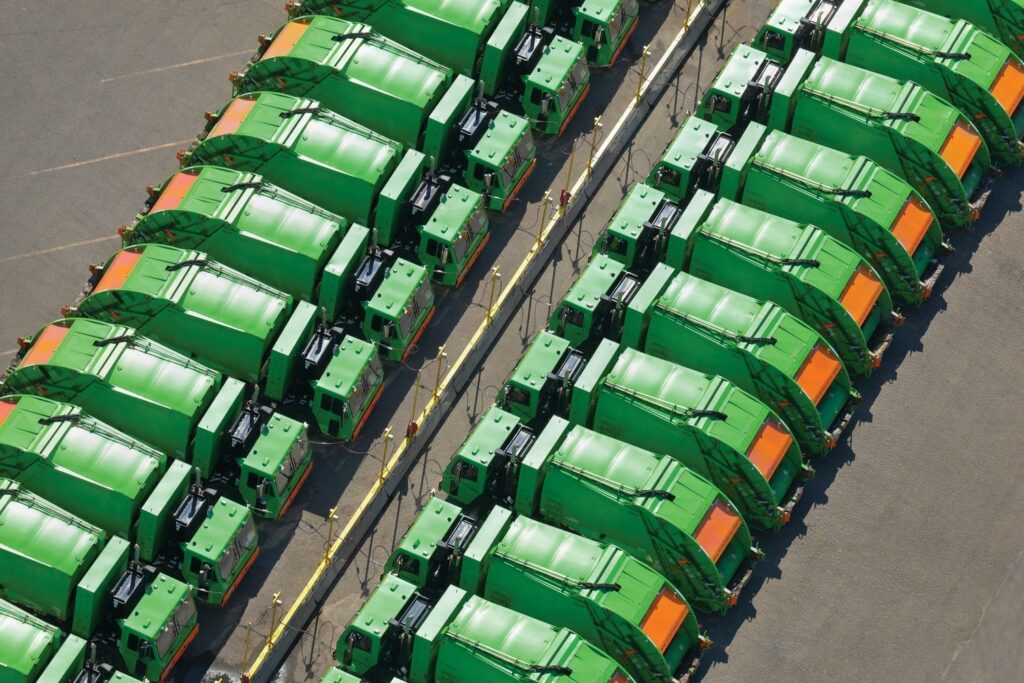
That’s possible because RNG is produced from methane – generally collected from landfill sites or dairy farms – which is much more dangerous to air quality than CO2. When captured and converted to RNG, methane is eliminated from the atmosphere in a true circular economy manner.
Proponents of RNG discussed the issue at length during a panel at the American Trucking Associations’ Management Conference & Exhibition this past week.
“RNG is here today, the engines are here today, and they’re certified to the cleanest standards today. If we want to make improvements to the environment and try to address climate change issues, we should be taking more advantage of what is available today rather than 10-20 years in the future,” said Matt Spears, executive director, regulatory affairs with Cummins.
He added the technology “Could be a game-changer for being able to comply with those [impending emissions regulations] without forcing fleets into battery-electric.”
Waste Management runs North America’s largest fleet of RNG-fueled Class 8 trucks, with more than 13,000 on the road today. By 2026, it hopes to fuel its entire fleet with RNG produced at the landfill sites it manages, and by then it will still have additional capacity it can sell publicly.

Marty Tufte, corporate fleet director for Waste Management, said it has been a welcome tool for the fleet, whose stop-and-go, high-idle application was not ideal for diesel engines and the related exhaust aftertreatment system requirements. He also noted natural gas pricing has been very stable for decades, unlike the volatility of diesel prices.
But it’s not just vocational fleets that are interested in the fuel. Matt Copot is vice-president of fleet management of LTL carrier Saia.
“We’re rather new to this space,” he said. “We just started a couple years ago realizing this isn’t a gap technology. It has opened our eyes. Right now we’re in the early stages of adoption. ESG (environmental, sustainability and governance) is a big initiative for Saia and we’ll continue down this path realizing it’s a bona fide fueling option for us moving forward.”
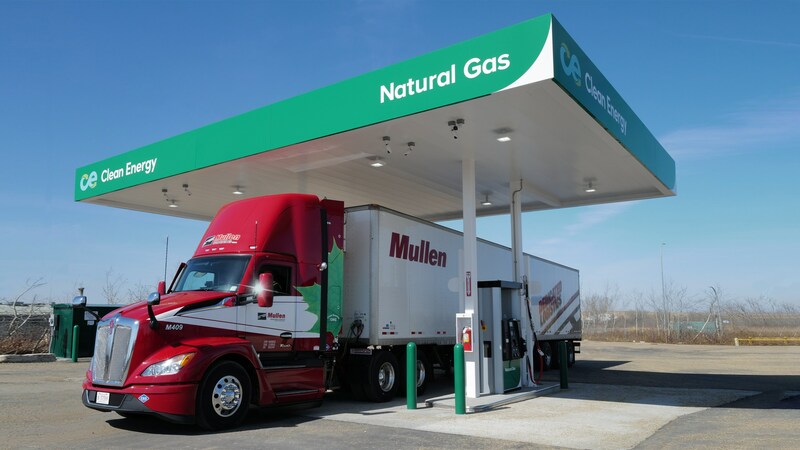
Clean Energy has more than 600 natural gas stations for commercial vehicles available in the U.S. and Canada, and the capacity to double volumes, said Brett Lindsay, vice-president, national accounts. He showed a map that indicates it’s easy to find CNG on longhaul routes right across the U.S.
“Operationally, we view these vehicles as something that’s easier to transition into [than battery-electric],” said Saia’s Copot. “We tried other alternative-fueled vehicles and there was more learning involved. These are a little more traditional.”
Cummins has come to market with a 15-liter X15N engine that addresses concerns fleets may have about power and payload capabilities. Ryan Bankerd, corporate director of sustainability for UPS, is encouraged by early performance data coming off that engine in his fleet.
X15N engine performing well
“We have some good mpg data coming out of it,” he said, adding RNG compares favorably to battery-electric and other technologies when it comes to total cost of ownership.
Spear said it’s a simpler design. Instead of a diesel particulate filter and selective catalytic reduction, all that’s required to address emissions is a three-way catalyst similar to what you’d find on a light-duty, spark-ignite vehicle. And diesel requirements are soon to get even more complex as EPA27 emissions standards will require higher-performing emissions aftertreatment systems including electric heaters.
Waste Management’s Tufte said his fleet employs about 3,500 technicians and that the simplicity of natural gas engine technology is welcomed by them. Range is also improving. Eric Bippus, executive vice-president, commercial group with Hexagon Agility, noted 10 years ago a CNG-fueled truck might get 350-400 miles (560-640 km) of range. Today, two back-of-cab tanks and two side mounts can get a truck 1,200-1,300 miles (1,920-2,080 km) down the road.
But even though RNG trucks’ environmental footprint can be carbon negative, regulators still worry about trace levels of tailpipe emissions.
“We are in conversations with CARB on a weekly basis, if not daily,” said Cummins’ Spears. While Cummins is also involved in building battery-electric and hydrogen fuel-cell-electric powertrains, Spears said it currently gets no credit for selling natural gas engines, which are treated the same by regulators as diesels.
‘Taking winnings off the table’
It’s a flawed approach, said Tufte, which “is taking winnings off the table now that you could get while other technologies mature.”
Lindsay pointed out CNG has the lowest well-to-wheel carbon intensity of any available fuel, even battery-electric. And Spears notes the methane that’s converted to RNG rather than being released into the atmosphere is 24 times as potent as CO2.
Bankerd said more education is needed to hammer these benefits home to those who oversee the transport industry’s emissions standards.
“Hydrogen has a great publicist,” he said. “EV has a great publicist. They’re very sexy. Internal combustion engines have been around.”
“Our lived experience is one where we’re seeing a lot of battery-electric technology replace other types of technology,” agreed Spears, citing examples such as power tools and lawnmowers. But he contended “RNG doesn’t look like a stepping stone [to zero emissions]. It looks like a long-term solution.”
Tufte added Waste Management is already planning its truck orders for 2026 and 2027 and doesn’t feel electric is the best option as of yet. “We can’t be forced into a technology that is not ready when you have to build a fleet plan and strategy,” he said.
And Bankerd added “This is a circular economy. As sustainability folks, we always talk about how to create a circular economy and get away from that take, make and dispose model. RNG puts us into that closed loop, circular economy and that’s where the powerful message lays for the industry.”
Have your say
This is a moderated forum. Comments will no longer be published unless they are accompanied by a first and last name and a verifiable email address. (Today's Trucking will not publish or share the email address.) Profane language and content deemed to be libelous, racist, or threatening in nature will not be published under any circumstances.
RNG is a proven solution with a net carbon negative intensity score. With a ~25% reduction in CO2 and a ~90% NOx reduction the tailpipe emissions are much improved over diesel. If the regulations are truly about improving air quality, then we really need to start embracing RNG for the viable solution it is TODAY. It will take fuels like RNG to provide that feasible bridge to what is now a more expensive and less productive electric or H2 option. Now with the development of the X15 there will be little to no drop off from diesel performance…and while the price of diesel fluctuates with unpredictable volatility, natural gas pricing remains stable and low.

In my opinion natural gas is the best way to go except fro trucks or buses that go under 240 kms a day in Canada Excellent article I do think all new trucks should have a longer life battery that can take hotel loads and a grant of up to 50% of the cost up to $2300 per truck or $9000 per trucking company per year as a way to get improve driver comfort along with $90 000 per truck for new trucks that use natural gas,to a limit of $900 000 per company and 50% of the cost of putting up a storage and filling stations for compressed gas.