Autonomous truck adoption is expanding, though more slowly than first expected

The real-world adoption of Level 4 autonomous trucking has taken longer than originally anticipated, but such trucks are out there delivering freight today.
Ann Rundle and Lydia Vieth of ACT Research recently hosted a virtual roundtable to provide an update on the status of the technology. Among their takeaways: adoption is taking longer than originally expected; the technology is here and functioning in the field; and there’s been a shift in key players in the interim, with some such as Locomation and TuSimple disappearing from the landscape and new players emerging.
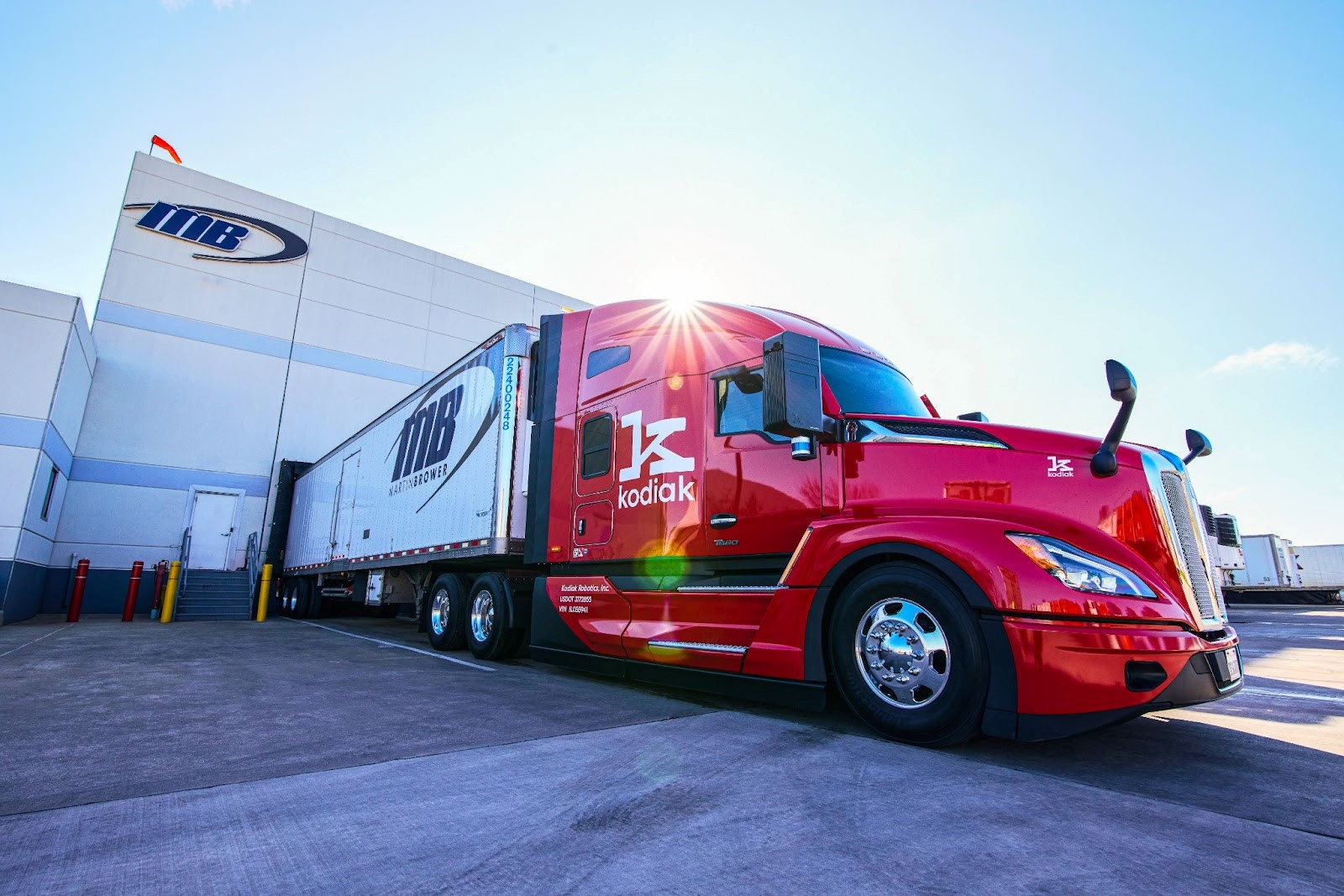
To provide an update on how the technology is performing, Rundle and Vieth were joined by: Josh Hankins, senior vice president at J.B. Hunt Transport Services, Inc.; Daniel Goff, vice president of external affairs at Kodiak AI; and Paul Konasewich, general manager at Paccar.
One of the biggest positives taken from the past year, said Hankins, is the transparency with which autonomous truck developers have shared their safety cases.
“The greater the transparency, the greater trust it builds,” he said.
Kodiak’s Goff said another development over the past year has been the public’s increasing comfort with the technology. He said many people have experienced a robo taxi, for example, and can now better understand the potential of autonomous trucks. Kodiak has a fleet of 10 driverless trucks making deliveries every day, mostly in the Permian Basin region of Texas. It plans to launch on-highway operations in the second half of 2026.
Redundancies have been built into critical safety systems including brakes, steering and power, said Konasewich. Such redundancy didn’t exist as recently as 2020 and now pave the way for on-road use. Traditional truck OEMs now have several autonomous driving platforms to choose from and integrate into their vehicles.
“What we have to remember is, the OEM is the quarterback for autonomy,” he said, adding there are dozens of suppliers involved.
J.B. Hunt has shifted from a retrofit system to full integration, with trucks coming straight from the factory ready for autonomous deployment.
Challenges to deployment
Panelists agreed much work must be done before rolling out autonomous trucks. An entire ecosystem must be built around that truck in order for it to bring value to the fleet or shipper.
“People have this idea that the technology works and all of a sudden everything falls into place,” added Goff. “That’s not accurate.”
He discussed the three pillars of autonomous trucking: the technology; safety; and the product itself. “Just because the technology can drive from Point A to Point B doesn’t mean you have that utility part,” he added. “The first and last 100 feet in a yard is really challenging from an autonomy perspective.”
Fleets also have to figure out how to integrate autonomous trucking operations into their transportation management system (TMS) and partner shippers to work with who are interested in participating in the journey – including the road bumps that will be encountered along the way.

What’s the value proposition?
Hankins said fleets adopting autonomous trucking must find their own value proposition before taking the plunge. They’ll also have to integrate autonomous operations into an existing supply chain and those vehicles will have to interact with four million other Class 8 vehicles on U.S. roadways.
Carriers will have to rethink how they calculate cost; cost per mile will have to be replaced with value per mile. These trucks will be able to run around the clock without adhering to driver hours of service rules, so the value equation is different.
They also have the potential to take just-in-time delivery to another level and reduce a shipper’s inventory holding costs since product can be delivered faster.
“Inventory and transport costs used to be completely separate,” Hankins said. “It’s not just a cost per load or cost per mile metric anymore. It’s the [overall] cost of goods flowing through my supply chain.”
Costs will decrease
Unlike typical trucks, which increase in cost as technology is added, Konasewich said the cost of automation is likely to decrease over time as the more expensive components such as on-board computing and radar actually decrease in price.
“Prices come down in ways in the truck industry we’re not used to,” he said. “The price for a brake system when it first comes out isn’t going to go down 50-70% over a year. In the computer industry everybody is used to that and assumes it, so that’s definitely going to be a tailwind.”
Will automation replace drivers?
Panelists said autonomous trucking won’t replace the occupation of truck driver. The technology is initially being rolled out on undesirable lanes. For J.B. Hunt, that means lanes like Dallas-Atlanta, which are difficult to service given hours of service limitations. It’s also why Kodiak began with dirty off-highway trucking in the Permian Basin.
“I don’t think autonomous trucks are going to threaten our need for a workforce at all,” said Hankins. “We will still need new entrants into the truck driving workforce at a very high rate.”
Local deliveries will still require human drivers even as some longhaul lanes may be fit for automation.
“It’s driverless, not humanless,” Goff agreed. “It takes a lot of people to build, maintain and oversee a driverless fleet. To some extent, this is about creating jobs as monitors and assistants and to some extent shifting the workforce in trucking away from people in the cab to people near the cab.”
The journey to Level 4
In the meantime, panelists said the technologies that will enable Level 4 (driverless) autonomy will also improve safety along the way. The cameras, radars and automatic braking systems, etc., will improve truck safety even before reaching Level 4 status.
“Level 2 and Level 4 are parallel paths and both very important,” said Konasewich.
Asked who would take on the liability risks associated with running driverless trucks, Goff said “it depends.” While it’s not yet clear, he envisions the autonomous technology provider would be liable for incidents that occur when the system is active.
While some insurance providers may wish to sit on the sidelines as the technology is ramped up, he said others are eager to get onboard, seeing the potential for reduced crashes.
Have your say
This is a moderated forum. Comments will no longer be published unless they are accompanied by a first and last name and a verifiable email address. (Today's Trucking will not publish or share the email address.) Profane language and content deemed to be libelous, racist, or threatening in nature will not be published under any circumstances.

Bonjour je suis chauffeur professionnel et intéressé pour travailler chez votre honorable compagnie de transport