5 questions with incoming TCA president Jim Mullen

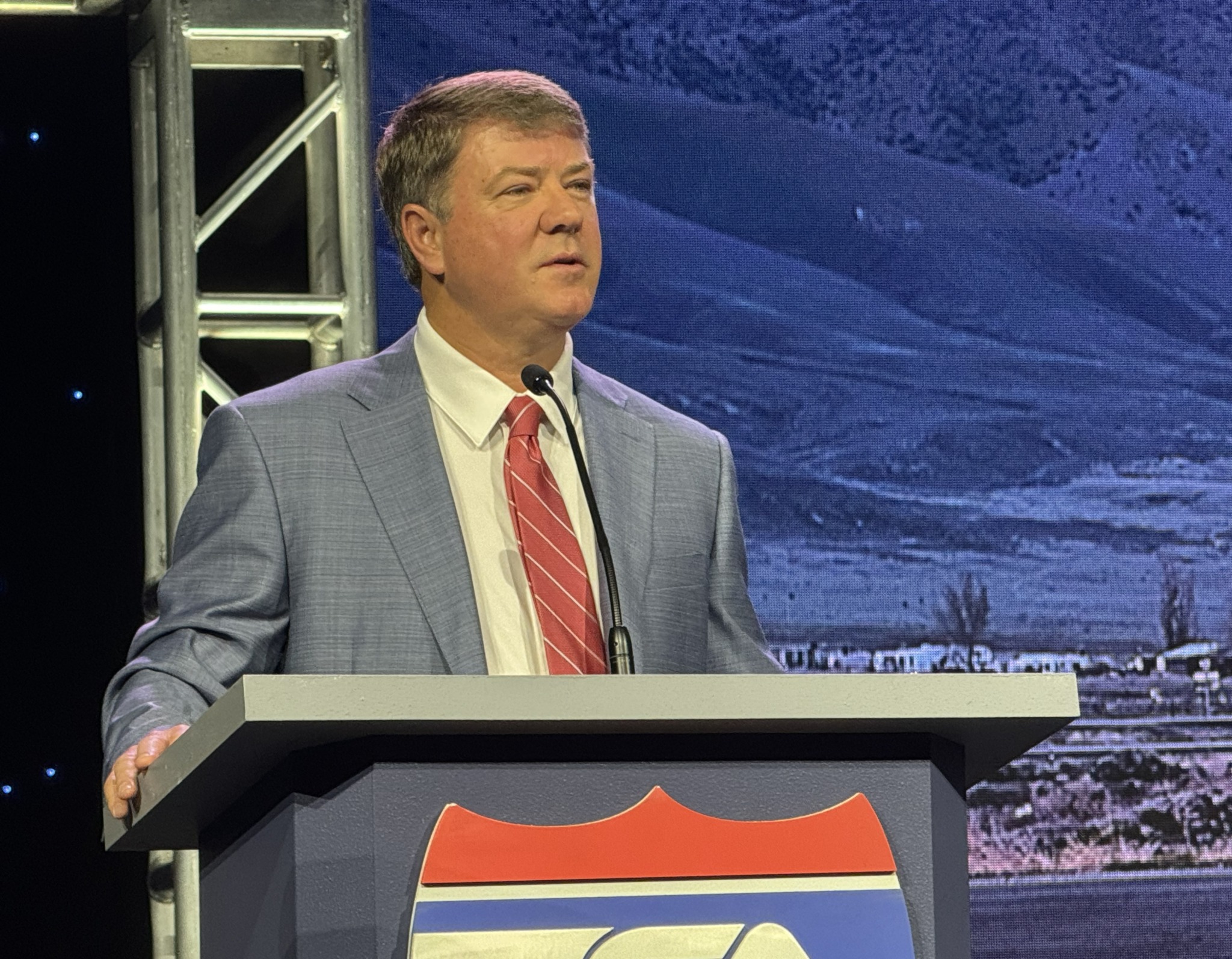
Jim Mullen will take over the presidency of the Truckload Carriers Association on April 6 at a time when the trucking industry is dealing with weak freight markets, shifting emissions regulations and safety concerns.
The former acting administrator of the Federal Motor Carrier Safety Administration and current executive director of the Clean Freight Coalition will lead an association representing ‘just shy of 1,000’ motor carrier members across North America.
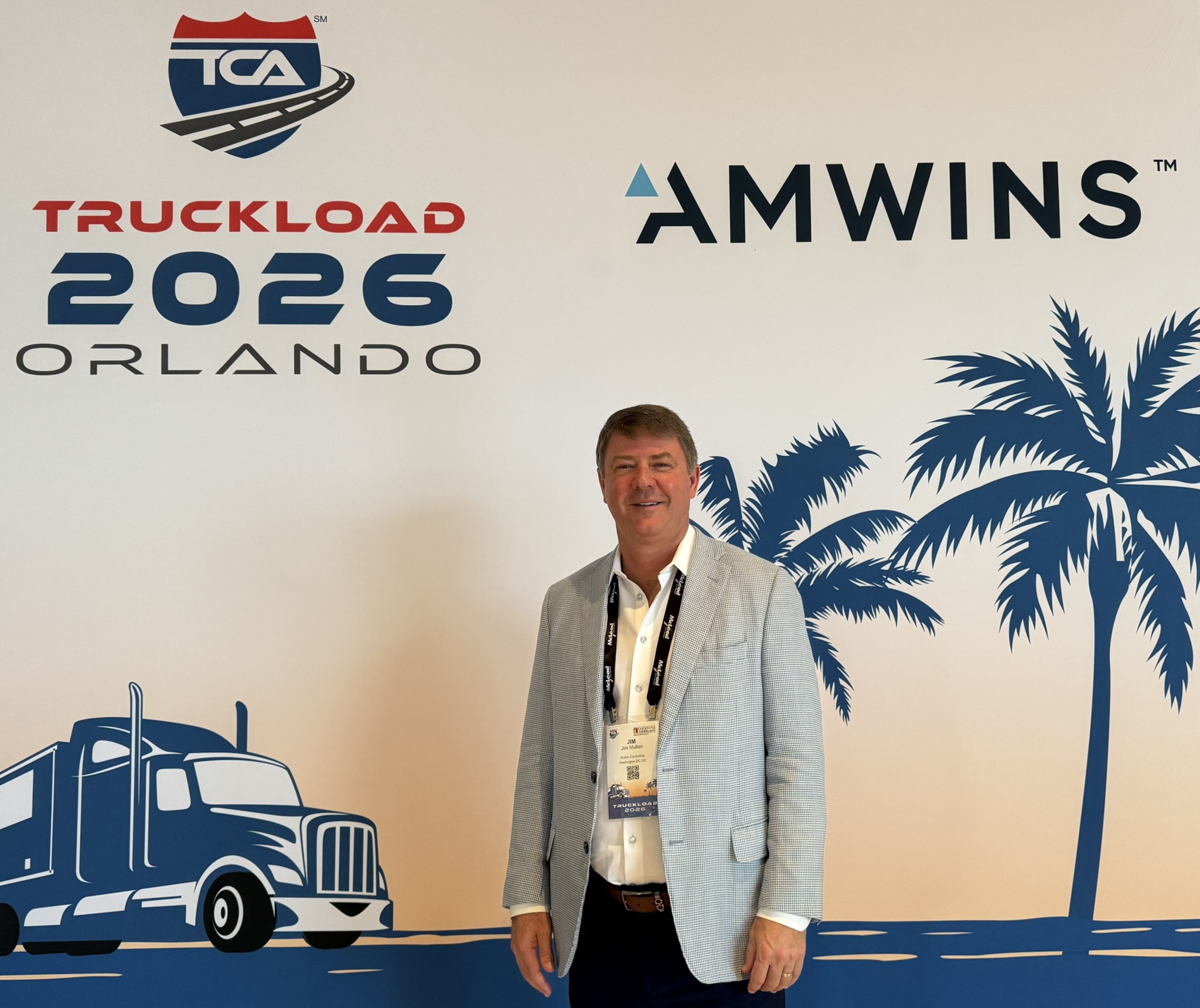
Speaking with trucknews.com during the TCA convention in Orlando, Fla., Mullen outlined how he sees the industry navigating regulatory changes, enforcement priorities and what expectations he has set for himself as TCA president.
How will the EPA’s decision to rescind the Endangerment Finding affect fleets?
Mullen said the U.S. Environmental Protection Agency recently took two significant steps that will have major implications for trucking.
First, EPA rescinded the Endangerment Finding, which served as the legal basis to regulate greenhouse gas emissions from vehicles since 2009, as the federal finding determined that carbon dioxide and other greenhouse gases qualify as pollutants under the Clean Air Act. At the same time, the agency also rescinded the proposed GHG Phase 3 rule, which would have pushed the industry toward zero-emission trucks.
When asked about the lawsuits that were filed by environmental and health advocacy groups, arguing that removing the finding was illegal, Mullen said, “I suspect that the court is going to uphold their [EPA’s] decision and their rulemaking on rescinding the endangerment finding… My belief is that the fleets are going to operate under the assumption that the EPA will prevail on this and that GHG Phase 3 will not come to fruition,” he said.
If the rule does not proceed, carriers will see major cost relief. Zero-emission trucks currently cost about 2.5 times more than a conventional diesel truck and come with more limited operational functionality, Mullen said, making the rollback “a tremendous victory” that will ensure “huge savings” for fleets.
However, he does not believe this means the end of the industry’s sustainability efforts, saying that carriers will continue to pursue cleaner alternatives such as renewable natural gas and biodiesel, particularly when those options are cost-competitive and operationally viable.
Are fleets ready for the 2027 NOx emissions rules?
Even with greenhouse gas rules being rolled back, Mullen said the EPA’s 2027 ultra-low NOx limit — requiring engines that meet stricter 0.035 grams per hp/hr limits — is still expected to move forward.
“There was some desire among certain portions of the industry on the fleet side to have EPA keep it at 0.20 grams hp/hr — not because they don’t want cleaner engines, it’s just because now is not a good time to absorb increased costs. Because these 0.035 engines are going to cost more, and now is not a good time for the marketplace to absorb additional costs on new truck purchases,” he said. “EPA has basically told us, ‘No, we’re not going to do that for you.’ Alternatively, we say, ‘Well, can you go to 0.05 instead of all the way to 0.035? And I think they’re going to say no.”
He noted two provisions in the rule — extended warranty requirements and longer useful-life standards — could add “relatively meaningful cost” to the engines. If EPA was to tweak those elements, that would reduce some of the financial pressure on fleets, he said.
Still, Mullen said reliability and testing may be an even bigger concern for carriers than the price.
“Nobody has these 0.035 engines in a truck which has been road tested by fleets,” he said. “That’s very, very important that these fleets be able to test these new technologies to make sure they work as they are supposed to work. Because the fleets can’t afford downtime if it’s not working properly.”
Mullen further added that the time between now and the rule’s implementation is unusually short for such testing. The industry saw similar challenges when emissions standards tightened in 2010 when some engines didn’t work as promised.
“The performance was poor for a couple OEMs, and it caused a lot of problems, and those OEMs that weren’t ready for prime time with that engine, it took them a while to bounce back market share,” he said. “So, that’s as much — if not a greater — concern than the cost.”
What are the biggest issues regulators should focus on?
Reflecting on the address that FMCSA Administrator Derek Barrs delivered to TCA attendees, Mullen said regulators are confronting “a lot of fires” that need to be put out, making it hard to rank priorities. But if he had to focus on the most urgent ones, he would start with issues that directly affect safety.
English proficiency enforcement is on top of that list. Mullen called it a huge deal, and said drivers must be able to understand road warnings, follow directions from enforcement officers, and respond appropriately to changing traffic situations.
Because of that, he is hopeful to see the requirement strengthened at the federal level.
Currently, English proficiency is addressed through regulation, but he said that leaves the rule vulnerable to political shifts between administrations. “I’d love to get that in statute versus just a regulation, so that the next administration — if they want to go back to not to have it [as] an out‑of‑the‑service violation — they don’t do that.”
He also pointed to CDL mills and weaknesses in the Entry-Level Driver Training system as major safety concerns, warning that some schools are “churning out” drivers who “ought not be driving.”
Mullen also pointed to growing abuse of electronic logging devices (ELDs). “It’s crazy how abusive that has become,” he said, referring to fake or manipulated devices used to bypass hours-of-service limits. While falsifying logs is not new, he said the self-certification system for ELDs has made it easier for bad actors to exploit the technology.
Reflecting on the scope and complexity of these challenges, he said FMCSA leadership is tasked with a heavy workload.
“I don’t envy him for having all those things on his plate at once, not just him, the Secretary [Duffy], too,” he said of FMCSA’s Barrs and the U.S. Transportation Secretary. “TCA obviously supports everything that he’s doing, and we’ll do anything we can to assist.”
Mullen also spoke about the increased levels of freight fraud, though he said it differs from the other issues because it is primarily economic rather than safety driven. The U.S. Department of Transportation and Congress are already working on legislative and enforcement responses. He also pointed to cabotage, saying that Department of Homeland Security, along with the Office of Multimodal Freight Infrastructure and Policy, are working on stopping cross-border drivers from using their work visas in the U.S. to transport goods within the United States.
When asked about nuclear verdicts, Mullen said jury awards in trucking cases have increased dramatically over the past two decades. When he began working in the industry in the mid-2000s, a fatality case that might have been valued at about $3 million now does not start with a reward of less than $10-15 million.
He ties the issue back to safety, adding that carriers without strong safety programs face major legal exposure. “If you don’t have a robust vetting process for what drivers you’re hiring, if you don’t have a robust training program…then if you have a bad accident, you’re toast.”
Mullen said the growth of nuclear verdicts has also been accelerated by plaintiff attorneys shifting their attention specifically toward trucking cases. Efforts to address the issue are largely happening through state-level tort reform, with states such as Florida and Iowa passing legislation aimed at limiting excessive verdicts.
What did your time at FMCSA teach you about truckers?
Mullen said his time leading the FMCSA during the pandemic deepened his respect for truck drivers and opened his eyes to how little policymakers often understand about their work. During the early months of Covid, he traveled along interstate corridors and visited truck stops without identifying himself to drivers, asking questions about their experiences.
“Obviously, I grew an even deeper respect for what they do for a living than I did before…their commitment to our country, our communities,” he said, adding he was struck by how little some decision-makers knew about truck drivers’ needs.
Some jurisdictions initially closed rest areas or limited the number of people allowed in truck stops, making it difficult for drivers to access basic services, Mullen recalls. Other areas attempted to block truck traffic entirely because of Covid concerns, only to later reverse course when deliveries stopped arriving. “It was a crazy time…people were doing things, making decisions with no clue how it’s affecting their ability to get groceries.”
What does success look like for you as TCA president?
While addressing attendees earlier in the day, Mullen said his priorities as TCA president will focus on three areas: improving the driver’s job, strengthening safety, and helping fleets remain profitable.
“I hate losing and I look forward to winning with all of you,” Mullen told attendees during his remarks on March 3.
In a conversation with trucknews.com, he described such victories as policy wins in Washington and improved safety outcomes for TCA members and fleets across the industry.
Membership strength will also be critical. “You really can’t have a strong association unless you have a strong membership,” Mullen said. “I don’t care how gifted of a president or executive director you have. If you don’t have a strong membership, nobody really cares about you.”

Have your say
This is a moderated forum. Comments will no longer be published unless they are accompanied by a first and last name and a verifiable email address. (Today's Trucking will not publish or share the email address.) Profane language and content deemed to be libelous, racist, or threatening in nature will not be published under any circumstances.