Best Fleets tie safety outcomes to trust, hands-on coaching and operations alignment

Being the “classic safety guy” that drivers fear and avoid is no longer the strategy for building a strong safety culture, particularly among Best Fleets, who are shifting toward hands-on coaching, communication, and closer department alignment within their operational practices.
This is according to Ontario-based TransPro Freight Systems and Nussbaum Transportation, headquartered in Illinois. Both carriers said during the panel at the Best Fleets to Drive For conference in Charlotte, N.C., that they have moved away from fear-based tactics a long time ago and now strive to cultivate relationships with staff and drivers built on transparency and respect.
They also agreed that safety programs cannot function independently from operations, maintenance, and driver management.
“Safety can’t operate in isolation,” said Michael Frolick, director of safety and compliance at TransPro.
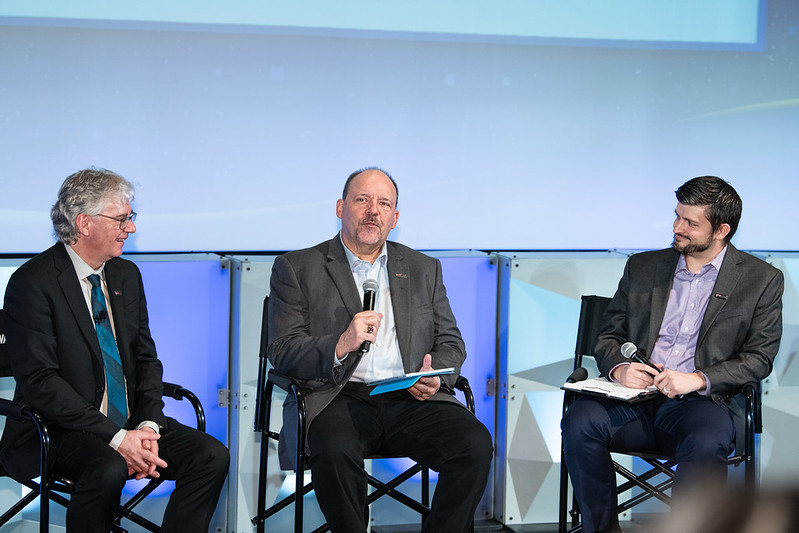
At TransPro, that has meant restructuring how drivers interact with the business. Following a merger with a sister company, the company introduced greater access to operations staff, allowing drivers to speak directly with dispatchers and planners.
At Nussbaum, safety staff are required to spend time in operations to understand dispatch pressures, customer demands, and real-world constraints, said Rick Schmidt, senior director of HR and safety.
New safety personnel shadow operations early on to build that understanding, while driver managers are trained to recognize and respond to safety-related issues. Members of the safety team also attend every driver orientation, ensuring new hires meet them from the start. Schmidt himself, however, waits until the third day to attend and engage with drivers, after they have already formed an impression of the company.
Communication and trust drive outcomes
By then, he said, most recruits already feel that “something is different”, allowing him to reinforce safety as part of a supportive, people-focused environment rather than a promise statement drawn out of thin air.
“I didn’t want to be the classic safety person,” Schmidt added when asked about his management style. “People never hear me scream and manipulate…Because that’s not how we have conversations, right? This is a stressful enough job as it is; I don’t want to make it any more stressful.”
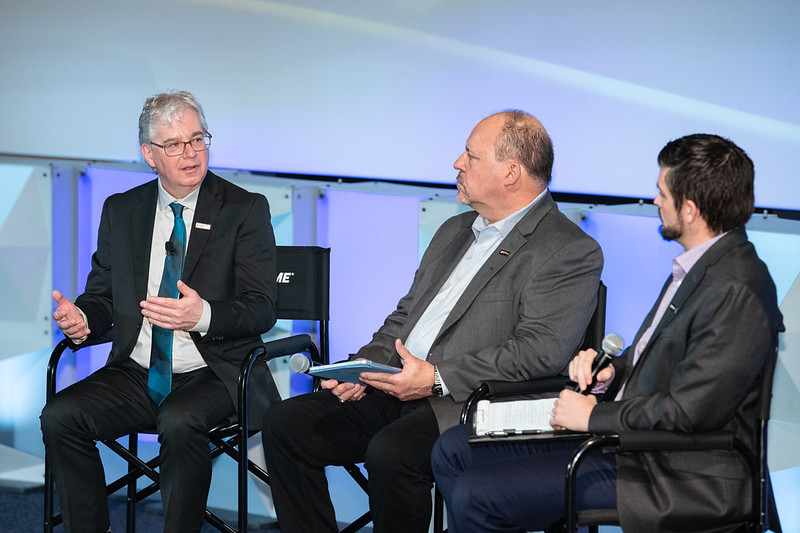
Frolick agreed that communication style matters when it comes to building a strong safety culture. “You can say things in a nice way, or you can say [them] harshly… if you say [them] harshly, you’ve got to be prepared — that’s what you’re going to get back. You can’t talk to drivers like that,” he said, adding that every conversation between a safety manager and a driver should not make them feel like they are about to lose their job.
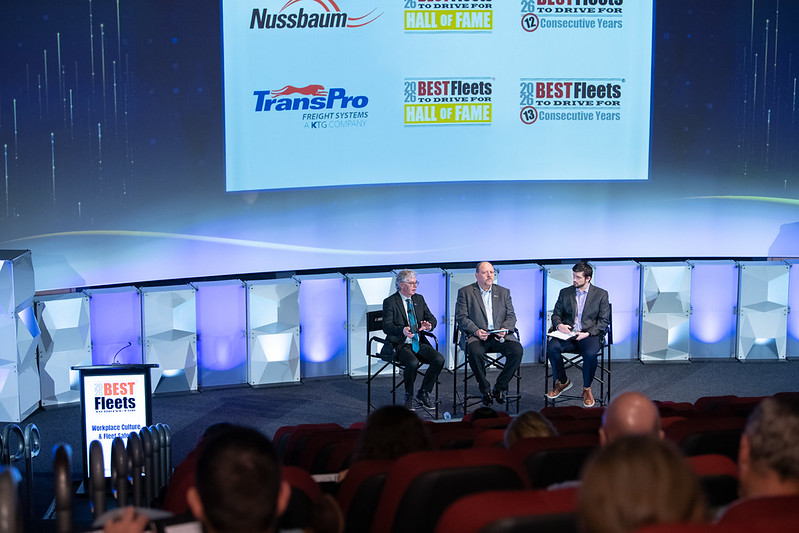
At TransPro, that approach has helped create an environment where drivers feel comfortable raising concerns, even when it comes to their director. Florick recalled a time six years ago when he walked into the yard without his safety vest on and got immediately called out by one of his drivers. Mark Murrell, CarriersEdge president, who moderated the panel, said this is evidence of a culture in which drivers feel safe and confident enough to speak to management on equal terms.
Florick added that, as cliché as it sounds, safety begins with leadership buy-in. He recalled a conversation with Mark Seymour, CEO of Kriska Transportation Group, TransPro’s parent company. “‘We either have a safety program, or we don’t. We don’t do it half-way,’” was what Seymour told him when the company got acquired a decade ago.
Measuring safety program’s success
While telematics scores remain widely used across the industry, panelists said their fleets are expanding how they define and measure safety.
At Nussbaum, drivers receive weekly scorecards that track behaviors such as smooth throttle, top speeds, spacing, and speed management, along with monthly performance summaries that incorporate input from operations, maintenance, and training. By making this data visible, the fleet enables drivers to act, as they can also see how they rank against the fleet and track improvement over time.
Schmidt also cautioned that focusing on metrics such as CSA scores or losses alone can “send you down the wrong path” if underlying behaviors and relationships are ignored, which is where coaching and relationships with drivers come into play.
He added that cross-department alignment is also an indicator of a fleet’s safety. “We scan over the success that a company has when you just see how close the different groups are,” Schmidt said. “For example, operations and safety, if they’re butting heads all the time … it’s not a really fun look and it’s really challenging.”
TransPro, meanwhile, reviews its telematics data, along with other important trends like claims and insurance data, while also benchmarking performance through captive insurance groups.
“We’re part of a captive… it’s going to show your trends from the previous year… At the end of the day, this is a business… they will be looking for what was in your program to get a decrease,” said Frolick. “The safer we can do it, the more profit we can make and less to pay them.”
He added that benchmarking through captive groups also allows fleets to compare performance with peers and adopt best practices.
Frolick added another way to track success is collecting feedback through driver committees, non-mandatory anonymous surveys, and in-person conversations with drivers.
Hands-on training matters
Training programs are also shifting away from one-time instruction toward continuous development.
At Nussbaum, that includes its “Certified Red” program, which requires drivers to complete structured training milestones every 100,000 miles, similar to a trade-based progression model that hones different skills over time. Hands-on training covers inspections, backing exercises, and real-world scenarios, while monthly online modules are used to support and back up in-person learning rather than replace it.
Some lessons come from drivers themselves. “For us, it’s finding what intrigues people,” Schmidt said. “One of the best videos we did this year is we took a driver who had previously had a major accident years ago, so it was old enough. The best thing we did was just have him talk about the accident.”
TransPro’s philosophy on training is a blended approach that combines online modules with practical in-yard instruction tailored to real operating conditions.
Frolick warned that many fleets assign online training as a punitive measure, which he believes doesn’t do safety managers any favors. Instead, he said, training should be designed to build real-world competence, from chain-up practice and winter driving to pre-trip inspections and equipment use, before drivers encounter those situations on the road.
For example, Frolick once brought Ontario Ministry of Transportation inspectors into the yard to run hands-on inspection exercises using equipment with planted defects, giving drivers the chance to work alongside officers and find the defects before the inspectors did. “One of the drivers came out and said, ‘Am I getting a ticket?’… At the end, they were taking pictures with [inspectors] and asking questions,” he recalled.
Driver trainers are carefully selected within the fleet, too. While TransPro uses experienced drivers as mentors, they are evaluated not on tenure, but on teaching skills. They are also required to complete formal programs, such as the IHSA driver trainer course, to ensure they can teach and mentor effectively.

Have your say
This is a moderated forum. Comments will no longer be published unless they are accompanied by a first and last name and a verifiable email address. (Today's Trucking will not publish or share the email address.) Profane language and content deemed to be libelous, racist, or threatening in nature will not be published under any circumstances.