Here’s a list of the U.S. tariffs still hammering Canadian industries

The U.S. Supreme Court struck down President Donald Trump’s use of the International Emergency Economic Powers Act to hit the world with tariffs.
While the decision ends the fentanyl-related duties on Canada, Trump said he would use a different tool — Section 122 — to implement a 15% global tariff. That duty can remain in place for only 150 days unless it receives Congressional approval.
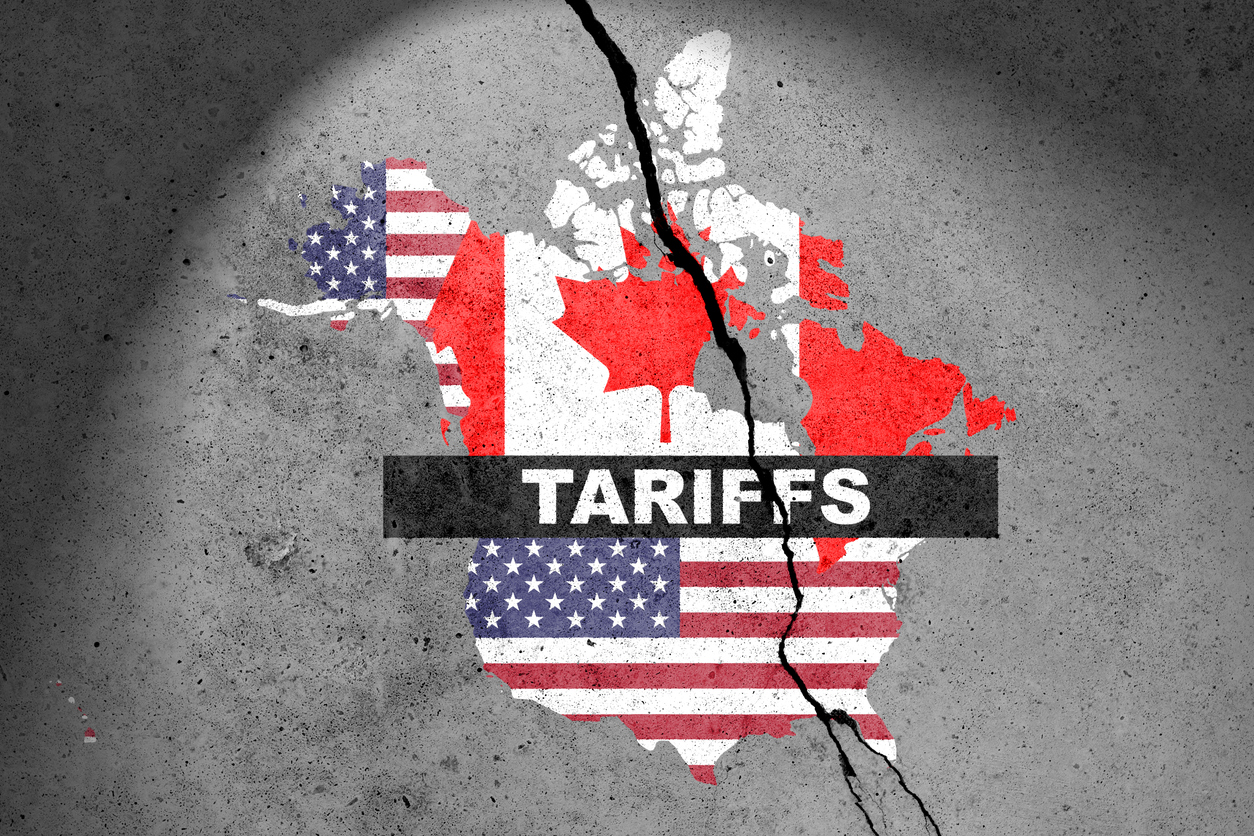
In a fact sheet, the White House said the new tariffs will not apply to goods compliant under the Canada-U.S.-Mexico Agreement on trade. The duties will also not stack on current sector-specific tariffs.
Here’s a list of the current levies:
Heavy-duty trucks
Trump used Section 232 of the Trade Expansion Act of 1962 to implement a 25% tariff on imported medium- and heavy-duty trucks last November.
There is a USMCA carveout for Canada. Only the non-American components of a vehicle face the duties.
Automobile tariffs
Trump used Section 232 of the Trade Expansion Act of 1962 to impose 25% tariffs on finished automobiles last year.
There is a USMCA exemption for Canada because of the highly integrated North American automobile industry. Only the non-American components of a vehicle are subject to duties.
While Trump did go ahead with tariffs on automobile parts for most countries, Canada was never hit with those duties on auto parts that comply with USMCA.
Steel tariffs
Trump used Section 232 of the Trade Expansion Act of 1962 to impose steel tariffs last year, citing national security as justification.
The duties started at 25%, but Trump raised them to 50% last June.
That same month, the Trump administration expanded the tariffs to the steel content in additional products, including dishwashers, refrigerators, washing machines, and freezers.
Aluminum tariffs
Trump used Section 232 of the Trade Expansion Act of 1962 to impose aluminum tariffs last year, again citing national security.
The duties were set initially at 25%, but Trump increased them to 50% last June.
Copper tariffs
Starting last August, Trump invoked Section 232 of the Trade Expansion Act of 1962 to impose a 50% tariff on copper.
The Canadian industry saw some relief because raw materials are exempted from the tariff.
Lumber tariffs
Trump used Section 232 of the Trade Expansion Act of 1962 to impose 10% tariffs on softwood timber and lumber last October.
The tariffs alarmed the Canadian lumber sector because the U.S. Commerce Department drastically increased countervailing duties and anti-dumping duties on Canada earlier this year — pushing them up from 14.5% to 35%.
Furniture
Trump used Section 232 of the Trade Expansion Act of 1962 to hit imports of upholstered wooden furniture, cabinets and vanities with 25% tariffs beginning last October.
Trump paused a planned increase that was scheduled for January.
Semiconductors
Trump imposed a 25% tariff on a narrow range of semiconductor imports in January.
Other threatened tariffs
The president also threatened to impose 100% tariffs on certain pharmaceuticals. His September deadline for implementation came and went without the duties going into effect. It would not have applied to generic pharmaceuticals.
Commerce Secretary Howard Lutnick indicated the delay was meant to give the administration time to negotiate agreements with pharmaceutical giants.
Trump has threatened to tariff many other imports throughout his second term, including agriculture products, iPhones and movies.
The president instructed the Commerce Department to start investigations into commercial aircraft and jet engines, integrated circuits, personal protective equipment, medical equipment, processed critical minerals, polysilicon, semiconductors, robotics and industrial machinery, unmanned aircraft systems and wind turbines.
Trump has specifically targeted Canada with some threats. He has threatened to introduce a 100% tariff if Ottawa strikes a trade deal with Beijing, and a 50% tariff on Canadian aircraft until American-made Gulfstreams are certified. Neither of those threats has materialized.
– The Canadian Press contributed to this article.

Have your say
This is a moderated forum. Comments will no longer be published unless they are accompanied by a first and last name and a verifiable email address. (Today's Trucking will not publish or share the email address.) Profane language and content deemed to be libelous, racist, or threatening in nature will not be published under any circumstances.