US enforcement actions to remove more trucks than ELD mandate

(Editor’s note: On Nov. 10, a federal appeals court paused the non-domiciled CDL rule pending further review.)
There is a growing consensus the U.S. government’s efforts to restrict non-domiciled commercial driver’s licenses and enforce English-language proficiency requirements will have a larger effect on truck capacity than the electronic logging device (ELD) mandate.
“This has the potential to be one of the largest structural changes to truckload supply since deregulation,” Drew Wilkerson, chairman and CEO of truck brokerage RXO Inc., said on a Nov. 6 conference call.

While there is no precise figure, industry analysts generally agree that enforcement of the ELD mandate in the United States starting in December 2017 removed approximately 3% to 5% of truck capacity.
David Parker, CEO and chairman of Covenant Logistics Group, said the federal government’s focus on who is behind the wheel of a commercial truck is unlike anything he’s witnessed in his 50 years in trucking.
That includes commercial drivers being placed out of service for failing English-language proficiency requirements or taken into custody for being undocumented. In addition, the Department of Transportation issued an emergency final rule in September that restricts the ability of non-citizens to obtain or renew a CDL. Data from the Federal Motor Carrier Safety Administration indicate that this could result in the removal of nearly 200,000 drivers.
Parker said he believes the industry transformation will be so significant it has him “more excited right now than I’ve ever been in my entire career for the next two-to-three years.” He suggested a tightening of capacity might be more noticeable already if not for the economic uncertainty “as a result of elevated interest rates and volatility of global trade policy.”
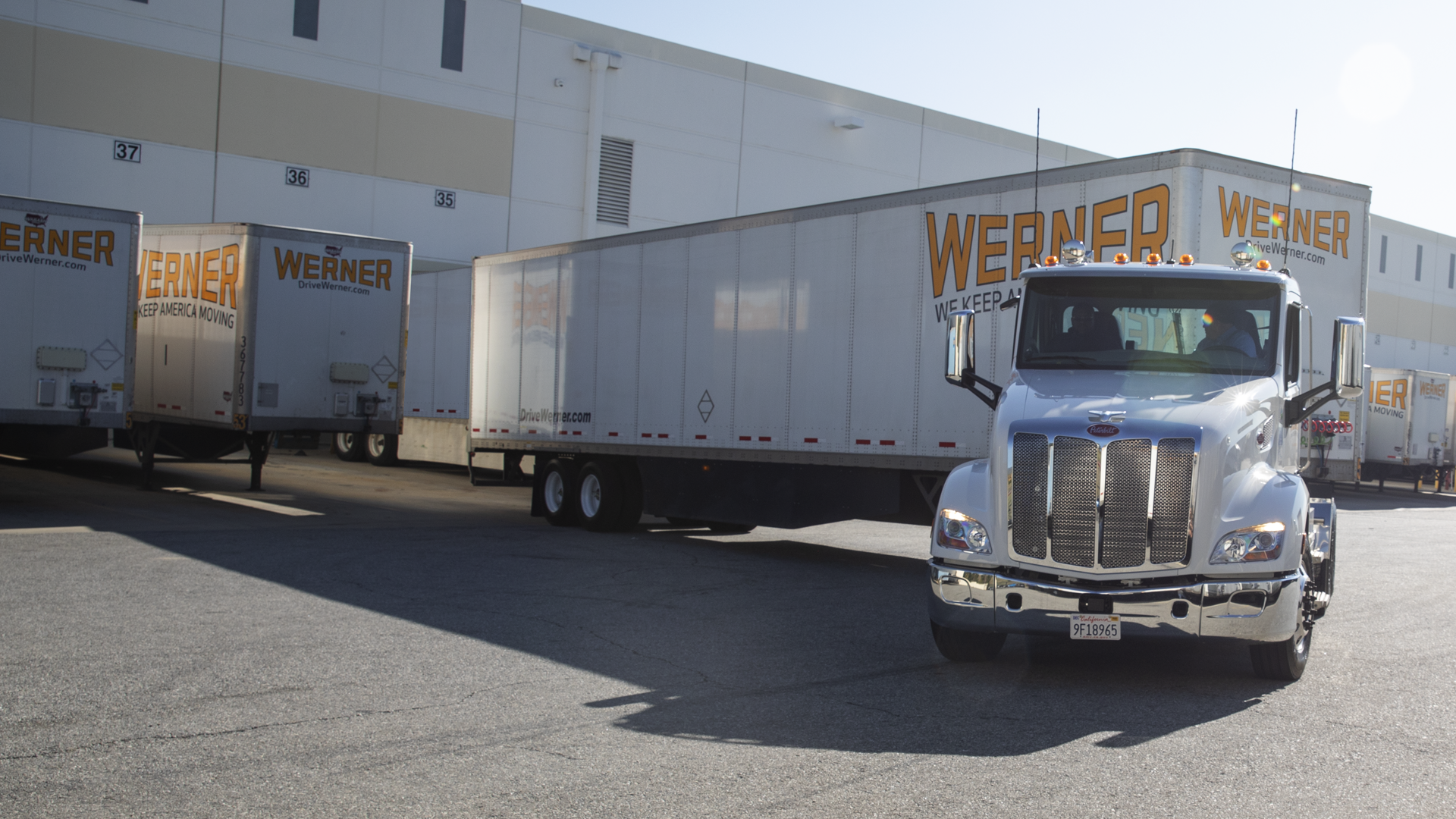
Derek Leathers, CEO of Werner Enterprises, was as emphatic the current enforcement measures would create a lasting change. He viewed the non-domiciled CDL issue in particular as being “larger than what we saw with the introduction of ELDs.”
Leathers also said that as more states begin paying greater attention to these issues, it would lead to more non-compliant drivers being removed even faster.
Mark Rourke, CEO and president of Schneider, said it is “already evident in certain parts of our business and our trade partners” these measures are already having an impact. He added: “It’s our belief that it is real … and it should only accelerate from here.”
Comments on recent earnings conference calls indicated some carriers are reconsidering their lengths of haul in certain regions to limit the number of time-consuming checkpoints they encounter.
Parker said he has concerns about moving freight through Oklahoma because of recent roadside enforcement actions. One multi-day blitz resulted in 120 people being taken into custody for immigration violations, including 91 CDL holders operating commercial vehicles, according to the U.S. Department of Homeland Security.
Parker mentioned Texas, California, and Chicago as other areas where more frequent roadside enforcement stops have been taking place. These regions have seen spot rates moving higher in recent weeks, which is further evidence of tightening capacity.
James Harris, chief financial officer of RXO, said the federal government’s emphasis on these issues is bad news for bad actors across the nation. “I don’t think we would say there’s any one spot that folks can go run loads in that is not under risk of being caught,” he said.
Parker and Leathers both said the insurance sector is taking notice and that the administration’s enforcement actions will prompt underwriters to scrutinize some of their fleet customers more closely than ever. They were also among a number of trucking executives who expect greater enforcement scrutiny in two additional areas moving forward.
First, there is growing evidence of commercial drivers who cross into the United States with a shipment from Canada or Mexico, and then do not return to their home countries until several weeks later. “Cabotage” regulations require these drivers to depart the United States without picking up an additional load for delivery inside the country.
In addition, momentum is growing to find ways to prevent drivers from using multiple ELD accounts or creating “ghost” drivers to avoid hours-of-service regulations. Parker said he expects to see FMCSA remove more lower-end ELD devices as they look closer into just how much cheating exists.
Have your say
This is a moderated forum. Comments will no longer be published unless they are accompanied by a first and last name and a verifiable email address. (Today's Trucking will not publish or share the email address.) Profane language and content deemed to be libelous, racist, or threatening in nature will not be published under any circumstances.
-
You are only partly correct in your comment to the article. I was told 9 yrs if Canada the bring a min safety and permit for all cross border truck drivers along with medical coverage that with a Canadian passport the possibility of allowing empty trailer movements and maybe more would be allowed in both Canada and U S ?

Your statement (paraphrased): …growing evidence of commercial drivers who cross into the United States with a shipment from Canada not returning home until several weeks later. “Cabotage” regulations require these drivers to depart the United States without picking up additional loads inside the country, is incomplete and misleading at best.
It leads me to believe that while you mention ELD’s in the article, you do not understand the Hours-of-Service regulations and the vast distance a load may travel from Canada into a southern State. Some being between 40-50 hours of just driving one way. This does not include traffic or any other road condition a driver may face. It also does not take into consideration that drivers are human and will need to stop during the course of their day to eat, use the facilities, maintain compliance with regulated breaks and shift resets, etc. This combined with receiver delays, return shipper delays or appointment requirements can be another 2-3 days. It would not be unreasonable to have Canadian driver not return for up to 3 weeks.
This leads me into your incomplete description of “Cabotage”. If a company has scheduled pick-ups in the US that would be within the return route to Canada, this is permissible. What cannot be done is point to point activities within the US by a Canadian driver.
It is understood that you may have a copy limitation for your article however, when the removal of information impacts the accuracy of what remains, it runs the risk of questioning the integrity of all information presented.