Highlights from THRC’s Calgary Workforce Bootcamp

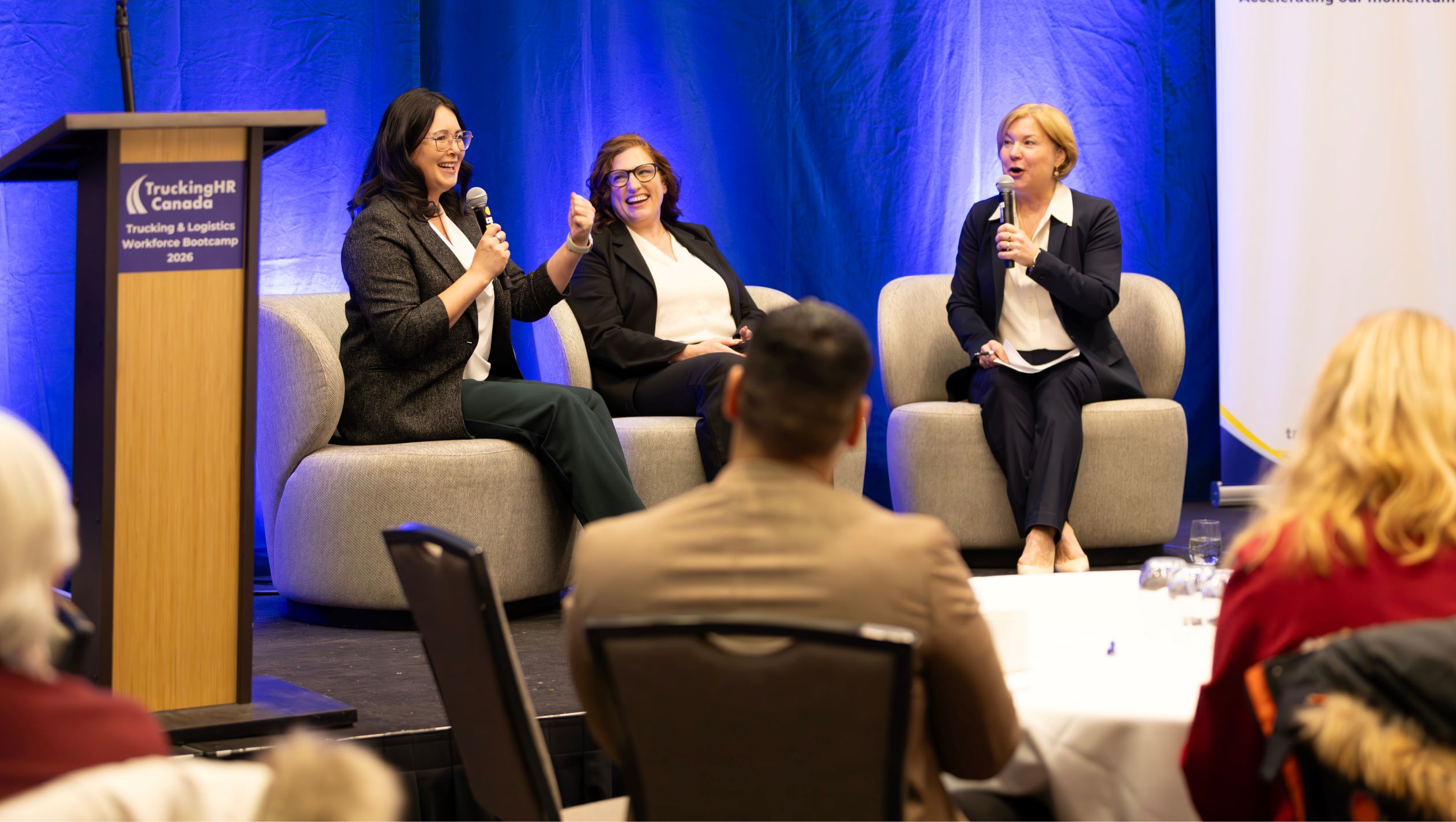
Last month at THRC’s Trucking and Logistics Workforce Bootcamp in Calgary, Alta., leaders from two THRC Top Fleet Employers — Trimac Transportation and Caron Transportation Systems — joined CEO Angela Splinter for a candid conversation about what’s really changing in the industry’s workforce.
From evolving driver expectations to new approaches to onboarding, leadership, and technology, the discussion revealed how leading fleets are adapting to stay competitive.
Here’s a look at the insights they shared and what they mean for the year ahead.
Workforce shifts
Angela Splinter, CEO, THRC: From your perspective, what are the biggest workforce shifts you’ve seen in the last 12 to 18 months?
Leah Miller, director, communications and engagement, Trimac Transportation: We’ve noticed that hiring bonuses no longer resonate with drivers. They care more about their experience at the company. They want better communication, transparency, and access to leadership.
We’ve invested heavily in leadership development and coaching rather than relying on attraction tactics. Drivers can move between companies for minimal pay differences. What matters is their experience once they arrive.
Leah Mawer, vice president, human resources, Caron Transportation Systems: I agree. We’re seeing more drivers available in the market, but retention is the issue. It’s about creating a human-to-human connection.
We’ve shifted our social media to show what it’s actually like to work at Caron. We feature our own employees instead of stock photos.
Splinter: So culture is more important than ever?
Miller: Absolutely. Younger workers want belonging and purpose. They want to work for a company that puts people first.
Retention and onboarding
Splinter: What are you doing differently today compared to a year ago?
Mawer: We’ve focused on onboarding. After one year, retention is strong, unlike at three and six months.
Now, onboarding includes extensive orientation, especially on customer requirements. We are gamifying training and adjusting it to different learning styles. We call our onboarding “Caronization.”
Miller: For non-driving roles, we’ve made a major investment in leadership development.
We developed our own internal leadership training program that focuses on emotional intelligence, trust-building, and communication.
Recruitment
Splinter: What recruitment strategy are you using today that you wouldn’t have considered a year ago?
Miller: We revamped our internship program into an Emerging Talent Program and bring students in over multiple summers and rotate them through departments. The goal is to build a pipeline for future leadership roles. We use funding from the Student Work Placement Program and have already transitioned interns into full-time roles.
Mawer: We’ve returned to select job fairs for brand awareness. We also moved away from simply posting jobs on social media and instead share authentic employee stories.
Career development
Splinter: Are you seeing different expectations from new recruits?
Miller: Yes. Career development is one of the first questions candidates ask.
Mawer: We see a split: Long-tenured employees may not seek development, but younger employees want rapid progression and frequent raises.
Compensation
Splinter: How are you managing compensation pressures?
Miller: In 2025, Trimac completed a full review. We benchmarked all roles against market data and adjusted pay bands accordingly.
For new talent, salary expectations are high. We lean into total compensation, including benefits, vacation, performance bonuses, and growth opportunities.
Mawer: We did a full market reset after pay equity legislation. For drivers, however, it still comes down to earnings. They look at their T4 income.
Technology and AI
Splinter: How are you using technology and AI?
Mawer: We use Samsara with AI coaching. It flags behaviors like harsh braking and phone use and gives drivers immediate feedback. It’s not disciplinary; it’s developmental.
Miller: Drivers are increasingly interested in their own performance data, like fuel efficiency, safety data, and incident footage. And we encourage employees to use AI to automate repetitive tasks so they can focus on critical thinking work.
Communication and leadership
Splinter: Where have leadership practices improved engagement?
Mawer: We increased direct communication from our owner — employees wanted to hear from him directly. And we expanded internal communications through multiple channels, including newsletters sent home so families stay informed.
Miller: We launched a monthly CEO segment called “Chat with Matt.” It began as a way to introduce him to the organization and evolved into interviews with employees and updates on strategy.
And instead of always relying on top-down messaging, we changed our approach so communications resonate with specific audiences, particularly drivers who care most about their direct manager’s message.
Looking ahead
Splinter: What are your top workforce priorities in 2026?
Miller: Definitely change readiness. We need to equip teams to handle change effectively so we developed in-house training focused on resilience and change leadership.
Mawer: Balancing wage pressures with pricing pressures is critical. The only way to sustain margins is through efficiency and technology, so we are investing in systems upgrades and automation.

Have your say
This is a moderated forum. Comments will no longer be published unless they are accompanied by a first and last name and a verifiable email address. (Today's Trucking will not publish or share the email address.) Profane language and content deemed to be libelous, racist, or threatening in nature will not be published under any circumstances.