Northern Ontario residents deserve safer highways

Folks in northern Ontario fear for their lives as trucks barrel along the roads that they use to take their kids to school and hockey games. They use these roads for doctor’s appointments, to pick up supplies and head to social gatherings.
Northerners are also frustrated and very angry. They are angry enough to have called for protests and highway blockades during an online discussion in which more than 150 people logged on.
Hwys. 11 and 17, which are part of the Trans-Canada Highway, are Main Streets for people living along these roadways, noted discussion organizer John Vanthof, NDP candidate for the provincial Temiskaming–Cochrane riding.

Social media sites are littered with images and videos of crashes and trucks in the ditch along this section of the Trans-Canada Highway. Such incidents occur regularly, Vanthof said.
Families’ lives are being put at risk by some truckers who speed, drive aggressively and badly, Vanthof and Lise Vaugeois, NDP candidate for Thunder Bay–Superior North, told me after the online discussion. They added that the number of trucks traversing Hwy. 11/17 has greatly increased in the past few years.
Their number one demand was that no trucking company or community college should be able to recruit, train and licence their own drivers. When I pointed out most drivers graduate from the MELT (mandatory entry-level training) program from driving schools, Vanthof said that schools are not providing adequate training, citing a 2018 auditor general’s report.
Lack of training
The candidates said that new drivers are not trained to drive on the mostly single-lane Hwys. 11 and 17, especially during the winter.
I asked Vanthof ‘How does one replicate northern Ontario winter conditions at a driving school in the south within the 103.5 hours provided by MELT?’ Vanthof suggested simulators, but also didn’t disagree that they are not very effective.
He added that graduated licensing would work.
But there is no appetite in the industry for a graduated licence. If a fleet can get a driver in a few weeks, why wait for months or years?
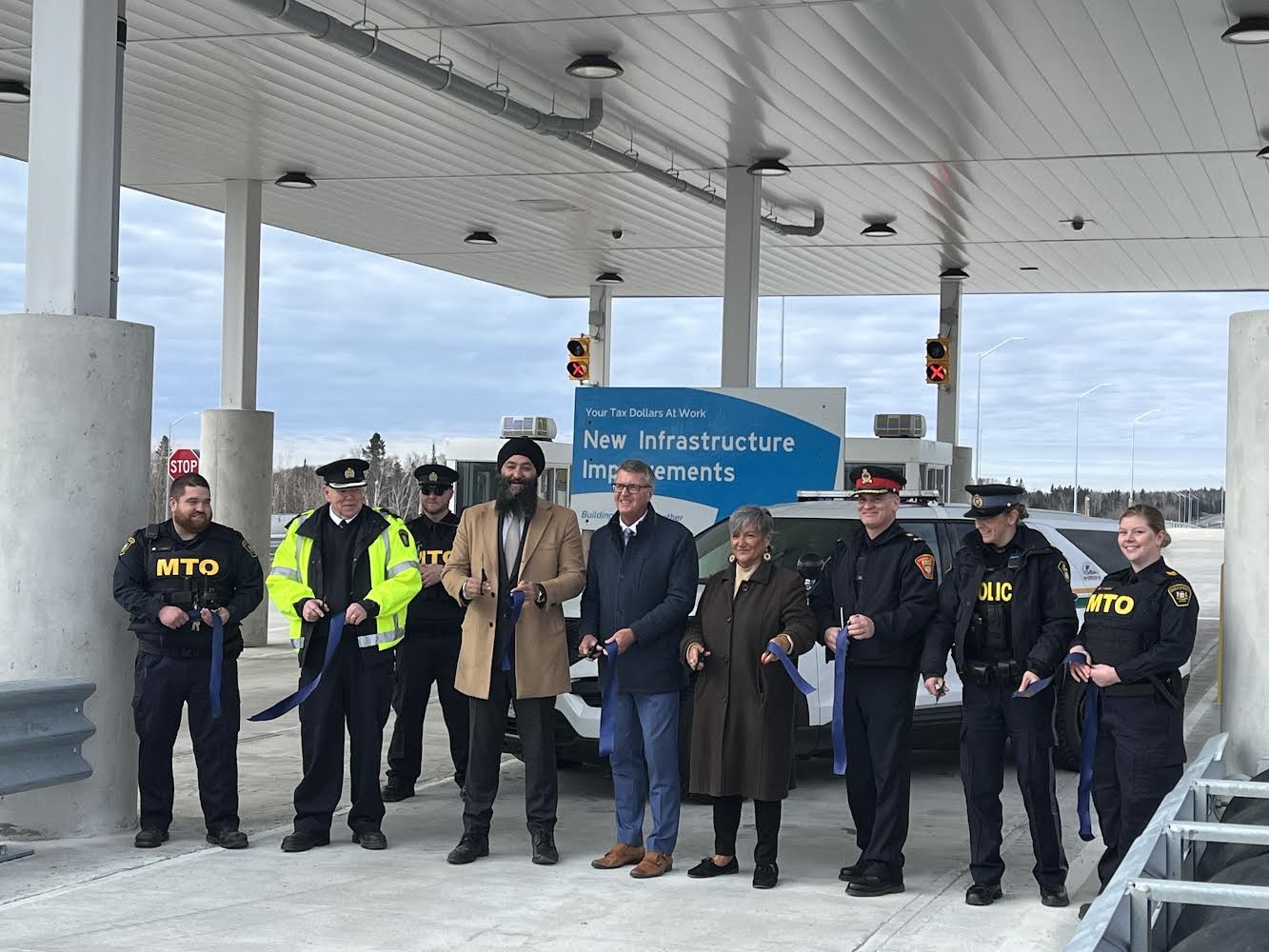
There were also numerous calls during the online discussion for increased Ministry of Transport (MTO) enforcement in the north. The government opened a $30-million commercial inspection station in Shuniah on Highway 11/17 near Thunder Bay last year with much fanfare.
The former legislators told me that it now sits unstaffed and shuttered. They added that MTO inspectors were brought from southern Ontario and housed in hotels to operate the scale for a while.
When the scale was operational, Vaugeois said that truckers would park and wait at the truck stop in Thunder Bay until the inspection station lights were turned off and then head back on the highway. She demanded that the Shuniah scale be operated 24 hours a day.
Vaugeois and Vanthof are keen to improve conditions and amenities for truck drivers along these highways, where in some places there is no safe spot to pull over for hundreds of kilometers. Truck stops are few and far between and there hardly are any rest stops. Washroom facilities on these routes are also dismal.
Highlighting concerns
The politicians are trying to diffuse the situation. Vanthof suggested making videos about the situation in the north and running advertising campaigns in the south to highlight their problems. He also said stickers on cars might help spread the word.
Vaugeois, Vanthof, and Guy Bourgouin, NDP candidate for Mushkegowuk-James Bay have released a plan listing what can be done to make the Trans-Canada Highway safer. A provincial election has been called and everything is on hold as candidates of all stripes focus on winning their seats.
Meanwhile, tensions will continue to simmer in the north. Car stickers, advertising campaigns and online discussions may not placate everyone as they struggle to make their voices heard in faraway Queen’s Park in Toronto. What if people take matters into their own hands and decide to protest or block the highway?
One more avoidable crash involving an 18-wheeler and a four-wheeler could result in more lives being lost. I wonder how many more lives it will take before things get safer for northern families and truck drivers who use their “Main Streets”.
Have your say
This is a moderated forum. Comments will no longer be published unless they are accompanied by a first and last name and a verifiable email address. (Today's Trucking will not publish or share the email address.) Profane language and content deemed to be libelous, racist, or threatening in nature will not be published under any circumstances.
Inspection stations are a very small part of the solution
In my opinion better snow removal more all season parking and one winter of experience in a smaller vehicle I’m the winter or coming out of a country like Russia to do winter driving the year in Canada along better testing would help Also put the money going into construction of the 413 into upgrade in north ont possibly a toll for trucks to help repay for the upgrades
This certainly needs attention. The entire stretch from NorthBay to MB border is a death zone. Having a regular operating scale house will not solve the problem. We need increased mobile enforcement (MTO, OPP) targeting tailgating trucks, speeders, and general reckless driving. There is also a huge lack of knowledge in the driver pool nowadays of even the basics of how a truck operates. I don’t understand how a person can sit through 103.5 + hrs of driver training and have so little knowledge. It’s obvious that schools are taking shortcuts. By the MB border Ontario recently completed a whopping 5 km stretch of 4 lane. Wow! Gonna have to really pick up the pace if they mean to be serious about it.
-
If you can not read or understand English, how would more hours of classroom training help?
I traveled both 11 and 17 for many years. The lack of services is disgraceful. In the summer 17 is choked with vacationers often pulling rv trailers or driving motor homes with little or no knowledge of how to do so safely (no training required). And now with the new batch of steering wheel holders driving trucks, all I can say is that I’m glad to be retired
Hi I’m a trucker since 1982 seen a lot of changes over the years. We didn’t even use log books back the let alone ELD. A lot of drivers were Farmer’s turned truckers or Mechanic turned truckers my dad drove ruck and then worked for the roads department. What I see know is truck drivers coming from. Other countries don’t speak or read English. Brought up in a way different culture way different way of driving. I think they shouldn’t be aloud to drive comercial vehicle till they have lived in Canada for at least 5 years are able to read English. And not get trained by someone who has been here for at least 10 years.
I see the same aggressiveness in our car drivers in a very big hurry..

It’s a Federal problem. These drivers AND COMPANY OWNERS just don’t commit unsafe motor vehicle acts in ON. They do it in all jurisdictions.
Lots of talk about being untrained, just because you are trained does not mean you will actually care about the law. If owners don’t care how does anyone else?
Severe consequences make you care. Companies that operate with a complete disregard for the law should be publicly named including ownership after being shut down. The US has a public system that sheds a significant light on the behaviours going on inside a trucking organization.
Canada is carved up by jurisdiction and no full free public visibility available 24/7.
No brokerage controls either.
It’s the Wild West. It’s embarrassing.