Northern Ontario MPPs introduce bill to address Hwy. 11, 17 dangers
A coalition of Northern Ontario MPPs and community leaders is calling on the province to take immediate action to improve safety on the region’s most critical roadways.
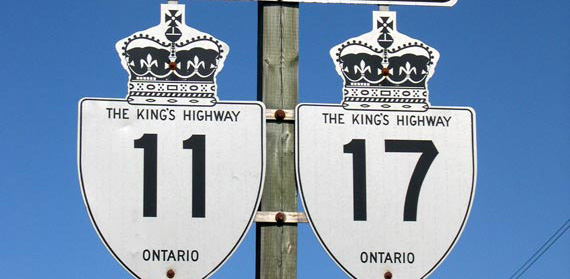
On June 4 at Queen’s Park, Mushkegowuk-James Bay MPP Guy Bourgouin introduced the Northern Highway 11 and 17 Safety Act, 2025, a Private Member’s Bill aimed at addressing the long-standing dangers on two of the province’s most vital and deadly corridors.
Joined by co-sponsors Thunder Bay-Superior North MPP Lise Vaugeois, Timiskaming-Cochrane MPP John Vanthof, Sudbury MPP Jamie West, and Nipigon mayor Suzanne Kukko, Bourgouin urged the Ford government to work across party lines to get the bill passed.
“It’s about keeping people safe. It’s about making sure Ontarians get home alive,” said Bourgouin during the news conference.
“Conditions have worsened. That’s why we’re back again, proposing concrete, common-sense solutions to protect northerners and all Ontarians who travel these roads every day.”
The proposed legislation calls for several key changes. It would require that weigh scales and truck inspection sites be staffed daily for at least 12 hours to hold commercial drivers accountable.
OPP enforcement
It also calls for OPP traffic enforcement to be sufficiently staffed to properly monitor the highways.
Bourgouin’s proposal would ensure truck drivers are tested and certified only by ministry examiners, helping eliminate cutting corners in driver training.
Finally, it aims to bring winter highway maintenance in Northern Ontario back under the direct management of the Ministry of Transportation, moving away from the current privatized model.
Bourgouin said that the bill builds on public consultations and years of advocacy, noting past efforts to improve winter maintenance, ban unsafe passing, and mandate winter driving training.
Traumatic incidents
Kukko made the trip to Queen’s Park to show her support for the bill. For her, the stakes are deeply personal.
“We’re at the crossroads of Canada, meaning you can’t cross Canada unless you go through Nipigon. So, our area sees a ton of highway traffic, commercial and non-commercial in all seasons,” she said.
Kukko recounted multiple traumatic incidents.
“Back before Covid, I had hired a young intern from Thunder Bay. Her fiance had just got a career job in our town, and their plan was to move to Nipigon,” she said.
“A week before she was to start, her partner died in a highway accident on his way to Nipigon to go to work.”
Near head-on collision
Kukko also experienced a near head-on collision with her children on Highway 11.
“As we turned a corner, a transport was passing on a solid line, and I had to swerve to avoid being hit head on. Then there’s the school administrator that never came back to work in our community because of the deadly accident she witnessed on her daily commute,” she said.
“And I won’t even go into the emergency workers who are off on extended leave because of what they have witnessed on our stretch of the highway.”
While the government has taken steps to increase safety on Highways 11 and 17, Kukko said there is “opportunity to do more.”
“How can I call myself an advocate for my community and not support this bill?” she said.
“This bill will prevent life-altering accidents. It will save lives.”
Winter maintenance
Vaugeois said much of the current danger stems from insufficient regulation of commercial trucking and privatized winter maintenance contracts that offer low wages and minimal benefits.
“Many new drivers are treated as indentured servants with little ability to demand driver and maintenance training,” said Vaugeois.
“If testing and licensing is done by ministry certified examiners, companies will be forced to make sure new drivers have the skills to pass the written and road tests.”
She added that the new $30-million inspection station in Shuniah is rarely staffed.
“And when it is, drivers can avoid the station by turning around at the Shuniah dump and waiting down the road at the Flying J until the station is closed again,” Vaugeois said. “This is why we need people staffing that station for at least 12 hours a day.”
By Marissa Lentz-McGrath, Local Journalism Initiative, TimminsToday.com

Have your say
This is a moderated forum. Comments will no longer be published unless they are accompanied by a first and last name and a verifiable email address. (Today's Trucking will not publish or share the email address.) Profane language and content deemed to be libelous, racist, or threatening in nature will not be published under any circumstances.