10% of Canada Post fleet now hybrid or electric

Ten percent of Canada Post’s fleet now consists of hybrid or electric equipment as the organization continues its journey to produce net-zero emissions by 2050. And its first 100 all-electric trucks are expected to be on the road by the end of 2023.
The fleet details are among highlights in Canada Post’s latest sustainability report, published June 23.
Last year, Canada Post’s board approved a billion-dollar investment into the net-zero plan, which aims to cut Scope 1 and 2 (direct and indirect) emissions in half by 2030.
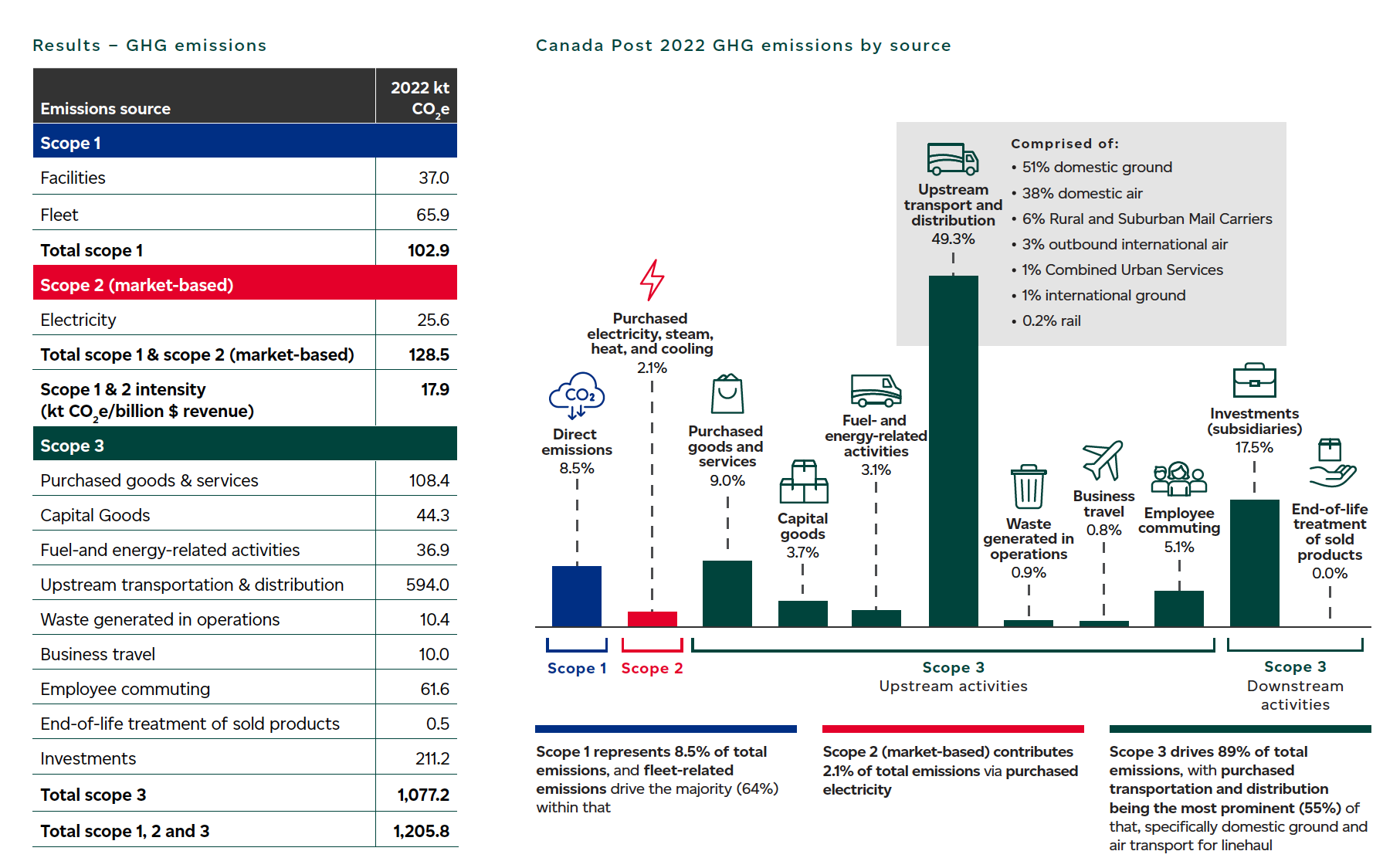
Compared to 2019, the Crown corporation has reduced its operational Scope 1 and 2 emissions by 6%, and the intensity of these emissions dropped 12% in 2022. Scope 3 emissions – those involving assets it doesn’t own or directly control — also decreased by 3% compared to 2021.
Another step is to fully electrify Canada Post’s fleet of over 14,000 vehicles by 2040. It started purchasing vehicles in 2022 and says it is on track to electrify half of its fleet by 2030.
Total energy consumption, meanwhile, fell by 2.6% from 2021 and by 6.3% from 2019, mainly because the fleet consumed less fuel.
Another part of the strategy includes engaging the company’s top suppliers and subsidiaries to adopt emission-reduction targets as well.
“Our target is to have 67% of our vendors (by spend), and 100% of our subsidiaries, adopt a science-based target by 2025,” the report reads.
Reducing waste, decarbonizing buildings
The environmental impact is not limited to emissions and electrification alone. Canada Post’s zero-waste policy also entails diverting at least 90% of non-hazardous operational waste by weight, and 90% of all construction and demolition waste by 2030.
Last year, out of over 40,000 tonnes of generated waste, the company diverted 67% (just below 27,000 tonnes) of waste from landfills, and installed 172 touchless water bottle filling stations.
Other near-term plans involve decarbonizing buildings and investing in renewable energy. Earlier this year Canada Post opened the 585,000-square-foot Albert Jackson Processing Centre, its first net-zero-carbon building.
Last year, Canada Post delivered almost 6.6 billion pieces of mail, parcels, and messages to more than 17 million addresses across the country.
ESG measures
Environmental, social and governance gains involved more than the environment alone.
For example, the total injury frequency rate improved 10%, and the lost-time injury frequency rate improved 15%, compared to 2021. Employees were provided over 829,000 hours of training, and the turnover rate in 2022 was 7.4%.
Canada Post also invested $1 million to expand and enhance postal services to Indigenous and northern communities.
Other 2022 initiatives included Indigenous cultural awareness training for employees,
launching the Anti-Racism and Anti-Discrimination Charter, and expanding inclusive practices to support the LGBTQ2S+ community.
Have your say
This is a moderated forum. Comments will no longer be published unless they are accompanied by a first and last name and a verifiable email address. (Today's Trucking will not publish or share the email address.) Profane language and content deemed to be libelous, racist, or threatening in nature will not be published under any circumstances.

Back in the Day ! ……….. A postal-route delivery person would take a local bus or their car to a Sub Station and sort their own mail for their Route. Then they would take a Bus to their assigned delivery Zone, deliver the mail to each house or commercial location. When finished with their deliveries, they would take a bus back to their Sub Staion and retrieve their car and go home.
We then saw that they were provided with Cell Phones and called a Taxi to go to their “Mail pick-up” location. The cab would take them to the location of their “walking route” and the Postal Person would deliver the mail door-to-door.
They would then use their Cell Phone to call a Taxi to take them back to their car location.
Where did all of those Cell Phones go ? How much did that programme cost?
Moving on ……… we then saw a Fleet of Mini Trucks ( 14,000 in Canada) on the roads being driven by Postal Delivery persons to and from their “walking zones”. How much does that programme cast?
And now we have another “Strike/Layoff” crippling our economy!
EVERY striker should be FIRED and a re-hire plan established for people that are willing to work.