Barrs says FMCSA to maintain aggressive pace to remove bad actors

Derek Barrs, head of the Federal Motor Carrier Safety Administration, said the agency will continue to pursue aggressive rules and enforcement actions as it works to remove bad actors from the trucking industry.
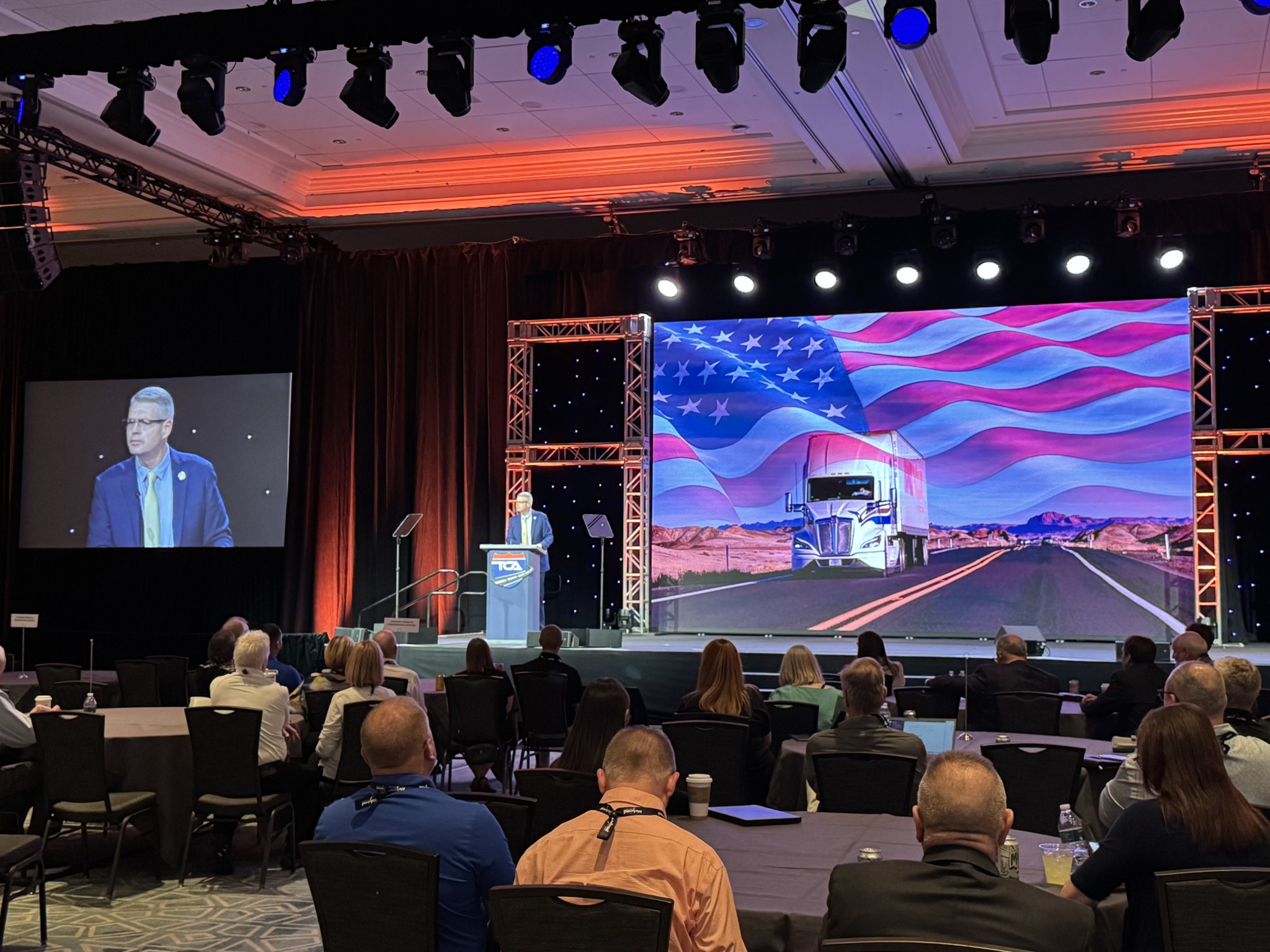
Addressing attendees at the Truckload Carriers Association annual conference in Orlando, Fla., on March 2, Barrs said this is both a safety imperative and a credibility issue for the industry.
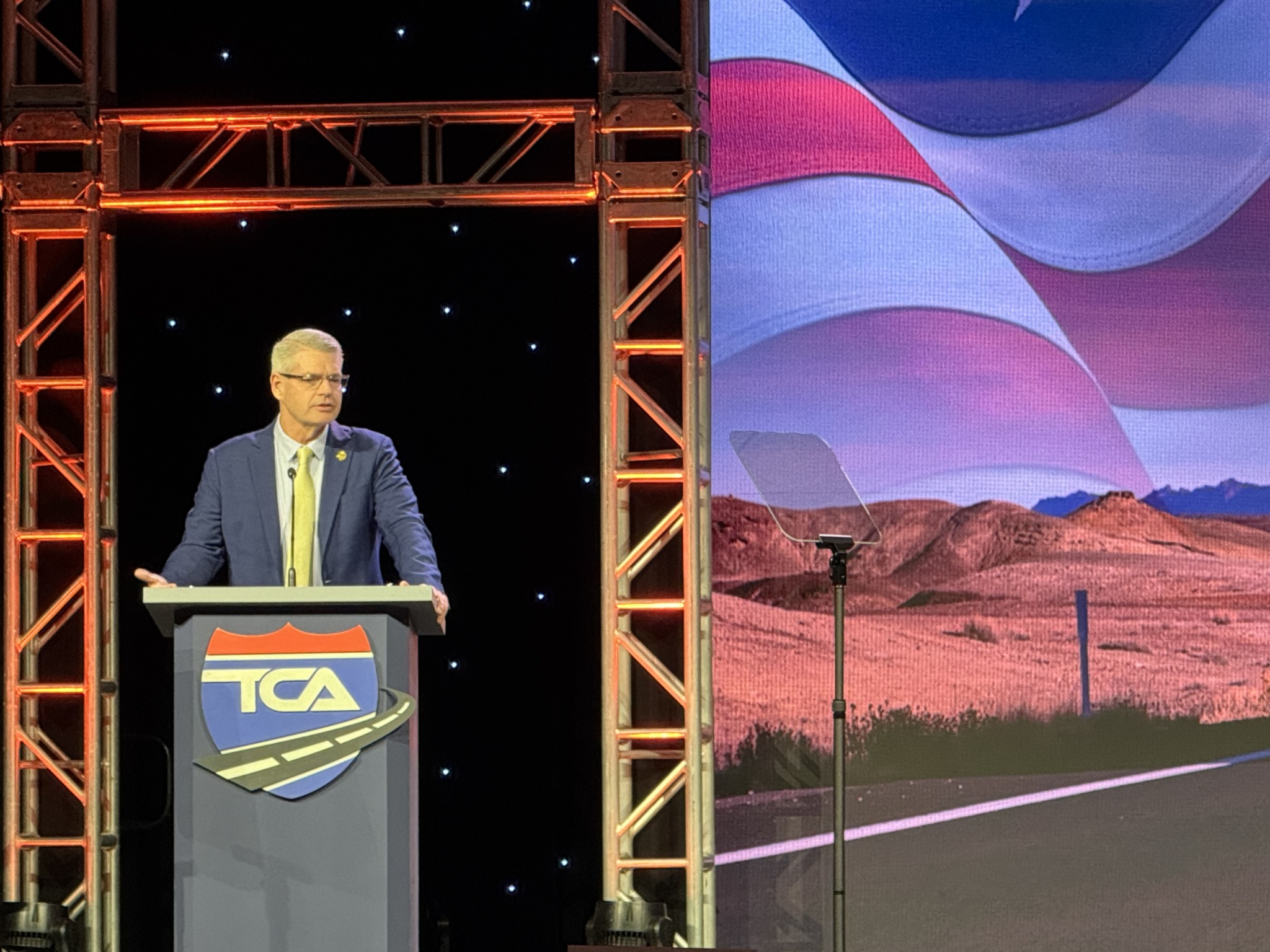
He referenced last week’s State of the Union address, in which President Donald Trump called on Congress to pass legislation to strengthen oversight and legal verification of commercial driver’s licenses. One day later, Sen. Jim Banks (R-Indiana) introduced legislation known as “The Dalilah Law.”
“Your CDL actually should mean something,” he said. “Your CDL should represent real training, real qualifications, real competency, and it must be issued in a way that is consistent, resistant to fraud.”
Stricter CDL standards
The agency continues to address inconsistencies in non-domiciled CDLs and discrepancies in documentation and identity verification processes across states. Last month, FMCSA updated a final rule that restricts the ability of non-citizens to obtain a CDL. The rule has been challenged in court.
FMCSA is also continuing its cleanup of the entry-level driver training registry. So far, Barrs said, more than 7,000 training providers have been removed from the registry after failing to meet federal requirements.
“Let me be clear, this is not about punishment. This is about protecting this industry,” he said. “The truckload sector is too important to allow weak standards.”
He added that FMCSA is also cracking down on inconsistencies in English-language proficiency enforcement, emphasizing that drivers must be able to read road signs, understand safety instructions and communicate effectively during inspections.
“When that standard is applied inconsistently, it creates risk, not only to the public, but to professional drivers operating alongside someone who may not fully understand critical instructions,” Barrs said.
Technology, data modernization
FMCSA is also working on the modernization of its legacy data systems and ensuring that oversight ties in with technological changes in trucking.
That includes stricter vetting of electronic logging devices. According to Barrs, more than 80 ELDs have been removed from the agency’s approved list in the past six months. But around 400 new ELD applications have been received.
“I’m not sure where all these people come from [but] we’ve not allowed the first one into the system through our own internal vetting process,” he said.
New HOS pilots
Barrs also discussed two hours-of-service (HOS) pilot programs designed to evaluate whether added flexibility can improve driver well-being and increase operational efficiency without compromising safety.
The first pilot will test allowing participating drivers to pause their 14-hour on-duty driving window for between 30 minutes and three hours, enabling them to avoid congestion, wait out unsafe weather conditions or rest when fatigued without losing productive drive time.
The second pilot explores alternative sleeper berth splits – “6/4” and “5/5” configurations — to determine whether these rest patterns better reflect real-world sleep behavior while maintaining or improving safety outcomes.
“This is a responsible, data-driven evaluation, and we will collect and analyze safety, fatigue, and operational data to determine whether these flexibilities enhance driver safety,” Barrs said. He added that the FMCSA is seeking 18 commercial drivers to participate in the pilot projects.
Aggressive regulatory actions
Barrs said the agency’s enforcement will extend beyond training and technology oversight and will include fraudulent registrations, shell or “ghost” companies, and so-called chameleon carriers that reconstitute under new identities to evade scrutiny.
“We are going after them, taking them out of the system,” Barrs said, describing what he called “webs of investigations” tied to companies exploiting regulatory gaps.
At the moment, Barrs said the FMCSA is pursuing approximately nine regulatory actions, ranging from English-language proficiency standards and CDL testing to new-entrant requirements.
“We strengthen safeguards, we clarify state expectations, we reinforce verification requirements, because if loopholes exist, bad actors will find a way to get into them, as you all know. And when bad actors exploit the system, good carriers like yourself pay the price,” Barrs told the attendees.

Have your say
This is a moderated forum. Comments will no longer be published unless they are accompanied by a first and last name and a verifiable email address. (Today's Trucking will not publish or share the email address.) Profane language and content deemed to be libelous, racist, or threatening in nature will not be published under any circumstances.