Used tires pile up across Ontario while fleets, customers keep paying recycling fees

Ontario’s decision to lower mandatory tire recycling targets has created a system that can remain fully compliant on paper while allowing ‘millions’ of used tires to pile up across the province, all while trucking fleets and other Ontario customers continue to pay recycling fees on every new tire bought.
Less than a year after the province reduced its tire recovery targets from 85% to 65% in January 2025, the Ontario Tire Dealers Association (OTDA) began sounding the alarm about used tires piling up at dealer, commercial, and municipal sites.
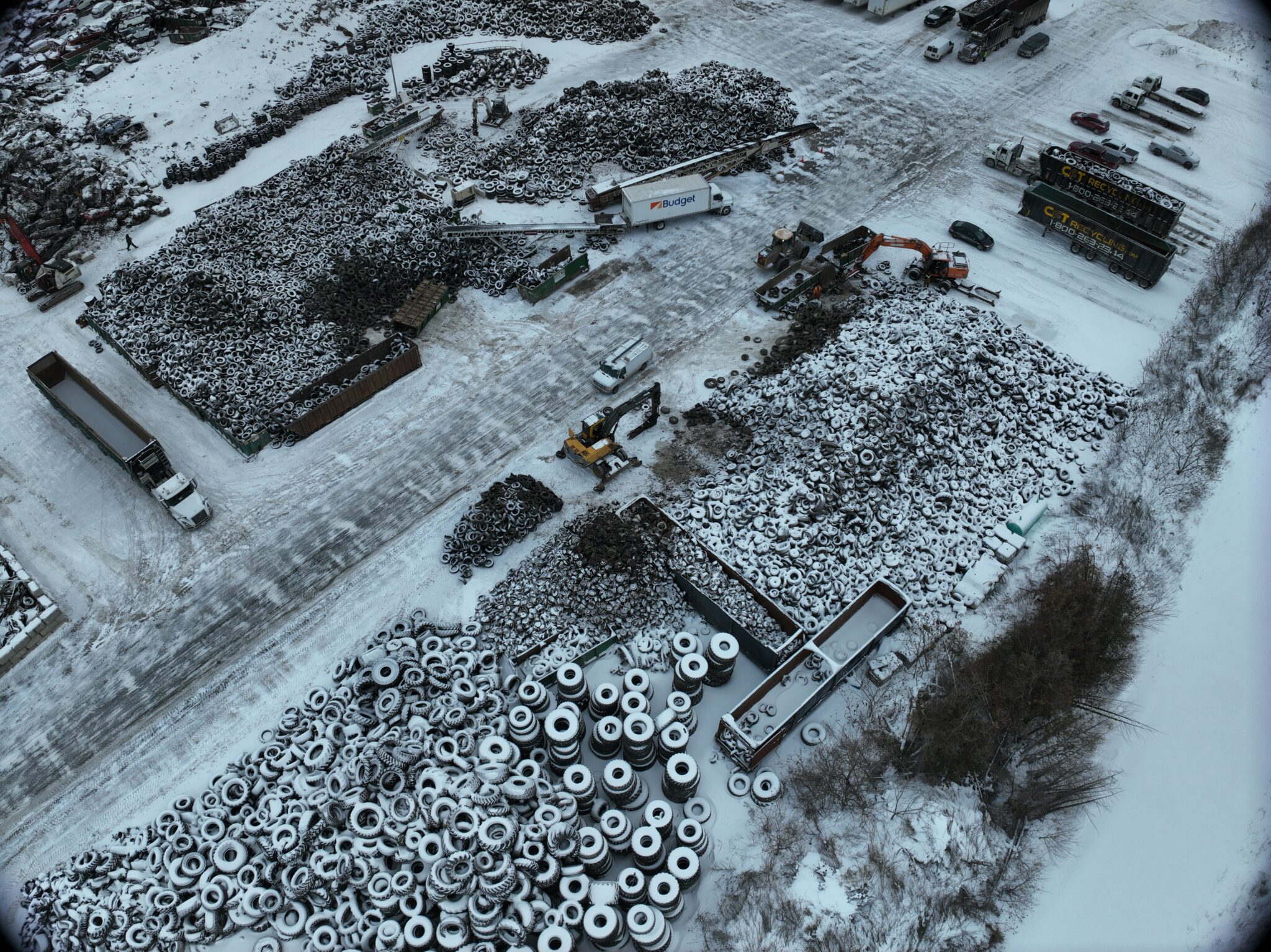
Adam Moffatt, executive director of OTDA, told trucknews.com the issue is becoming more acute as tire dealers approach the spring seasonal changeover, when tire volumes surge and storage space shrinks, while large stockpiles form at specific locations.
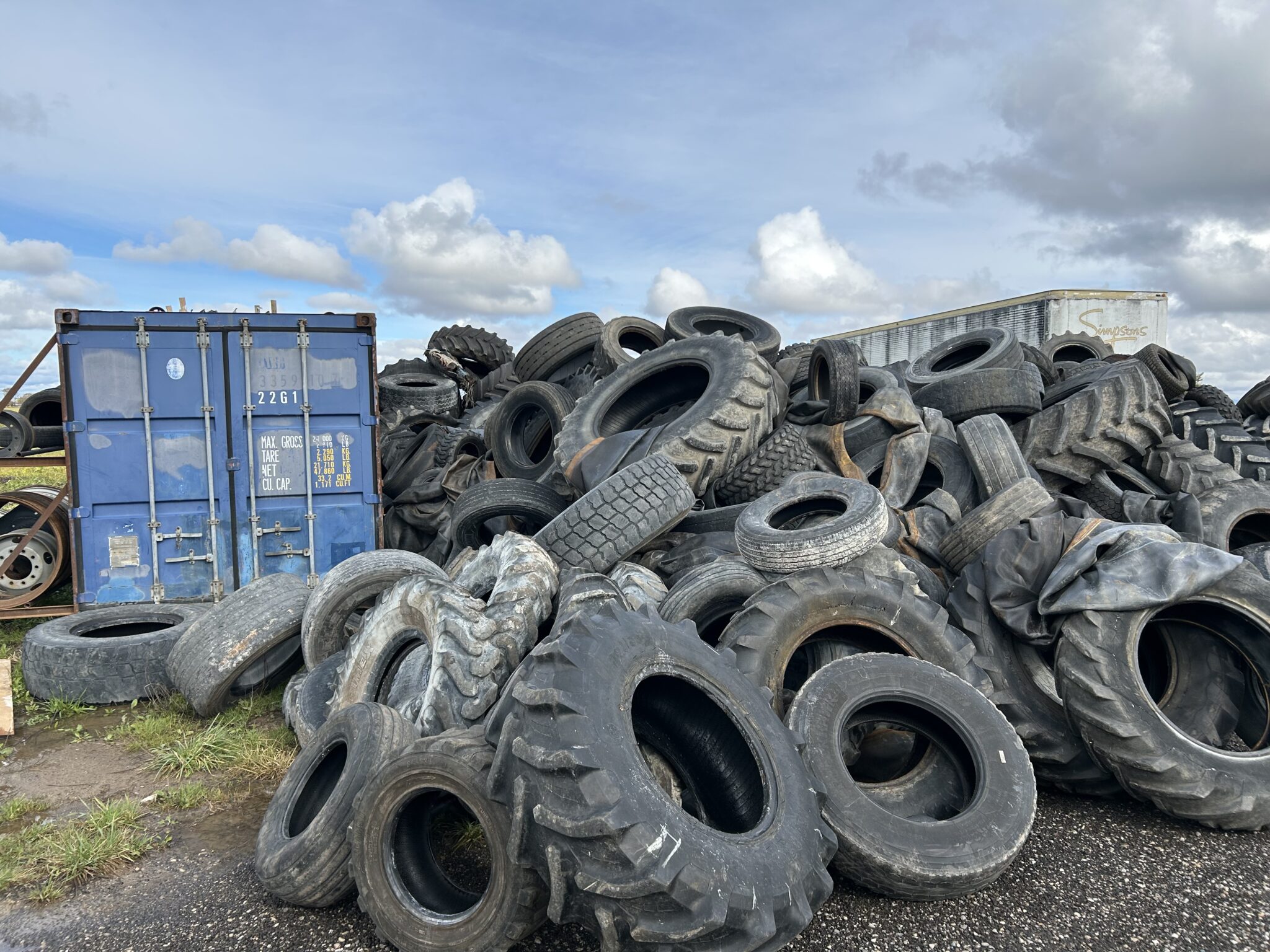
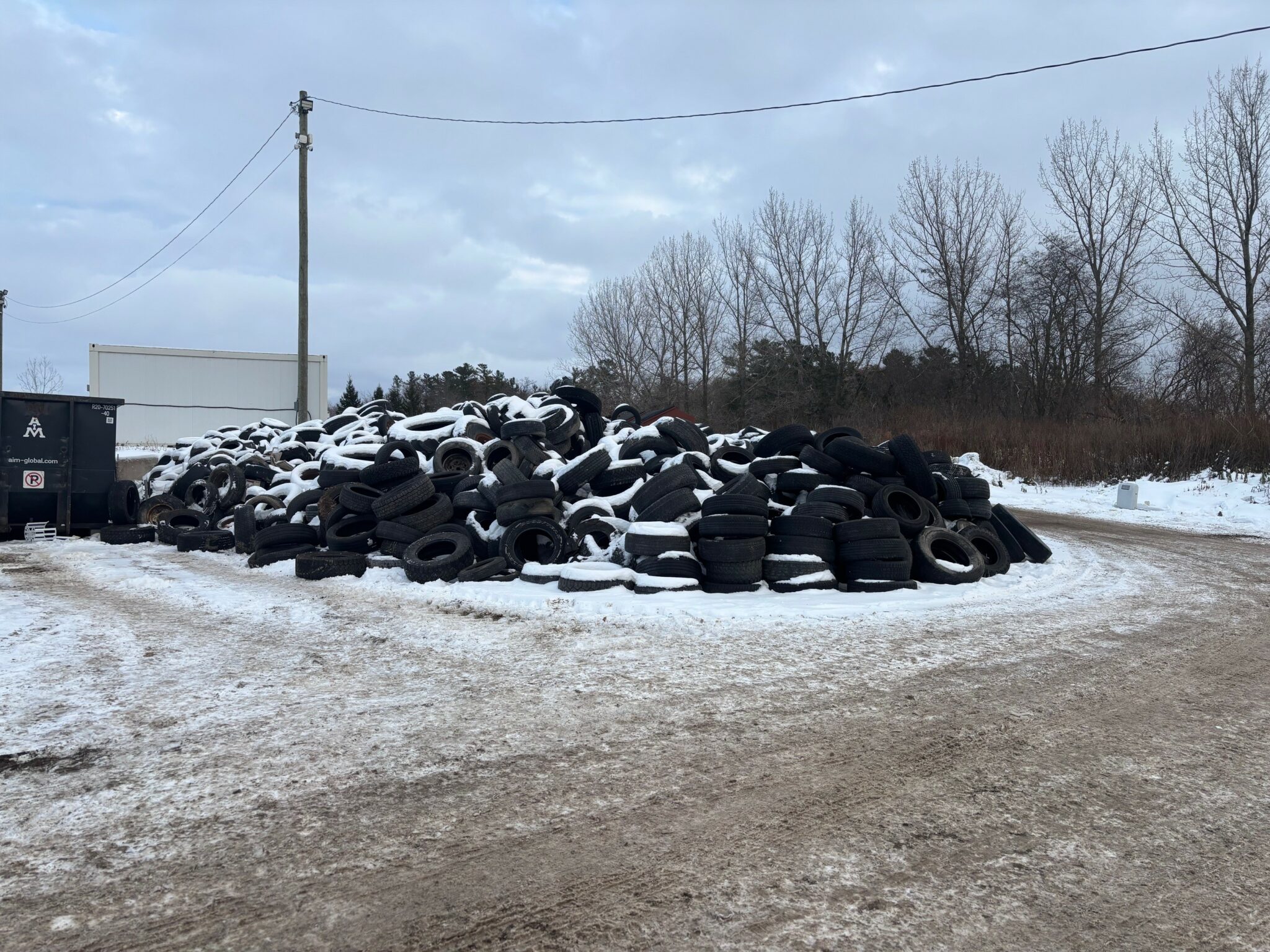
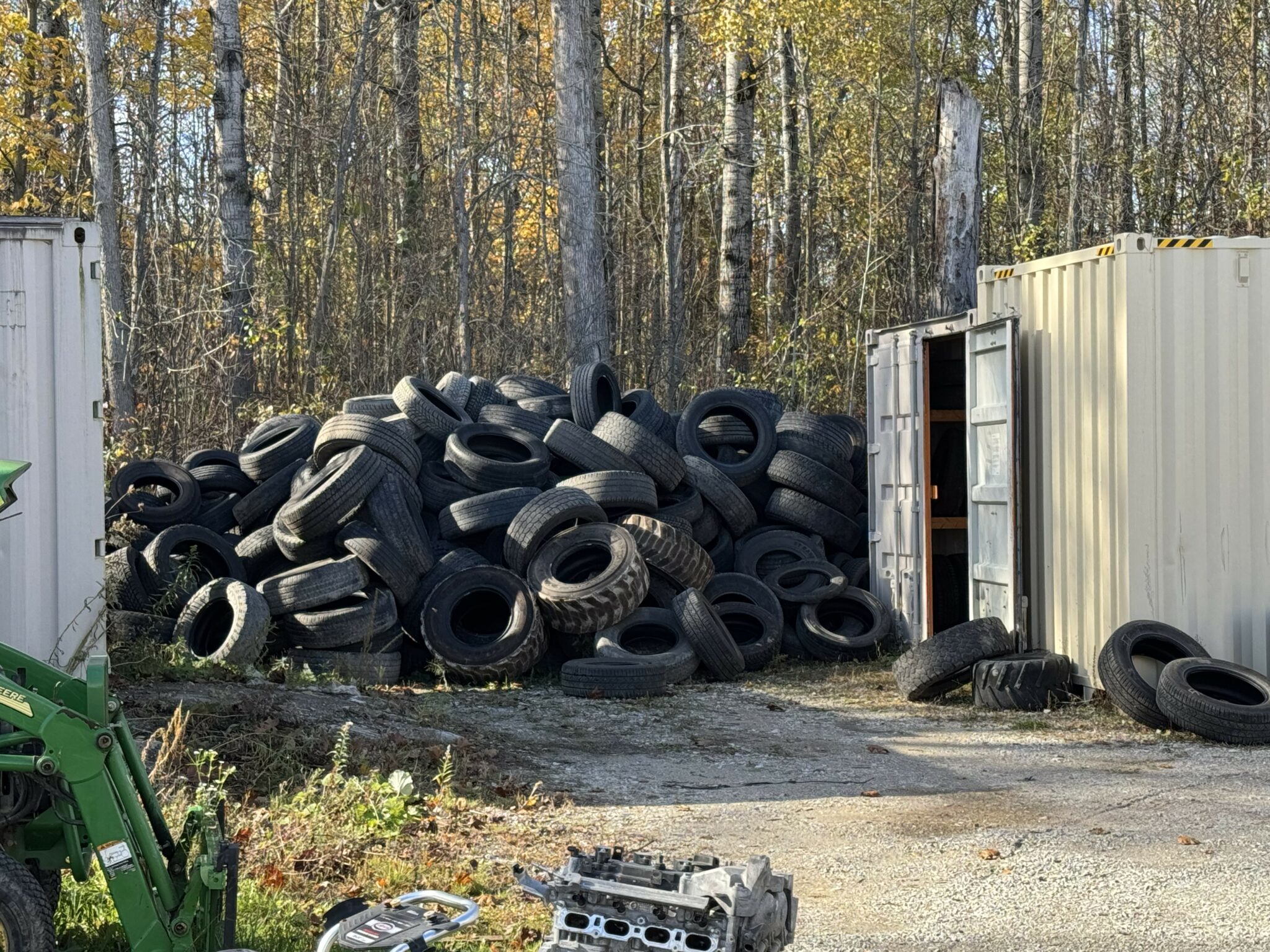
A site in Stittsville is estimated to contain more than 600,000 tires, and another stockpile is reported in the Surrey area, of ‘at least the same size’, Moffatt said, adding those locations represent only the most extreme cases, while there are also smaller piles, ranging from a few hundred to several thousand tires.
“So as of today, in January, we’re still seeing a backlog of tires,” Moffatt said. “Tire dealers, collection sites, municipalities are reporting daily that they’re either not receiving tire collections or their collections they are receiving are just inadequate. They’re not keeping up with the volumes.”
He said the situation has been worsened by how existing stockpiles are being handled.

“These massive stockpiles that were identified are now taking priority to be shipped into the recycling plants, which is pushing off the haulers who are still trying to actively collect today’s tires,” Moffatt said.
On Jan. 15, a coalition of tire dealers, recyclers, and environmental organizations sent a letter to the Ministry of the Environment, Conservation and Parks (MECP) calling for changes to Ontario’s used tire regulation. The group urged the province to revisit recovery targets, require more consistent tire collection throughout the year, and strengthen oversight to prevent stockpiling.
“We need the minister’s office to step in to enforce that the tires are immediately picked up… The threshold of 65% is clearly too low,” Moffatt told trucknews.com.
He added that OTDA raised red flags immediately when the province lowered the recovery threshold to 65%.
“To be very honest, we are not sure what led to the minister or the MECP making those adjustments. We don’t know who was lobbying for it. We don’t know what exactly was said, we don’t even really know what data was used when looking at the regulation to make the determination of why it should go from 85% to 65% threshold. That information just hasn’t been provided,” he said.
“What was the initial root cause that even created the need for regulatory reform when, effectively, the market was collecting all the tires pre‑2025?”
A ‘systematic issue’
Ontario operates under an individual producer responsibility model, where companies that import tires into the province are responsible for collecting and recycling them at end of life. Most producers meet that obligation by contracting with a producer responsibility organization (PRO), which arranges tire collection, hauling, and processing on their behalf.
Moffat explained that under the current regulation, each producer — either directly or through a PRO — must meet its recovery targets over the course of the year. Once those targets are met, there is no requirement in the regulation to continue collecting additional tires.
There are six PROs in Ontario, though most tire volume is handled by just two. One of those is eTracks, and its vice president of communications and sustainability, Melissa Carlaw, said the company’s customers account for just under 70% of Ontario’s total tire recovery volume.
And eTracks says it continued collecting tires through the end of the year and exceeded its recovery obligation by about 20%.
“As a not-for-profit, it is not reasonable to expect eTracks to backfill the provinces tire recycling needs in the absence of other PROs – with out any coordination mechanisms in place – we collected 20% more than what was required,” Carlaw wrote. “We continued to collect to the end of the year in spite of the systemic issues that created backlogs in the provinces tire recycling network. We plan to once again exceed our targets in 2026.”
Moffatt says the reports of slowed or suspended collection began surfacing months earlier, particularly among PROs servicing large portions of the market. In summer, OTDA members first heard that certain PROs were announcing they were hitting their targets.
According to Moffatt, one of the PROs servicing a large share of Ontario’s tire volume suspended collection and processing activities in August 2025 after reaching its recovery threshold. By November, he said OTDA was hearing from dealers and collection sites that other PROs were scaling back operations as they approached their annual targets.
By December, the association began receiving reports of 500,000-plus tire stockpiles forming.
Recycling fees charged anyway
And as these piles grow, customers – including fleets – keep paying recycling fees on every tire bought.
“How are we still charging for a program when tires were not being collected and recycled?,” Moffatt said.
Recycling fees are set by PROs to cover collection and processing costs and are embedded in the price of new tires sold.
Before the most recent increase, recycling fees were typically about $4.50 per passenger or light-truck tire and roughly $14.50 per semi-truck or medium-duty tire. As of Jan. 1, 2026, one of the large PROs increased those amounts to about $5.00 per passenger tire and $15.00 per semi-truck tire, Moffat says.
Capacity is not the issue
When it comes to recycling itself, there are no issues with capacity.
This is according to Kyle Gregoire, president and CEO of Windsor-based recycler Granulum, who said Ontario’s processors collectively have the ability to handle the province’s tire volumes when material is moving through the system as intended.
“We have lots of processing capacity,” he told trucknews.com. “If we all got the tires we needed every day, there would be no waste tires in the province.”
Granulum is a smaller processor that handles passenger tires because of the size of its shredder, but says its processing capacity is about 5,000 tires per day, or roughly 20,000 tires per week — volume Gregoire said he needs consistently to keep the facility running efficiently.
During periods of disruption in 2025, he said Granulum had to source scrap rubber material from outside Ontario, including from the U.S., to maintain steady throughput even as used tires were reportedly piling up elsewhere in the province.
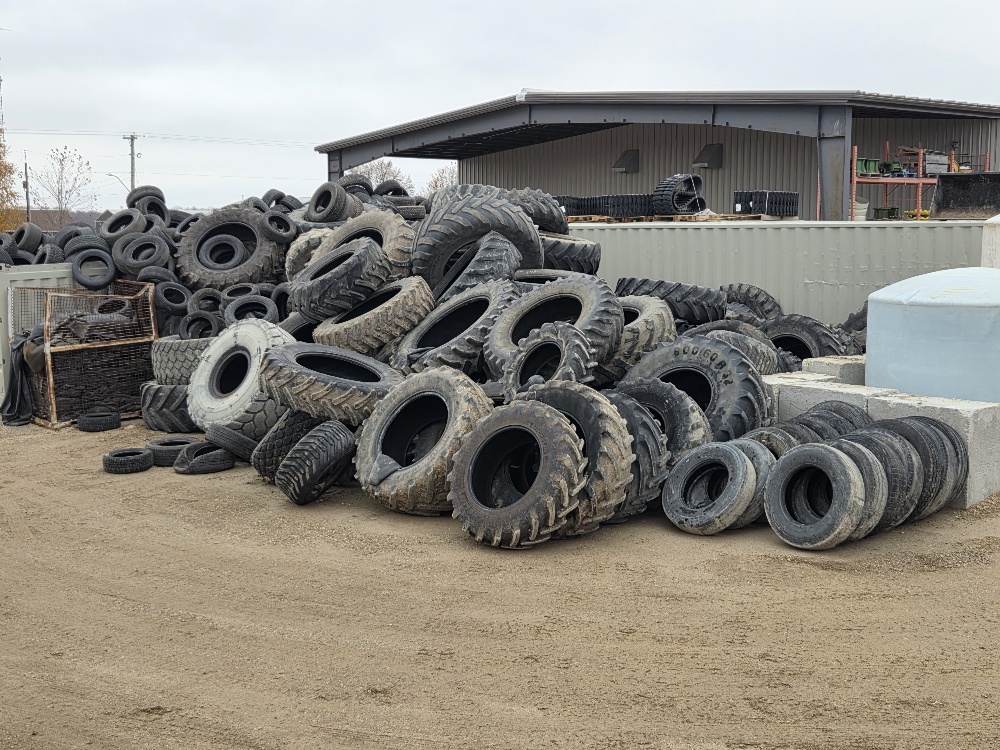
He reiterated Ontario’s processing capacity, estimating that current backlog could be processed within weeks under normal operating conditions, particularly by larger processors, if operating at full capacity.
“I’ve only seen one photograph of the pile in Stittsville. So I don’t know how many tires are there — but even if I estimated — let’s say there’s 200,000 tires there. Well, I can process that myself in 10 weeks. And I’m probably the smallest processor in the province,” he said.
OTDA’s Moffatt, meanwhile, said that even if government action were taken quickly and processing capacity fully reopened, clearing all the existing backlog would likely take several months.
“If we’re sitting on a couple of million tires right now, it would probably take three to four months to have the entire backlog cleaned up,” he said. “One of the big triggers is one of the larger recycling plants in Ontario that closed down… From what we understand, that site requires 30 to 45 days to open back up.”
Not all tire stockpiles are visible
And while recyclers focus on processing capacity, tire dealers and service networks are left managing where used tires physically sit when collection slows.
Christine McClay, president of Tirecraft Ontario, told trucknews.com that while the current disruption does not affect the retreading capabilities and capacities, it has created challenges tied to tire flow and storage.
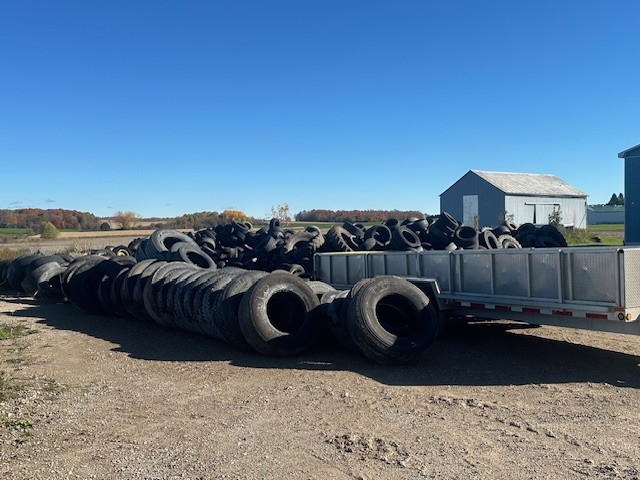
She says that the accumulation of used tires is not always immediately visible, explaining it’s because many dealers and service locations are storing them in trailers rather than in open piles.
She heard anecdotal stories about tires parked in trailers at fleet yards and service locations. “You don’t necessarily know what’s in those trailers when you go by a fleet yard,” she said.
McClay added Tirecraft itself currently has several trailer loads of rejected tires sitting at its facilities — roughly five full trailers.
“Now we’re running out of trailer space,” she said. “I’m gonna say we have a few thousand [tires] sitting there at least.”

McClay added, “That’s scary when you have a program that’s there, when you have processors, there is availability, the fact that there are these plants that are staying idle, not taking the tires in… We’re gonna end up with an environmental issue.”
She pointed to risks such as mosquito breeding as snow melts and warmer weather arrives, as well as the possibility of tires being shipped out of province or to the U.S. for disposal.
“That’s not the intention of the program,” she said.
Looking ahead
Moffatt says the risk of recurring stockpiles going into 2026 is real, explaining that tires left uncollected in 2025 will still count toward this year’s recovery targets once they are eventually processed.
“If there’s several millions of tires that we suspect in the market at the end of December 31, 2025, those tires will likely be applied against all of these producer and PRO targets this year,” he said, adding that PROs might again meet their recovery targets as early as by mid-summer.
“Without changes to the regulation, these problems will reoccur over and over again…If we don’t get on top of this this year, by the time we get [to] 2027 it will be a much different landscape.”
When asked if OTDA has heard reports of dealers renting additional storage space or passing costs on to fleets, Moffatt said no. But he does not rule out that possibility if the situation persists, especially given the size and storage demands of commercial truck tires.
Have your say
This is a moderated forum. Comments will no longer be published unless they are accompanied by a first and last name and a verifiable email address. (Today's Trucking will not publish or share the email address.) Profane language and content deemed to be libelous, racist, or threatening in nature will not be published under any circumstances.

Complete and total incompetence by the provincial government on this. If you only require the tire manufacturer/importer to collect 65% of the used tires, what the hell did you think would happen?? Most companies are not going to pay to collect the tires if the regulator does not make them. Idiocy.