Truck capacity tightens as freight spending outpaces shipments: U.S. Bank

Trucking capacity continued to tighten during the second quarter, pushing freight spending higher even as shipment volumes declined, according to the latest U.S. Bank Freight Payment Index.
The national shipments index fell 1.1% from the first quarter and was down 2.8% year over year, while the spending index climbed 6.4% sequentially and 28.1% from a year earlier, suggesting higher transportation costs despite soft freight demand.
U.S. Bank attributed the trend to a shrinking carrier base following more than three years of weak freight conditions, along with stricter enforcement of federal safety and compliance rules. The report cites increased enforcement of English-language proficiency requirements, revocations of non-domiciled commercial driver’s licenses, greater oversight of driver training schools, and a crackdown on cabotage violations involving Mexican B-1 visa holders as factors that have reduced available capacity.
The report also noted that a May U.S. Supreme Court ruling clarifying brokers’ potential liability in carrier selection may have prompted some brokers to tighten carrier qualification standards, although the second-quarter impact appeared limited.
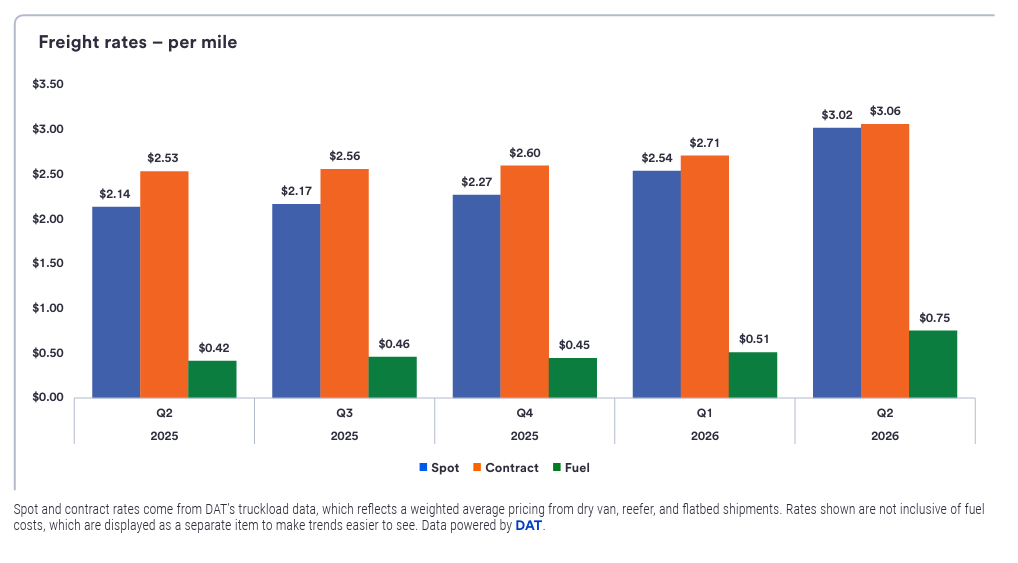
While fuel costs increased shipper expenses, U.S. Bank said tightening capacity was the primary driver behind rising freight costs. DAT Freight & Analytics reported average spot rates rose 18.9% during the quarter to $3.02 per mile, while contract rates increased 13% to $3.06 per mile. Average fuel costs climbed to 75 cents per mile, up 47.1% from the previous quarter.
Regionally, the Southwest showed the widest gap between freight volumes and spending. Shipments declined 20.2% year over year while spending increased 39.9%, a trend the report said may reflect the impact of cross-border enforcement actions and tighter capacity. The West recorded the strongest shipment growth, with volumes up 5.5% year over year, supported by import activity, rebuilding following Southern California wildfires and stronger housing construction.
Despite soft freight demand, the report concludes that many carriers are benefiting from reduced competition for available freight as industry capacity continues to contract.

Have your say
This is a moderated forum. Comments will no longer be published unless they are accompanied by a first and last name and a verifiable email address. (Today's Trucking will not publish or share the email address.) Profane language and content deemed to be libelous, racist, or threatening in nature will not be published under any circumstances.