Does your air system have a moisture problem?

After months of battling freezing temperatures and ice, truck air systems will soon face another challenge: air laden with moisture on hot, super-humid summer days.
What begins as harmless water vapor in the intake air can quickly turn into a gunky mess of oily sludge that gums up narrow air channels and restricts the movement of various electromechanical components.
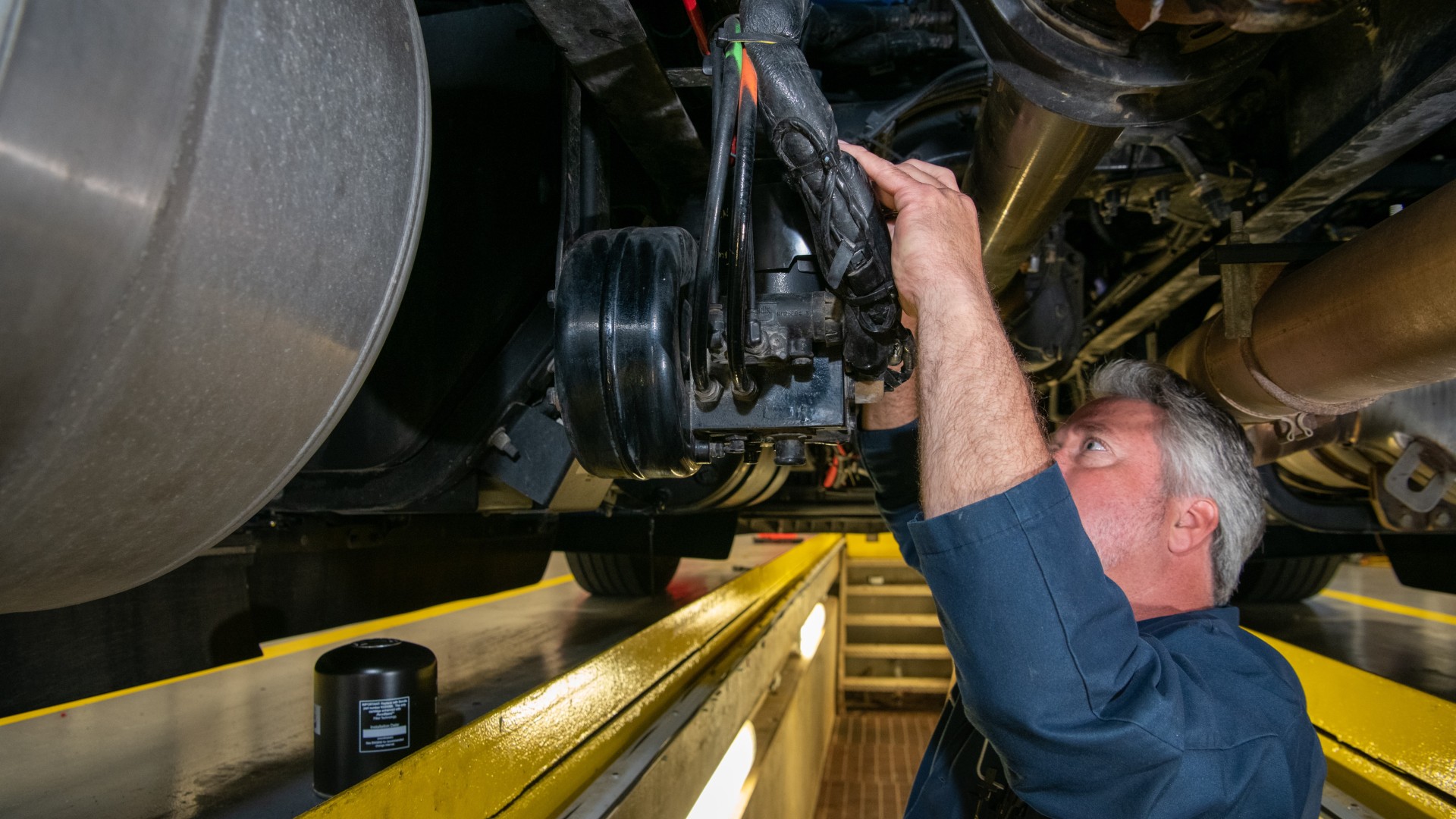
Several critical truck systems, not just brakes, need clean, dry air to perform. The list includes fan clutches, emissions systems, suspensions, tire inflation systems, and, of course, automated manual transmissions. Fleets could probably live with a slow-filling tire inflation system, but an automated manual transmission (AMT) that won’t shift? That’s operational Armageddon.
Air systems aren’t complicated, and they’re consistently reliable. Consequently, they don’t get much love from the shop until it’s desperately needed.
An engine-driven air compressor controlled by a pressure-sensitive governor pumps air through a hose to an air dryer. Once past the air dryer, it travels to the supply tank — sometimes called the “wet tank.”
From there, compressed air passes onto either the primary or secondary air tanks before working further downstream into those tiny passages and orifices in brake valves and other electromechanical actuators.
Between the compressor and the wet tank sits the air dryer, so called because its job is to remove moisture and other contaminants from the hot, freshly compressed air coming from the compressor.
This happens in two phases. As the air enters the air dryer, it passes through an oil separator where liquid oil and solid particles are collected prior to purging. Air then passes through a desiccant cartridge filled with desiccant beads which adsorb water vapor (the vapor sticks to the surface of the beads).
During the purge cycle, the oily muck is ejected from the bottom of the air dryer, while a blast of clean dry air is sent back into the desiccant cartridge to clean the surface of the beads of contaminants. In a perfect world, this cycle repeats endlessly and the truck’s air systems get only clean, dry air.

Water or water vapor?
Several factors can influence the effectiveness of this process.
- Multi-axle trailers with air suspensions consume much more air than typical five-axle combinations, increasing the workload on the compressor and the air dryer, although these components are usually sized and spec’d for the application.
- Warm air retains more moisture than cold air, so hot, humid weather introduces more moisture into the system, forcing the air dryer to work harder.
- Aging compressors can pass more oil into the discharge line, while overused desiccant cartridges become less effective at removing moisture from the compressed air. Desiccant cartridges fouled by oil from the compressor are even less effective.
- Warmer weather provides less opportunity for air to cool en route from the compressor to the air dryer, so the air contains more vapor than actual water. Air dryers are more effective at removing water than water vapor.
- The length of the hose running from the compressor to the air dryer impacts how much cooling can occur between the two. Longer is generally better, to a point.
The length of the line from the compressor to the air dryer doesn’t change how much water vapor is in the air, but it absolutely changes how much of that vapor turns into liquid water before it reaches the dryer.
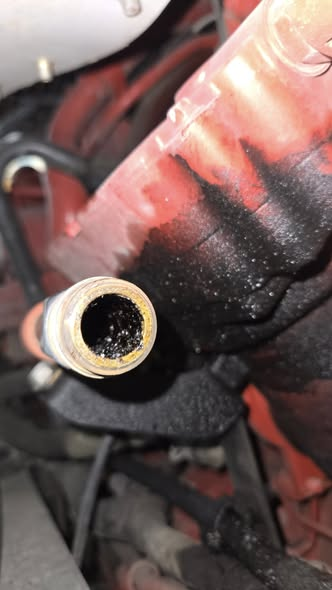
If enough water vapor passes through the air dryer, it will condense instead in the so-called wet tank. And in a system fouled with oil, we now have a mixture of oily water and sludge sitting in the wet tank, one step closer to the primary and secondary tanks — and all those tiny air passages we mentioned earlier.
“Rule number one is keeping moisture, oil aerosols, and other contaminants out of your air system to the greatest degree possible, since they present a corrosion hazard to some of the crucial components within,” said Jason Kolecki, Bendix director of marketing and customer solutions, air supply and drivetrain. “Oil in particular can deteriorate seals, cause leaks, and damage valves and brake chamber diaphragms. There really is a lot at stake.”
Spring cleaning
The air system needs a bit of attention after a long, harsh winter, before subjecting it to a hot, humid summer.
It’s been exposed to a lot of thermal cycling, where it’s hot one day and really cold the next day. It’s been sprayed with all manner of road treatments like road salt, sand, calcium chloride, and even beet juice.
It’s more than likely that after a winter or two, some corrosion or oxidation may have set in, possibly compromising mounting brackets, electrical connections, etc.
A good visual inspection of the air system and all its components is a smart place to start.
Next, chock the wheels and charge the system to full operating pressure and release all the parking brakes. Shut off the engine and place the transmission in gear and walk around the truck listening for audible air leaks.
Then, open the drain cocks on all the tanks, including trailers, and assess the amount of water that drains out. A quick pull on a cable drain isn’t enough. Remove the drain cock if necessary, but let all the water drain out.
If very little water or oil is present (normal) and the desiccant cartridge is within its replacement interval, you’re good to go.
If you have an oily mess oozing from the wet tank, you have a problem that needs attention.
Note the condition of the air discharging from the primary and secondary tanks, as some of the mess from the wet tank may have migrated further into the system. If it’s mucky too, you may need to manually clean the air system and check the brake valves for contamination.
According to Bendix, contaminated valves can affect brake performance.
Recommended Practice 617A – Contaminant Elimination Procedure for Tractor, Trailer or Dolly Air Brake Systems, published by the ATA’s Technology & Maintenance Council, offers a step-by-step procedure for eliminating contaminants from air brake systems.
The AMT conundrum
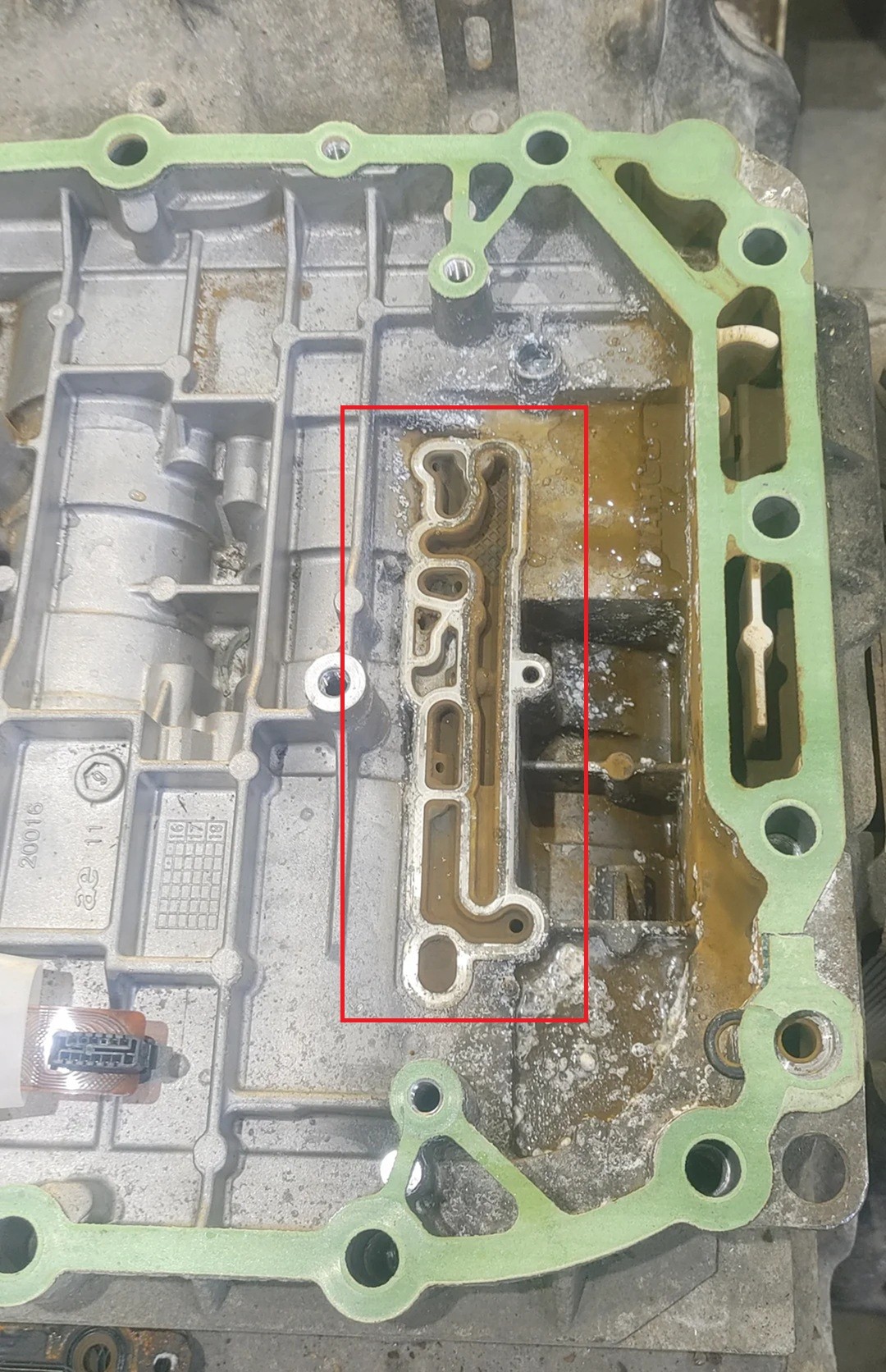
Some automated manual transmissions appear to be particularly vulnerable to contaminated air. The shift actuators on most models are electro-mechanical but use air to execute the gear change. If the air inlet port on the shift actuator is clogged or fouled, or if the internal channels are fouled, the actuators may shift slowly or not at all.
The problem seems to stem from excess water in the air system, often contaminated with oil. While the problem is recognized, there is a lot of finger-pointing going on. Fleets accuse the suppliers of inadequate design, while the OEMs accuse the fleets of improper maintenance.
Some have suggested the transfer hoses from the compressor to the air dryer are too short, not allowing adequate cooling before the air reaches the air dryer (see above: water vs. water vapor).
“The air coming out of the compressor is really hot, and the air dryer suppliers will tell you they need that air to have cooled off before it hits the air dryer,” says Geoff Selby, president of D&D Instruments, makers of the Expello automatic drain valve. “There’s some suspicion that the shorter hoses don’t allow that to happen.”
The OEMs charge that fleets are not adequately maintaining their air systems (not changing filters and desiccant cartridges frequently enough, or failing to utilize drain valves properly), allowing contaminants to enter sensitive parts of the system.
Regardless of the root cause of the problem, water and other contaminants are fouling the shifting mechanisms in some AMTs. Nobody disputes that. Regular daily maintenance should include draining the water from the truck’s air tanks. That responsibility usually falls to the driver.
In the drivers’ defense, accessing the air tank drain cocks on some truck models is nearly impossible because of the side fairings. In some cases, the cords on the drain cocks are missing. And in other instances, drivers just don’t bother with this necessary daily maintenance task.
There’s also an argument that spring-loaded drain cocks with pull cords may take too long to adequately drain the tank, with a brief tug on the cord allowing only a small amount of water to escape.
For trucks with AMTs, Bendix suggests installing an extra oil-coalescing filter immediately downstream of the air dryer.
“Our PuraGuard QC oil-coalescing filter serves as an extra layer of filtration protection, while including a bypass valve that permits the air supply to continue through in the unlikely event that the filter becomes clogged,” advises Kolecki.
Selby says automatic drain valves ensure water and oil are drained from the air tanks automatically, taking the drivers out of the loop.
“Our Expello electronic drain valve replaces the manual drain on a compressed air tank,” he says. “It opens for one second every five minutes using the pressure in the tank to blow out water and oil that has collected in the tank. It runs on 12 or 24 volts, it never clogs, and it’s maintenance free. It will keep the air reservoirs clean and dry.”
The Expello works on a timer, so it does require an electrical connection. Actuation is brief, timely, and current draw is minimal, Selby says. And the same electrical connection will support a heated version of the product.
To get a sense of the condition your air system is in, drain all the air tanks completely and take note of how much water is discharged from the drain valve.
It should be a milky white color. If it’s black and sludgy, you have oil contamination. Do the same test a week later and compare the results. If it’s still mucky, you have a problem with the compressor oil bypass. If there’s a lot of water, your air dryer may need service.
Summer’s coming, and with it, days and weeks of high humidity. You do not want all the oily water fouling the shift actuators in your automated manual transmissions.
Have your say
This is a moderated forum. Comments will no longer be published unless they are accompanied by a first and last name and a verifiable email address. (Today's Trucking will not publish or share the email address.) Profane language and content deemed to be libelous, racist, or threatening in nature will not be published under any circumstances.
To drain the most of the water out of the tank , a partial opening of a valve allows maximum water to flow out in a steady stream of only water until water is gone.
A quick full opening causes air pressure to punch through the pool of water to get to the drain and send a lot of the water blasting sideways and upwards to splash and soak the entire inside surfaces and ends of the tank. A lot of the water is actually left in the tank and with air coming out ,one may assume that the water is out, but after the valve closes ,the water pools again in the bottom.
One can always depend on you, Jim, to enlighten or remind us of important issues with timely articles. Thank you and keep it up.
On another note, though, i got a chuckle from the words of Bendix’s Jason Kolecki, when he discribed the process of Spring Cleaning the Air System, with his wise words “Chock all wheels…”
Heck, how many power units and trailers actually come from the factory with a receptacle to store wheel-chocks, which should be included in the spec sheet? (do watch videos of European and other wordly truck & trailer manufacturers, and all of them are delivered with wheel-chocks wedged into receptacles and properly secured!).
How are drivers expected to perform a mandatory brake-check en-route, if they cannot secure their vehicle(s) to prevent their vehicles from moving? One chock won’t suffice either, and heaven forbid, if those drivers who do carry chocks wedge them between the fuel-tank and frame-rail, will risk being cited with an insecure load at roadside inspection stations (proof available).
All that being said, IM(not so humble)O, a lot of these issues being written about in this valuable article could be prevented if….
a) drivers were still taught how to perform a proper pre- & post-trip inspection including draining the air-tanks on a daily basis;
b) driving-instructors or carrier-safety staff were to properly explain the air-system to new drivers – or refresh the memory of seasoned drivers – akin to how it’s being described in this article;
c) if OEMs were to worry less about the “good looks” of their power units, and instead make the drivers’ daily vehicle inspection more accessible and/or periodic preventive maintenance inspections less time-consuming due to these useless (*) air fairings.
d) After-market equipment installers were to think like a driver, when installing their components, such that drivers won’t need a 8-ft step ladder for safe access to these parts….or, for that matter OEMs of vocational vehicles (designed to frequently work in the field) who expect drivers to check the engine fluid-levels through a hatch in the hood, that’s located >7 feet off the ground (tilting the hood is useless, since many of these special application vehicles are boom trucks with the hook-block attached to the bumper, which would force the driver to crank the engine before performing the under-hood inspection).
I could go on….but I’m sure you get my drift.
(*) 20 years ago, I did a cost-analysis of a particular carrier, where I compared the annual fuel-consumption of a tractor/trailer equipped with tank- and sleeper-cab extension fairings with an identical tractor/trailer that was not equipped with said fairings…both combos ran the same general LTL-destinations from the GTHA to the US-Eastern Seaboard, 10 trips/month, 120,000 miles/annually, identical driving behaviour. Results:
the fuel-consumtion between the two tractors was practically identical, i.e. 37 L/100 km (6.32 mpg, for you metrically challenged readers) for the tractor with fairings, versus 38.2 L/100 km (6.13 mpg).
The cost of repairing the various tractor-fairings for that test-unit amounted to C$9,767.35 for that year.
Thus….the non-fairing equipped tractor, did burn C$1,741.76 more for fuel, yet the carrier wasted nearly C10.0K for these allegedly fuel-saving “beautifying” appendages, a.k.a fairings.
Nota bene: the costs of the fairing repairs do not include the carbon-footprint associated to the production thereof, nor for their repairs….meaning that the additional carbon foot-print of the additional fuel consumption shall not be considered in this example.
PPS: yours truly managed both, the driver & vehicle fleets of that particular carrier for 8 years, so all the data for this example was tracked by my department.

Another great article Jim … Thank You