Geotab launches fuel tracking, idling tools to help manage fuel costs

Geotab has introduced new MyGeotab tools aimed at helping fleets monitor fuel use and reduce unnecessary costs as diesel prices continue to climb.
The company announced the launch of Fuel Transactions and a new, enhanced preventable idling rule within its MyGeotab platform, targeting what it says are two key sources of unnecessary fuel spending: unauthorized purchases and avoidable idling. This comes as fuel accounts for more than 20% of total fleet operating costs, with U.S. on-highway diesel prices having risen to more than $5.35 per gallon, up from $3.66 in 2025, according to Geotab.
“The challenge most fleet managers face when trying to control costs is that the data they need is fragmented, delayed, and difficult to act on,” said Charlotte Argue, senior manager of sustainable mobility at Geotab. “Fuel card transactions reconciled once a month, idling reports that lump productive and avoidable engine time together, and anomalies that surface weeks after the fact all contribute to cost leaks that compound before anyone notices.”
Fuel Transactions
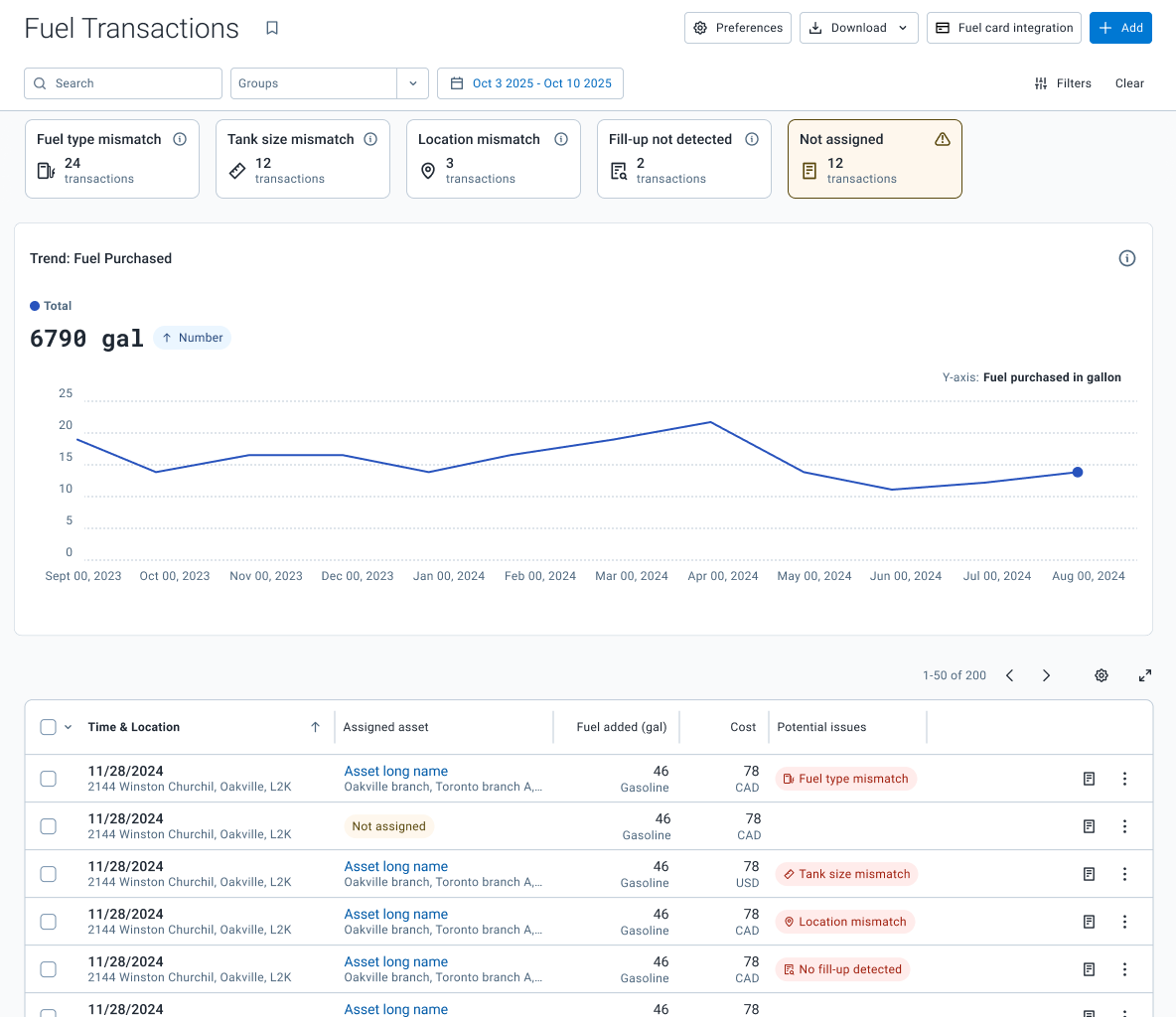
Geotab Fuel Transactions, now available after completing beta testing, connects fuel card transaction data with vehicle diagnostics in a single, automated view, replacing manual spreadsheet reconciliation with continuous oversight.
The system flags potential anomalies, including: purchases where fuel volume exceeds the vehicle’s tank capacity; transactions where the fuel type doesn’t match the vehicle’s powertrain; and purchases where the purchase location mismatches the vehicle location.
Fleet managers can filter flagged transactions by issue type and click into individual records for full context, asset details, mapped location history, and trip data.
Idling control
Geotab also introduced a new Preventable Idling Rule that allows fleets to exclude power take-off (PTO) activity from idling calculations, helping managers focus on fuel waste rather than productive engine use.
The new rule uses hardware sensor configurations or engine diagnostics to detect when PTO equipment is active, excluding it from idle calculations.
The challenge is particularly common for vocational fleets in sectors like construction and utilities, where PTO activity must be recognized as productive work rather than flagged as an idling violation, Geotab says.

Have your say
This is a moderated forum. Comments will no longer be published unless they are accompanied by a first and last name and a verifiable email address. (Today's Trucking will not publish or share the email address.) Profane language and content deemed to be libelous, racist, or threatening in nature will not be published under any circumstances.