Headwind Solutions launches ShockerEdge engine protection system

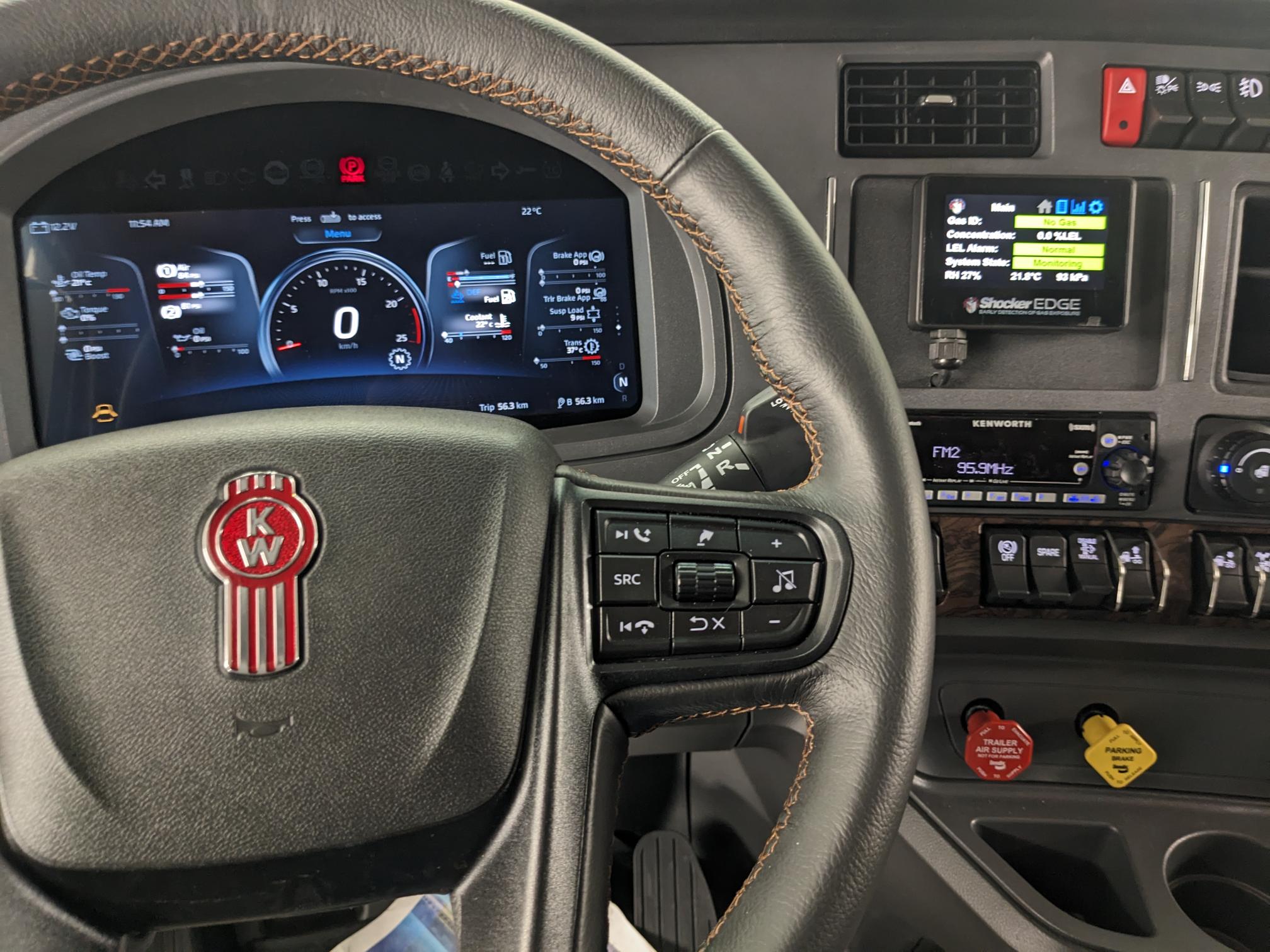
Alberta manufacturer Headwind Solutions has introduced ShockerEdge, an engine protection system designed to automatically shut down diesel engines operating before combustible gases can cause an engine runaway.
Unlike traditional mechanical air shut-off systems that use a butterfly valve to block engine intake air, ShockerEdge connects directly to the engine’s electronic control module (ECM) or fuel shut-off solenoid. At 7.5% of the lower explosive limit (LEL), it simply cuts the power to the fuel supply electronics, killing the engine instantly before it ever has the chance to start inhaling gas as an alternative fuel source.
The Camrose, Alta-based company said in a news release the system includes an in-cab display that provides real-time readings of LEL percentages, detected gas type, ambient atmospheric conditions and onboard data logging. Drivers receive visual and audible warnings when gas concentrations reach 2.5% LEL, with a second alert and automatic engine shutdown occurring at 7.5% LEL.
Headwind said the system uses a molecular property spectrometer (MPS) sensor that recalibrates itself every two seconds for temperature and humidity, completely removing those ongoing maintenance costs eliminating the periodic calibration and bump testing typically required with conventional gas detection systems.
According to the release, Transport Canada has issued Equivalency Certificates for the ShockerEdge. This means regulatory bodies officially recognize this electronic system in place of a traditional mechanical positive air shut-off valve, allowing it to legally run on high-risk sites.

Have your say
This is a moderated forum. Comments will no longer be published unless they are accompanied by a first and last name and a verifiable email address. (Today's Trucking will not publish or share the email address.) Profane language and content deemed to be libelous, racist, or threatening in nature will not be published under any circumstances.