Shoreland Transport pursues practical path to greener trucking

A slogan on the side of the trailer says it all. “From ocean to plate in record time.” Or, as Rodney Weston describes it, the fish you’re eating today was swimming in the Bay of Fundy yesterday.
Weston is Shoreland Transport’s vice president of fleet management. He’s a former member of the Legislative Assembly of New Brunswick, a former federal member of parliament, a former service station owner and a former truck driver. He served as former New Brunswick premier, Bernard Lord’s chief of staff. Today, he runs the in-house transport operations for global seafood giant, Cooke Inc.
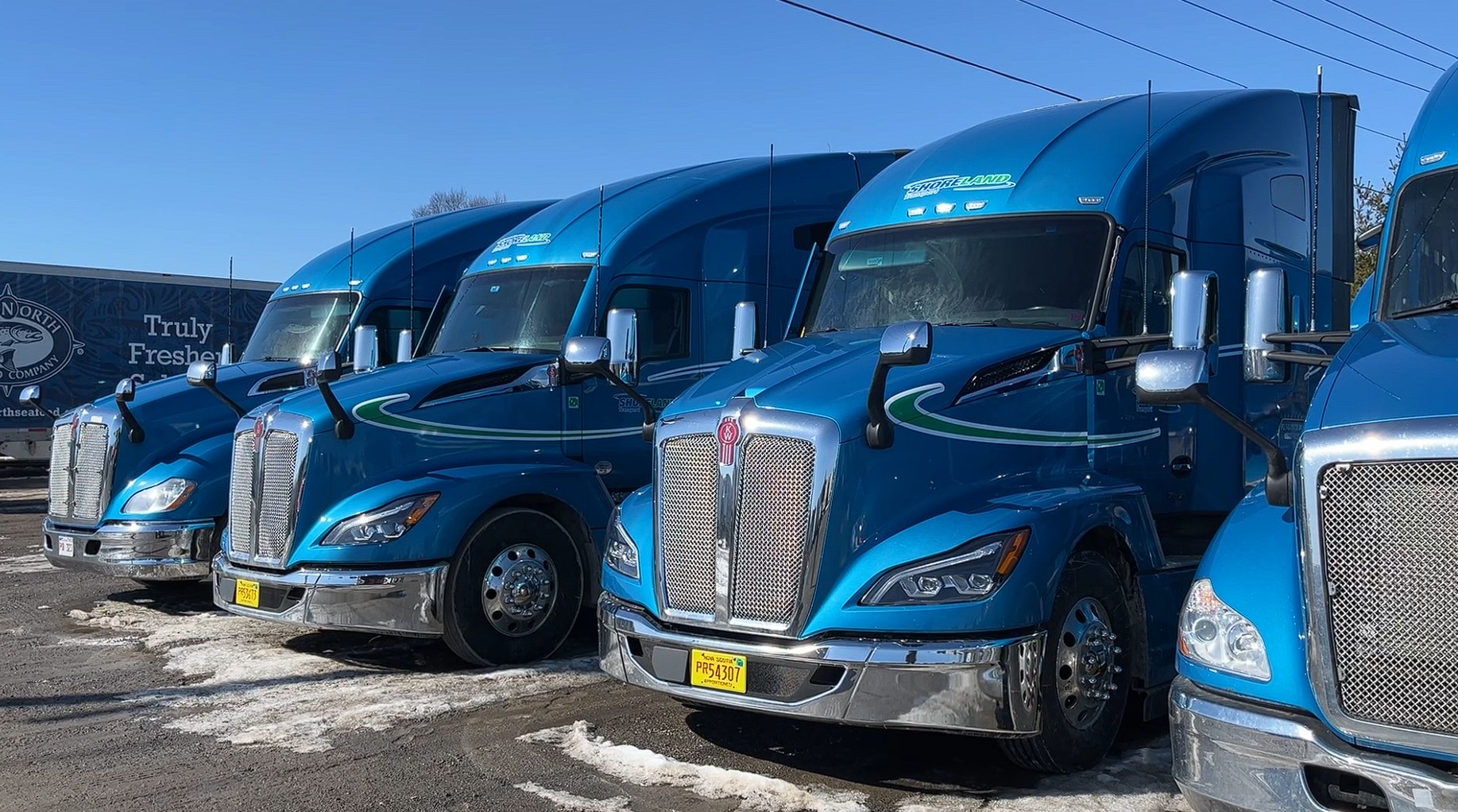
Weston oversees a fleet of 235 trucks and more than 500 trailers — including vans, reefer units, tankers, flatdecks, along with some specialty equipment. From the head office in St. George, N.B., and terminals in Saint John, Shoreland hauls Cooke Inc. seafood products to markets mainly along the U.S. Eastern Seaboard, including Boston and New York City, as well as Ontario, Quebec, and Newfoundland & Labrador.
Return loads are usually related to the aquaculture business; fish feed, equipment such as netting for cleaning/repairs, etc., along with the occasional load of general freight for some of Atlantic Canada’s largest retailers.
“A lot of what Shoreland does is to support our aquaculture operations,” Weston told trucknews.com during a recent visit to the fleet. “With the diversity of our fleet and the operation generally, you have to have your head in many different games. It keeps life interesting and exciting.”
Low-idle incentives
Shoreland’s focus on fuel efficiency and GHG reduction begins with idle management, Weston says. The company tied its driver incentive program directly to low idle time, rewarding drivers who minimized engine idling.
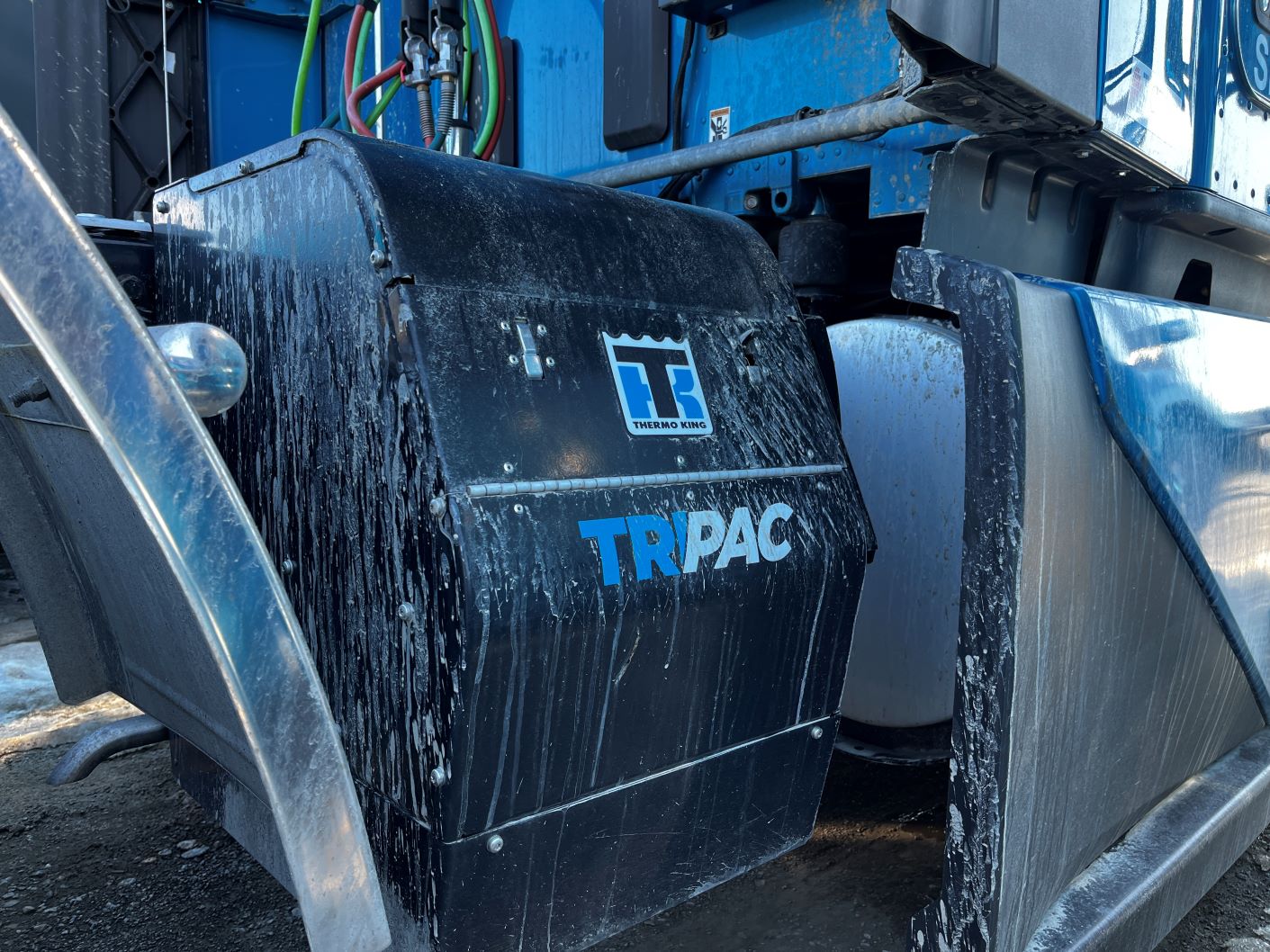
To make the goal achievable, the fleet equips all trucks with auxiliary power units (APU) for engine-off heating, cooling, and hotel power.
The company saw a very healthy uptake on the bonus — 95-96% of drivers collected the maximum payout.
“We saw real value coming to the company through these incentives, and making sure they had the tools to do the job was an important part in achieving that success,” Weston emphasized.
Until recently, Thermo King’s diesel Tripac was the preferred APU. Shoreland is now equipping some newer trucks with Thermo King’s Envidia electric climate control system, along with Kenworth’s battery-powered Idle Management system (KIM) and Freightliner’s ParkSmart system.
“We give the drivers a premium work environment, equipped with all the amenities they need on the road,” says Weston. “They live in their trucks, we believe in keeping them comfortable.”
Trailer aero treatment
The fleet invested heavily in aerodynamic improvements to its trailers as a way to reduce fuel consumption. Trailer skirts and other aerodynamic add-ons were installed early on to cut drag and improve fuel efficiency.
The company deliberately avoided folding “trailer tails,” despite claims they could deliver about 3% fuel savings, because of concerns about their mechanical complexity and the likelihood of drivers damaging or forgetting to deploy them.
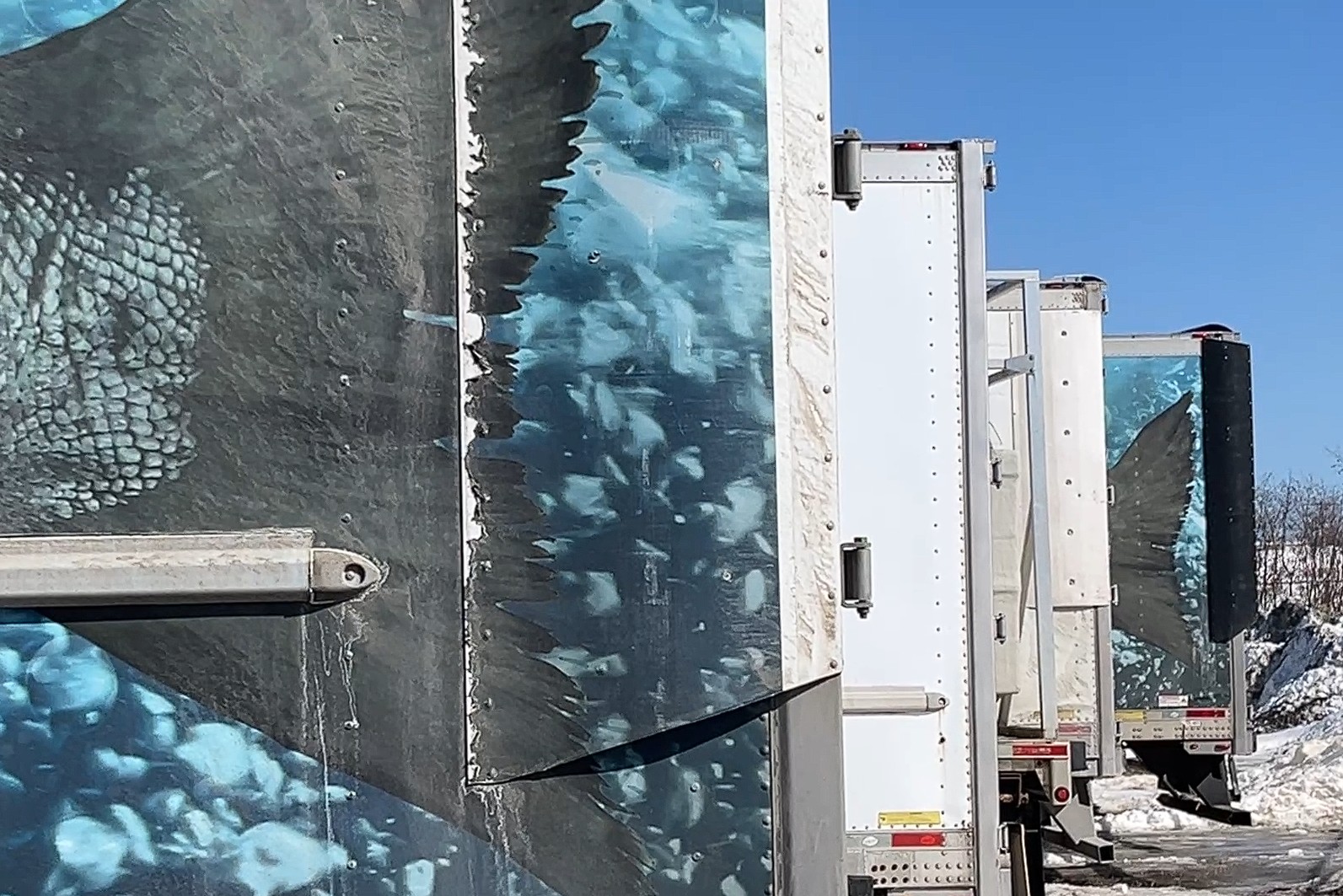
Instead, Shoreland chose simpler, maintenance-free aerodynamic devices, the Utility Aerodynamic Tail and side skirts from its trailer supplier, Utility Trailers.
The Utility’s tail system consists of two side air foils and one across the top at the rear of the trailer. They function like a trailer tail — reducing the drag-inducing turbulence in the low-pressure area at the rear of the trailer — but without the mechanical headaches and related maintenance cost. Weston says they are good compromise on cost/effort versus efficiency.
“There’s no maintenance on them, they are totally passive,” he says. “Actually, we wrap right over them a lot of our trailers. You can’t even tell they’re on there.”
Load optimization
Shoreland’s outbound loads of fresh-caught salmon are packed in Styrofoam crates, which preclude double-stacking the pallets. As a result, they usually cube-out before weighing out. The solution? Vertical e-track and decking bars.
“The e-tracking and load bars allowed us to optimize our loads and get more payload on each trailer,” says Weston.
The setup required some up-front trailer modification during production and some additional effort on the driver’s part when loading and unloading, but it makes better use of available trailer space.
Weston originally outfitted six trailers with the decking system, including a storage box at the rear of the trailer. Just as they were beginning to implement the strategy, COVID-19 hit. Drivers weren’t allowed on most loading docks, so they could manage the bars while unloading.
“It was a fair investment that sat on a shelf for a while,” Weston laments. “We now have the tracking in 16 trailers, and we use it mostly on internal movements for our Newfoundland operations.”
The initiative was supported by NRCan’s Green Freight program, which funded a portion of the investment.
Electric trucks?
Like any innovative and forward-thinking company, Shoreland is keeping an eye on the future of truck electrification. Weston told trucknews.com the owners examined the potential but concluded the economics currently don’t justify the investment.
“Electric trucks were considered more feasible for local distribution routes rather than longhaul at this point, but the idea was set aside for now because vehicle costs and the required charging infrastructure are still too high,” he says.
Despite that, the company continues to monitor emerging technologies and opportunities. Shoreland, indeed Cooke Inc., will never slam the door on an idea if it has potential. There’s lots more in the pipeline to consider, such as emerging safety and emissions reductions from the truck makers. “Shoreland is looking at all that and more,” says Weston.
“This industry has gone through some challenges, and I think those that are left standing at the end of the day are going to be even stronger.”
He credits the Green Freight program with making fuel-saving technologies more widely accessible, which only strengthens the industry and drives innovation.
“Trucking has been around for many, many years, but those who are going to survive are the ones that embrace the innovation and the opportunities.”

Have your say
This is a moderated forum. Comments will no longer be published unless they are accompanied by a first and last name and a verifiable email address. (Today's Trucking will not publish or share the email address.) Profane language and content deemed to be libelous, racist, or threatening in nature will not be published under any circumstances.