NuPort Robotics quietly charts its own course in autonomous trucking

Some autonomous trucking developers have built their reputations through high-profile announcements and headline-grabbing milestones. NuPort Robotics has taken a quieter approach.
The Markham, Ont.-based startup has spent the past six years steadily building its autonomy platform, signing commercial customers and expanding into industries ranging from retail distribution and forestry to mining and ports. While it has largely stayed out of the spotlight, CEO and co-founder Raghavender Sahdev believes the company’s measured approach is beginning to pay off.
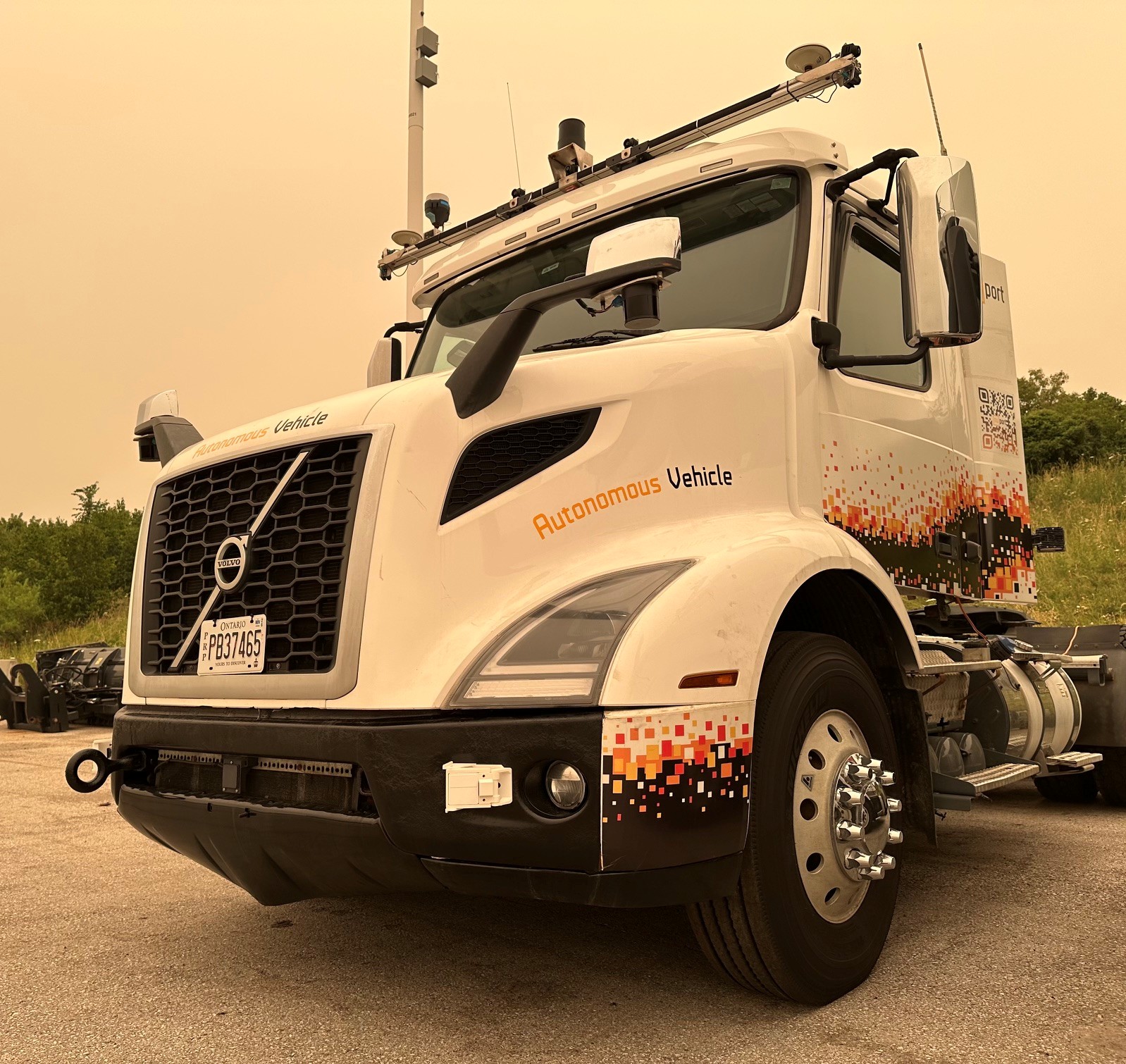
Today, the company’s most high-profile customer is Canadian Tire, but it is also working with research body FPInnovations, major forestry companies, mining operators, ports and one of North America’s largest logistics providers. The company has also quietly reached a milestone that Sahdev says reflects its deliberate approach to growth: cumulative revenue has surpassed the amount of capital NuPort has raised.
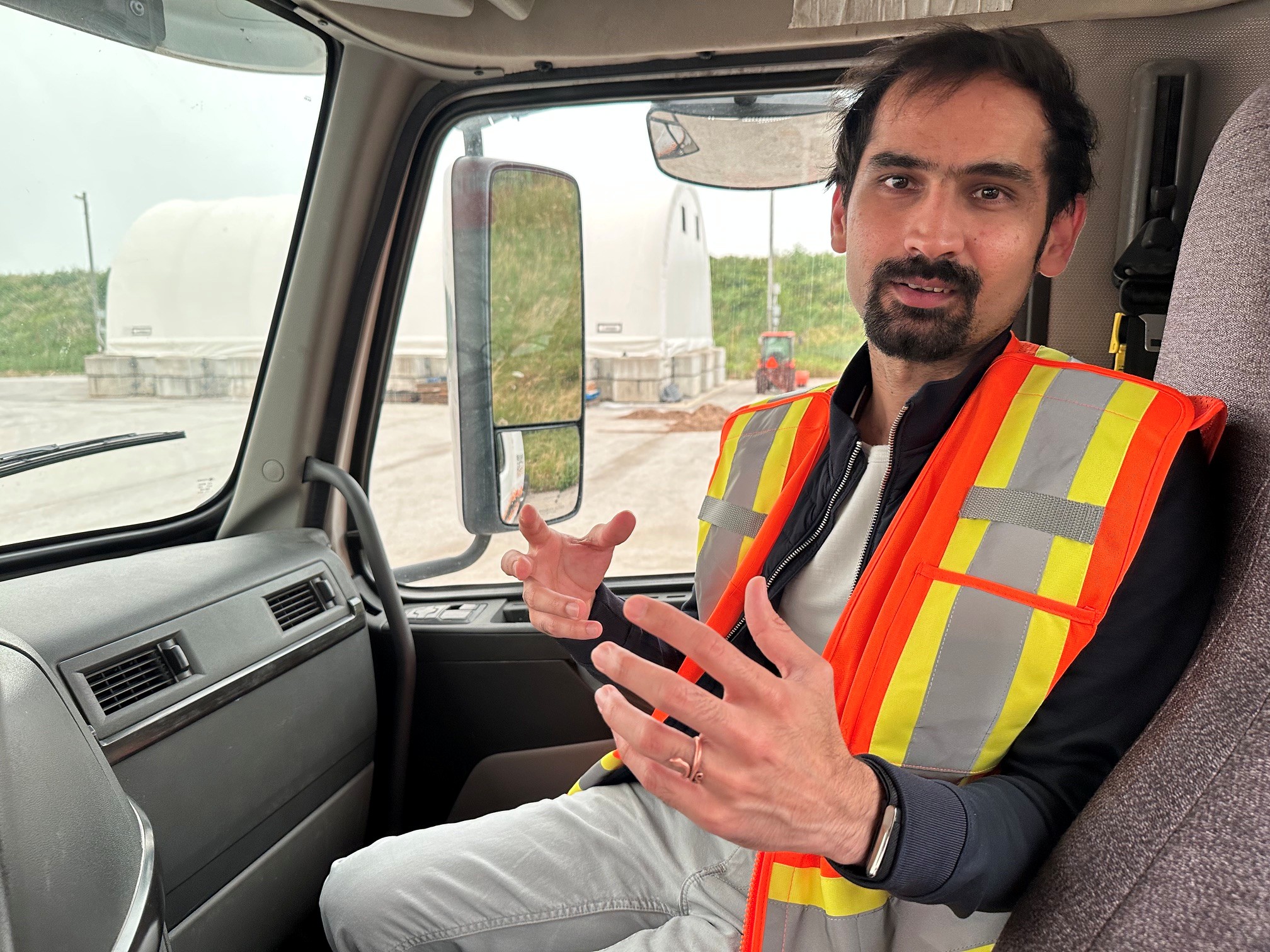
“We’ve been generating revenue for the past few years, and the amount of revenue we have generated is more than the capital we have raised to date,” Sahdev told trucknews.com during an in-depth interview at Canadian Tire’s distribution center in Bolton, Ont. on July 15, where two of its trucks are stationed and actively working.
While Sahdev didn’t disclose financial figures, the claim stands out in an emerging technology sector where commercial adoption often takes years to materialize, and some upstart providers haven’t survived long enough to achieve revenue generation.
Founded in 2019 by Sahdev and chief technology officer Bao Xin Chen, NuPort was the first autonomous trucking company established in Canada.
Sahdev, whose background spans nearly two decades in robotics and artificial intelligence, said the company’s philosophy has always been to commercialize autonomy one market at a time rather than attempting to solve every trucking application simultaneously.
“Our vision is that every truck in the future is going to be running an autonomy operating system,” he said. “NuPort is building that.”
Unlike many autonomous developers that have focused on a single operating environment, NuPort has built what Sahdev describes as a vehicle-agnostic autonomy platform capable of supporting multiple applications. The company has intentionally concentrated its commercial efforts on four sectors — retail, ports, forestry and mining — while designing the technology to eventually support a much broader range of trucking operations.
“Our technology is very robust and versatile to be deployed in multiple sectors,” Sahdev said. “We are taking a very realistic approach where we’re proving the concept in a private site first at lower speeds, then increasing the speeds by going toward private highways, and then going to public roads.”
That gradual approach reflects the company’s broader philosophy.
Rather than promising immediate driverless highway operations, NuPort is expanding autonomy incrementally, building experience in controlled environments before tackling increasingly complex operating conditions.
Building an autonomy platform
The company’s software platform, branded NuDrive, combines lidar, radar, cameras, GPS and other sensors that are retrofitted onto existing trucks.
Unlike some autonomous vehicles that are immediately recognizable by large sensor arrays mounted across the cab and roof, NuPort’s installations are intentionally understated.
“We made it in a way that anybody that sees the technology, it’s like, ‘Oh, it’s barely even there,'” Sahdev said.
The retrofit strategy allows customers to automate existing equipment without waiting for factory-built autonomous vehicles.
“It allows us to get to market quicker and allows us to generate immediate revenue,” Sahdev said of the decision to go to market initially as a retrofit. “But most importantly, it allows us to generate immediate value for our customers.”
That doesn’t mean retrofit will remain the company’s only strategy.
Sahdev confirmed NuPort is already in discussions with truck manufacturers about integrating its technology at the factory, although he declined to identify the OEMs involved.
“Our goal has been to ensure that we are backwards compatible and future ready,” he said. “If trucks already come with sensors, we already have the software stack ready to deploy.”
Built for Canadian conditions
Operating in Canada presents challenges that many autonomous vehicle developers working primarily in the U.S. Sun Belt have yet to encounter. NuPort says it has tested its technology in temperatures ranging from -40 C to 45 C, operating through snow, ice, rain and dust.
Among its most significant demonstrations to date was a forestry project with FPInnovations that logged 2,700 autonomous kilometers across two forestry routes.
“It’s not like you can just flip the switch and it’ll start working in snow,” Sahdev said. “It requires rigorous years of testing and deployments.”
He argues that experience gives Canadian developers an advantage when autonomy eventually expands into northern operating environments.
“Some of our competitors have never even seen snow,” he said.
Delivering measurable value
While Sahdev declined to discuss details of Canadian Tire’s deployment, he said customers are adopting autonomy for practical business reasons rather than technological curiosity.
The company’s objective is straightforward: improve asset utilization while reducing operating costs. In a yard environment, Sahdev estimates autonomous operations can increase trailer movements from five per hour to seven or eight per hour. NuPort is also able to install the NuPort Drive system on terminal tractors for autonomous trailer shunting within a yard environment.
Over longer distances, he said the platform is designed to reduce operating costs through improved efficiency and fuel economy.
“Our goal is to increase operational efficiency and make sure it’s financially viable,” he said. “We want to make the COO happy and the CFO happy.”
That commercial focus appears to be resonating.
Sahdev said NuPort has experienced no customer churn since launching commercially.
“I can very confidently say in North America we’ve got zero churn,” he said. “Every customer we’ve worked with, we’ve gone commercial or are going commercial.”
He attributes that retention to transparency with customers about both the capabilities and limitations of autonomous technology.
Learning from an industry that overpromised
Sahdev believes parts of the autonomous vehicle industry damaged investor confidence by making claims that proved difficult to deliver.
“There have been a lot of companies that have raised significant amounts of capital, and we still don’t see a product that is deployed at scale,” he said. “What is fundamentally missing is understanding the exact use case for the customer and deploying technology in a very transparent and fair and honest manner.”
Rather than chasing valuation, he said NuPort has concentrated on disciplined spending and solving immediate customer problems.
That philosophy has also shaped its growth.
The company employs about 25 people, with engineering based in the Greater Toronto Area and a business office in San Francisco.
Despite its relatively small size, Sahdev believes the company has achieved outsized commercial results.
“What we’ve achieved with these 25 people is much more than what you would have seen with some of the other competitors from a revenue standpoint and from a capital-efficiency standpoint,” he said.
Sahdev believes Canada can play a larger role in autonomous trucking than many realize and he says Ontario, specifically, has created a regulatory environment that’s conducive to autonomous vehicle testing and validation.
NuPort has worked with Ontario’s Ministry of Transportation while contributing technical feedback as governments consider future autonomous vehicle regulations. The company has also received more than $1 million through Ontario’s Vehicle Innovation Network (OVIN) program administered by the Ontario Centre of Innovation, along with support through federally funded projects.
“Our goal is to make sure Canada is able to keep up,” Sahdev said.
While autonomous trucking deployments in Texas continue attracting international attention, he believes Canada’s opportunity lies in developing technology capable of operating in far more challenging environments.
He expects widespread public-road deployment will still take time, but sees today’s commercial projects as laying the groundwork.
“We are taking a very realistic approach,” he said.
Ready to scale
NuPort says it is now actively seeking additional commercial deployments across North America.
The company believes its retrofit approach allows fleets to begin introducing autonomy without replacing existing equipment, while positioning itself for future factory-installed integrations.
Sahdev said customer attitudes have evolved significantly over the past five years.
“Customers that were hesitant earlier are now coming out of their hesitation process,” he said. “There are still early adopters, and there are customers that will wait until the technology is widespread. That’s true in every industry.”
Related: Meet the roboticist behind NuPort
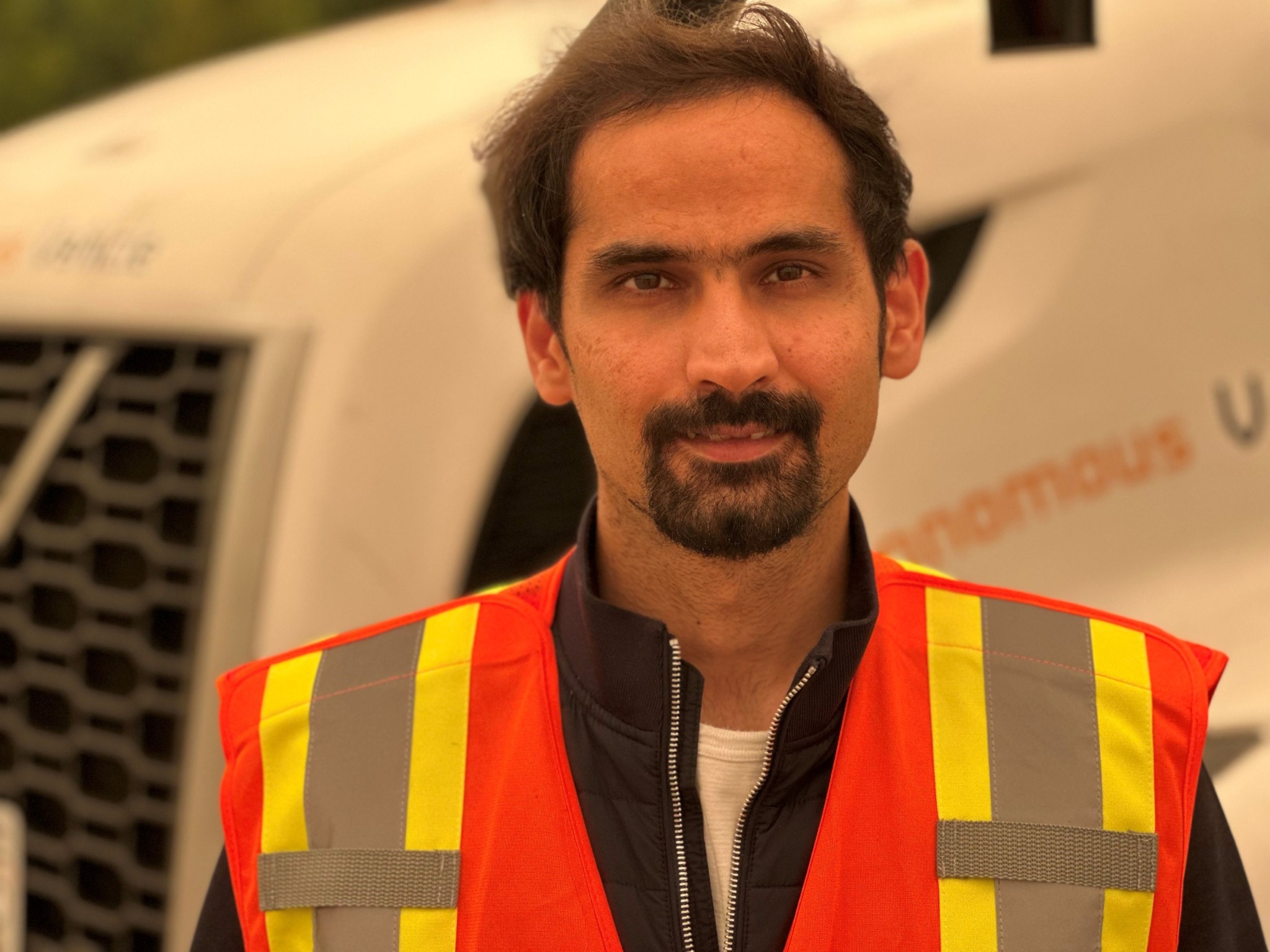
Raghavender Sahdev didn’t set out to build an autonomous trucking company.
His career began in robotics and artificial intelligence, where he spent nearly two decades developing autonomous systems designed to solve practical problems. Before founding NuPort Robotics in 2019, Sahdev worked on projects ranging from defense robots in India to robotic arms, autonomous greenhouse technology and mobile robots in Canada.
“I describe myself as an entrepreneur by heart, but an engineer by choice,” he said.
That combination has shaped NuPort from the beginning.
Sahdev and chief technology officer Bao Xin Chen had collaborated on robotics projects before deciding to apply their expertise to trucking. They believed autonomous technology could deliver immediate value in freight transportation, beginning in controlled environments such as distribution centers, ports, forestry operations and mines before eventually expanding to public roads.
Unlike some technology startups that begin with an ambitious vision and search for customers later, Sahdev says NuPort has always focused on solving specific operational challenges first.
That customer-first philosophy remains central to the company’s growth strategy.
“We are a customer-obsessed company,” he said. “Customer obsession is what drives us.”
Rather than asking fleets to adapt their operations to fit autonomous technology, Sahdev says NuPort tries to integrate seamlessly into existing workflows while delivering measurable improvements in efficiency.
Have your say
This is a moderated forum. Comments will no longer be published unless they are accompanied by a first and last name and a verifiable email address. (Today's Trucking will not publish or share the email address.) Profane language and content deemed to be libelous, racist, or threatening in nature will not be published under any circumstances.

Someone needs to tell me what the advantages are in autonomous trucking? Outside of costing mega thousands to outfit each unit and a life span of maybe 4:to 5 years before replacement of the tractor is needed and retrofit to it. So I don’t see the monetary value here. Is it because you want to get rid of drivers? Seems odd since you still need people to do many of the functions And the one I still have grave concerns is safety. You can not convince many people on our highways that 40 ton of truck in a snow storms , heavy rain, traffic, construction etc is not going to pose a problem. Maybe I am just old school ,, but I still prefer a person behind the wheel!