Decarbonization path remains complex for longhaul fleets

The path to decarbonizing trucking remains uneven and fragmented, especially for longhaul fleets, where operational realities continue to limit the viability of zero-emission vehicles.
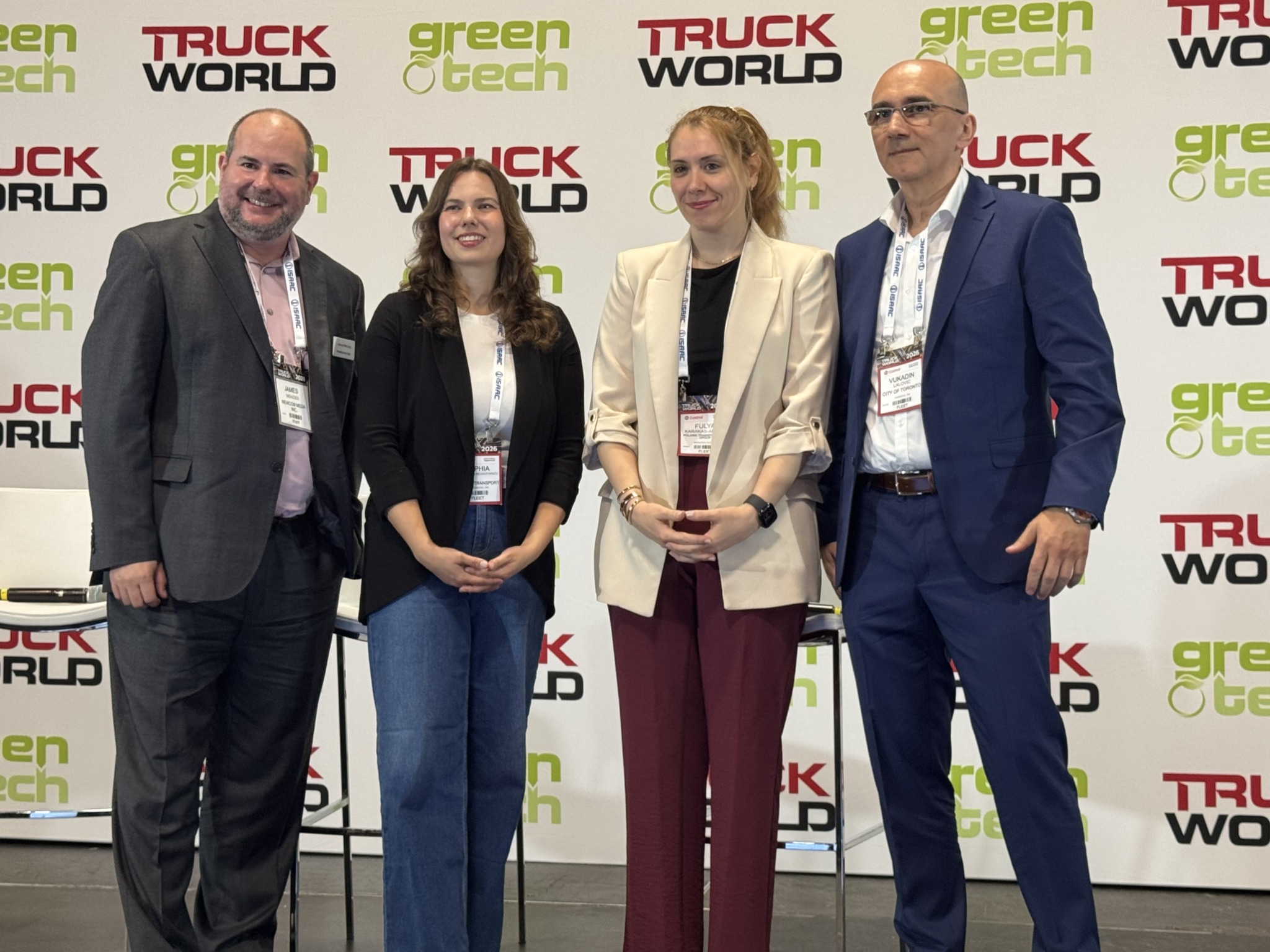
During a panel at the Truck World show in Mississauga, Ont., leaders from Polaris Transportation Group and Musket Transport said that while sustainability targets are becoming more prominent, the conditions required to meet them at scale, especially on the transportation side, are still not in place.

“Unfortunately, when it comes to longhaul, the alternative fuel vehicles are not in scope,” said Sophia Sniegowski Begidzhanov, Musket’s corporate communications officer.
She pointed to a broader structural issue not just with vehicles and their readiness, but with the entire system required to support them.
“It really comes down to having a full ecosystem. So it starts from your own facility to having the proper charging infrastructure. Then it goes to the over-the-road customers. And I think the biggest obstacle that we have in North America, not just in Canada, is that everything within transportation is very fragmented.”
That fragmentation spans jurisdictions, infrastructure, and even climate conditions, making it difficult to scale any single solution across a cross-border, longhaul network.
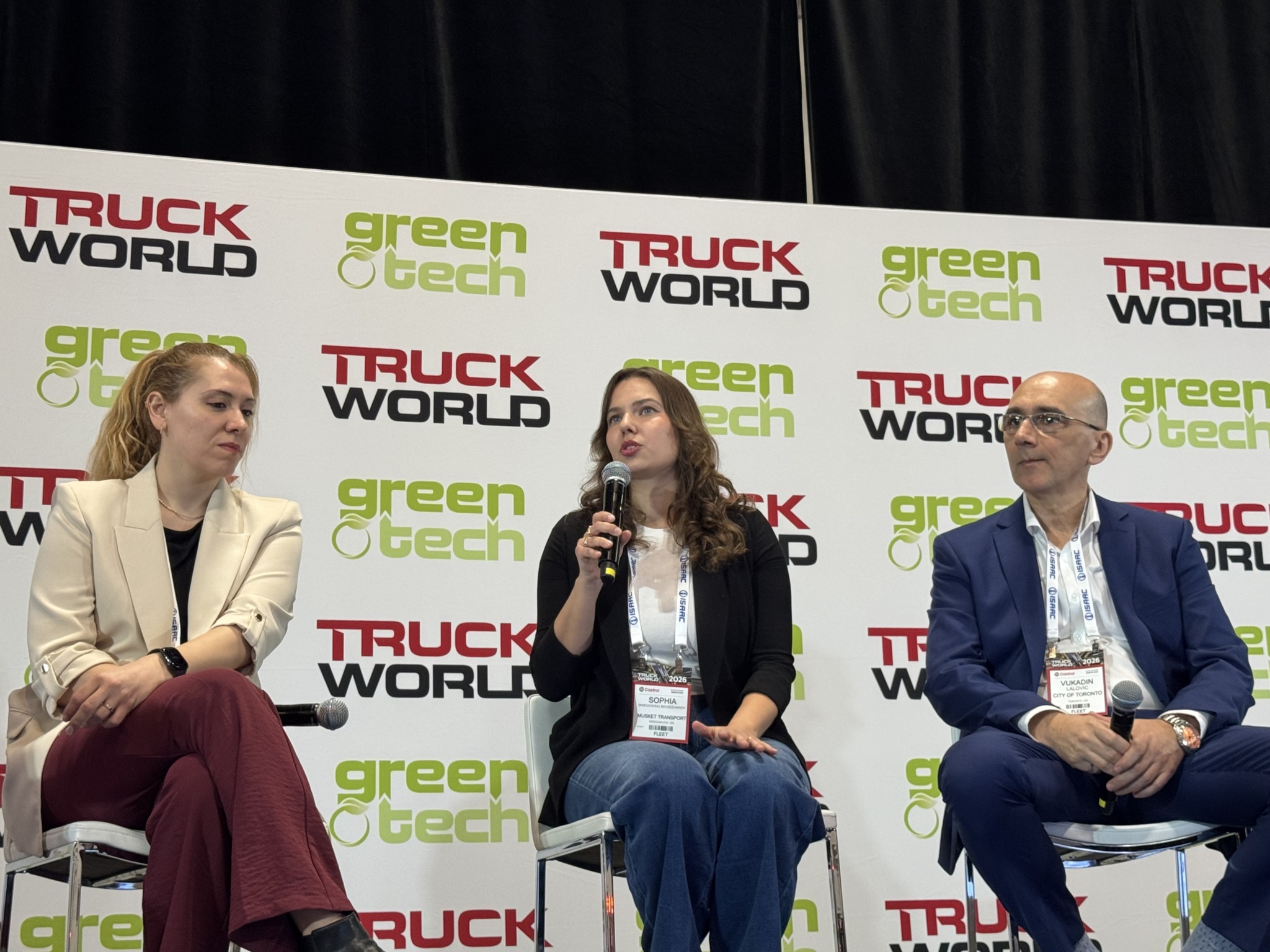
Polaris Transportation Group echoed the sentiment, saying that no single factor is holding the industry back – it is a combination of different challenges.
“There needs to be a change at a much broader level,” said Fulya Karakas-Akgun, sustainability manager at Polaris. “It’s an ecosystem. I can’t just name one factor that needs to change. They go hand in hand altogether.”
She, too, pointed to a combination of policy gaps, infrastructure limitations, incentives and market realities that make it difficult to scale alternative fuel or zero-emission solutions.
“We need stricter policies, but then incentives as well, because you can’t just make it a policy obligation and tell companies and people to deal with it alone. You have to have a really robust support system,” Karakas-Akgun said.
Even in cases where technology is available, such as renewable diesel, the economics remain a limiting factor. “[The renewable diesel pilot] is a negative ROI project, but we are trialing with a limited number of assets, so the premium we pay is still within the tolerable limit. But the customer demand is not there yet,” she said.
“If we switched the entire fleet, we’d need to bake the extra premium into our pricing, but then we become uncompetitive.”
Shippers want sustainability data and benefits, but not associated costs
That lack of competitiveness is largely driven by shifting customer expectations, both fleets said.
Shippers are increasingly asking for emissions data and sustainability reporting as part of Scope 3 requirements, but those expectations are not translating into a willingness to pay higher rates.
“The reason why it’s a conundrum and a little bit frustrating is that we undergo this analysis, and even though — when you compare our carrier to others of the similar size — we’re much more advanced in terms of our GHG reduction and the fact that we do have [a] sustainability committee and a team and individuals that are responsible for it, it’s not going to get us the deal,” said Musket’s Sniegowski Begidzhanov. “It will always be over the cost and what the rates are. I mean, we’ve had customers go for cents, not even on the dollar. For cents. It’s so incredibly competitive.”
That pricing pressure makes it difficult for fleets to justify large-scale investments in lower-emission technologies, particularly in an industry with single-digit profit margins.
“If you want to pilot something out, the best way is to think what customer would go in on this, because they are going to have to pay a premium rate for that delivery system,” she added.
Without that customer buy-in, even solutions that are technically feasible struggle to move beyond small-scale pilots.
Focusing on what works now
This is why fleets are turning to other strategies that can deliver measurable gains today.
For Musket, that means focusing on fuel efficiency and newer engine technologies rather than waiting for alternative fuels to mature. Sniegowski Begidzhanov pointed out that the industry’s current emissions profile is often misunderstood.
“A lot of people have this assumption that it causes a lot more pollution than it does. In fact, as an industry, we’re not even really at the top. Agriculture is far larger than we are, but [we are] more public-facing, because people interact with the trucks on the highways.”
She added that manufacturers have continued to improve diesel engine efficiency, giving fleets a practical way to lower fuel use and emissions even before alternative fuels or zero-emission vehicles become viable at scale. “If we could be completely operational without fuel, that would be the ultimate goal. But the technology, the infrastructure, it’s just not there. So, until technology goes ahead and circumvents those obstacles, we have to focus on the advances that are happening right now.”
These include not only newer, more fuel-efficient engines, but also better route planning, reduced idling, and driver coaching.
For Polaris, that approach also includes investing in data and visibility tools that help both the company and its customers better understand emissions.
For example, the company created a carbon calculator in response to customer demand for emissions data. The tool is tied to actual shipments for precise emissions reporting, allowing shippers to access data directly rather than relying on generalized estimates.
At the same time, both companies have introduced smaller-scale operational and facility improvements — though these often remain secondary to core fleet investments.
“Our budget goes towards the fleet,” Sniegowski said, noting that facility-related sustainability initiatives are limited compared to spending on equipment, maintenance, driver pay and training.
Municipal fleets face similar challenges
While longhaul carriers struggle with infrastructure and economics, municipal fleets operate under a different framework, but still face many of the same issues.
For the City of Toronto, electrification has been successful in light-duty applications, supported by a growing charging network and detailed planning.
The city now operates about 500 EV chargers across its network — planning to add 200 more this year — and has shifted from early, piecemeal deployment to a more strategic approach focused on full-yard electrification
“In the beginning, it was just like here and there a few chargers, but now we are scaling it up… it is important to do more advanced planning and looking at the grid capacity at specific sites,” said Vukadin Lalovic, director of fleet and asset management for the city of Toronto. “We are no longer talking about EV anxiety. Now we are talking more about EV confidence and having that embedded in the process and looking at the more strategic approach, how to electrify the entire yard, versus just having piecemeal here and there.”
That shift has introduced new complexities, including determining charger-to-vehicle ratios and designing sites that can support future demand. In some cases, the city must plan for one-to-one charger-to-vehicle ratios, depending on duty cycles.
Electrification becomes more difficult as vehicle demands increase, particularly for severe-duty municipal applications. Trucks equipped with plows, sanders and liftgates require significantly more energy, limiting the viability of current electric options.
Pilot projects have shown that some duty cycles are not yet well-suited for electrification.
“We did the pilot test with the fully electric refuse truck… the daily cycle may not be an optimal solution, but we are not rejecting that. We are piloting, testing, collecting data,” Lalovic said.
He added that cost is another barrier, with medium- and heavy-duty zero-emission vehicles remaining significantly more expensive than diesel.
The city relies on incentives and a dedicated carbon budget — about $250 million — to support the transition, while continuing to use a mix of fuels, including CNG, as well as biodiesel and hydrogen pilots.
Have your say
This is a moderated forum. Comments will no longer be published unless they are accompanied by a first and last name and a verifiable email address. (Today's Trucking will not publish or share the email address.) Profane language and content deemed to be libelous, racist, or threatening in nature will not be published under any circumstances.

Not to worry. Tesla will take care of it. They will scale up faster than you think. Both the trucks and the charging network. Tesla’s got it nailed.