Roadcheck begins with five clean inspections, stolen tractor seizure

Nothing is perfect in trucking, although sometimes there may be a good run.
On May 12, the first day of International Roadcheck, the first five commercial vehicles that were pulled into the inspection lanes on Steeles Ave. in Halton Hills, Ont., all passed Level 1 inspections.
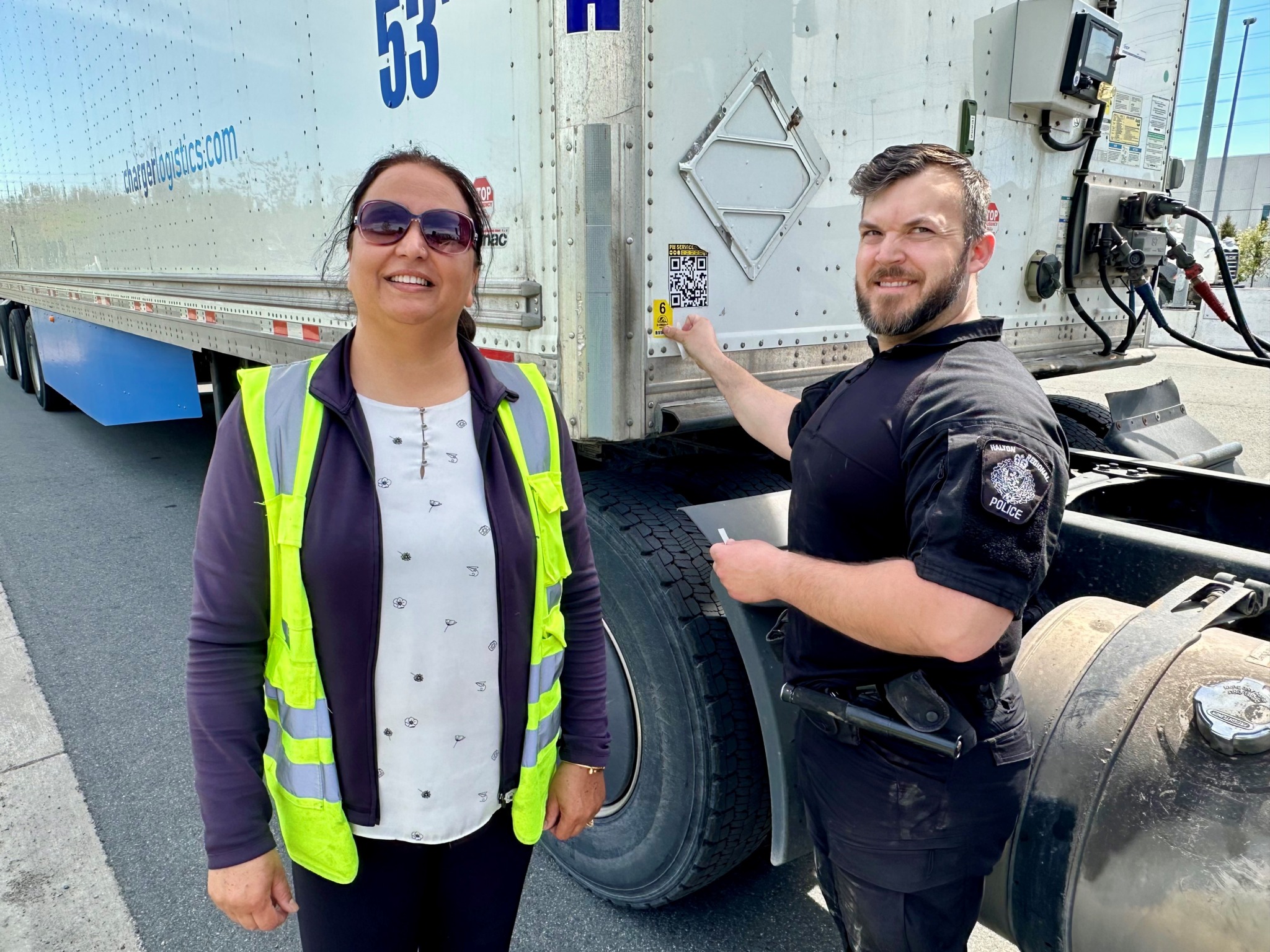
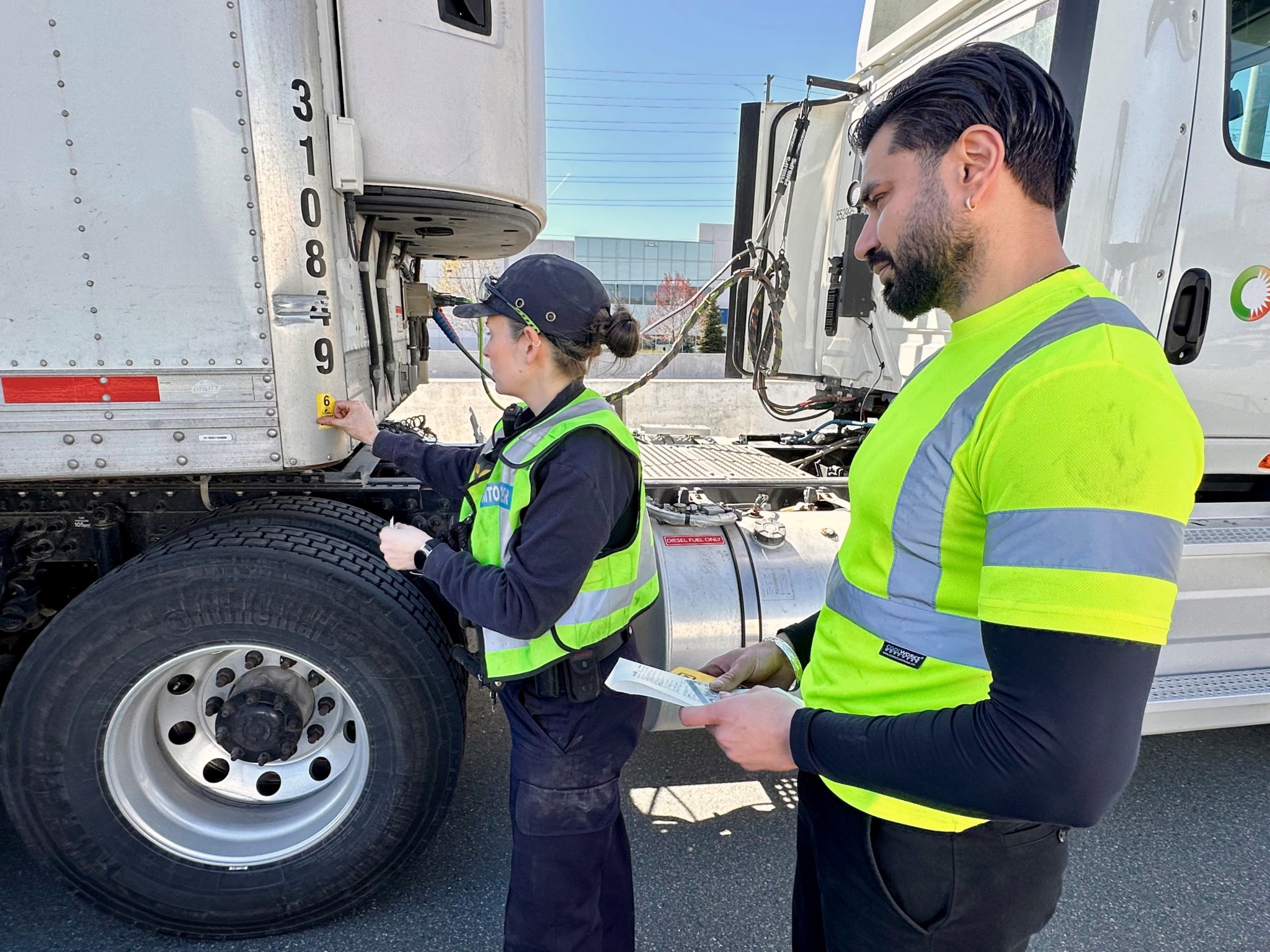
Drivers of those vehicles were smiling and their faces showed relief as officers from Halton Regional Police Service’s (HRPS) commercial vehicle unit and Ontario’s Ministry of Transportation affixed Commercial Vehicle Safety Alliance (CVSA) decals on their vehicles.
Inspectors are focusing on electronic logging device tampering and cargo securement during this year’s three-day enforcement blitz in Canada, the United States, and Mexico.
Manvir Mann, who has been a trucker for 14 years, said receiving the CVSA decals on his tractor and trailer adds to his motivation.
He urged other drivers to keep their trucks clean and tidy. “I judge a driver by the truck they drive,” he said. “And don’t make excuses that you did not do a proper inspection due to the weather.”
Amid the smiles and sunshine, the atmosphere changed after officers pulled in another commercial vehicle later in the morning.
During the inspection, HRPS officers observed irregularities with the VIN number displayed on the tractor.
“After conducting checks, we’ve been able to determine that the vehicle is a previously reported stolen tractor, and the VIN has been manipulated to attempt to conceal the fact that it’s a stolen vehicle,” Marc Taraso, commercial vehicle inspector with the HRPS commercial vehicle unit, told trucknews.com. “The tractor is being seized for further investigation.”
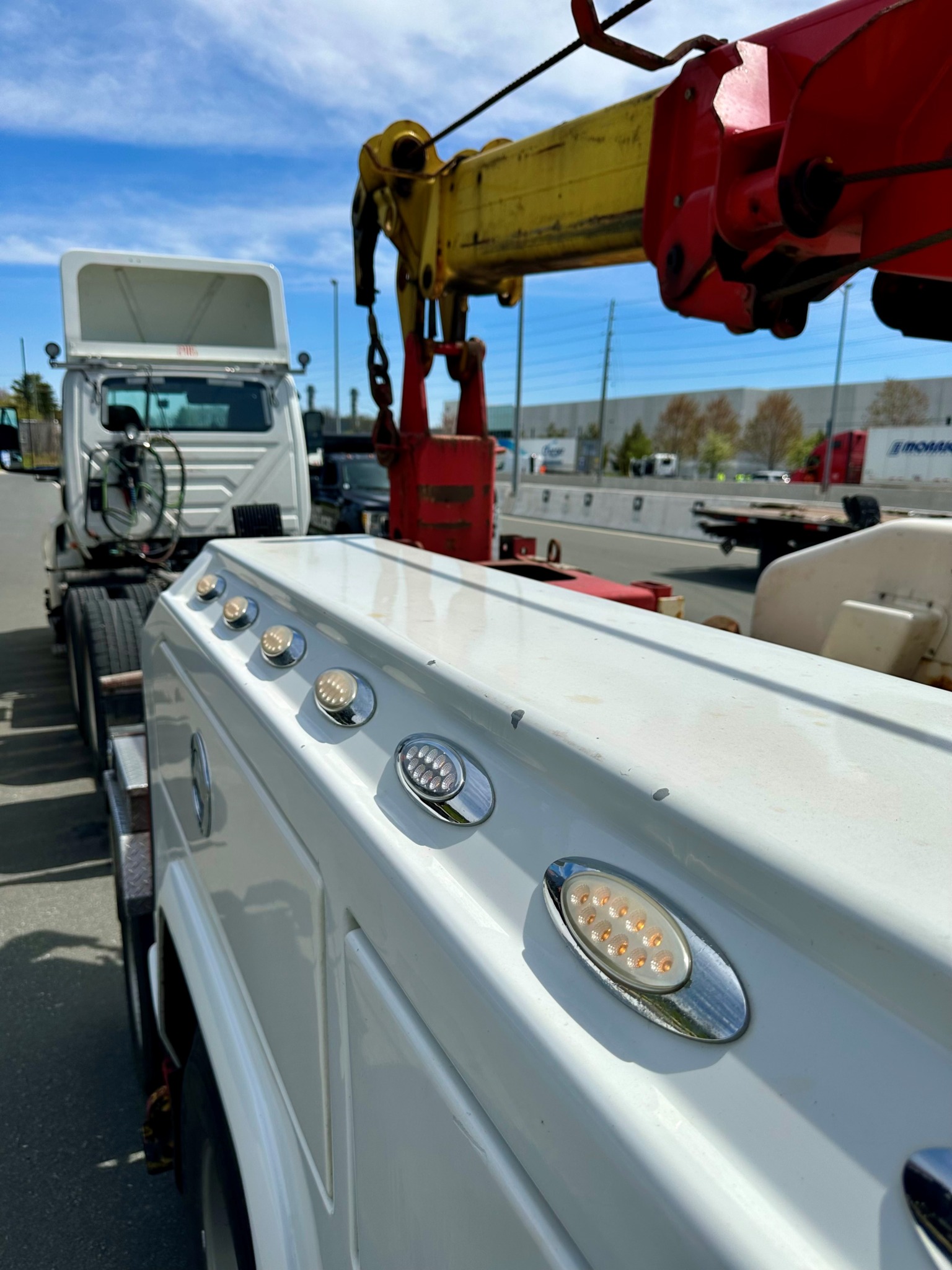
A tow truck came and hauled the tractor away as the trailer sat on the side of an inspection lane.
Taraso said the trucks are selected randomly for inspection. “We are trying to set a baseline of how many vehicles are operating on the roadway with out-of-service conditions.”
This year’s driver’s focus is on electronic logging device (ELD) tampering. Officers are making sure the logs are proper, complete and not tampered with. The vehicle area focus is on insecure loads. “Every year we see countless collisions, injuries and fatalities caused by loads that are not properly secured,” Taraso noted.
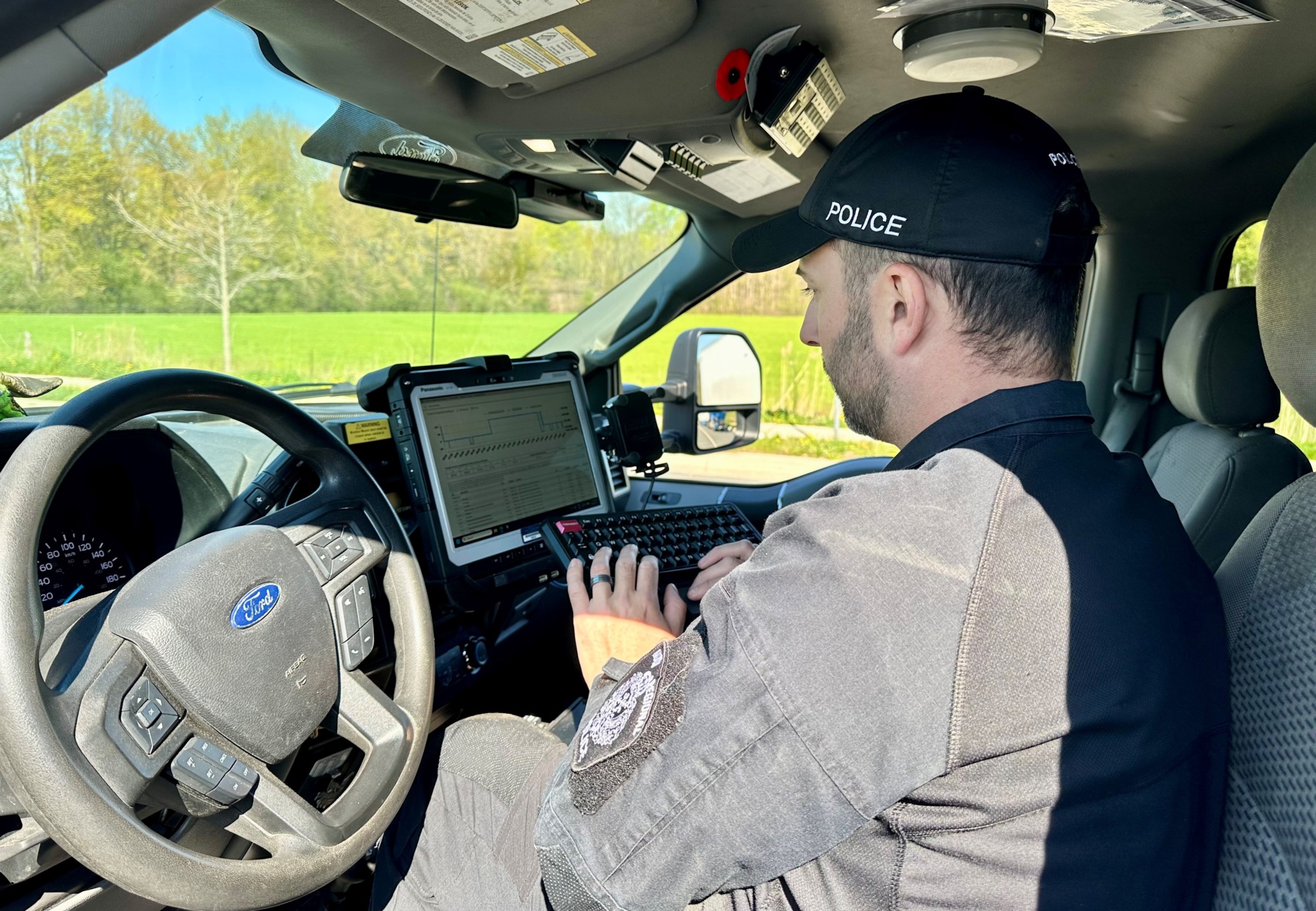
He explained that a Level 1 is a comprehensive inspection. Officers check all the critical items on a vehicle, the driver’s credentials, license and vehicle documents. “And while it’s a 37-point inspection, we’re actually checking hundreds of vehicle components while we’re around and under the vehicle to make sure that that vehicle is safe on the roadway and won’t injure anybody when it departs,” he said.
Taraso said that these inspections are not meant to delay the movement of freight. “While we want safe roads, we also want industry to function, we want goods to get to market. We don’t want to delay vehicles if we don’t have to,” he said.
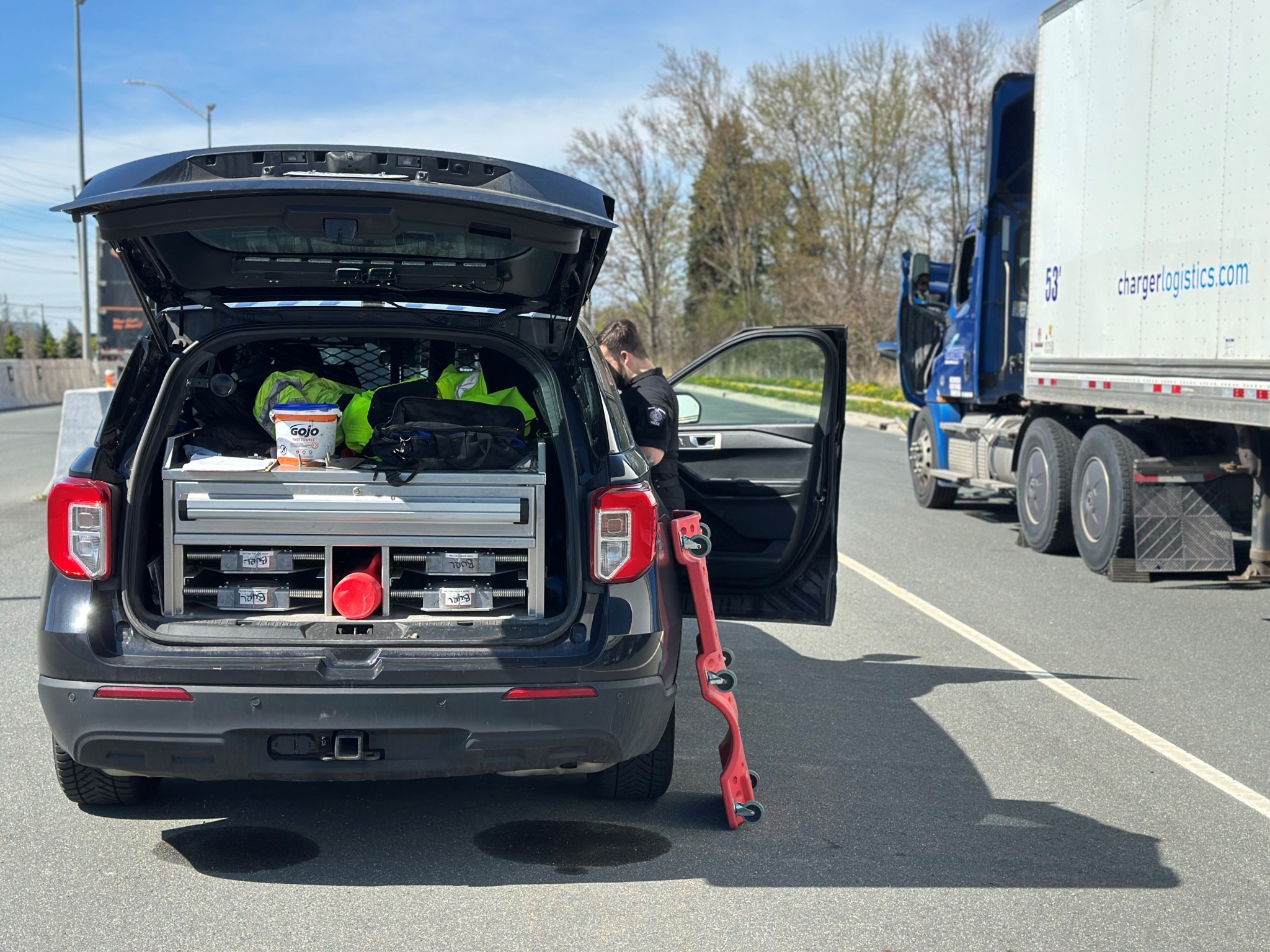
He said they use escalating inspection steps when a vehicle is stopped.
“It might only be a Level 3, where we check the driver’s documents. If something is alerting us to a possible defect, we might escalate that to a Level 2, where we do the walkaround, and if, on that inspection, we see something that leads us to believe that we have a major defect or an out-of-service condition, that will escalate that to an under-vehicle inspection as well.
“If we do find some sort of prescribed defect, we escalate it to a Level 1 inspection and check all the components.”
Roadcheck will continue May 13 and 14.
Have your say
This is a moderated forum. Comments will no longer be published unless they are accompanied by a first and last name and a verifiable email address. (Today's Trucking will not publish or share the email address.) Profane language and content deemed to be libelous, racist, or threatening in nature will not be published under any circumstances.

I was stopped this week and officer that did mu inspection was awesome. He could tell i was a little nervous , after a while we started talking and I began to feel more relaxed with the whole thing. There only out there to keep us safe . Not there to harass you. You treat them right and they will do the same to you.. I hope they keep up the good work.