Electric trucks prove most energy-efficient in B.C. port trial

After more than a year of testing four low- and zero-emission truck technologies in drayage and local delivery operations, Innovate B.C. says battery-electric trucks proved to be the most energy-efficient and least expensive to power.
The findings come from the Heavy-Duty Zero-Emission Vehicle (HD ZEV) test bed in Prince Rupert, which compared battery-electric, hydrogen fuel-cell, hydrogen co-combustion and diesel trucks.
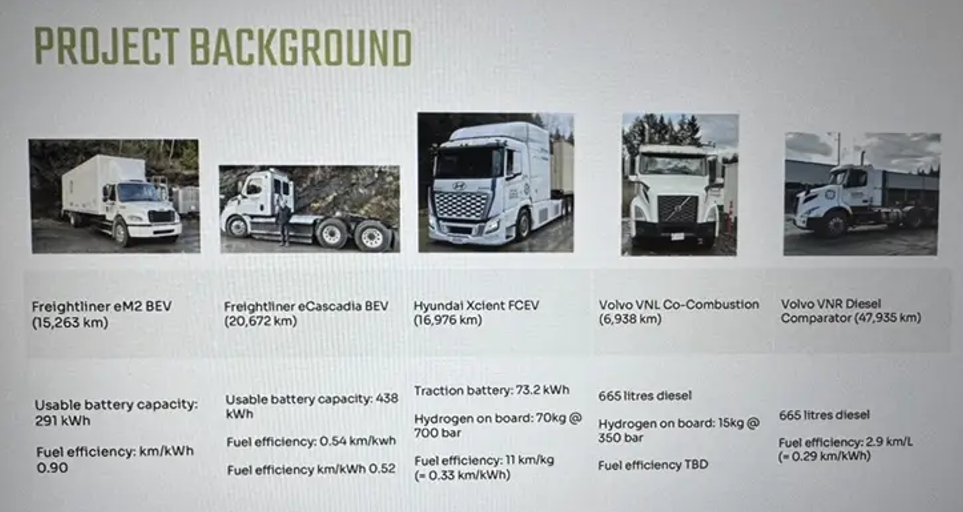
During a July 8 webinar hosted by the B.C. Trucking Association, project lead Tim Peterson said the five vehicles evaluated were running in the port and along the Prince Rupert to Terrace corridor. Those include a Freightliner eM2 battery-electric truck for pickup and delivery, a Freightliner eCascadia battery-electric drayage tractor, a Hyundai Xcient fuel-cell electric truck, a Volvo hydrogen co-combustion truck and a comparable diesel Volvo.
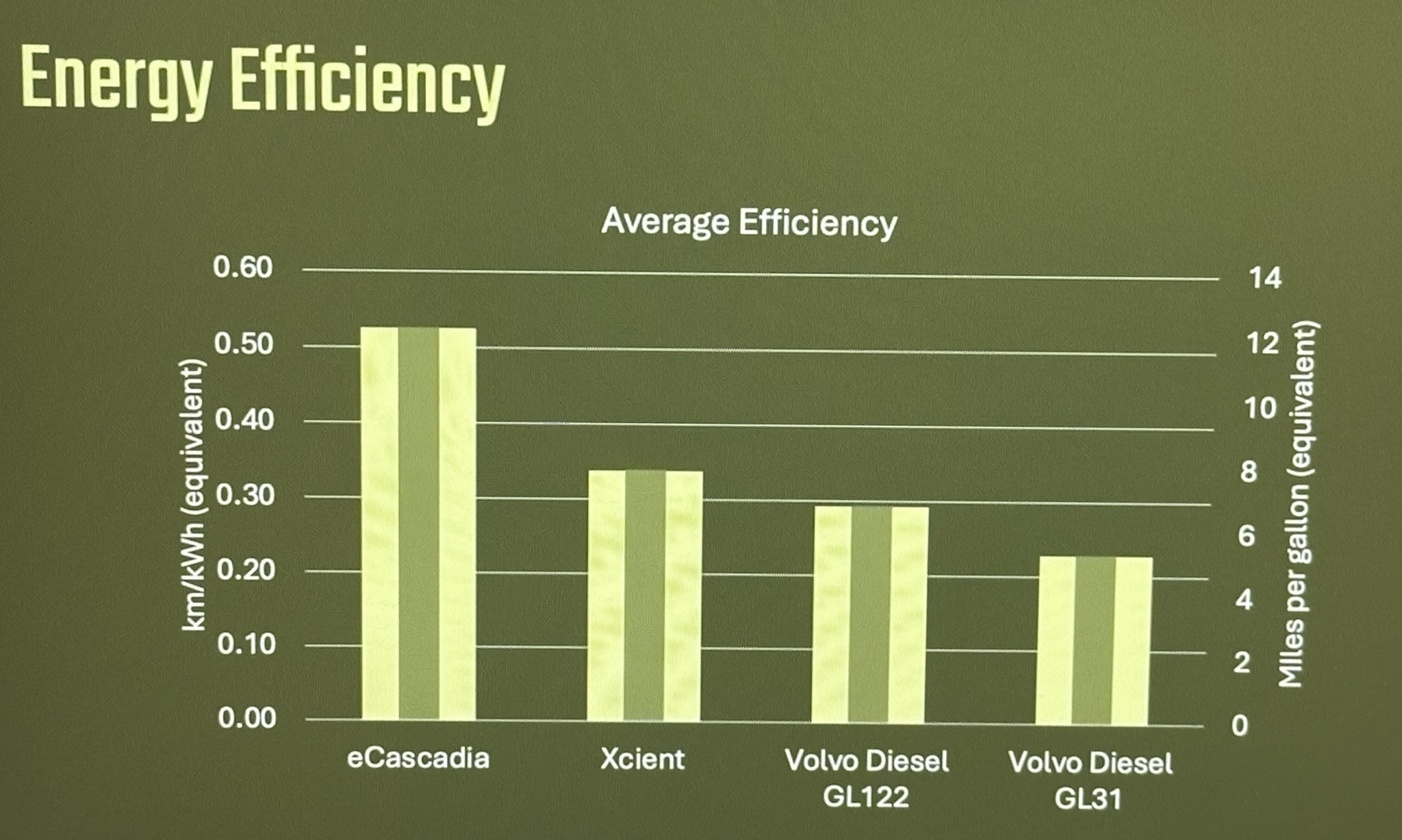
To compare trucks powered by different energy sources, researchers converted each truck’s energy consumption into a common energy-equivalent measurement. On that basis, the battery-electric Freightliner eCascadia was the most energy-efficient vehicle in the trial, ranking at roughly just over 0.5 km per kWh equivalent, followed by the Hyundai Xcient fuel-cell truck at 0.3 km/kWh equivalent. The diesel comparators ranked last.
That efficiency advantage translated into lower energy costs.
Using electricity priced at 11 cents/kWh, diesel at $2/liter and hydrogen at $16.50/kg, Innovate BC estimated battery-electric trucks cost about 25 cents per kilometer in just energy. Comparable diesel trucks ranged from roughly 75 cents to $1 per kilometer, while the hydrogen fuel-cell truck approached $1.75 to $2 per kilometer because of today’s hydrogen prices.
The comparison reflects energy costs only and does not include vehicle purchase price, charging or fueling infrastructure, or maintenance, Peterson noted.
The project also highlighted the importance of matching vehicle technology to the application, he added.
The eCascadia spent most of its time shuttling containers between Fairview Container Terminal and the Canada Border Services Agency’s container examination facility along a relatively flat six-kilometer route. The Class 7 eM2 BEV handled local pickup‑and‑delivery work around Prince Rupert, returning to Gat Leedem’s yard for charging.
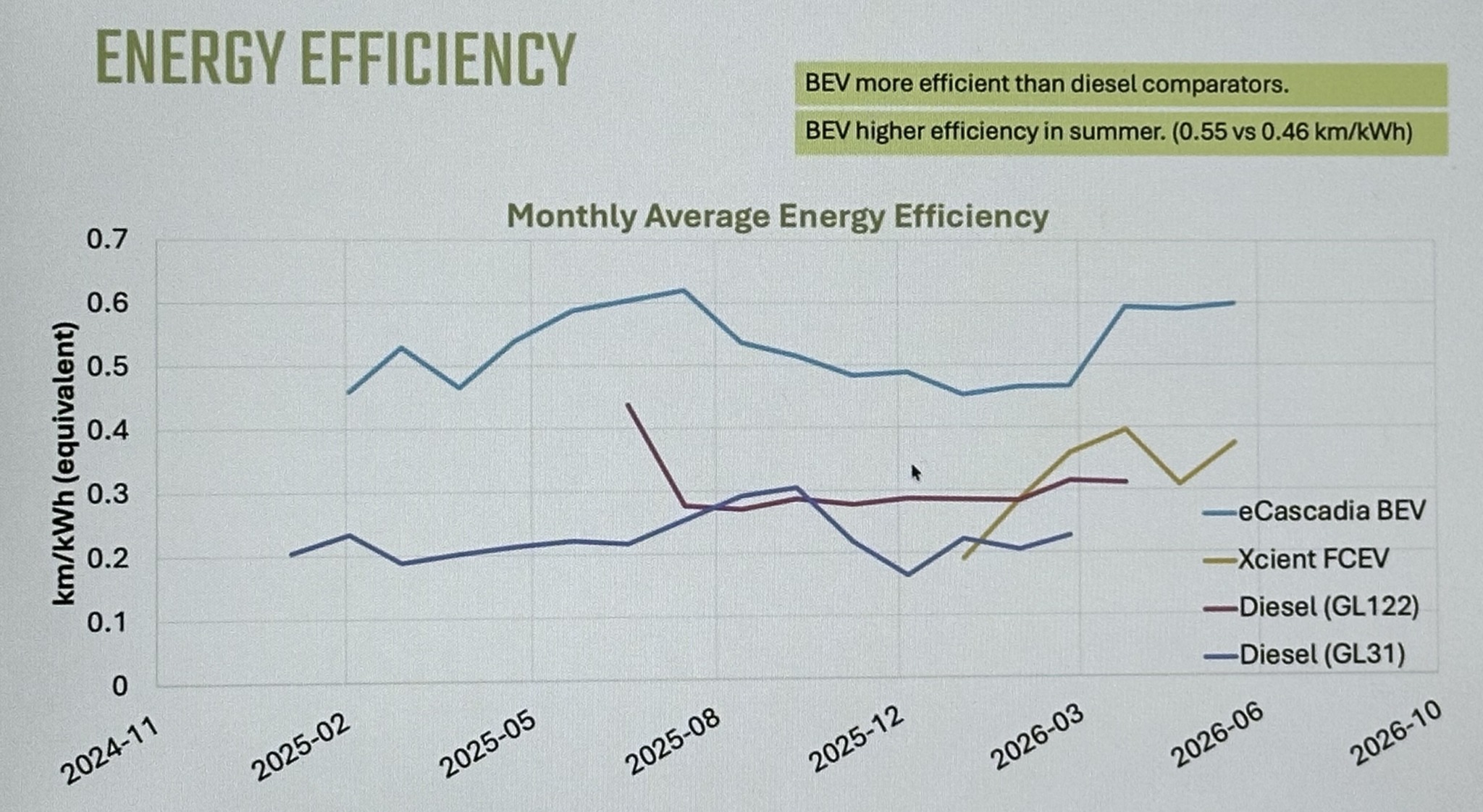
While the BEVs averaged about 275 km of real-world range – well below their advertised range of 354 km on Cascadia and 402 km on eM2 — they comfortably completed their assigned routes. Peterson said the trucks stayed in the lead even though winter reduced battery efficiency by about 16% to 20%, even in Prince Rupert’s relatively mild coastal climate.
Hydrogen fuel-cell trucks, meanwhile, demonstrated significantly longer operating range. The Xcient reached up to about 950 km when operating without a trailer and about 700 km while hauling heavy loads, closely matching its advertised range of 724 kilometers.
Infrastructure remains key
Peterson said charging has fit naturally into the battery-electric trucks’ daily schedule. The eCascadia typically returned to the yard mid-afternoon and required about four hours to recharge, allowing it to complete a full shift each day.
Hydrogen presented a different challenge because during the trial, the Xcient was mostly fueled by hydrogen delivered by mobile tube trailers, which was both expensive and time-consuming. A permanent electrolyzer-based fueling station that is now under development is expected to reduce hydrogen costs to less than $10/kg while cutting refueling times to about 20 minutes.
Freightliner BEVs also posted strong reliability throughout the demonstration. Peterson said the vehicles experienced “really good” uptime, with only minor issues such as parts delays and a broken headlight. The downtime experienced with Xcient was largely because servicing the relatively new platform required coordinating parts and maintenance support between Prince Rupert and a dealer in Terrace.

Have your say
This is a moderated forum. Comments will no longer be published unless they are accompanied by a first and last name and a verifiable email address. (Today's Trucking will not publish or share the email address.) Profane language and content deemed to be libelous, racist, or threatening in nature will not be published under any circumstances.