Tire recycling issues resurface in Ontario as regulatory changes, processing disputes strain the system

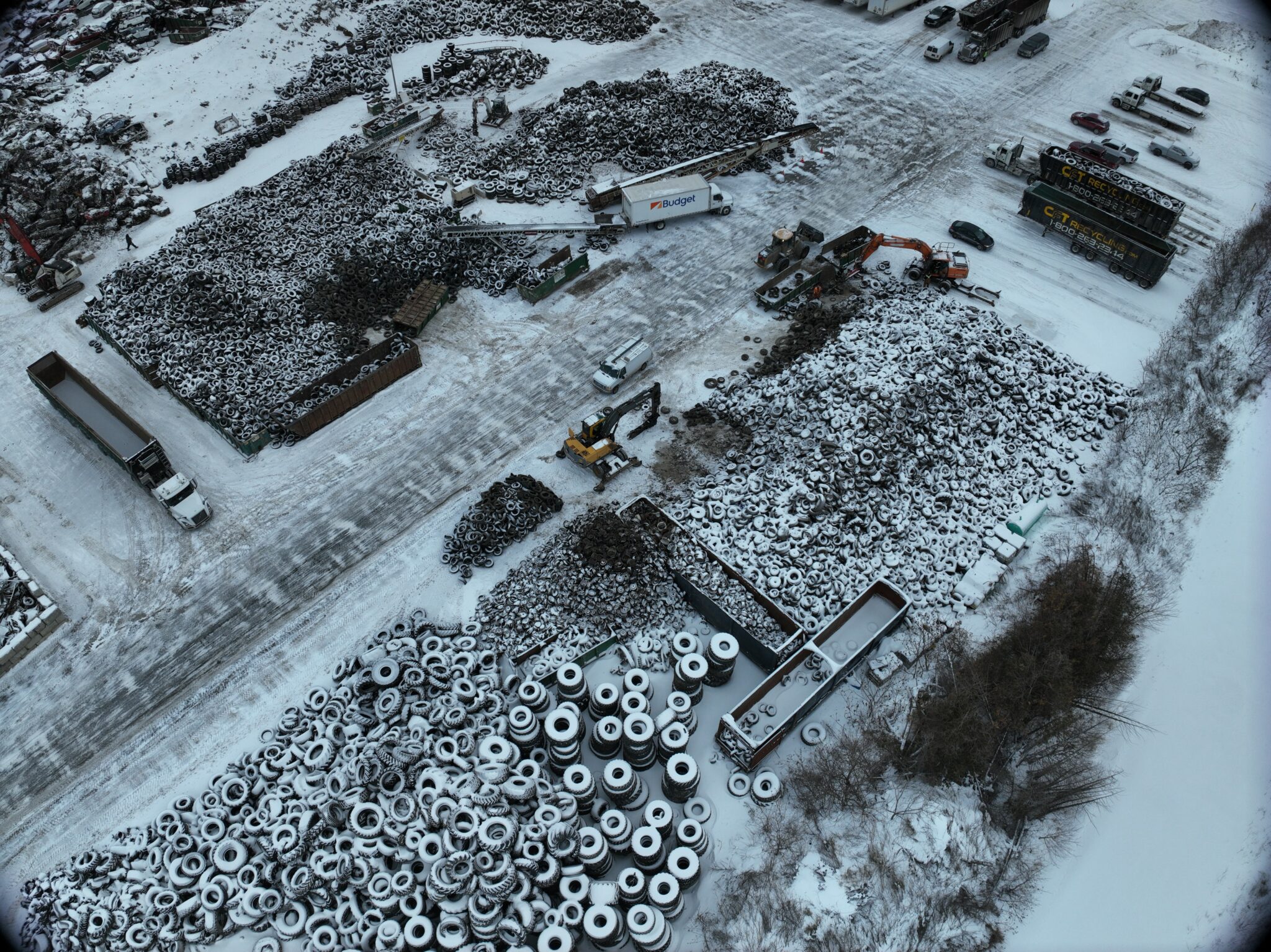
Concerns about Ontario’s tire recycling system are resurfacing, as industry players warn that regulatory changes and processing disruptions are destabilizing the network responsible for collecting and recycling scrap tires. At the same time, one of the province’s largest Producer Responsibility Organizations (PROs) says tire volumes entering the system are currently 43% higher than normal seasonal levels.
This comes after earlier reports that hundreds of thousands of used tires were piling up across Ontario in late 2025 and early January, even as recycling fees — about $5 per passenger tire and $15 per semi-truck tire — continue to be charged on new tire purchases. At the time, dealers and collection sites reported that some of the largest PROs — which manage recycling on behalf of tire producers — slowed or stopped collecting tires once annual recovery targets were met.
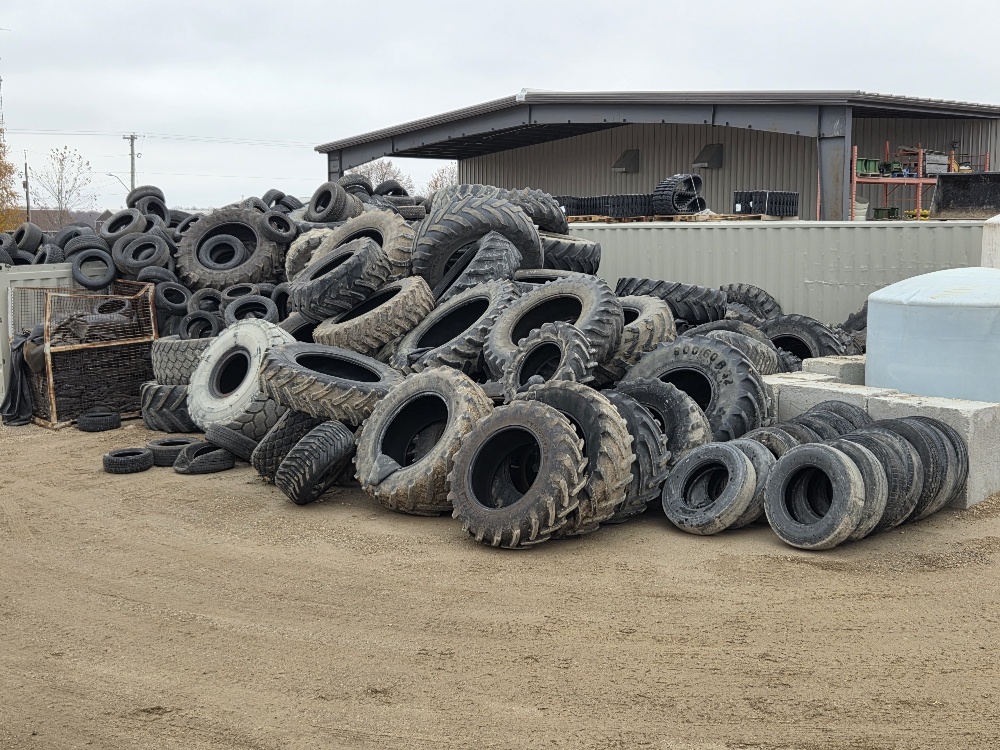
While the system is still working to clear stockpiles that built up in 2025, the latest tensions are caused by disruptions affecting deliveries to tire processors, including an alleged temporary suspension of inbound loads at a major recycling facility, and concerns from haulers about how volumes are being allocated across the recycling network.
The Ontario Tire Dealers Association (OTDA) also warns that a reduced collection network could leave some sites outside official recycling programs, potentially opening the door for unregulated operators to take advantage of the lack of oversight.
All this comes just weeks before dealerships are about to be swamped by the spring passenger car tire changeover season.
“Last week, I received 14 emails from haulers who are affected by the most recent cutbacks. All of them have the same issues, right? Their inbound has been cut, which means their revenue has been cut, which means they’re looking at laying off staff. Some of them are saying they may not be able to continue in business,” said Adam Moffatt, executive director of OTDA, in an interview with trucknews.com.
“These disruptions, just one after another, are playing havoc on every single one of these haulers. And I wouldn’t be surprised in the coming months if we see haulers start closing operations, shutting doors down. It’s just an unsustainable network, an unsustainable market to work in right now.”
Shrinking collection networks
Regulation changes introduced in 2025 altered how Ontario’s tire recycling system operates, Moffatt said. While the province lowered the required tire recovery target from 85% to 65%, the minimum number of required collection sites under the recycling system was also reduced.
Previously, about 9,000 locations across Ontario were registered to collect used tires. Under the revised rules, roughly 4,450 sites are required to meet compliance obligations.
Moffatt says PROs are now adjusting their networks to meet the lower requirement, leaving some generators outside the system. Sites that fall outside those networks (so-called ‘non-network’ sites) may still generate used tires but no longer qualify for pickup through a recycling program, though recycling fees are still applied when new tires are sold.

“We’re still frustrated … there’s a real gap on the funds that [producers] are charging and the services that they’re providing, and somebody — sooner than later — really needs to speak to that,” Moffatt said.
He also said sites that fall outside a PRO network are given several options, including re-enrolling into the PRO network, transporting tires to another collection site themselves or hiring a private recycler to remove them.
The first two options, Moffat believes, are not real solutions. On re-enrolling with a PRO, his view is that it ‘makes no sense’, since sites were already in the system for years and still got removed, while PROs have no obligation to take them back.
On self-hauling tires to another network site, he says the burden shifts to the removal site, which would have to cover the trucking, staffing, loading and unloading costs even though the recycling fee was already charged when new tires were purchased.
“I really doubt that many sites will be able to accept hundreds and hundreds of tires from all locations throughout the year, because they’re deemed in the network,” Moffatt added. “So we’ve pushed back on that to say that that’s unacceptable, that cannot take place.”
Risk of unregulated hauling
The third option — paying a private hauler — raises two concerns, he said.
The recycling fee is charged when a new tire is purchased. But if a collection site is removed from the recycling network, businesses may still end up paying again to have those used tires hauled away.
“We’re still being charged by the producers when we buy the tire through the retail chain. Now you’re telling us that certain sites have been removed from the network, and those sites…they’ve already paid once, now they’re gonna have to pay again to have somebody haul those tires away.”
He also warned the situation could create opportunities for unregulated operators to collect tires without clear oversight.
“The other challenge there is — and we’ve been experiencing the last little bit — is to haul those tires away. We don’t know, one, that they’re legitimate haulers, because I haven’t been able to identify two of them that are trying to charge [to] haul away. Number two is, where are those tires going?” he said.
“As we talk to the MECP (Ministry of the Environment, Conservation and Parks), we’re concerned maybe scrupulous business behaviors [are] going on, where somebody realizes they can make a quick dollar picking up tires, and those tires may wind up in a ditch, an alleyway, an abandoned building somewhere, because they fall out of what we call the network… So it’s like a grey market, but we want to be cautious about that.”
Haulers report delivery disruptions
Concerns about processing volumes have also surfaced among companies responsible for hauling scrap tires to recycling facilities.
Trucknews.com received a copy of an email sent to CRM sub-haulers advising the processing facility in Brantford would not accept tire deliveries until March 6.
The March 4 email said the temporary suspension was not related to processing capacity but to a quota imposed by the PRO eTracks on March 3, which it said mandated an immediate reduction of CRM’s inbound tire volumes by more than 50% until the end of the month. The message also said each hauler would be contacted with revised delivery allocations for the rest of the month.
CRM did not respond to trucknews.com’s inquiry to comment.
Trucknews.com also received a copy of a letter sent by a licensed tire hauler to the Resource Productivity and Recovery Authority, as well as a separate letter addressed to media, both raising concerns about the effect the temporary delivery disruption could have on hauling operations.
In the letter to media, it wrote, “As a hauler operating within this system, this sudden decision has immediate and significant consequences. The interruption will once again affect scrap tire collection across the province and severely disrupt our business operations. We rely on stable processing volumes to maintain service schedules, staffing, and financial viability. Abrupt quota reductions create uncertainty throughout the supply chain and place undue strain on haulers.”
eTracks denies cutting volumes in half
However, eTracks — one of the province’s largest PROs, accounting for roughly 70% of Ontario’s market — disputes claims that it reduced processing volumes by half.
Melissa Carlaw, vice president of communications and sustainability, told trucknews.com the organization is currently managing tire flows that are significantly higher than normal seasonal levels.
“We are not cutting our processing volumes by 50%,” Carlaw said, “Volumes are 43% higher than normal as we head into March, and we need to bring them back in line with normal-high volumes while we manage the ongoing backlog from 2025 and continue to collect in 2026.”
Carlaw claims suggestions that eTracks has reduced processing volumes by half are “completely misleading” and self-serving for the businesses who are paid based on the volume of tires they receive from the PRO.
When asked about adjustments affecting deliveries to CRM, she said it was related to cost management.
While describing CRM as “a valued service provider,” Carlaw said the company is “the most premium-priced processor” in eTracks’ network of 10 processors, and sending higher-than-normal volumes to the facility was not sustainable for the organization.
“eTracks pays processors to take tires – it’s a multi-million-dollar expense than needs to be managed. Once processed, processors can them sell their product into an end market,” she said. “It’s a valuable market and service, but eTracks can’t backfill the province in the absence of precedent or guidance – especially when we are managing 43% higher than seasonal tire volumes and it’s only the third month of the year. Our goal is to meet the compliance obligations of our customers while being fiscally responsible.”
Carlaw also said that processors are able to obtain tires outside of the producer responsibility system. “It’s not required under the current regulation that they are paid to accept tires, they then sell them into end markets. Some processors buy the tires they need to generate their end market sales. eTracks pays to process tires according to meeting regulations and ensuring that all the tires it collects are recycled into new products, even after meeting targets.”
When asked if eTracks has reduced the number of collection sites in its network, Carlaw said none of the sites have been removed from its network to date. “When a large PRO/hauler stopped collecting, eTracks was inundated with new collection site enrolment requests,” she added. “In 2025, eTracks accepted as many of these abandoned sites as we could reasonably service.”
Carlaw also challenged the suggestion that the province’s decision to lower tire recovery targets is the primary cause of current disruptions. While Ontario’s recovery target was reduced from 85% to 65%, she claims eTracks exceeded the current target in 2025 and would also have exceeded the previous 85% requirement.
“This makes us question that the issue is not about a lower target, but about PROs being able to suddenly stop collecting without facing a penalty,” she said.
Carlaw added that the lack of coordination between competing PROs has contributed to the backlogs.
These backlogs, unless cleared, will cause environmental and safety concerns soon, too. “The average dealership, the average location, they can probably only safely hold 100 to 150 tires before they run out of space, before you have health and safety concerns,” OTDA’s Moffatt said. Tires are difficult to extinguish if they catch fire, while piles stocked outside during winter can cause mosquito breeding as snow melts and standing water collects as the warm weather arrives.
Have your say
This is a moderated forum. Comments will no longer be published unless they are accompanied by a first and last name and a verifiable email address. (Today's Trucking will not publish or share the email address.) Profane language and content deemed to be libelous, racist, or threatening in nature will not be published under any circumstances.
-
I hear ya on that but my son’s blasting mat shop in Sturgeon Falls shut their doors cause there are no hauler to bring them tires to build blasting mats for hwy constructions and the list goes on. There are ALOT of people WITH families who lost their jobs. In this whole post it was neglected to mention that E360 Solutions is owed over 30 000 000$ by the government for the recycled tired they collected but we’re never paid for.

The Canadian government should give somebody a grant to start up to crush up these tires and put them into the road system. You mix rubber with asphalt and it will be a perfect highway not only that it gives in the winter and in cold weather your highway will not be all cracked up.