It’s time for accountability: An open letter to Canada’s ministers of transport

How many more people have to die beneath the wheels of trucks piloted by poorly trained drivers working for sham companies before the government starts living up to its responsibility?
That question is for you, Doug Ford and your partners in neglect, Ontario Transport Minister, Prabmeet Singh Sarkaria, and Nolan Quinn, the minister of Universities, Research Excellence and Security — the ministry responsible for the administration of post-secondary education, including private career colleges in Ontario.
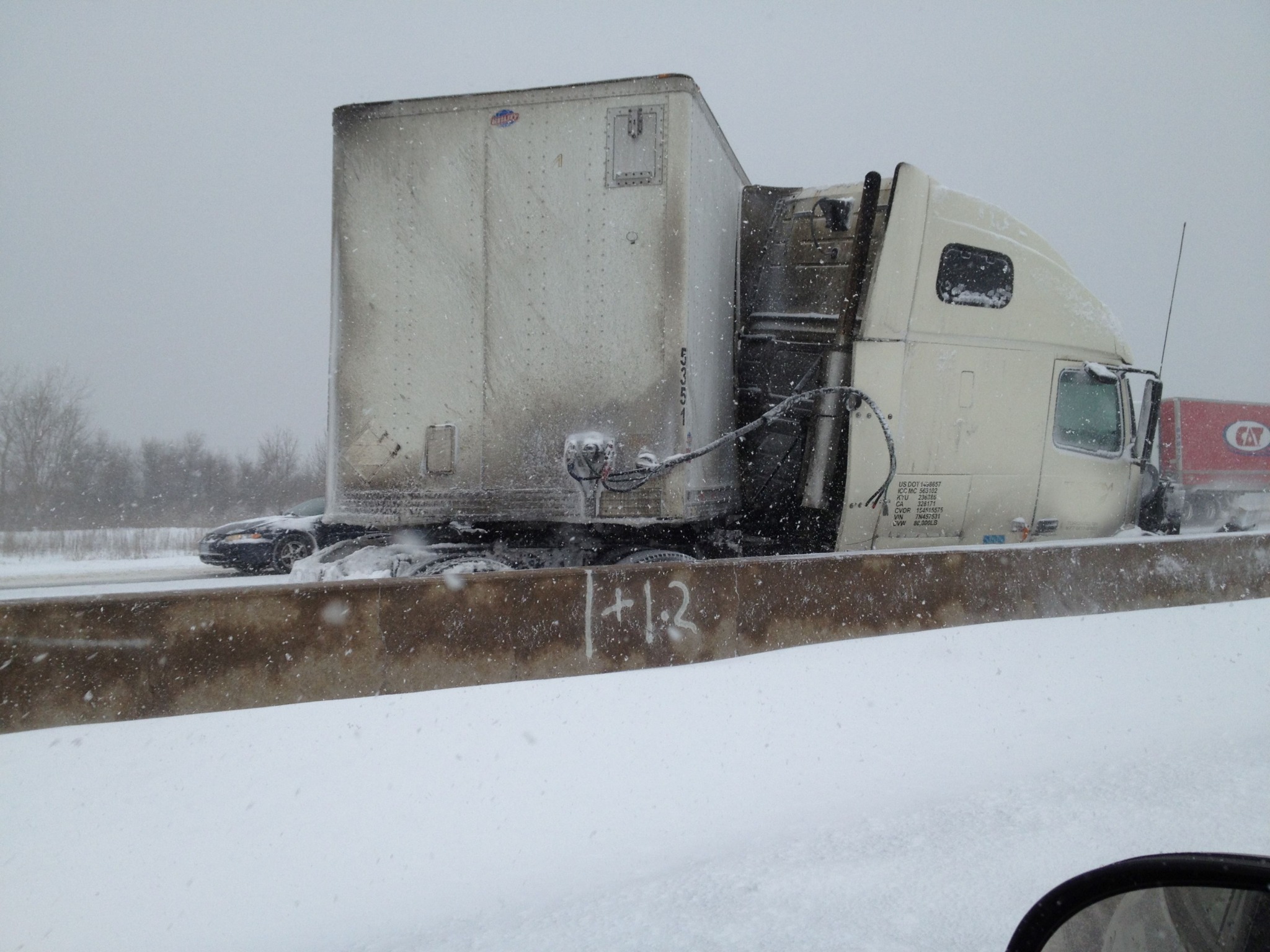
Ontario’s Auditor General recently released a scathing report on the state truck driver training and licensing in that province. I wasn’t terribly surprised by the AG’s findings. What shocked and angered me was that the data that produced those findings sat there in plain sight. If the AG could see it, why didn’t the senior leadership of those ministries see it too? More importantly, why was nothing done about it?
I would also address my question to Canada’s federal minister of transport, Steven MacKinnon, and the Canadian Council of Motor Transport Administrators (CCMTA).
CCMTA consists of representatives from Canada’s 14 provincial, federal and territorial governments. They have responsibility for the administration, regulation and control of motor vehicle transportation and highway safety in Canada.
Because of Canada’s constitutional structure, the federal government has little actual oversight of provincial trucking regulations. But there is an interprovincial component to this. Each province does not operate in a vacuum.
Truck fleets cross borders. Truck fleets do business in multiple jurisdictions. And as desperately as we need some level of interprovincial playing field upon which to weigh carrier performance, driver training standards, enforcement and business registrations, we’ll probably never see it.
CCMTA has a role to play
CCMTA, however, has a role to play here. It has some authority to facilitate some degree of cooperation and information-sharing between jurisdictions. For example, the problem of chameleon carriers relocating from one province to another could be resolved by establishing a national carrier safety database. Regulatory harmonization has been on the CCMTA table for years. But we’ve seen little in the way of concrete action.
I’ve attended more than a dozen CCMTA annual meetings, and I’ve heard all the excuses for why we can’t create such a database. The problems aren’t structural or constitutional — they can be overcome; it’s a lack of political will.
Just this week, we learned of another life taken by the driver of one of those chameleon carriers. Published reports say a truck driver ran a stop sign in Winnipeg and crashed into an SUV, killing its driver.
The carrier that the driver worked for, the CBC reports, had its Manitoba safety fitness certificate revoked in 2021, but remained in business after registering in Alberta.
In a story on CBC.ca, Manitoba Transportation Minister, Lisa Naylor, acknowledged the need for a national transportation database of truck operators. “That gap speaks to the need for the federal government to create a national database of truck operators for everybody’s safety,” said Naylor, the CBC wrote.
In the same story, Manitoba Trucking Association’s executive director, Aaron Dolyniuk told reporters that the lack of a federal database is hurting the trucking industry and the public. He indicated the problem is that the reporting around safety issues with companies is unique to each province, and [the provinces] are not working together.
Federal database needed
“Industry has been raising the alarm bells on this topic for many years. [The] public should be upset. We are upset. In our view, this accident is one that should not have happened, because this company should not exist,” Dolyniuk told CBC.
So, Minister Naylor, you are obviously aware of the problem. Why has your ministry not done anything to resolve it? Your inaction, and that of other equally aware ministers of transport across Canada, is jeopardizing the health and prosperity of the very industry that keeps Canada functioning, while turning a blind eye to the safety of the motoring public — and the other truck drivers who share their workplace with these lowlife reprobates.
And here’s a question for you, Devin Dreeshen, Alberta’s minister of transportation and economic corridors: How is it that so many fly-by-night trucking outfits, like the one previously mentioned, wind up registered in your province after fleeing some other province when their safety records catch up with them?
Legacy carriers, the old rules-based carriers, are losing the battle against this invasive species of carrier who, rather than play by the rules — ensuring their drivers are qualified and their equipment is properly maintained — actively seek out ways to scam the system and defeat the checks and balances that exist to protect the industry and the motoring public.
The old-order trucking industry does not have the legal tools or authority to fight this scourge alone. There’s not a single mechanism carriers can employ to combat the threat of these illegal and unscrupulous competitors except to demand action from our regulators and their political bosses.
More resources needed
As Dolyniuk noted, the responsible carriers and associations in the industry have been calling for greater oversight from regulators for a long time. Those calls have been ignored or punted down the field for some other administration to deal with.
So, here’s one more question for those with some regulatory or administrative authority over trucking: You acknowledge your ministries are understaffed. You claim you don’t have the budget to hire enough inspectors to police commercial driving schools or conduct compliance audits on motor carriers. Have you ever weighed the cost of adding additional staff against the societal cost of the highway closures resulting from the dozens of fatal crashes on our highways? Or, the cost of replacing equipment and merchandise destroyed in those crashes?
Have you ever considered the personal costs of burying loved ones killed in those crashes, or the cost of the long-term care required by those injured or maimed for life in such crashes?
I’d much rather see my tax dollars spent hiring additional enforcement personnel and auditors than pay for the aftermath of another fatal truck crash.
The Americans are taking decisive action in truck safety. U.S. DOT Secretary Sean Duffy has called for several regulatory changes aimed at getting unsafe carriers and poorly trained drivers off the road. He has much the same problem we do. And he’s doing something about it.
I wish I could say the same for our ministers of transport and their senior leadership. Here’s one final question for you: how do you sleep at night?
Have your say
This is a moderated forum. Comments will no longer be published unless they are accompanied by a first and last name and a verifiable email address. (Today's Trucking will not publish or share the email address.) Profane language and content deemed to be libelous, racist, or threatening in nature will not be published under any circumstances.
-
I see some many bad drivers in Canada and this because of lack of training and we need a min standard of pay for all trucks that haul hazmatt and or cross the border. Ont and Alberta seem to have the most poor trucking companies.
Great article
More training won’t do anything. The people behind the wheels don’t care. They simply couldn’t care less as this country run by the inefficient political machine grinds on to platitudes and B.S.
Despite decades of this abuse, it continues. Money trumps everything in Transportation. Lack of oversight abounds. Lack of enforcement and fear of political backlash from the different ethnic cultures is fueling the lack of process to prevent the ever increasing damages, theft, and loss of life on our highways and those of our neighbour’s
Keep up the fight we need to turn this catastrophe around. 90 percent of the problem truck drivers stem from lack of English speaking, reading, writing, attitude towards safety and a culture of cutting every corner imaginable to make a dollar. All while pulling down everyone else in the trucking industry. It’s not a difficult fix or discrimination, safety has to always come first.
Thank you Jim for stating the current state which federal and provincial give continue to avoid addressing. We all know there are some great tools and fleet safety performance information out there today and readily available. Yet there are these scab fleets who do nothing to improve. One tool the USA has that I would like to see adopted here in Canada is their one source to see a carrier’s over the road performance. It’s called CSA (compliance, safety, accountability) available free on line through the FMSCA’s Safer Website. It provides details on a carrier’s performance on collisions, maintenance, roadside violations, mechanical defects, hours of service compliance across all of the USA. It also grades the carrier’ performance. A great tool for fleet safety management, yet Canadian provinces only provide poor lookalikes many of which are only available for a fee.
Couldn’t agree with you more on this issue Jim.
Jim,
Good article.
I would be interested to see how this issue relates to insurance companies. They are the ones who can put a stop to a lot of this garbage.
AND:
Your publication is guilty of not going after these nickle-and-dimers, with full force. By that I mean, there is diligent reporting, but names are withheld. And while we’re at it how about, some of the bigger carriers? This carnage on the road, and safety nonsense going on at the inspection stations is not restricted to smaller carriers.
Identify these companies, their owners, and demand comment from them. If you need to qualify it with the word “alleged” do so, but writing about some unknown company doing some shady or outright illegal activity and not saying who, does nothing.
And let’s follow up. We see reports of crashes on this or that hiway, and then never hear again about what resulted from it. The last time I saw any kind of follow up was with the Saskatchewan tragedy or that drunken moron who hit the Burlington Skyway with his bucket. Both were so sensational that follow-up reporting was demanded by the public.
How about a quarter page showing companies who are on notice with the MTO? If you really wanted to go for the throat, expose the companies that hire these disreputable carriers. This notion of shippers hiring a carrier and then refusing to accept any responsibility for that carrier’s actions, has started to unravel, based on the recent SCOTUS decision regarding logistics providers.
You make it very unpleasant for this kind of thing to go on, and maybe some of it will end.
Well Said Jim I am Waiting for the Response From the Higher Ups on The Situation
-
Don’t hold your breath, Alf.
Jim, I love the way you’ve included CCMTA in this expose’.
For those unaware, CCMTA is the Canadian Council of Motor Transport Administrators – they are made up of representatives from every province and territory and they get to make the calls on federally regulated issues related to the trucking industry.
Jim, as we both know, the people in the room other than those appointed are “guests” and have to pretty much beg to be heard. This is a broken system from the get go when the experts have to beg and the governors have little or more likely NO hands on experience.
I intent to push our Western Professional Truckers Association (WPTA) to adopt an action item with a formal request for the creation of a CCMTA subcommittee which would act as a “House of Representatives” staffed categorically by two people from each jurisdiction: 1 representative elected by carriers and one representative elected by drivers.
We are so far past the point of begging for change and way too far down the path of road safety decimation to allow this to continue any longer. A true panel of experts allied to act quickly and decisively is paramount.
Not to take away from the situation in Ontario however are commercial drivers heading to the west coast in
B.C. Mountain certified as part of their license ?
The past few years on main mountain routes commercial transport incidents and accidents have increased with delays for hours if not days traumatic injuries, fatalities should not be part of the norm.
Jim I hope you are not wasting your breath….this situation has persisted for many years and it seems no Government has the will to make the changes needed. Good luck

Watching unscrupulous carriers is disgusting. Their drivers are SLAVES with not a care on what happens. They have lowered rates to rates that don’t pay to maintain trucks. Shippers have encouraged this race to the bottom by hiring them. It is now evident , in USA truck stops, that bad drivers are in fewer trucks. Watch a truck back into a stall is a quick verification of the driver skill set.