Ontario’s ‘easy’ truck license culture puts lives at risk

Ontario Auditor General Shelley Spence’s scathing report on commercial truck driver licensing confirms what has been going on for a while.
Everything crooked you can imagine, and more, is taking place.
Focusing on passing the road test rather than broader skills, check.
Training on DriveTest’s road test routes, check.
Booking tests at “easier” test centers, check.
Signing off on fewer than mandated training hours, check.
Not maintaining student-to-trainer ratios, check.
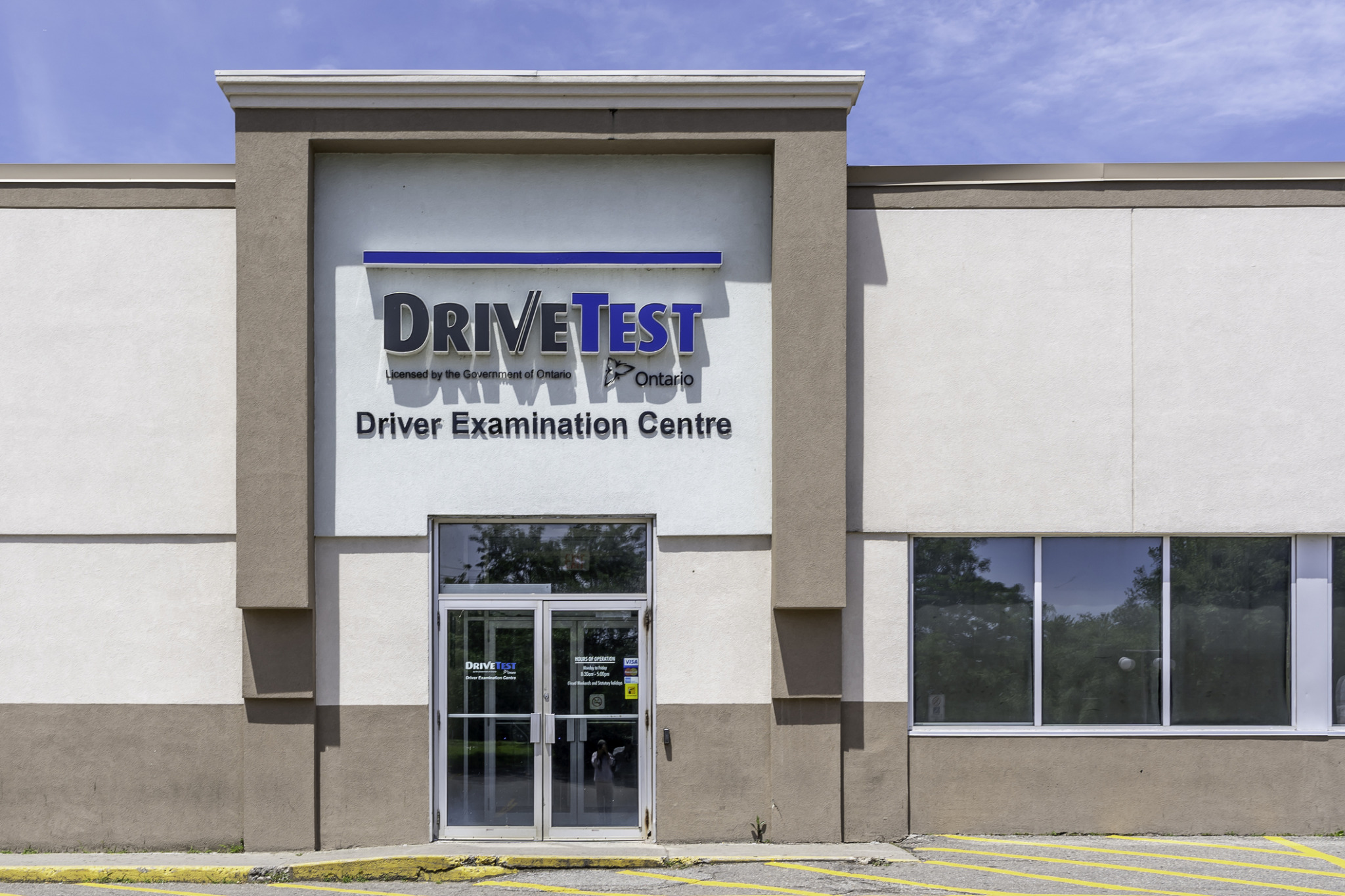
I’ve heard of mandatory entry-level training (MELT) certificates being signed off for a fee. Also, a student who failed a road test at one school was training others on pre-trip inspections at another school in lieu of taking a road test with their truck. You can’t make this stuff up.
The auditor general found that, as of March 2025, 25% of all Ontario private career colleges offering MELT — 54 of the 216 — were never inspected by the Ministry of Colleges, Universities, Research Excellence and Security (MCURES).
One in four driving schools not inspected
That’s one in four schools.
Multiply that by the number of students trained by them who have passed a road test, maybe the “easy” one, and are now driving beside you and your loved ones on the roadway.
I’m not painting all schools with the same brush, because there are some really good training institutions. And those mostly get inspected and audited.
Would you be comfortable sitting in an aircraft whose pilot was trained by a flying school that was never inspected? What about the train operator hauling hundreds of freight cars rolling into your town? Or the captain and officers helming the cruise ship you are vacationing on?
Oversight by two ministries
Ontario has a strange officialdom when it comes to truck driving schools. They are private career colleges under MCURES, but oversight is shared with the Ministry of Transportation (MTO).
The troubling part is that MCURES inspectors are checking culinary and hairdressing schools, along with truck driver training schools. They may or may not possess the expertise and understanding required.
Ontario Transportation Minister Prabmeet Sarkaria said the Ministry of Transportation and MCURES have been conducting targeted enforcement against schools, and charges have been laid. He did not provide details.
The industry and public are very interested in the details.
Details are lacking
As part of my job, I seek those details in the questions I send to the transportation ministry. I usually get a statement, and no response to the questions asked.
MCURES Minister Nolan Quinn’s office provided details. The province has inspected 14 additional career colleges offering Class A truck driver training since the drafting of the auditor general’s report.
The government is working with the superintendent of career colleges to ensure all remaining career colleges offering Class A truck driver training programs are visited by the end of June.
I applaud the auditor general for shining an official light on the embarrassing mess. This report lands squarely in the public spotlight, and it’s creating waves, as it should.
“Not my truck, not my industry,” is perhaps what goes through the public’s mind. For many, trucks are a nuisance, blocking lanes on a highway or slowing traffic on smaller roads. When there is a crash involving a transport truck, there is a collective shaking of heads until the next thing comes along in the news cycle.
Recipe for disaster
Amid all this activity, let’s focus on the driving school students. It is in their interest to get the best training possible. But consider these factors as well. For many, the mindset is to get the license first and learn on the job later.
Driving school owners (the good ones) have told me on numerous occasions the first question they get asked from prospective students is, “How much?” The second question is, “How long?”
The cheapest option with the shortest training timeframe is a recipe for disaster.
Rot in the industry
That is what is driving this rot in the industry. And there are many willing to cater to this appetite to get a commercial driver’s license.
Supply and demand without enforcement and penalties is what led us to this situation. Actions speak louder than words, and time will tell if things get cleaned up.
Until then, be afraid, be very afraid of the “easy” bunch on the road.
Have your say
This is a moderated forum. Comments will no longer be published unless they are accompanied by a first and last name and a verifiable email address. (Today's Trucking will not publish or share the email address.) Profane language and content deemed to be libelous, racist, or threatening in nature will not be published under any circumstances.
The quality of training provided to truck drivers at various truck driving schools has become a recurring topic of discussion periodically. To preclude future repetition, innovative yet straightforward actions are necessary to modify the delivery of the M.E.L.T. program in Ontario.
Proposal to Improve Mandatory Entry-Level Training (MELT) for Truck Drivers in Ontario
Objective:
To improve the quality, consistency, accountability, and road safety outcomes of the Mandatory Entry-Level Training (MELT) program for commercial truck drivers in Ontario through a simpler and more effective training and testing structure.
Proposed Changes:
1. Deliver the Theory Portion Exclusively Online
The complete theoretical portion of MELT should be standardized and delivered only through one approved online learning platform, similar to the model used in Saskatchewan. Bluedrop developed AccelerateMELT™ https://bluedropism.com/acceleratemelt/ in collaboration with industry experts. This interactive alternative to the in-class portion of the MELT program fully aligns with the national NSC Standard 16, and offers comprehensive curriculum coverage.
Benefits include:
Consistent delivery of curriculum across the province
Easier government oversight and auditing
Reduced classroom scheduling and infrastructure costs
Greater accessibility for students in rural and remote areas
Better monitoring of student participation and progress
A centralized online curriculum would also reduce inconsistencies between schools and help prevent abuse or shortcuts in theoretical training.
2. Mandatory Final Written Examination Through Drive Test
After completing the online theory program, students should be required to pass a standardized final written examination administered only by Drive Test.
This would:
Ensure independent evaluation of theoretical knowledge
Create province-wide testing consistency
Prevent conflicts of interest between schools and students
Increase credibility and public confidence in the MELT program
Only applicants who successfully pass this examination should be permitted to continue to the practical training portion.
3. Practical Training at Any Registered Truck Driving School
Once the written examination is passed, applicants should be free to select any registered truck driving school for the practical driving portion of MELT.
This approach would:
Increase competition between schools based on training quality
Give students greater flexibility and choice
Allow specialization in practical driver development
Simplify administrative responsibilities for training providers
Practical training schools would focus primarily on real driving skills instead of classroom administration.
4. Significantly More Demanding Final Road Test
The final commercial road test administered by DriveTest should be substantially longer and more difficult than the current examination.
The emphasis should shift from minimum competency toward demonstration of genuine professional driving ability.
Expected Benefits
Implementing these changes would:
Increase the skill level of new commercial drivers
Improve highway safety for all road users
Reduce opportunities for inconsistent or low-quality training
Improve public confidence in Ontario’s licensing system
Create clearer accountability between theory training, practical training, and finally testing
better prepare drivers for real-world commercial driving conditions.
Conclusion:
Ontario’s current MELT system can be improved through a more standardized and independently verified training structure.
A centralized online theory program, independent written testing, flexible practical training selection, and a significantly stronger final road test would create a more effective and credible licensing system while improving safety on Ontario roads.
These reforms represent practical, common-sense measures that could be implemented without unnecessary complexity while delivering substantial long-term benefits to the trucking industry and the public.
Sincerely,
Jacek Hoffmann Retired Ontario Driver Examiner(15 years ) Former Professional Truck Driver (15 years) Qualified In-Truck Instructor / Trainer Transportation Consultant and a very concerned Ontario resident
I am reaching out to various stakeholders about this issue, anticipating meaningful actions to improve safety on Ontario roads.
-
Well said a solution that everyone can get behind and maybe bring S G I to do supervision to that program and offer insurance to training schedule that they like in Ontario Canada
I’ve had my A license since 1984 as a safety consultant I do many road tests every week for various clients it amazes me that I still get driver who can’t back up can’t even get it into the loading door something is very rotten in this industry I blame the government we need to take back the licensing and only MTO signing authority again bring it all back in house

We need the gov insurance for new drivers for the first 2 years with half of the cost of the insurance and training for new truck drivers to paid from.a specific fund by a fee of 1 cent per km traveled in a truck over 20 000 kgs . It costs about $12 000 to train a new driver plus a extra risk factor of about $800 per month if they stay in Canada the first 9 months
Small fleets can insure new drivers better in 3 parts of Canada but more training is needed after finishing current training in my opinion