Building safety culture requires consistency, trust and follow-through

Changing safety culture in trucking operations requires consistency, communication and a shift away from discipline-first approaches, safety executives said during a Fleet Safety Council Hamilton/Niagara chapter seminar on April 30, in Burlington, Ont.
Officials described how workplaces have evolved from rigid enforcement models to more collaborative approaches focused on coaching, trust and accountability.
Werner Unger, safety and compliance manager at CNTL, said earlier practices relied heavily on fear and punishment, which proved unsustainable over time.
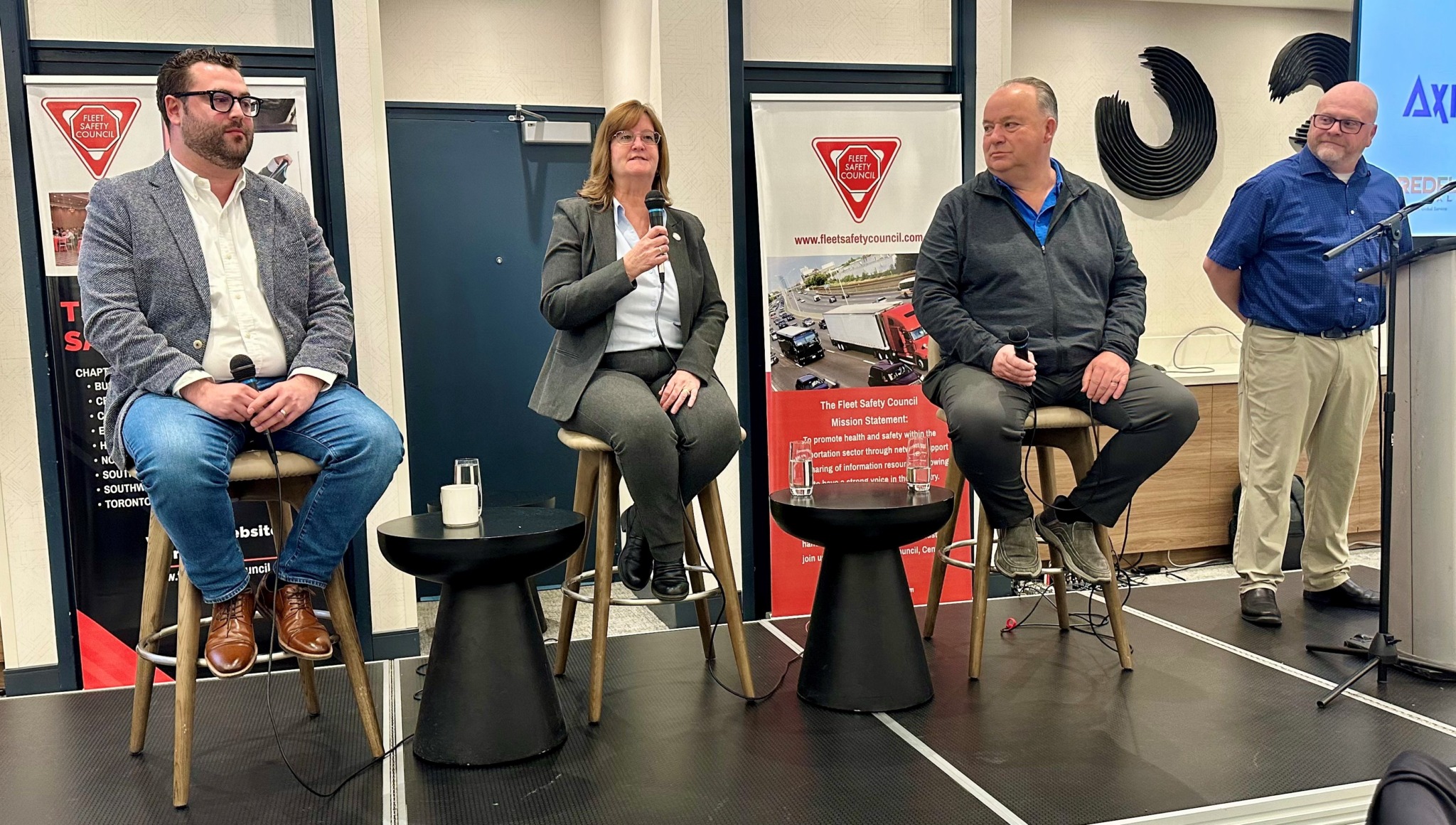
“Many years ago, we were a culture of fear and reprisal,” Unger said, describing an approach that emphasized catching mistakes and issuing discipline. That model led to disengagement and limited communication from drivers.
Organizations have since moved toward encouraging drivers to understand the purpose behind safety rules and to take ownership of their actions. Unger said this shift has improved interactions between drivers and safety staff, replacing anxiety with more open dialogue.
Cooperative environment
Drivers are now encouraged to think about why safety matters personally, including responsibilities outside of work. That change has helped create a more cooperative environment, he added.
Daniel Cohen, service center president at Salit Steel, said culture is not a fixed outcome but an ongoing process that requires constant attention.
“I don’t think there’s one ultimate goal,” Cohen said, noting that companies must continuously adjust and refine their approach. He added that treating employees with respect and listening to their concerns plays a central role in driving change.
Panelists emphasized that effective safety culture depends on relationships built over time. Wendy Watson, director of safety and training at Attridge Transportation, shared an example of a driver who initially resisted oversight and criticized her role. Over time, consistent engagement led to a change in attitude, culminating in an apology and recognition of the safety program’s value.
Watson said such experiences highlight the importance of persistence when implementing new practices, especially in environments where long-standing habits are difficult to change.
New drivers often receive extensive training, but maintaining those standards can be challenging once they begin working alongside experienced employees. Watson pointed to issues such as resistance to daily inspections or reluctance to follow personal protective equipment policies.
She said leading by example has been effective in reinforcing expectations. Demonstrating compliance and engaging drivers directly has helped influence behavior, particularly among more experienced workers.
Leadership visibility
Panelists agreed that leadership visibility is critical. Unger said safety teams regularly observe drivers in the field to ensure procedures are being followed and to provide feedback when necessary. These interactions are intended to support drivers rather than penalize them.
The discussion also highlighted the importance of communication following incidents. Unger said the first priority when responding to a collision or safety event is checking on the well-being of those involved.
“The first question … is, how are you?” he said, stressing that people must come before equipment or cargo.
He acknowledged that reactions to incidents have not always been measured, noting that earlier approaches sometimes involved anger or blame. Over time, organizations have adopted structured response protocols that focus on support, investigation and prevention.
Separate emotional response from analysis
Cohen said separating the emotional response from the analysis of an incident is essential. Understanding what happened requires examining multiple factors, including training, policies and environmental conditions.
He said companies are increasingly using collaborative reviews and simulations to improve preparedness. These exercises bring together different perspectives, including insurance representatives and industry experts, to establish clear response strategies.
Watson said post-incident reviews are now treated as learning opportunities. Drivers may revisit the location of an event to assess what could have been done differently and identify safer alternatives.
The panel also discussed the role of leadership in shaping culture. Cohen said technical skills do not always translate into effective management, and organizations must invest in developing supervisors who can communicate expectations and support employees.
Maintain consistent approach
Dispatch environments were identified as particularly demanding, requiring individuals who can manage high-pressure situations while maintaining professionalism.
Family-owned businesses face additional challenges when balancing operational decisions with personal relationships. Watson said enforcing safety standards can be difficult when they conflict with established practices or expectations within the organization.
Despite these challenges, panelists stressed the importance of maintaining a consistent approach. Watson said remaining focused on safety priorities, even in difficult situations, is necessary to achieve long-term change.
Unger highlighted the need for open communication between drivers and management. Encouraging employees to report issues without fear of punishment helps identify risks early and prevents more serious incidents.
He compared the approach to parenting, where honesty is valued more than avoiding consequences. Drivers who report problems promptly are better positioned to receive support and guidance.
Calm, one-on-one approach
The panel also emphasized listening as a key component of effective communication. Understanding the reasons behind driver behavior allows safety teams to address underlying issues rather than simply enforcing rules.
Watson noted that aggressive or confrontational communication can lead to disengagement. Taking a calm, one-on-one approach has proven more effective in building trust and encouraging compliance.
Cohen said fostering genuine relationships is essential for sustaining cultural change. Employees are more likely to engage when they feel valued and understood, rather than treated as part of a system.
He added that informal communication networks within organizations can help spread safety messages, particularly when influential employees adopt and reinforce desired behaviors.
Ultimately, panelists agreed that improving safety culture requires ongoing effort at all levels of an organization. Consistent messaging, visible leadership and a focus on people were identified as key factors in achieving lasting results.

Have your say
This is a moderated forum. Comments will no longer be published unless they are accompanied by a first and last name and a verifiable email address. (Today's Trucking will not publish or share the email address.) Profane language and content deemed to be libelous, racist, or threatening in nature will not be published under any circumstances.