Carriers await Gordie Howe bridge opening as launch delayed

The Windsor-Detroit Bridge Authority (WDBA) announced June 11 that Canada and the United States had agreed to delay the Gordie Howe International Bridge opening to “resolve any outstanding issues,” without elaborating on what those are.
This comes before a ribbon-cutting ceremony planned for June 12. Meanwhile, some Ontario carriers have already begun onboarding and operational testing tied to the long-awaited opening of the crossing.
“As we work towards an opening date, we are taking a collaborative approach, reflecting our shared ambition for this trade corridor,” said Chuck Andary, interim CEO and chief legal officer of WDBA, in a statement.
However, Canadian fleets are eagerly awaiting the bridge opening, with the Private Motor Truck Council of Canada (PMTC), Ontario Trucking Association (OTA) and Canadian Trucking Alliance (CTA) all stressing the importance of opening the crossing quickly.
“While any delay in opening is unwelcome news, as long as the delay is short and the long-awaited opening of the Gordie Howe Bridge occurs extremely soon, we look forward to the relief and convenience this new connection will provide our members,” PMTC president Mike Millian told trucknews.com. “We hope political agendas south of us will stay out of the way going forward and allow this great feat of partnership between our two countries to move forward seamlessly.”
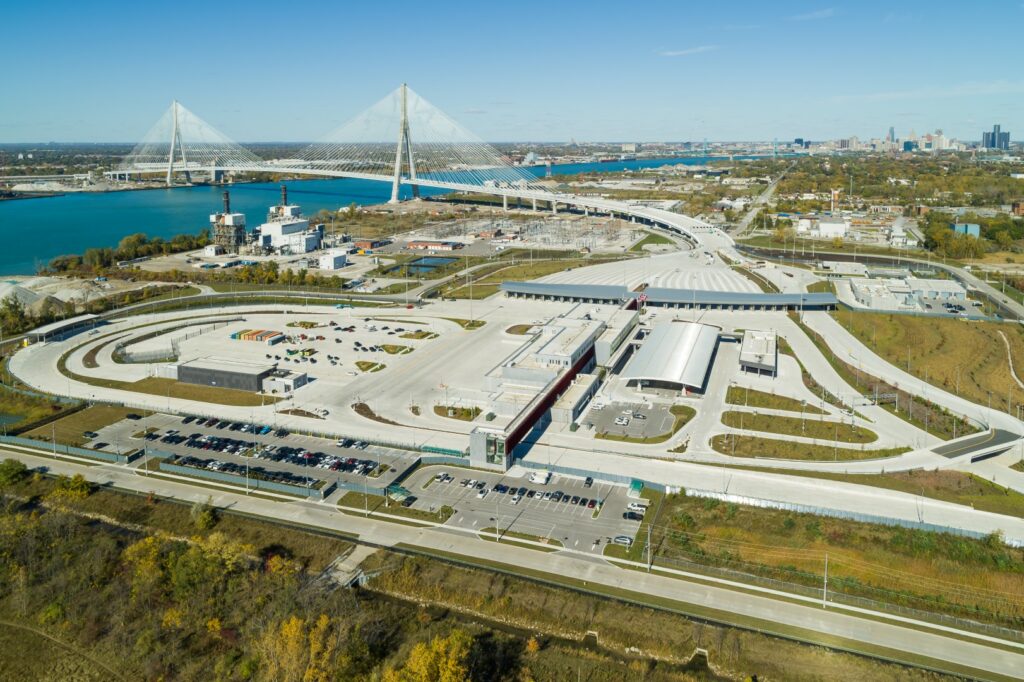
The bridge, jointly owned by Canada and Michigan, was expected to open to traffic this month, but the opening date was in question after President Donald Trump’s social media post in February, demanding Canada turn over at least half of the bridge’s ownership to the U.S. federal government and agree to other unspecified demands in one of the Republican president’s many salvos over cross-border trade issues.
Canada’s Prime Minister Mark Carney hinted June 10 that the opening could be delayed, while downplaying any concerns. “There is no big drama. If it takes a little longer it will take a little bit longer, but this will benefit Canadians, Americans, business, tourists, residents for decades and decades to come,” he said.
Nearly $400 million worth of goods moves daily through the Windsor-Detroit corridor, one of the busiest trade gateways between Canada and the United States, and the OTA said last week some carriers report additional monthly costs ranging from $20,000 to more than $100,000 to maintain normal shipping schedules through the corridor.
“The longer the Gordie Howe International Bridge remains unavailable, the longer businesses on both sides of the border must absorb unnecessary expenses associated with congestion, delays, and longer transit times,” Stephen Laskowski, president and CEO of the OTA and CTA, said in a statement on June 11. “The trucking industry is ready. Carriers, drivers, and supply chain partners have prepared for the opening of this critical border crossing, and we stand ready to work alongside government and project partners to help get this vital gateway open as soon as possible.”
Ontario carriers already preparing for launch
The new bridge will connect Highway 401 directly to Interstate 75, allowing trucks to bypass Windsor city streets and easing pressure on the nearby Ambassador Bridge.
For carriers, this roughly $4.4-billion project is expected to reduce border delays, improve routing flexibility and add much-needed redundancy to a corridor that has relied heavily on a single major commercial crossing for decades.
“It’s going to add another option,” Yudi Persaud, owner of Kingsville, Ont.-based SK Cornerstone, said. “It’s been a number of years where the traffic backlog is terrible on the [Ambassador] bridge. I’ve got guys that spend probably up to four hours crossing the border before, [so] that will definitely disappear.”
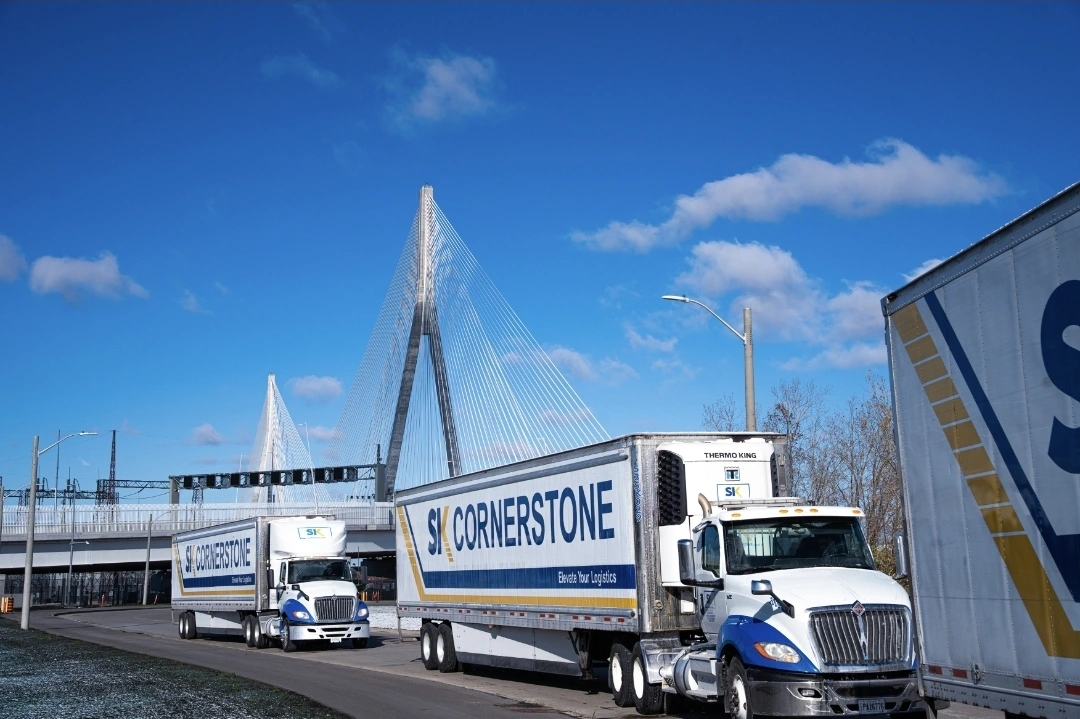
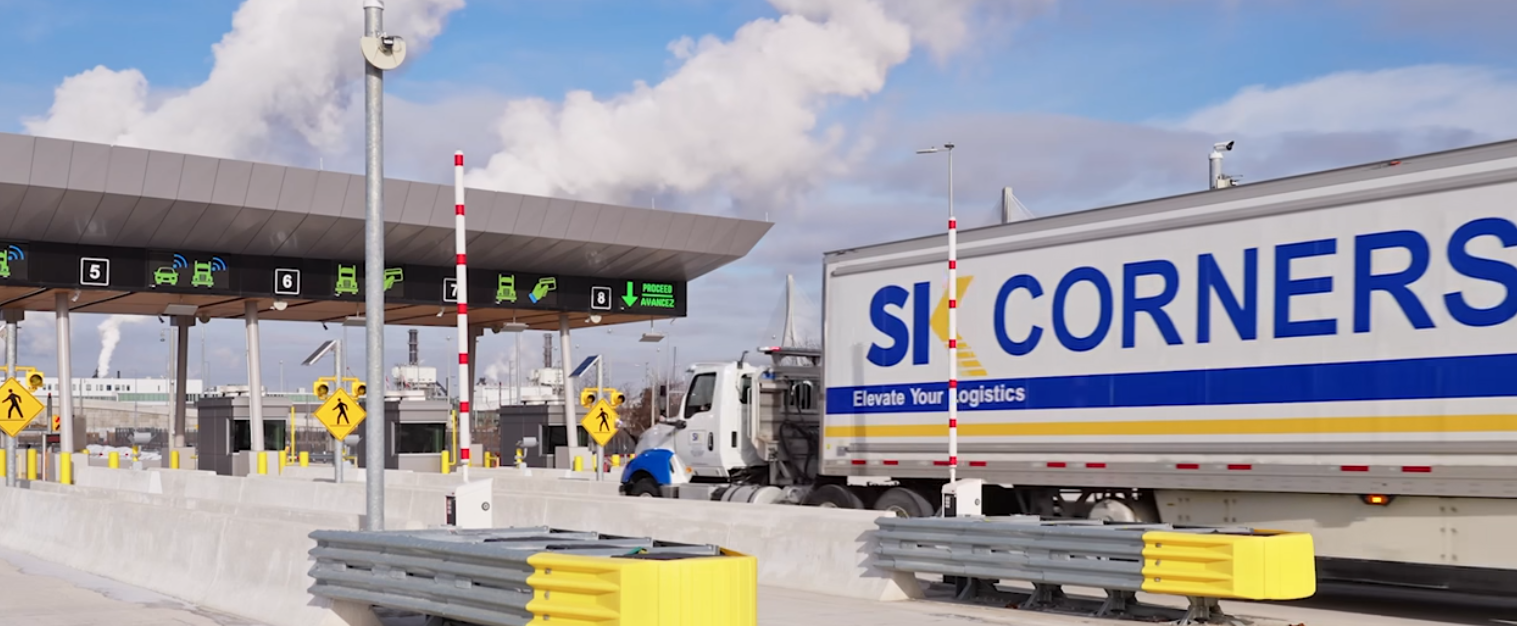
Persaud told trucknews.com that two months ago, his fleet participated in pre-opening onboarding activities tied to the bridge’s launch. SK Cornerstone was the first refrigerated carrier invited through the completed facilities as part of the project’s testing and onboarding process. He said at least two other Ontario carriers later participated in similar onboarding activities after SK Cornerstone’s visit.
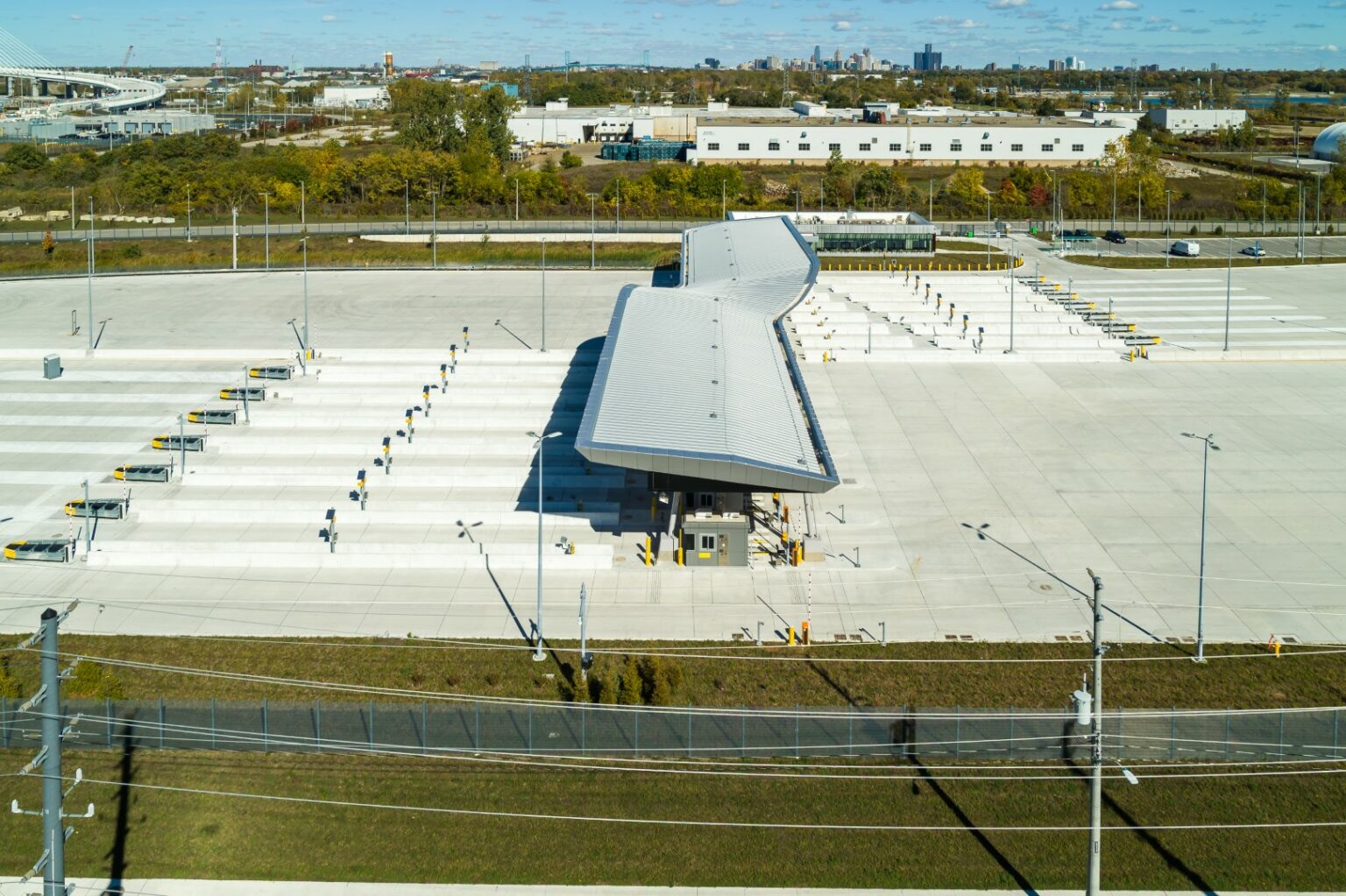
The process involved controlled access through the commercial plaza and testing areas while the bridge was still in its final stages of construction.
While no freight was hauled and the trucks did not cross onto the U.S. side, Persaud said drivers were pre-cleared in advance before being guided through portions of the inspection areas. When asked about the testing, Persaud said it went smoothly.
He added that the scale of the new crossing immediately stood out to him.
“When the Ambassador Bridge was built, it was built for smaller trucks, so the scale of the Gordie Howe bridge made a big difference. Your turning lanes are wider, your X‑ray area has a lot more room, your duty‑free area is [bigger]. Granted, it’s empty and it’s not full of people, but it’s meant for larger trucks versus 100 years ago, when the maximum truck, I believe, was 40 feet.”
The bridge features six traffic lanes measuring 12.1 ft. (375 m) wide, 16 toll lanes with manual, automatic, and electronic toll collection, separated passenger and commercial traffic, oversized vehicle accommodation, expanded inspection facilities, advanced cargo imaging systems, and a dedicated 24/7 traffic and operations management center.
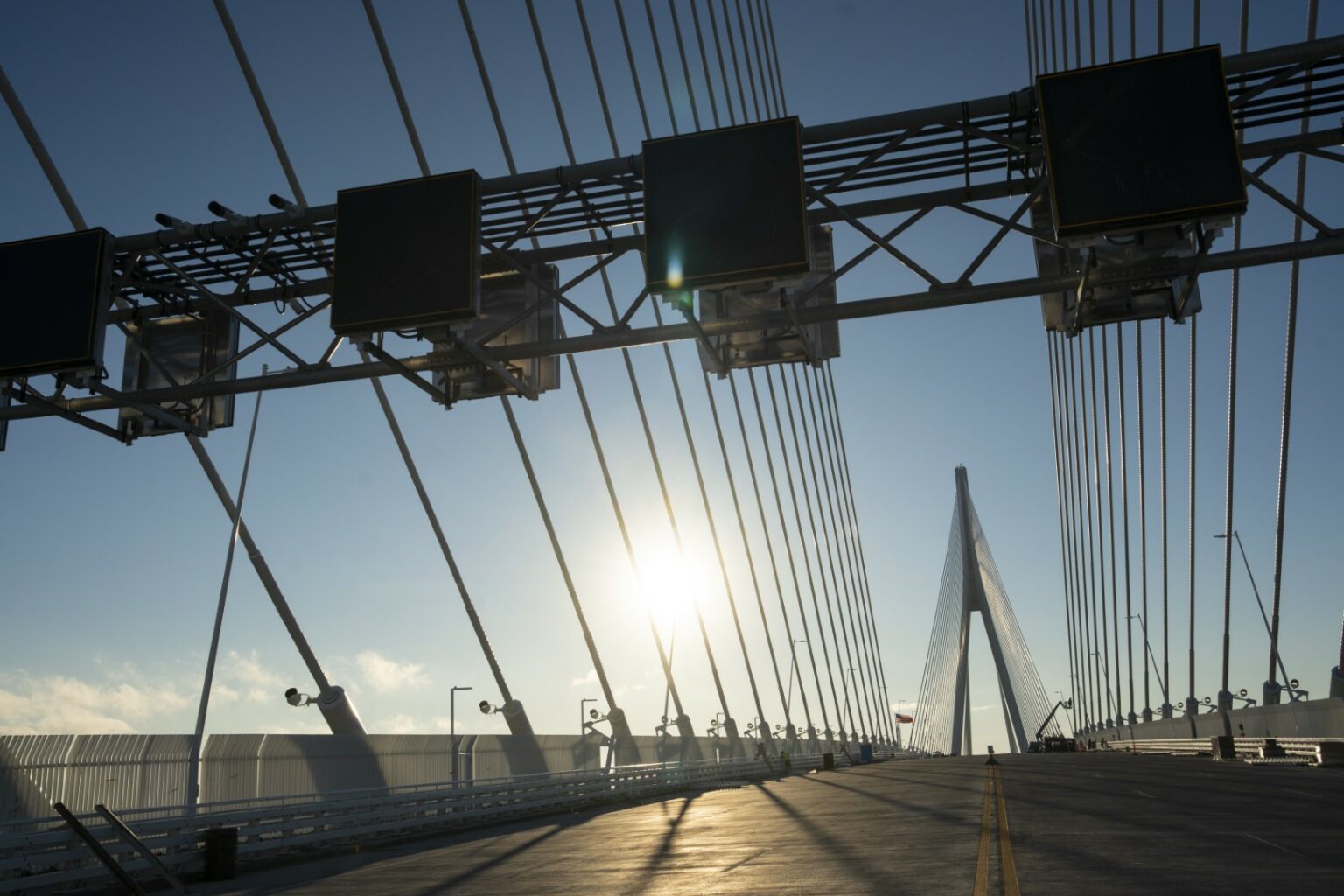
The bridge’s introductory toll structure will also make it an attractive option for fleets. Commercial tolls will be set at $12 per axle, with discounted rates of $9.60 per axle available through the bridge’s Breakaway account program.
While Persaud said some companies like his own may initially continue using the Ambassador Bridge for some shipments because some of the customers are located near that particular crossing, he still expects the new bridge will significantly improve overall freight flow in the corridor.
“Everyone’s going to benefit across the board,” he said.
With files from The Canadian Press
Have your say
This is a moderated forum. Comments will no longer be published unless they are accompanied by a first and last name and a verifiable email address. (Today's Trucking will not publish or share the email address.) Profane language and content deemed to be libelous, racist, or threatening in nature will not be published under any circumstances.

Think windsor should shut down road to ambassador bridge till trump allows gordie howe opens