Aperia expands tire inflation system to steer axle

Aperia Technologies is expanding its automatic tire inflation system to the steer axle, addressing what the company says is one of the most safety-critical and frequently underinflated positions on a commercial vehicle.
The new system builds on Aperia’s Halo technology, which has been used for years on drive axles, but has been redesigned to meet the packaging and performance constraints of the steer position.
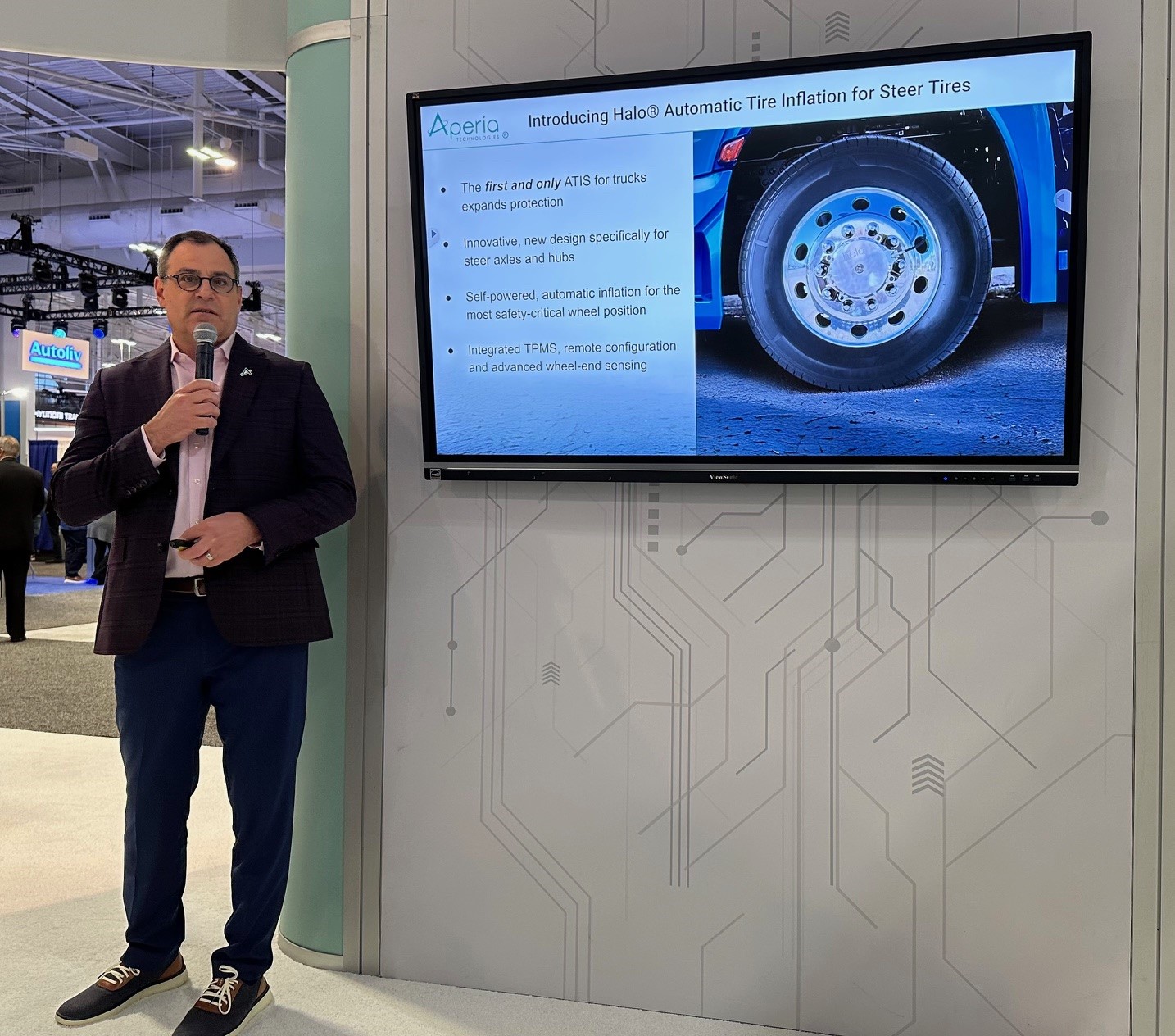
“It’s been something at the front of our minds for close to a decade,” said Ralph Dimenna, chief commercial officer at Aperia.
The steer axle system uses the same core principle as the drive axle version, generating power from wheel rotation to maintain optimal tire pressure without requiring an external power source. The unit mounts directly to the wheel end and integrates with the hubcap, while a redesigned structure allows visibility of the oil sight glass.
The system is fully connected, offering two-way communication through telematics platforms. Fleets can monitor inflation performance, receive alerts and adjust pressure set points over the air.
Dimenna emphasized the safety implications of maintaining proper inflation on steer tires, citing research showing tire-related issues contribute to a meaningful share of truck crashes, with a disproportionate number involving the steer axle.
Based on the company’s own data from monitoring tens of thousands of steer tires, those tires are typically underinflated by eight to 12 psi — roughly 10% below recommended levels.
“We know those tires are, on average, eight to 12 psi underinflated in the market today,” Dimenna said.
By maintaining optimal pressure, the system is expected to address more than 90% of underinflation-related issues, similar to results already seen on drive axles.
The company says that can translate into improved safety, reduced roadside events and longer tire life, while also delivering fuel economy benefits.
Initial testing suggests tire life improvements of 10% to 15%, with additional fuel savings expected due to the heavy load carried on the steer axle.
Aperia is also enhancing its Halo Connect platform alongside the steer product launch, improving alert speed and precision while reducing false or unnecessary alerts.
The system uses a proprietary leak detection algorithm that can identify slow leaks before a tire appears underinflated, by monitoring how hard the inflator is working to maintain pressure.
“If the pump is working overtime to maintain pressure, we know there’s a leak,” Dimenna said.
At the same time, the platform is designed to reduce alert fatigue by filtering out expected pressure changes, such as those caused by temperature swings.
Aperia says its system generates two to three times fewer alerts than traditional tire pressure monitoring systems, allowing fleets to focus on issues that require immediate attention.
The company is also expanding its diagnostic capabilities beyond inflation, using data from the wheel end to identify potential issues such as mismatched duals, alignment problems and early signs of component wear.
Aperia says its platform has been trained on hundreds of billions of tire pressure data points, enabling more precise recommendations and predictive insights.
Fleets can access the data through multiple channels, including in-cab displays, ELD platforms and back-office maintenance systems, with customizable alert thresholds and messaging.
The goal is to give fleets full visibility into tire performance across all wheel positions and allow them to proactively manage maintenance.
“With steer, drive and trailer covered, we now have every wheel position on the vehicle,” Dimenna said.
The steer axle system is expected to be available in the fourth quarter of 2026.
Aperia says the addition of steer axle inflation will further reduce maintenance touchpoints, eliminate many manual inspections and improve overall fleet safety and efficiency.

Have your say
This is a moderated forum. Comments will no longer be published unless they are accompanied by a first and last name and a verifiable email address. (Today's Trucking will not publish or share the email address.) Profane language and content deemed to be libelous, racist, or threatening in nature will not be published under any circumstances.