We need to adjust our thinking about air brakes

Brake adjustment might not be the greatest crisis of our time, but with all the talk of Red Seal certification, mandatory entry-level training (MELT) upgrades and driver competency generally, now seems like good time to put this on the table.
We’ve had formalized air brake training in Canada for more than 20 years, but do we really need to know about anti-compounding valves and how compressor governors work? Should drivers know how variable geometry turbochargers work? Or how the shift algorithms are programmed into automated transmissions?
Drivers absolutely need to know how to determine if their brake system is working properly. Those checks and inspection procedures are part of the endorsement, but what about brake adjustment?
For some bizarre reason, drivers are held accountable for brake adjustment, yet they have no influence over how the systems are maintained. I mean, brake systems with automatic brake adjusters should never be “adjusted” except at installation and for diagnostic purposes, and even then, only by trained personnel.
Contradictions regarding drivers’ interaction with their brakes abound across Canada. Air brake manuals from various provinces offer conflicting guidance on brake adjustment; some even recommend practices that are expressly discouraged by brake manufacturers.
Provincial inconsistencies
Let’s begin with Ontario. That province basically prohibits drivers from touching their brakes except to conduct a mark-and-measure inspection. The air brake manual says drivers who obtain an air brake adjustment certificate may adjust brakes fitted with manual slack adjusters. It also notes only certified technicians are permitted to adjust automatic slack adjusters.
In addition to the mark-and-measure method, B.C.’s commercial driver manual also describes the pry method as an option for checking adjustment. Free stroke of between half and three-quarters of an inch (12-20 mm) is acceptable. Ontario specifically eschews this method as inaccurate.
If brakes are found to be out of adjustment, various provinces offer different solutions.
The Nova Scotia, B.C. and other air brake manuals actually offer instruction on how to adjust manual slack adjusters. In Ontario, you need a certificate to do this.
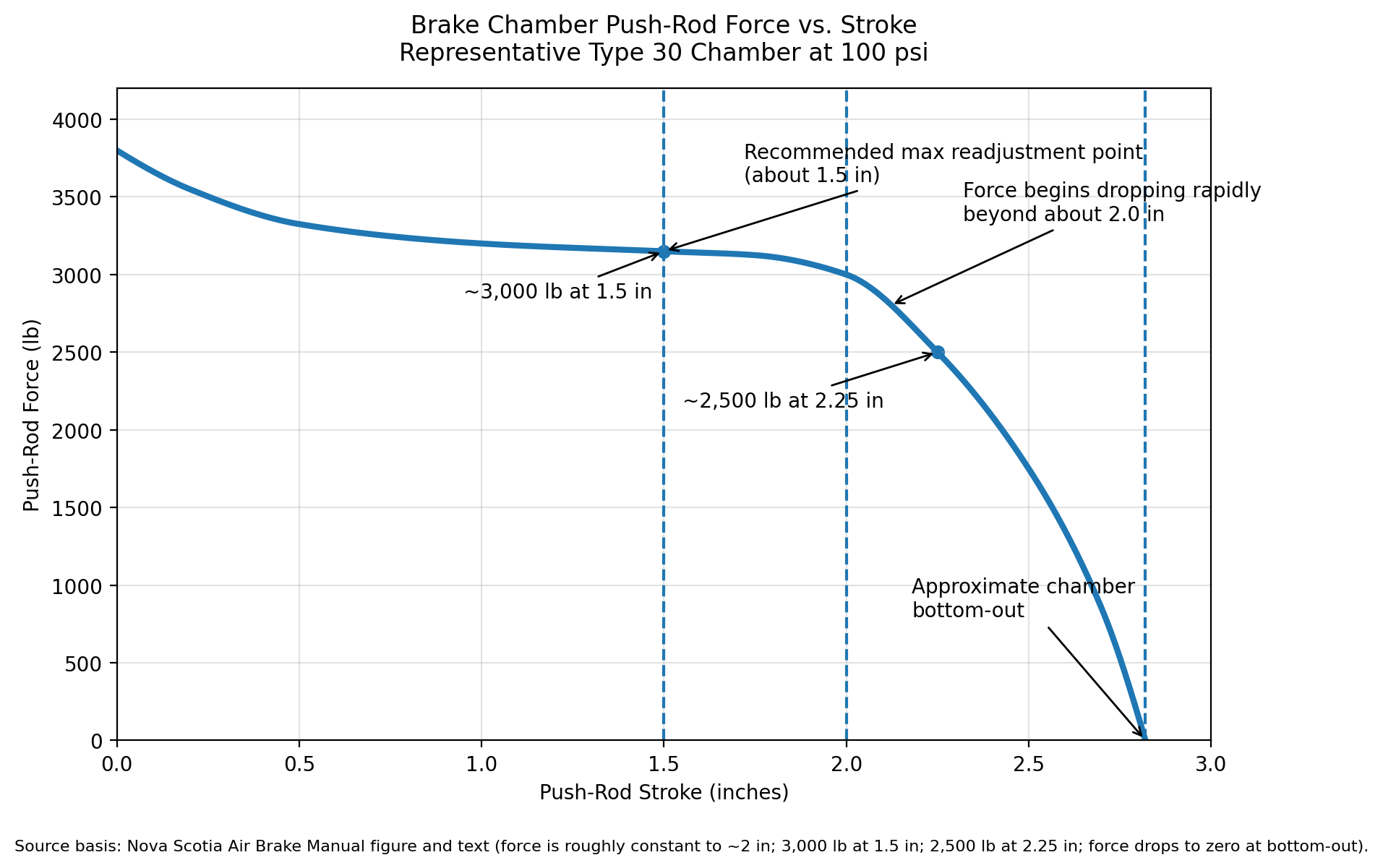
When it comes to automatic slack adjusters, air brake manuals from Saskatchewan, New Brunswick and others say, “two to four brake applications of 80–100 psi per day will keep the brakes properly adjusted.”
New Brunswick and Saskatchewan suggest, “If [brakes] are badly out of adjustment it may take up to 12 brake applications of 100 psi (690 kPa) to adjust them.”
But there’s a caveat: all the manuals that I researched noted automatic slack adjusters that are stroking beyond their adjustment limit are defective and must be repaired by a certified technician, or words to that effect.
If they are defective, why are drivers permitted to bring them back into adjustment with a procedure that goes against the manufacturers’ recommendations?
“If an automatic slack adjuster strokes beyond the maximum allowed, this usually indicates that there are other brake problems that need to be repaired by a qualified brake service mechanic,” notes the B.C. manual. “Manual adjustment [of an automatic adjuster] may temporarily shorten the stroke, but the automatic slack will soon re-set to its designed stroke.”
Most of the manuals also mention the possibility of damaging the internal mechanisms inside the adjuster through repeated manual adjustments.
B.C. also debunks a few brake-checking misconceptions, such as observing the air reservoir pressure drop when making a full-pressure application.
The thinking is, an abnormally large pressure drop indicates a possible out-of-adjustment condition. The pressure drop will vary from truck to truck depending on the size of the brake chambers and the number of axles. And when all is said and done, how do you tell which brake is out of adjustment?
Another is observing the angle between center of the slack adjuster arm and the push rod. Ideally, that angle should be 90 degrees or greater. But for various reasons, some slack adjuster arms and push rods may be longer or shorter than others. This will affect the push rod/slack adjuster angle, rendering this inspection method less than consistently reliable.
All the manuals describe the mark-and-measure procedure as well. But here’s the thing: while the regulations require drivers to inspect every brake on every vehicle they operate every day, that hardly ever happens. I have never met a single driver, ever, who does this.
We have a brake inspection procedure that nobody ever follows, and a couple of methods that might be a little easier on the driver but are not recommended. We are also offered procedures for resetting adjustment that aren’t endorsed by the brake makers, and others that may damage the equipment.
And at the end of the day, if an over-stroking brake is found during a roadside inspection, the driver gets the ticket. Why does the driver get the ticket when over-stroking brakes are actually a failing of the maintenance department?
Out-of-adjustment is a mechanical defect
First of all, the Commercial Vehicle Safety Alliance’s (CVSA’s) North American Standard Out-of-Service Criteria handbook defines a brake beyond its adjustment limits as a “defective brake.”
Further, with automatic brake adjusters, if the brake is over-stroking, the adjuster is telling you one of two things, either: a) the adjuster is defective; or b), there’s some other problem with the foundation brake — possibly worn worn S-cam bushings, rollers, etc. There are several possible suspects.
When you see an over-stroke condition with automatic adjusters, it’s almost always a symptom of something else wrong in the system. Even if the driver or someone else is able to wrench the adjuster back into compliance, it will likely be over-stroking again after just a few brake applications. That’s because the underlying problem hasn’t been addressed.
And here’s where it gets ridiculous. If an inspector finds 20% or more of the truck’s brakes out of adjustment, the trucks will be placed out of service and the driver will be ticketed for failing to note the defect on the daily inspection report.
But if the driver can somehow cause the brake to conform with the stroke requirements, upon reinspection, the inspector will allow the truck to continue its journey.
The truck is back on the road with exactly the same problem as before, the brakes will be out of adjustment again in a short time, and the driver is a few hundred dollars lighter. Who are we fooling here?
For all the fuss about brake adjustment, the system allows trucks to operate with defective brakes while holding drivers responsible for a problem that’s truly outside their sphere of influence.
Re-adjustment is not a solution
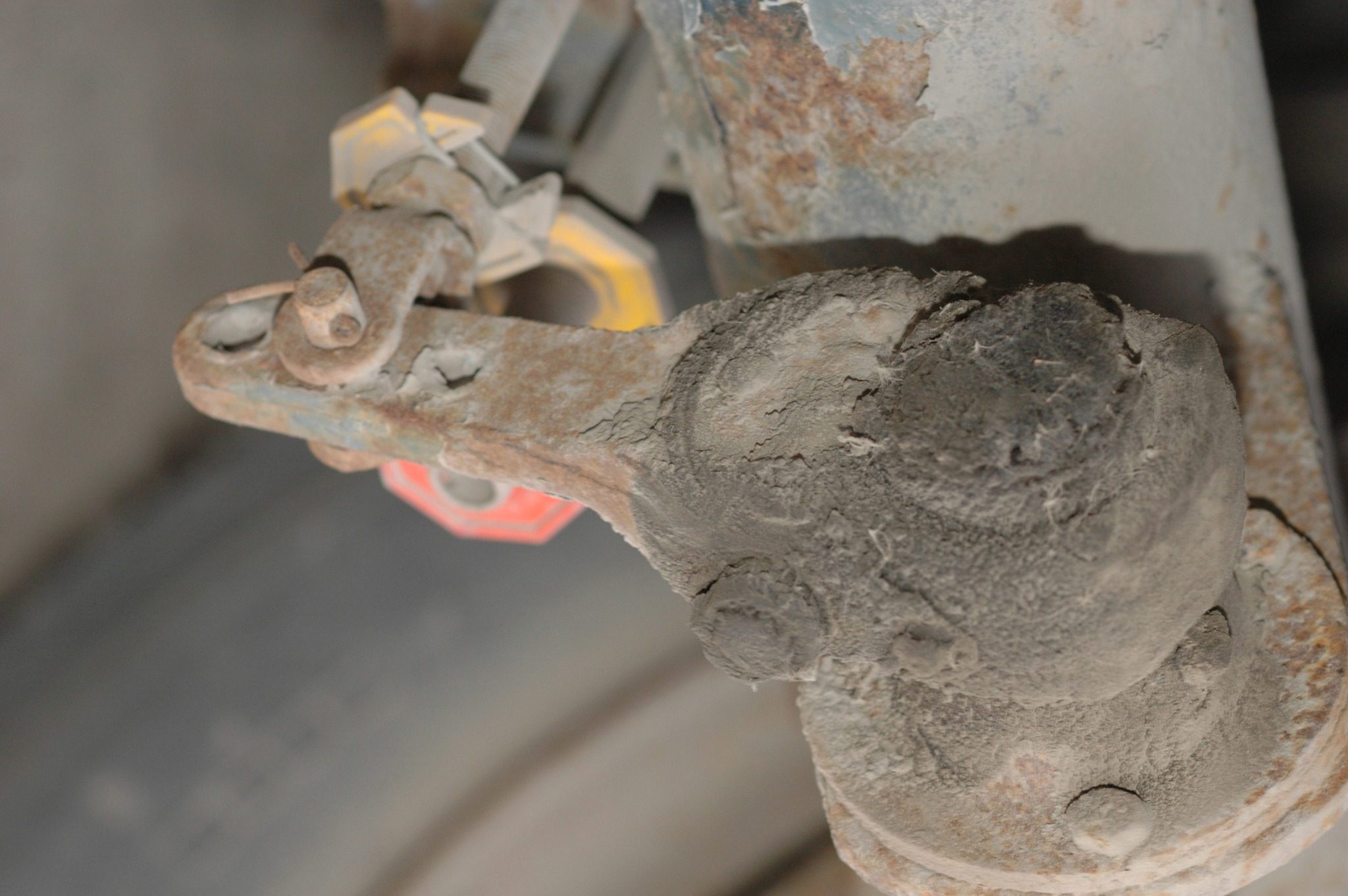
Frequent manual adjustment of auto-adjusting slacks can wear and damage the internal mechanism. This was proven by a U.S. National Transportation Safety Board investigation of a fatal crash involving an out-of-control dump truck in Glen Rock, Penn., in 2003.
That happened more than 20 years ago, and the industry is still manually adjusting automatic slack adjusters.
Manufacturer guidance is unambiguous on this. Meritor’s Maintenance Manual MM4 states that automatic slack adjusters must not be manually adjusted to correct excessive stroke, as this indicates a defect in the foundation brake. Haldex service literature similarly limits manual adjustment to set-up and diagnostics, instructing technicians to find and repair the root cause.
Says Bendix in its Knowledge Dock section on slack adjuster maintenance, “Do not manually adjust the adjuster. There are many factors that can cause an automatic slack adjuster to overstroke, but none of these will be remedied with a manual readjustment. Instead, investigate why the brake is over the stroke limit.”
As well, the the long-standing belief that a few hard brake applications will “ratchet” an automatic slack adjuster back into spec’ isn’t supported by any major brake manufacturer. Guidance from Bendix, Meritor and Haldex all make the same point: if a brake is out of adjustment, the cause is mechanical, and neither manual adjustment nor repeated brake applications will correct it.
Best intentions?
Let’s look at what probably happens when a driver reports an out-of-adjustment condition. Some fleets are likely to simply re-adjust the brake to bring it into compliance. But following OEM guidance, the problem should become a troubleshooting and brake repair event.
Considering the time and labor involved in a thorough brake troubleshooting and repair process, it’s a good thing drivers hardly ever do proper brake inspections.
We need to address this foolishness — the inconsistency and the misapplied responsibility. We need an alternative to the never done mark-and-measure brake inspection.
And we need some middle ground during brake inspections where “slightly” maladjusted brakes are given a warning that requires follow up within a reasonable time, while trucks with badly adjusted or flat-out defective brakes are sidelined until they are repaired, not just readjusted.
Overhaul the air brake endorsement
First, we need to get every driver on the same page by eliminating the discrepancies in various provincial air brake manuals.
Next, we need to dispel the myth that simply readjusting an over-stroking brake adjuster solves the problem. Lastly, we need to push the out-of-adjustment problem from the driver back to the shop — to the folks who are responsible for the mechanical condition of the vehicle.
Drivers need to be able to determine if their brake systems are functioning properly, and they need to know how to recognize when something isn’t working as it should — such as brakes that pull to the right or left, brakes that are slow to release, or why brakes “fail” when they are overheated.
And we need a reliable method for determining when brakes are out of adjustment with a simple visual inspection.
We are fooling ourselves if we think drivers mark-and-measure their brakes every morning. They don’t. So why, after all these years, are we still pretending they do?
Have your say
This is a moderated forum. Comments will no longer be published unless they are accompanied by a first and last name and a verifiable email address. (Today's Trucking will not publish or share the email address.) Profane language and content deemed to be libelous, racist, or threatening in nature will not be published under any circumstances.

Mr. Parks you are so right most drivers don’t even carry tools so how can you adjust things out of your control.
We can be ticketed for adjusting brakes in some provinces but if you are not near a repair facility how do get them fixed.
and most new drivers wouldn’t have a clue how to even adjust them even if they are mechanical.
I started when we only had manual slack adjusters but now not a chance would i crawl under a truck or trailer and even attempt this procedure.
With disk brakes this is not even an issue as there are no adjustments why companies continue to use drum brakes is totally beyond my comprehension. mostly i believe its cause they believe its cost but if you are not put out of service its not even an issue cost wise.