B.C. invests $4.5 million in three new truck chain-up areas

British Columbia has awarded a $4.52-million contract to build three new chain-up areas along Highways 37 and 37A, giving commercial drivers safer places to install and remove tire chains during winter conditions.
TwinCon Enterprises will enhance the existing Windy Hill chain-up area and build new facilities near Meziadin Junction and the Bell 1 rest area. Construction is expected to be substantially complete in fall 2026.
“Highway 37 is a vital transportation corridor for northern communities, industry and visitors travelling through northwestern B.C.,” Mike Farnworth, B.C.’s minister of transportation and transit, said in a news release. “These new chain-up areas will give commercial vehicle drivers safer places to prepare for challenging winter conditions, helping reduce incidents, improve reliability, and keep people and goods moving safely throughout the region.”
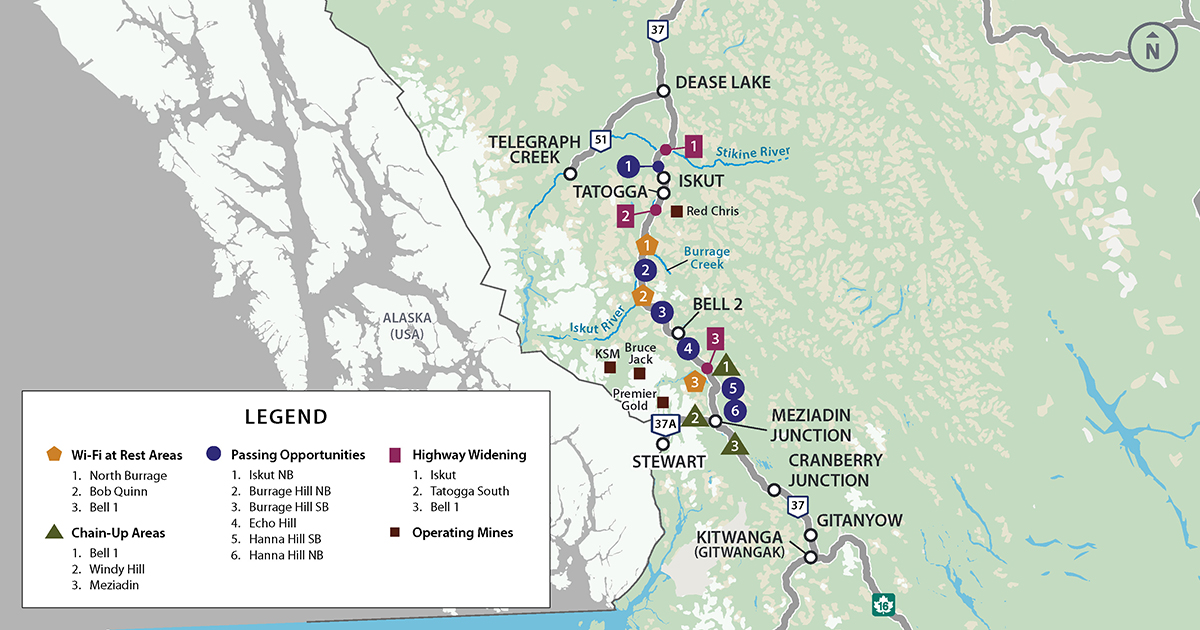
The new locations will feature paved pullouts near steep grades where drivers can safely install and remove tire chains. Some sites will also include rest-area amenities such as garbage cans and toilets for commercial drivers and other travellers.
The province said the improvements are expected to enhance vehicle traction during winter conditions while reducing crashes, traffic delays, road closures and emergency response calls.
The project is part of the Northwest Corridor Improvements Program, which includes upgrades along Highways 37, 37A and 51 to improve safety and support the development of critical mining resources in northwestern British Columbia.
Wi-Fi at rest areas
Other planned improvements include installing Wi-Fi at rest areas, adding passing lanes and widening sections of highway along the corridor.
The overall program is valued at an estimated $195 million, including $120 million from the province and nearly $75 million from Natural Resources Canada through the First and Last Mile Fund. Work on the program began in 2025 and is expected to continue through 2030.

Have your say
This is a moderated forum. Comments will no longer be published unless they are accompanied by a first and last name and a verifiable email address. (Today's Trucking will not publish or share the email address.) Profane language and content deemed to be libelous, racist, or threatening in nature will not be published under any circumstances.