Hours-of-service cheating hasn’t disappeared in the ELD era. It has simply evolved.

When a truck involved in a crash came under scrutiny, Halton Regional Police commercial vehicle inspector Marc Taraso expected to find a straightforward hours-of-service violation.
Instead, he alleges he uncovered a fake co-driver profile, manipulated electronic logging device (ELD) records, repeated ELD malfunctions, and a driver who may have used those malfunctions to conceal driving time.
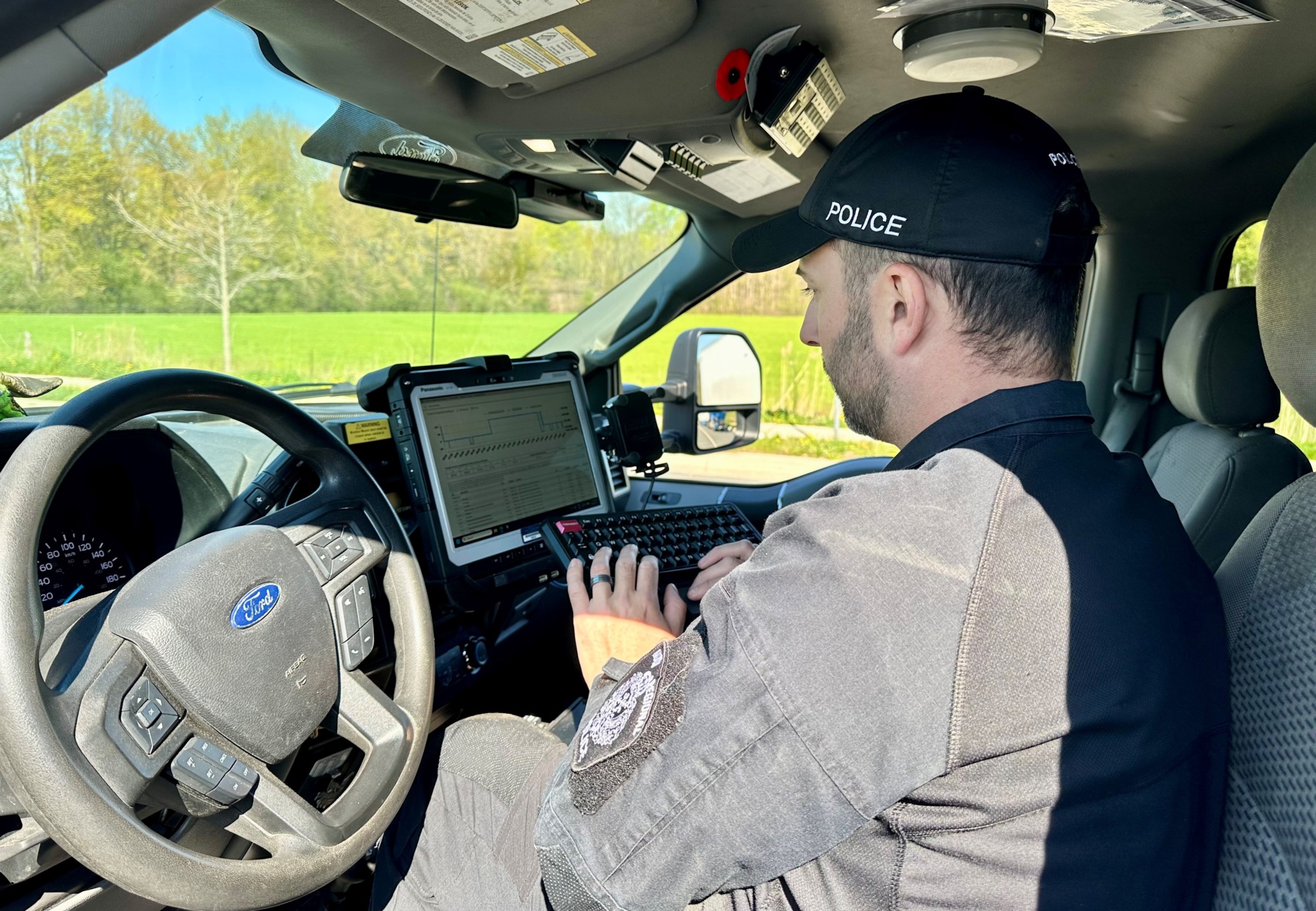
The allegations have yet to be tested in court. But the investigation highlights a growing concern among enforcement officials across North America: hours-of-service cheating hasn’t disappeared in the ELD era. It’s gotten more sophisticated.
For fleets and drivers that play by the rules, that’s more than a safety issue.
“It generates an unlevel playing field for operators on the road,” Taraso told trucknews.com. “And it creates an unsafe condition for all motorists on the roads where we have fatigued drivers who are trying to drive past their hours and trying to avoid sanctions and being placed out of service by manipulating their logs.”

ELDs haven’t eliminated cheating
Electronic logging devices were introduced to eliminate the paper-logbook fraud that had plagued the trucking industry for decades. By automatically recording driving time and synchronizing with a truck’s engine, ELDs made it far more difficult for drivers to simply redraw logbook lines or maintain multiple sets of records.
Most enforcement officials agree the mandate achieved that objective.
But the incentive to exceed legal driving limits never disappeared.
According to investigators, industry groups, and lawmakers, some operators have adapted by exploiting digital vulnerabilities, creating fictitious driver accounts, misusing personal conveyance, manipulating ELD malfunctions, and altering electronic records after the fact. In fact, HOS cheating has become so rampant that the Commercial Vehicle Safety Alliance (CVSA) made ELD violations one of the main focuses of enforcement activities during this year’s North America-wide International Roadcheck blitz.
A changing enforcement challenge
Taraso recently investigated a case in which a driver presented a paper HOS record and claimed the carrier was experiencing ELD malfunctions. Regulations permit drivers to revert to paper logs when an ELD fails, provided the malfunction is documented and efforts are made to repair the device.
The challenge, Taraso said, is what happens when devices repeatedly fail and return to service.
“If the ELD malfunctions and then it’s repaired and malfunctions and then repaired and then malfunctions, there’s no real teeth in the Act into how that’s addressed,” he said.
In the case now before the courts, Taraso alleges the driver deliberately triggered a power compliance malfunction, allowing a switch to paper logs that concealed actual driving activity. He further alleges the driver created a fake co-driver profile during a trip between Ontario and Virginia.
Using what he described as various investigative techniques, Taraso concluded the alleged co-driver was not in the truck at all, but traveling in a separate vehicle on a different journey at the same time.
“I believe that the driver falsified their records by using a fake driver profile to have a fake co-driver that did not exist in the vehicle,” he said.
The allegations are striking because they mirror concerns increasingly being raised by enforcement agencies elsewhere.
Earlier this year, the CVSA issued guidance warning inspectors about false records of duty status involving misuse of personal conveyance, unidentified driving time, fictitious driver accounts and altered electronic records.
One example described a carrier creating a fictitious ELD account by slightly altering a driver’s information. The driver allegedly alternated between the two accounts to continue driving after reaching HOS limits.
Another involved records that appeared to have been shifted backward by several days, obscuring nearly 21 hours of driving time. Investigators only uncovered the discrepancy by comparing fuel receipts to electronic records.
The bulletin noted some cases are so severe that inspectors cannot determine when a driver actually rested, resulting in out-of-service orders.
From paper fraud to digital fraud
What makes these cases noteworthy is that they represent a different kind of cheating than the industry dealt with prior to mandating ELDs. Before ELDs, falsification generally involved handwritten logbooks.
Today, investigators are increasingly looking at:
- Fake co-driver profiles;
- Multiple driver accounts;
- Unidentified driving time;
- Manipulated ELD malfunctions;
- Company and driver edits;
- Altered audit trails;
- Misuse of personal conveyance.
In one investigation, Taraso said an entire trip between Niagara Falls and Pennsylvania generated no movement records from the ELD itself. Instead, all movement activity appeared to have been entered later through driver or company edits.
“Not a single one of those codes was registered from the ELD itself,” Taraso said. “But there was no malfunction recorded on the ELD that day.”
Those allegations also remain before the courts.
Canada took a different approach
While concerns about ELD manipulation are drawing attention on both sides of the border, Canada and the United States took very different approaches to certifying devices.
In the United States, manufacturers have historically been permitted to self-certify their ELDs. That resulted in hundreds of devices entering the marketplace without independent third-party validation.
Canada adopted a much stricter approach.
Under the federal ELD mandate, devices must be independently tested and certified by an accredited third party before they can be approved for use. The process drew criticism from some suppliers during the rollout because of delays and added costs, but supporters argued the independent certification model would improve consistency, security and confidence in the devices ultimately approved for use.
They seem to have been right.
As a result of third-party verification requirements, far fewer ELDs have been approved in Canada than in the United States. And far fewer have since been removed from the list of approved devices. The FMCSA has recently been aggressively removing noncompliant devices from its registry of approved devices.
In a May press release, it said “Since January 2025, FMCSA has removed 79 devices that failed to meet federal standards to ensure the technical integrity of the ELD program. Today, the FMCSA database of approved ELDs counts more than 960 that remain approved for use and about 360 that have been revoked.
“Safety is not optional, and neither is compliance,” FMCSA Administrator Derek Barrs said. “FMCSA is serious about removing unsafe and unreliable electronic logging devices from the market and holding manufacturers accountable to federal safety standards. These standards are in place to help protect everyone traveling on American roads.”
Whether that stricter certification process ultimately reduces opportunities for manipulation remains an open question.
Overseas ELD editing
The issue has now reached Capitol Hill. In late June, U.S. representatives Greg Steube and Dave Taylor introduced the GHOSTRUCK Act, legislation intended to prevent foreign-based actors from editing or annotating ELD records. It stems from accusations records generated by certain ELDs are easily modified by bad actors overseas, enabling North American truck drivers to appear compliant while exceeding their legal hours.
The proposed legislation would restrict edits to carriers, dispatchers and drivers physically located in North America.
Supporters argue current regulations do not clearly prohibit overseas personnel from accessing and modifying Hours-of-Service records.
The bill has drawn support from both owner-operator and carrier organizations.
“OOIDA is proud to support Rep. Greg Steube’s GHOSTRUCK Act, which would prevent foreign nationals in places like Eastern Europe and Asia from altering the ELD records of American truckers,” said Todd Spencer, president and CEO of the Owner-Operator Independent Drivers Association. “Importantly, the bill ensures that a driver has final approval for any edits suggested by their motor carrier.”
The Truckload Carriers Association also backed the proposal.
“TCA has consistently stressed that we advocate for compliance with trucking’s rules and regulations,” said Jim Mullen, the association’s president. “The GHOSTRUCK Act represents a critical step toward the continued enforcement of roadway safety and ensuring that commercial vehicles operate with greater transparency and accountability.”
A growing concern
Taraso said Ontario enforcement agencies are paying attention to these developments.
The Ontario Police Commercial Motor Vehicle Committee and the Ontario Association of Chiefs of Police have begun examining ELD tampering and abuse, with discussions underway about potential recommendations for lawmakers, enforcement agencies and industry stakeholders.
“We are aware of ELD tampering and malicious use of ELDs,” Taraso said.
Electronic logging devices changed how drivers record their hours. They didn’t change the economic pressures that tempt some operators to exceed those hours.
As enforcement officials become more familiar with digital manipulation techniques, the battle over HOS compliance is increasingly being fought in audit trails, driver profiles, edit histories, and data records rather than paper logbooks.
- With files from Leo Barros
Have your say
This is a moderated forum. Comments will no longer be published unless they are accompanied by a first and last name and a verifiable email address. (Today's Trucking will not publish or share the email address.) Profane language and content deemed to be libelous, racist, or threatening in nature will not be published under any circumstances.
We don’t create safe roads until we make it not worth while for these manipulators!
Happens all the time last 3 companies I was with did it especially ones in Chicago but not just Chicago they know how in NC and sc as well I don’t like it at all.

And this is coming to to attention,,, pathetic, our government has been aware of this, but NOW want to pretend to be the hero f#** them