Fleets overlooking drivers in cyber training face growing risks

A cyber-savvy driver is safer on the road, safer in personal life, and, ultimately, is a stronger asset to your fleet.
These days, as cybersecurity risks in trucking increasingly target both people and systems, drivers are emerging as both a vulnerable entry point and a critical line of defence, said Ben Wilkens, cybersecurity principal engineer at the National Motor Freight Traffic Association, at the Best Fleets to Drive For conference in Charlotte, N.C.
Despite this, many fleets still focus cybersecurity efforts on back-office systems, assuming drivers face limited to no risk because they lack access to corporate networks and databases. But in reality, drivers are exposed through phone calls, text messages, social media, and in-cab communication tools, and are often the first to encounter suspicious activity.
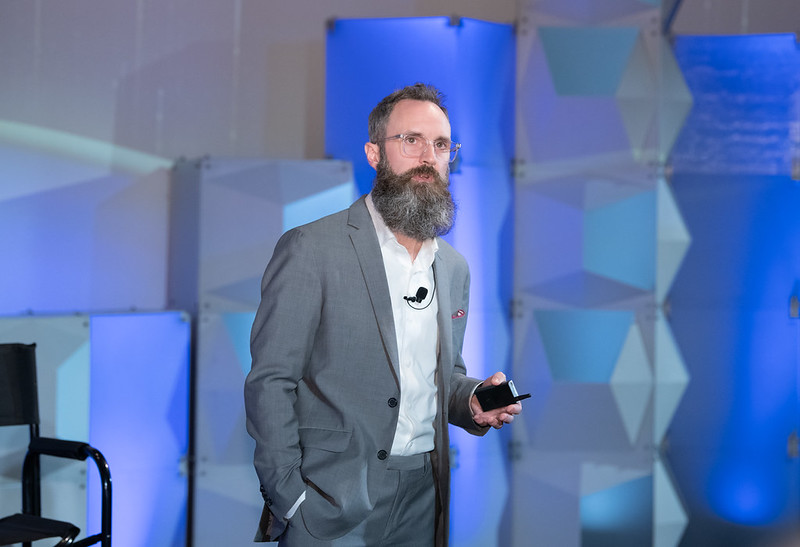
While social engineering schemes are increasingly linked to cargo theft, rerouted loads, and other types of fraud, extortion at an individual level can pressure any employee into sharing information or taking actions they otherwise wouldn’t, Wilkens warned.
“You can have the best cybersecurity culture and training internally, but you’re leaving out what can be arguably one of the larger positions here if you’re not including your drivers in some way,” he said. “When someone is being extorted — whether it’s finance, or sextortion, or in some other way they’re being threatened with a negative consequence — they can be talked into doing all sorts of things, and those things can quickly turn a dedicated employee into an insider threat.”
Match the training to the role and threats it encompasses
Wilkens said traditional cybersecurity awareness programs often miss the mark because they tend to be generic, mostly focusing on email phishing or network security, and it does very little to prepare employees for real threats. Instead, fleets need to tailor training to how and where drivers operate and interact with technology, whether through text messages, phone calls, or onboard devices.
“You’ve got to tailor your cybersecurity awareness training to the role in order for it to be effective,” he said. “If they’re only ever using text, you can teach them the basics of email security as courtesy for their personal [life], but that’s not going to help protect them within your fleet.”
Wilkens added that such an approach needs to extend across the organization. Dispatchers, maintenance and safety teams, and staff across all operations face different risks and use different tools, which means their training, too, must be tailored to their roles, day-to-day workflows, and the risks they face.
Drivers specifically are targeted with cargo theft schemes and opportunistic fraud.
Even drivers who still use flip phones are not immune. Wilkens said it took him about 10 minutes to create a convincing deepfake of his own voice, capable of speaking any language, meaning even a call that sounds legitimate may pose a threat to the driver and the organization. “Drivers need to understand they need to verify who they’re talking to,” he said.
Once the training has been developed and delivered, it is important to measure whether it is actually working. Drivers who understand cyber risks and can spot them are not only less likely to fall victim to increasingly complex scams, but can also act as an early warning and detection system, identifying suspicious instructions, inconsistencies in paperwork and communications, and reporting those issues before they escalate.
“What is the cyber‑savvy driver? Well, that driver is safer personally from all the online threats that they’re going to face, all the scams. They’re also safer professionally…They are also going to be more valuable to your fleet, because they’re going to be your frontline…These drivers are going to be more valuable more they know, and you’re going to be more valuable to them the more you help protect them.”
A cautionary tale
Wilkins pointed to a real-world example from his earlier career, when he transitioned from dispatching to IT.
This cautionary tale is about John, a dedicated longhaul driver, known for always being available and willing to take any load, help out wherever he can. One day, John came into the office, telling his co-workers about his girlfriend whom he had met online. She lived overseas, and after weeks of messaging, she decided to visit John in New York. She never asked for money and gave him no reason to doubt her.
And yet, she never landed at the LaGuardia Airport. There was an issue with the ticket, she told him. She couldn’t board the flight, and it was non-refundable. She was upset and couldn’t afford another one. So, he paid for it.
The second attempt failed as well, with more delays and excuses. By then, he was back on the road, trying to coordinate plans while running loads. Wilkens said the driver was increasingly distracted. Even the colleagues tried to intervene, showing him evidence that her picture appeared on multiple scam alert sites. Yet, John refused to believe it, saying her identity was stolen. Even when requests escalated, asking money for rare cancer treatment, John did not come to his senses and drained his savings. When he later asked for a second pay advance and was denied, he quit.
“These aren’t the best decisions that John made, but he was caught up in this scam, and this scam started as social engineering – and he had no clue, no reason to be on the lookout,” Wilkens said. “Now there are a lot of red flags… but it’s important to understand that it’s not just someone who’s not tech-savvy. It’s not someone who doesn’t understand anything about cybersecurity. Anybody can get scammed with a skilled enough attacker or the right tools.”

Have your say
This is a moderated forum. Comments will no longer be published unless they are accompanied by a first and last name and a verifiable email address. (Today's Trucking will not publish or share the email address.) Profane language and content deemed to be libelous, racist, or threatening in nature will not be published under any circumstances.