FedEx Freight CEO: No ‘silver bullet’ for decarbonization as LTL industry evolves

FedEx Freight’s incoming leader says the less-than-truckload (LTL) sector is entering a period of rapid transformation, but fleets shouldn’t expect a single technology to lead the way.
Instead, the path forward will be incremental, data-driven, and grounded in what works today.
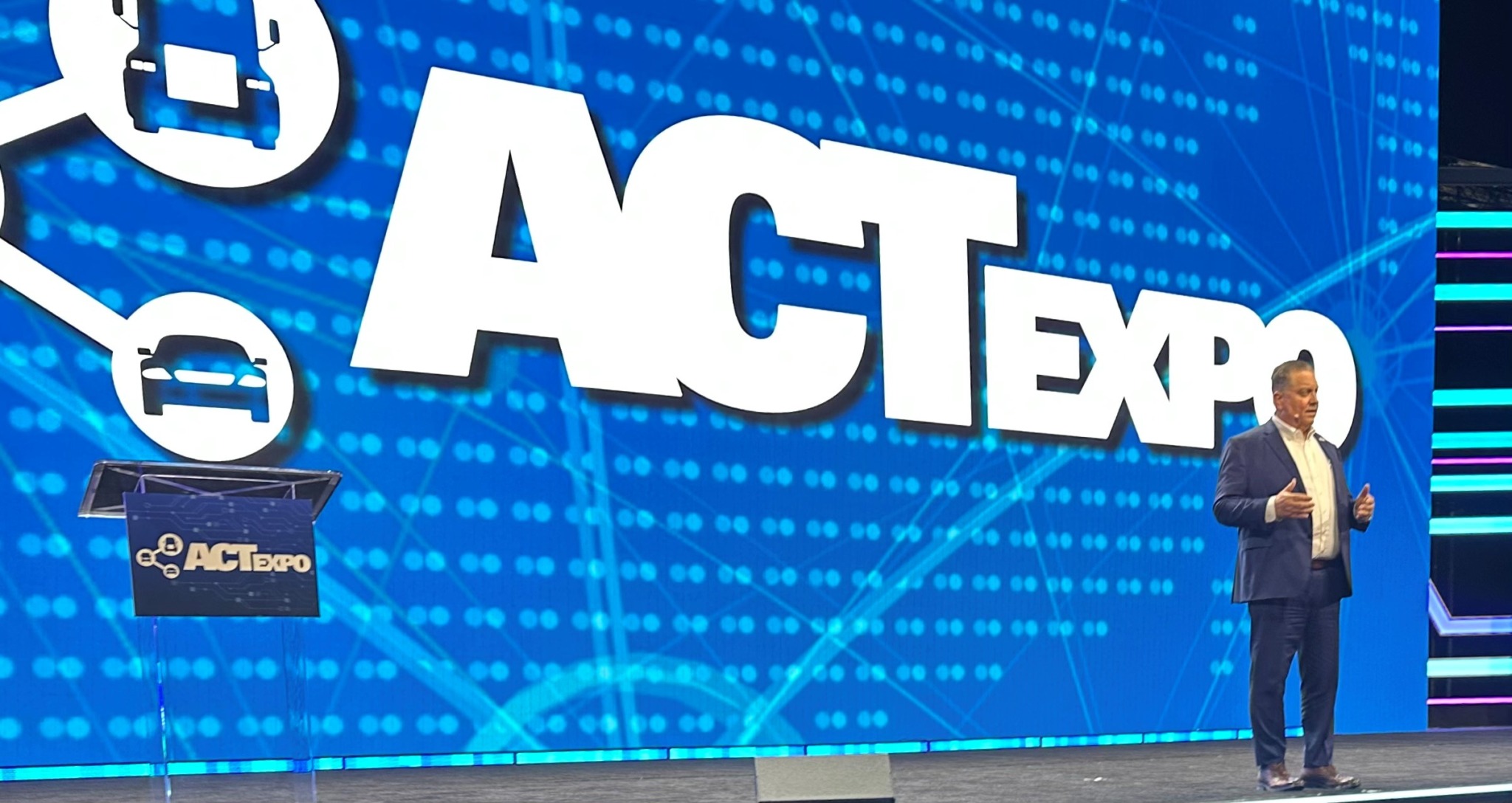
“Sustainability is only sustainable if it makes business sense,” said John Smith, incoming president and CEO of FedEx Freight, speaking as a keynote speaker at ACT Expo 2026. “You can only make a difference if you stay in business.”
Smith, currently chief operating officer of U.S. and Canada operations for FedEx Corp., will take over the LTL division as it prepares to spin off into a standalone company June 1.
Transformation hitting LTL all at once
Smith described the LTL sector as undergoing its most significant shift in decades, driven by technology, sustainability pressures, customer expectations, and rising costs.
“The changes are coming at a breakneck speed,” he said.
Unlike past transitions — including deregulation in the late 1980s — today’s transformation is being shaped by digital tools, emissions requirements, and increasingly complex freight networks.
“Freight networks are complex, capital-intensive systems,” Smith said. “Adapting them requires precision, discipline, and a long-term view.”
CNG leads near-term strategy
In the near term, FedEx Freight is leaning heavily on compressed natural gas (CNG), particularly renewable natural gas (RNG), as a practical way to cut emissions without disrupting operations.
“It is a ready-now solution that fits the rigors of our duty cycles,” Smith said.
The company expects broader adoption of CNG across major LTL carriers over the next two to four years.
Battery-electric trucks are already in use within FedEx Freight’s network, but Smith said deployment is limited to applications where range and charging are predictable.
“We are integrating these units where the range is predictable and charging can be more consistent,” he said.
Electric vehicles are currently better suited to pickup-and-delivery operations and yard applications, including forklifts and terminal equipment. Wider adoption will depend on improvements in range, weight, and charging infrastructure.
Hydrogen still on the horizon
Looking further out, Smith said hydrogen and hybrid technologies could play a role, but only once they prove they can handle the demands of Class 8 operations.
“Whatever the new technology may be, it needs to fit seamlessly into our day-to-day operations,” he said.
For fleets, that means new powertrains must integrate easily into existing networks without adding complexity. “From a fleet operator’s perspective, we need these technologies to be just another truck,” Smith added.
Rather than waiting for a single breakthrough technology, FedEx Freight is focusing on incremental gains, improving efficiency one step at a time.
“We aren’t waiting for a silver bullet,” Smith said.
Those gains include aerodynamic improvements, low rolling resistance tires, and optimized powertrain performance, along with network-level changes. One example is a “right truck, right route” strategy, which matches equipment to duty cycles and prioritizes the most efficient trucks on longer hauls.
Smith emphasized that technology adoption must be disciplined and tied to real-world performance, not hype. “Our approach is deliberate. It’s data-driven and grounded in real operational testing,” he said.
That applies not just to alternative fuels, but to broader network optimization, safety, and efficiency tools.
For LTL carriers, the next decade will be defined by balancing sustainability goals with operational realities, Smith concluded.
Cleaner trucks, new fuels, and emerging technologies will all play a role — but none will replace the need for disciplined execution.
“Every efficiency improvement, every cleaner mile, every optimized route moves the industry forward,” Smith said.

Have your say
This is a moderated forum. Comments will no longer be published unless they are accompanied by a first and last name and a verifiable email address. (Today's Trucking will not publish or share the email address.) Profane language and content deemed to be libelous, racist, or threatening in nature will not be published under any circumstances.