Minimax takes delivery of CNG trucks as diesel prices soar

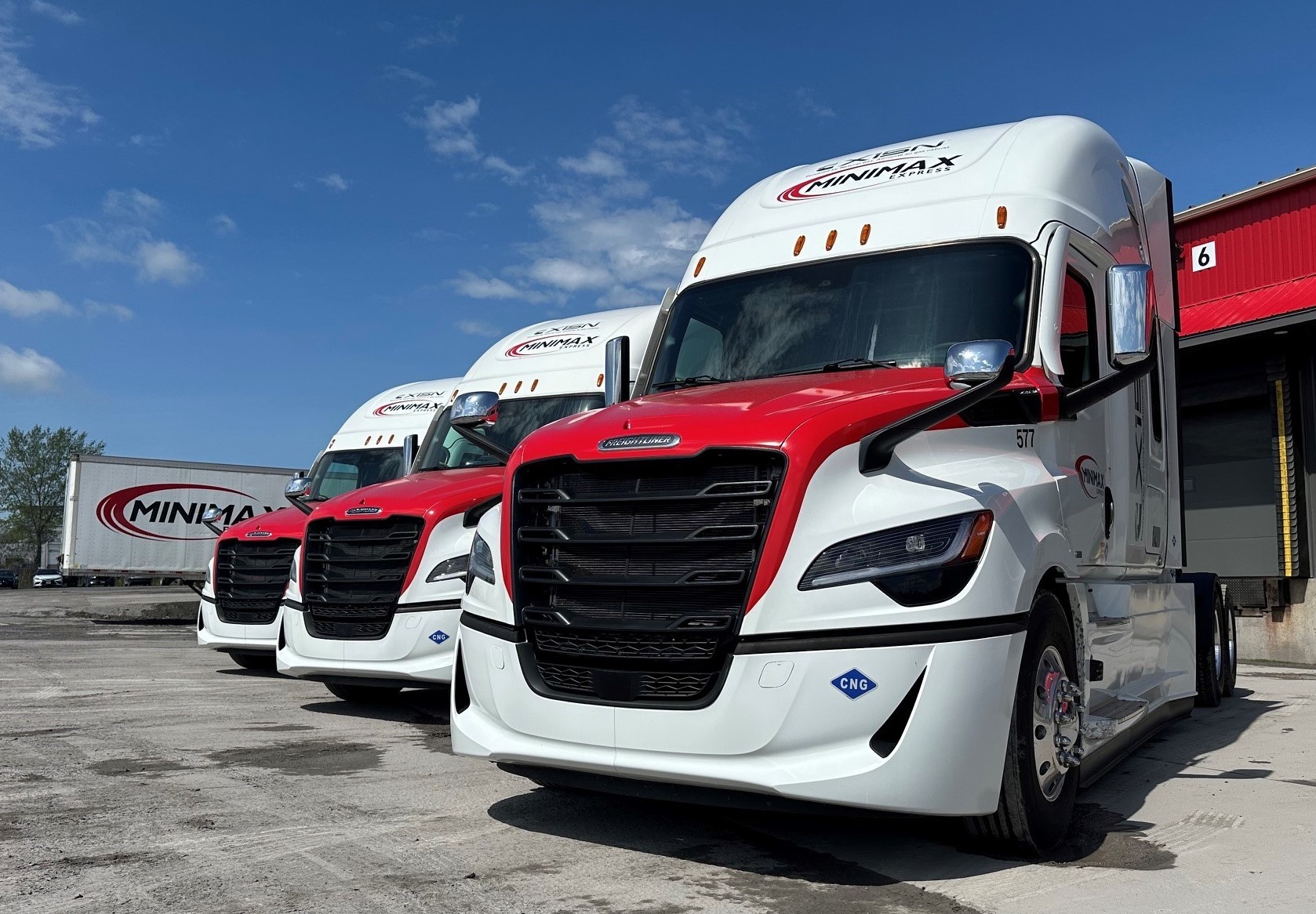
With retail diesel prices surpassing $2/liter in Ontario, Yves Poirier was especially happy this week to welcome three new CNG-fueled Freightliner Cascadias to the Minimax Express fleet.
“With the price of diesel right now, we look pretty smart,” Poirier quipped.
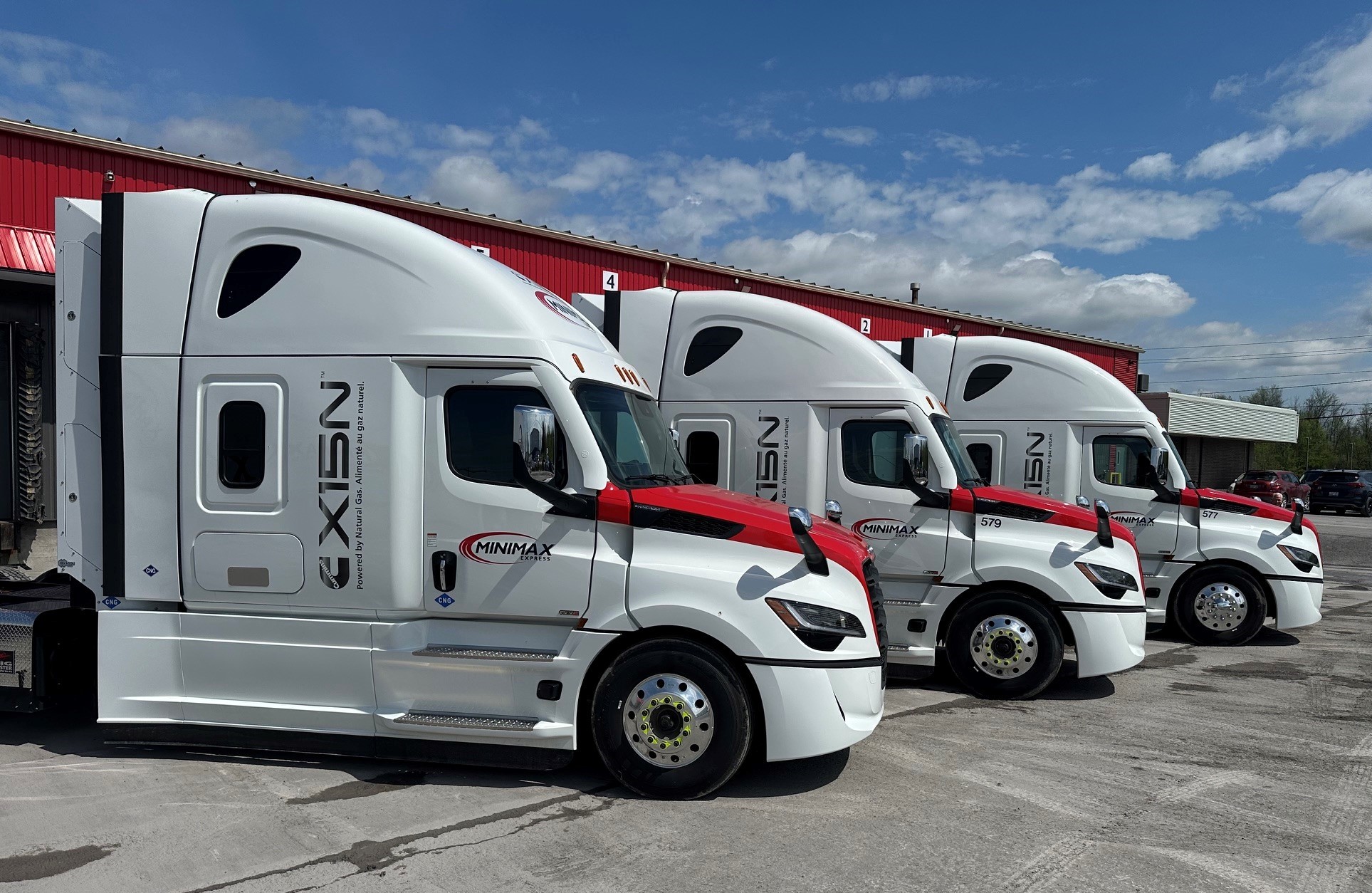
But the transition to natural gas began well before bombs started dropping on Iran. Minimax has always had an interest in natural gas, and flirted with the alternative fuel when Westport had a 15-liter liquefied natural gas engine in the market.
“We did dip our toes in natural gas years ago with LNG and Westport and that didn’t work out very well,” Poirier acknowledged.
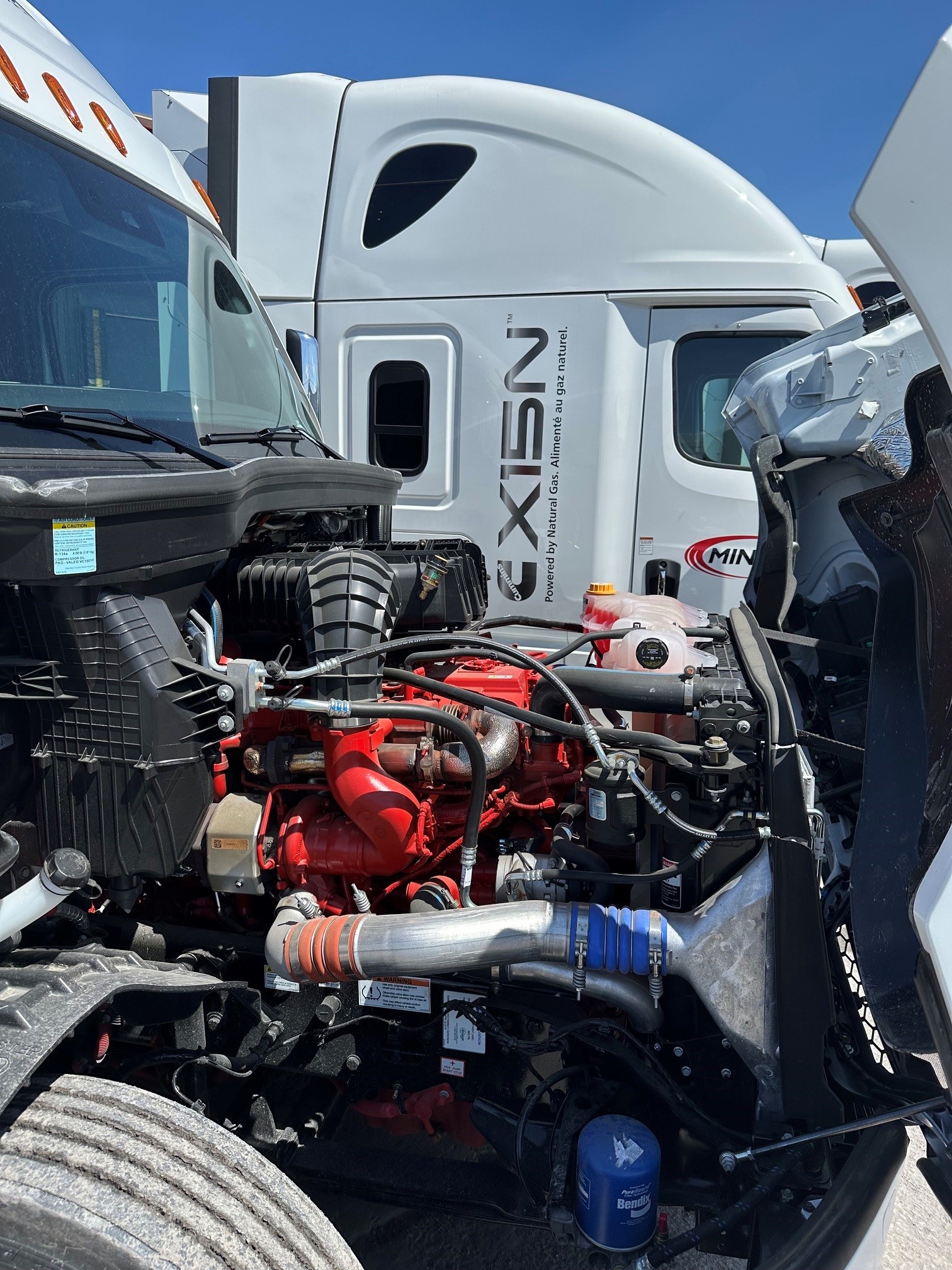
That engine was discontinued, leaving a void in the market that Cummins initially tried to fill with its 12-liter ISX12N. Many Canadian fleets felt that was inadequate for Canadian terrain and payloads. Then came the X15N, with 15 liters of displacement and diesel-like performance and power.
Minimax put its first X15N-powered truck on the road in January 2025, “and the results were pretty good,” Poirier said.
Natural Resources Canada came out with Stream 2 of its Green Freight Program, offering incentives to invest in cleaner fuels, including natural gas. Suddenly, the stars were aligning for a resurgence of interest in natural gas: high diesel prices, federal incentives, a capable engine, and pressure from sustainability-minded shippers.
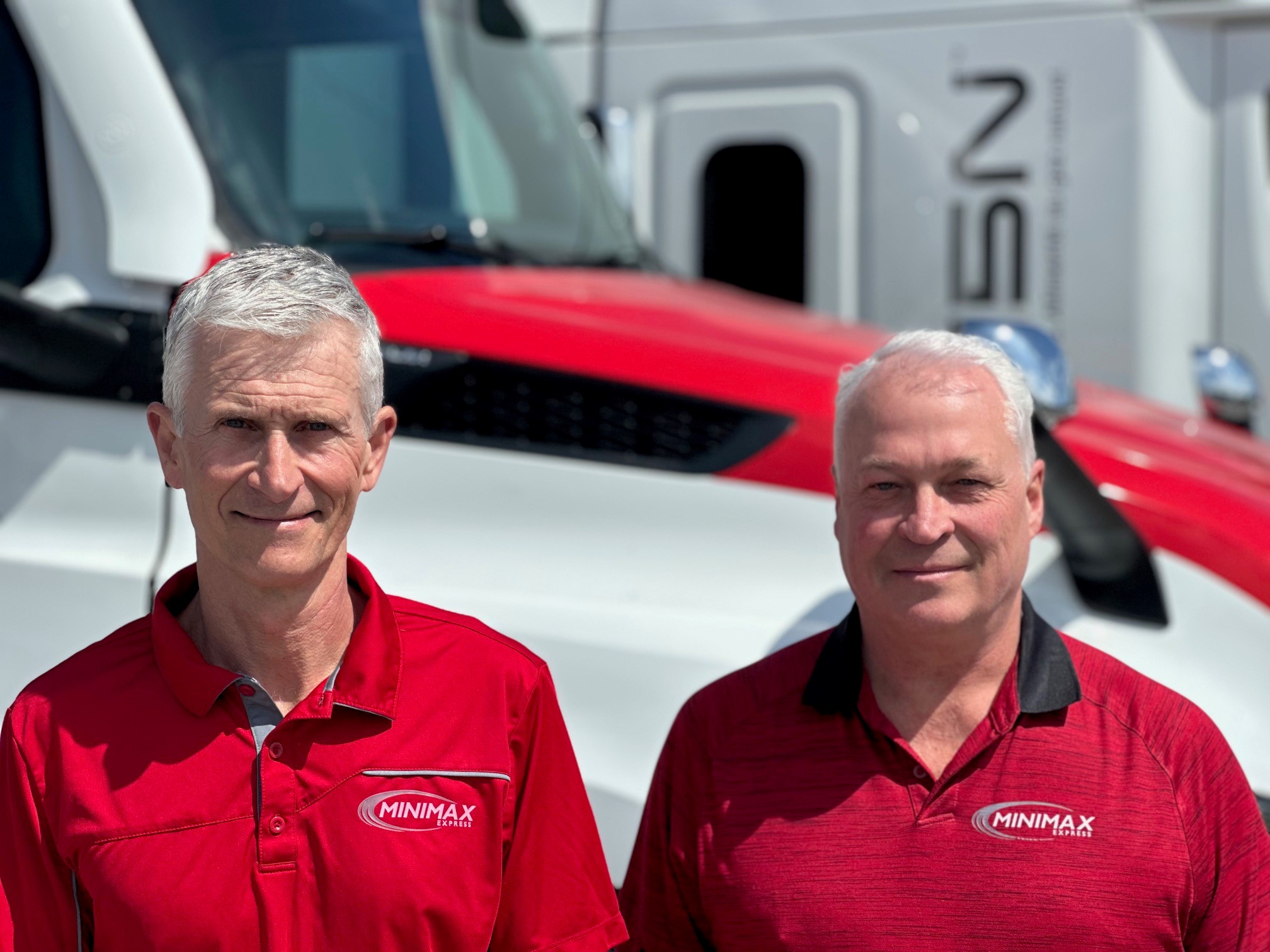
In response, Minimax manager Richard Poirier worked with FPInnovations’ PIT Group to evaluate the use case and secure funding for five more CNG-fueled trucks.
The first of those trucks arrived earlier this year and have been running out of Drummondville, Que., where there’s a CNG filling station that serves up renewable natural gas (RNG). NRCan’s subsidies require fleets to fill with at least 1% renewable gas, which is difficult to source in Ontario.
Currently, Minimax is in discussions with a Cornwall, Ont.-area company that is setting up a biodigester that will be capable of providing 100% RNG. The three newest arrivals will be based out of Cornwall and will be used to serve a local customer that is pushing to have more of its freight moved sustainably.
Yves Poirier said there are few limitations on how the trucks are deployed. There are sufficient fueling points from Quebec all the way along the 401 corridor to Windsor, Ont. And more public fueling stations are coming, including one in Minimax’s backyard in Cornwall later this year or early next.
The subsidies helped offset the higher acquisition cost of about $125,000 per truck, Poirier said. But even without subsidies, he sees a payback, since natural gas costs 20-30% less than diesel during normal times. With subsidies, Poirier is expecting a payback in just two years – and even less at today’s inflated diesel prices.
Better yet, the composite tanks, sourced from Hexagon Agility, can last the lives of two trucks, substantially reducing the cost of replacement vehicles.
“I think there’s a business case, even with no subsidies, on these trucks,” Poirier said.
Ian MacDonald, senior vice president of sales, Americas, for Hexagon Agility, said the tanks would get a software update and paint job before being installed on their second vehicle. Currently, the X15N is offered in Freightliner, Peterbilt and Kenworth trucks. Hexagon installs the tanks at its own facilities near where those trucks are built.
Marc Poirier, Minimax vice president, said drivers rave about the trucks’ performance.
“I’ve heard it’s quieter, has more torque and more power,” he said of feedback received so far. Drivers are also impressed with the trucks’ range. “One driver told me he gets up to 1,500 kilometers [on a fill].”
Globocam sales representative Dave Savard sold Minimax the trucks, and the dealer is currently performing any needed maintenance. But Minimax plans to upgrade its own shops so it can eventually handle maintenance and repairs in-house.
Richard Poirier said the fleet is paying about $1.10/kg for 8% RNG. In diesel terms, that pencils out to about 81 cents/liter and Poirier said natural gas prices are much less volatile than diesel.
They are payload implications to consider. Hexagon’s MacDonald said the tanks weigh about 2,000 lb. when empty or 3,600 lb. full.
“But you do have a slightly lighter engine and a much simpler aftertreatment system,” he added. “So, I think at the end of the day, even full, it’s about a 2,000-lb. difference, and on U.S. federal highways, you get a 2,000-lb. weight exemption, so if you’re going into the U.S. and you’re worried about that weight, you get the bonus 2,000 lb.”
Fueling time is about 12 minutes, similar to filling a diesel.
Asked if Minimax explored other clean energy options, Yves Poirier said the fleet did examine battery-electric vehicles but felt it wasn’t a good fit.
“When I learned that in the winter, we’re going to lose 30-40% of our range, I just kind of gave up, because for our application, it wouldn’t work,” he said of electric trucks.
Minimax was founded in 1991 as an LTL carrier serving Ontario and Quebec. It runs about 170 trucks and 250 trailers out of six locations. The company hopes to continue increasing the portion of its fleet that’s powered by CNG, especially as it helps it gain an edge with sustainability-minded shippers.
“I feel like now, when you look at an RFP (request for proposal) or when you talk to a shipper, it’s a bit more prevalent than it was five years ago,” he said of sustainability initiatives. The fleet took part in an EcoVadis sustainability assessment that required about 100 hours of work and made clear the company had opportunities to reduce its environmental footprint.
“That’s when the whole CNG thing started,” Yves Poirier said.
Minimax now uses a third party to track its carbon reduction results so it can convey those improvements to shippers. Early assessments suggest Minimax’s six current CNG trucks will collectively eliminate about 222 tons of CO2 per year.
Rolly St-Denis is Minimax’s head mechanic in Cornwall. He said technicians there are eager to receive training to begin servicing the CNG trucks in-house.
In terms of maintenance requirements, the trucks require a separate engine oil, but drain intervals are aligned with a diesel. Aside from that, little additional maintenance is required.
And he smiled broadly when asked about the elimination of diesel exhaust aftertreatment systems, including the diesel particulate filter and selective catalytic reduction.
“That’s going to be a big bonus,” he said of the elimination of those pesky systems.
Have your say
This is a moderated forum. Comments will no longer be published unless they are accompanied by a first and last name and a verifiable email address. (Today's Trucking will not publish or share the email address.) Profane language and content deemed to be libelous, racist, or threatening in nature will not be published under any circumstances.

Kudos to the Poirier boys for ingenuity and for their Head Mechanic Rolly St Denis for being ahead of the competition which Rolly is well known for in the trucking business.,I am sure Yves & Marc are more then satisfied with Rolly’s many years of experience that is great demand these days.MiniMaxa company thinking of the future.Well done gentlemen,you can be proud of your accomplishments.This report was well written thanks for sharing.