US Supreme Court rules brokers can be held liable in accidents

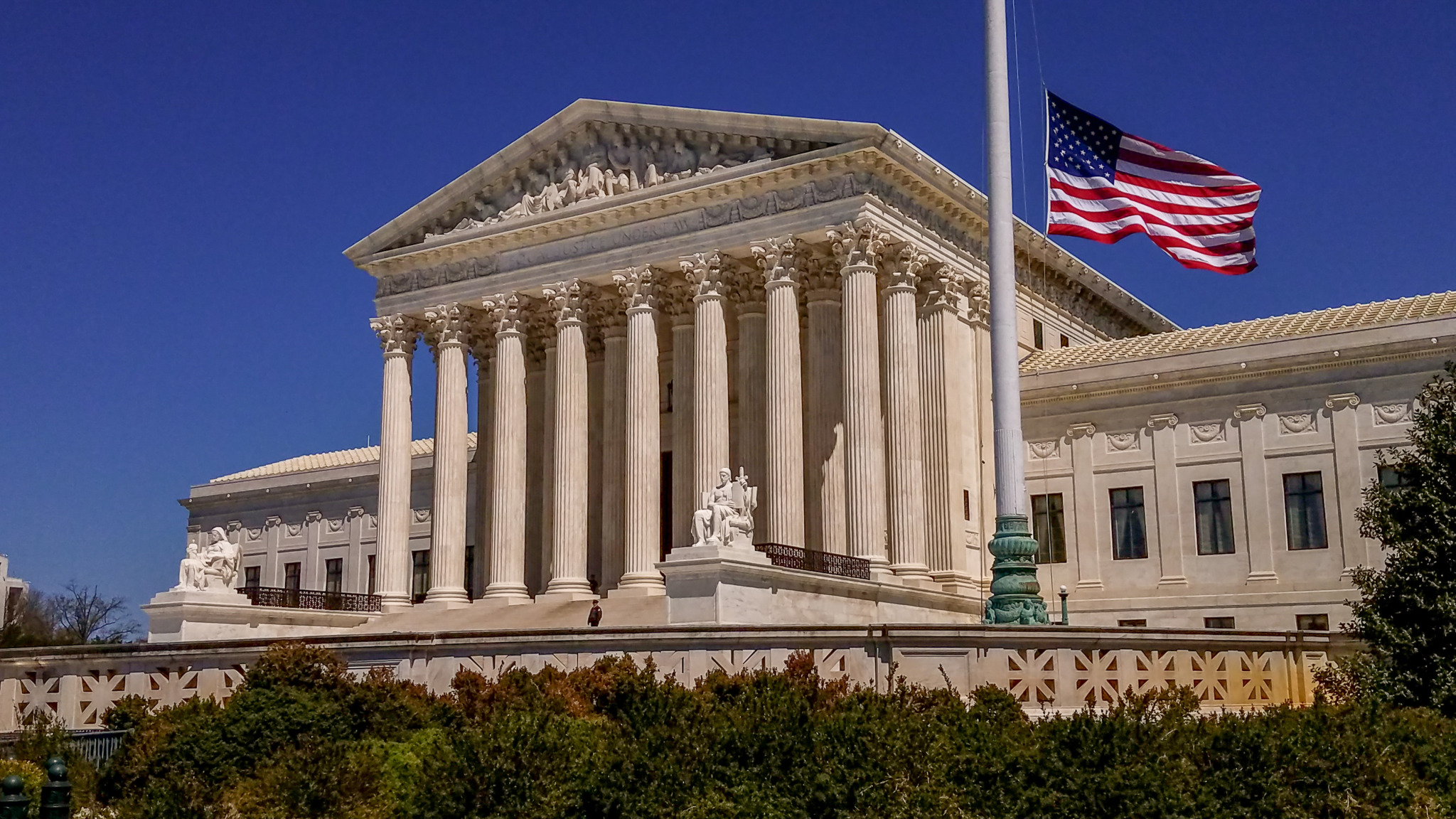
The U.S. Supreme Court on May 14 ruled that freight brokers can be held liable for negligence under state laws for highway accidents.
The court’s unanimous decision in Montgomery v. Caribe Transport II could have significant ripple effects across the freight transportation industry. The nine justices all sided with Shawn Montgomery, whose parked vehicle was hit by a speeding Caribe Transport truck on an Illinois highway in 2017.
Montgomery claimed C.H. Robinson, the nation’s largest freight broker, should be liable for its role in putting the driver on the road despite “serious red flags.” The opinion overturned an appeals court ruling in favor of C.H. Robinson.
The appeal to the Supreme Court was backed by more than two dozen U.S. states, which said the case would help bolster safety. On the other side was the Trump administration and companies like Amazon, who argued against exposing logistics companies to liability under a “patchwork” of state laws.
Montgomery’s attorneys said the trucker had been cited for careless driving in an earlier crash. The lawsuit said C.H. Robinson should share liability because it hired the carrier.
The company argued that Montgomery’s lawsuit, filed under state law, should be dismissed because brokers rely on the federal government to regulate carriers under the Federal Aviation Administration Authorization Act (F4A), and federal law trumps state law.
But in an opinion authored by Justice Amy Coney Barrett, the Supreme Court disagreed. The justices found that Montgomery’s claims fall under an exception for safety regulations.
The decision could increase litigation and insurance costs for freight brokers that eventually “cascade through the economy” and result in higher prices for consumers, Justice Brett Kavanaugh wrote in a concurrence joined by Justice Samuel Alito.
“While we are disappointed in the court’s decision, we will continue to operate responsibly, support stronger federal enforcement, and work constructively with regulators, carriers, and customers to strengthen the national safety system and support safe, reliable transportation across the country,” Dorothy Capers, chief legal officer at C.H. Robinson, said in the company’s statement after the decision.
C.H. Robinson said it would continue to select only carriers licensed by the Federal Motor Carrier Safety Administration as required by law, and support strong federal oversight, including urging Congress to pass Dalilah’s Law.
In its recent first-quarter earnings conference call, C.H. Robinson President and CEO David Bozeman said this case was not about immunity for brokers.
“This is about safety, and this is why we support this case — not having 50 different state rules,” he said. A loss in the case would mean “headwinds to the industry, because you’ll have to start dealing with various brokers, and this should be the FMCSA really being the ones driving safety of carriers.”
“We are deeply disappointed with the decision as the law and legal precedent for decades has given the federal government, not states, the responsibility for setting safety standards for motor carriers. To date, carriers, not brokers, have been responsible for complying with these standards,” said Chris Burroughs, president and CEO of the Transportation Intermediaries Association.
“While brokers are fully committed to safety and to working with federally licensed motor carriers in good standing, the decision imposes an impossible task on brokers — effectively asking them to evaluate the safety of a given motor carrier despite having been deemed safe to operate on public roads by the federal government. This is like asking travel agents to evaluate the safety of a given airline despite the fact that the airline has been licensed to fly by the federal government,” Burroughs added.
During XRO’s earnings call, Drew Wilkerson, chairman and CEO, said this decision could force out many brokers, in part because of rising insurance costs. It could also create opportunities for organic growth for established firms and likely result in consolidation through mergers and acquisitions.
Frank Lonegro, president and CEO of Landstar System, also spoke last month of the changing insurance landscape that could arise from this decision.
“It likely will create a situation where smaller players are going to get priced out of the market because of the cost structure going up,” he said. “And I think you’ve got so much fragmentation in our industry on the brokerage side that [some companies] may not survive in an environment where you have to have $5 million or $10 million of insurance just to cover a single incident.”
He also suggested that, regardless of the decision, Congress could review the outcome and seek to develop policy, rather than leave it to the courts.
– The Associated Press contributed to this article.
Have your say
This is a moderated forum. Comments will no longer be published unless they are accompanied by a first and last name and a verifiable email address. (Today's Trucking will not publish or share the email address.) Profane language and content deemed to be libelous, racist, or threatening in nature will not be published under any circumstances.
The broker has no way to verify a single driver like in the example situation. The carrier hires them, trains them (maybe), and tracks their performance (maybe), and should be responsible. I know CH Robinson, having been to their shop in Chicago, put a lot of work and money into their networking and planning systems, but even they can’t get down to the driver level. I also know they make a lot of cash without doing the “on the road” work where all the real costs are, so quit complaining about having to have more insurance.
Thanks Neil – It’s time ALL carriers take their share of responsibility; however, given the current pressures around fuel costs and regulatory enforcement, this is not the most opportune moment to have this judgement

While I agree that brokers should bear a piece of the burden to ensure they’re using good carriers, I fail to see how one previous accident, where a driver was cited for careless driving, should be the single item that includes them. The broker does not have that information. It is not public information. There is no website to see where drivers get these fines and if they are proven in court. There is no way that a broker even knows which driver is on the load. If this is the case today, next time it will be the ultimate freight payor on the hook for choosing the wrong broker. How far down the rabbit hole do we go?
While brokers may now be on the hook if they choose to use a carrier that is far above the average SMS score, I don’t think it will amount to a burden of the exposure on the broker. The bulk of this exposure rightfully lies on the carrier and the insurance company that insures it. The insurance company needs be the gatekeeper to ensure that negligent carriers with horrible business practices are not on the road.