Range Energy’s powered trailer makes a strong case for hybrid trucking now

Hybrid powertrains are commonplace on passenger cars today.
And 20 years ago, several truck OEMs – International, most notably – experimented with mating an electric motor to the transmission of diesel-powered trucks.
Ultimately, the project fizzled out. Electric motors at the time were large and heavy. The powertrains were also expensive to acquire. And they were expensive and difficult to maintain.
Still, the effort proved that diesel-electric hybrid powertrains worked well in heavy truck applications. They delivered on-demand propulsive power to the diesel engine at low rpms, when the truck is working its hardest to get a load up to road speed. They could also add propulsion on grades or in difficult road conditions on demand. This extra motive effort helped trucks save fuel and reduce diesel exhaust emissions.
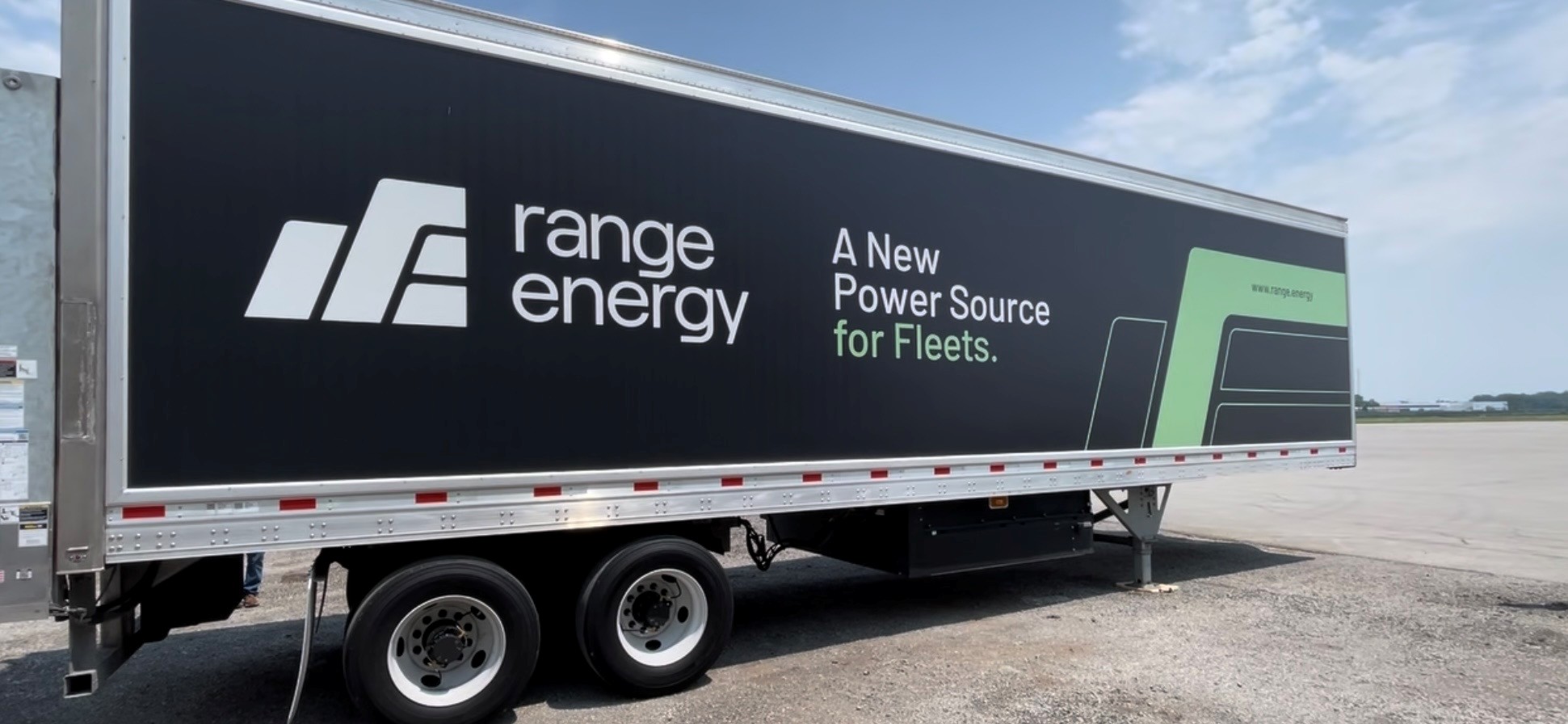
Flash-forward to today, and a company called Range Energy has taken the standard hybrid drivetrain blueprint and turned it 180-degrees around. Range Energy’s concept is to add ZF’s “smart” AxTrax 2 electric axle and battery packs to trailers. It’s a remarkable technological concept that gives fleets the capability to turn any diesel truck in their stable into a hybrid-powered vehicle.
Range Energy has been on the scene for several years now talking about its technology.
But it wasn’t until ZF invited a select group of journalists to its vehicle research facility at the Transportation Research Center (TRC) outside of East Liberty, Ohio in July that I finally had the opportunity to experience Range Energy’s technology for myself.
An elegant highway solution
To my mind, the Range Energy hybrid approach is elegant in its simplicity.
Instead of asking the tractor to do all the work, Range Energy is, in essence, finally asking the trailer to start carrying some of its own weight.
As noted, the system’s foundation is ZF’s AxTrax 2 electric axle, a commercial-duty electric drive system that Range has integrated into its intelligent trailer platform.
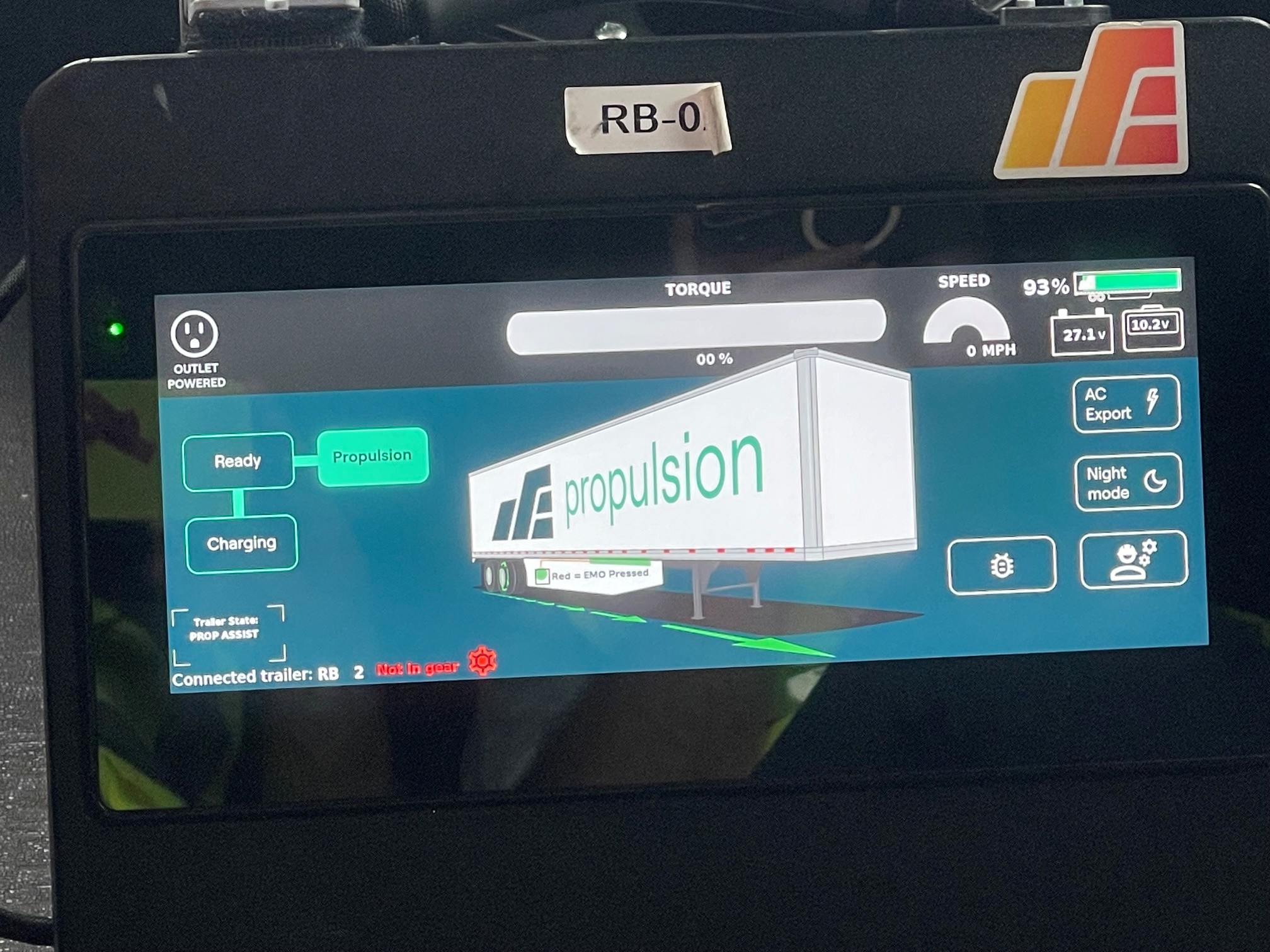
The powered axle supplies propulsion during launch, assists while climbing grades and stores energy captured through regenerative braking. That same stored electrical energy can also power refrigeration units, liftgates, lighting systems and other trailer-mounted accessories without requiring separate power sources.
It’s an approach that could allow fleets to realize many of the operational benefits associated with electrification while continuing to operate the diesel tractors already sitting in their yards.
Because the technology is still in its early stages, journalists weren’t allowed behind the wheel. Instead, I rode along in a Freightliner Cascadia pulling a Range-equipped trailer around the TRC test track.
The difference was noticeable almost immediately.
With the Range system engaged, the tractor-trailer moved away from a dead stop with far less effort than a conventional diesel-powered unit does.
Launches were noticeably smoother, with less fore-and-aft jerking through the cab. There is also much less of the side-to-side torque rocking that you get with a heavily loaded diesel drivetrain.
And while Range Energy doesn’t turn tractor-trailers into Top Fuel dragsters, there is a definite noticeable push in the seat of your pants when the AxTrax 2 kicks in to help the diesel engine out with a firm, controlled push from behind.
From a dead stop, the Range Energy Cascadia gathered speed more quickly and quietly and far more smoothly than I expected. That’s because the Range Energy trailer isn’t designed to overpower the tractor. It’s simply there to assist it.
Benefits beyond fuel economy
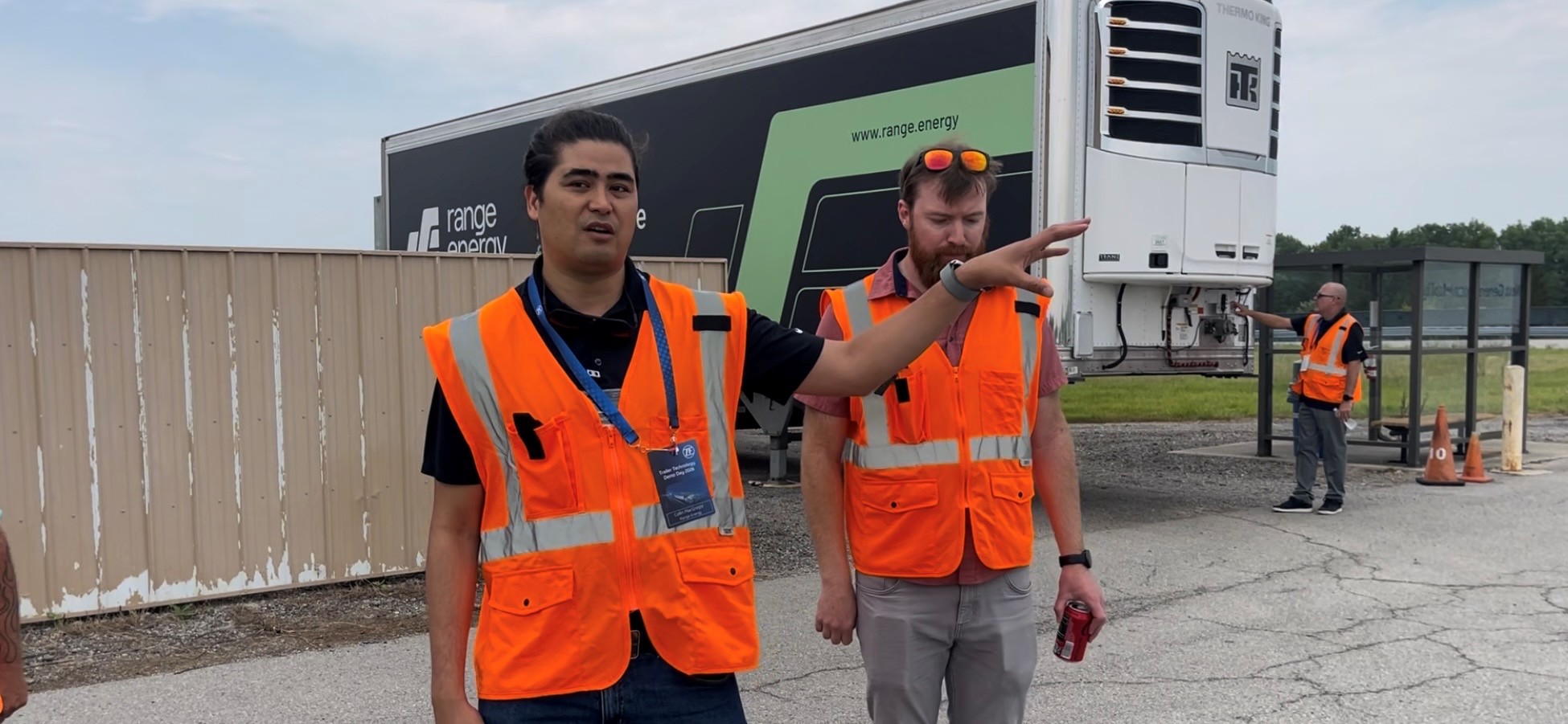
According to Collin MacGregor, Range Energy’s vice president of product systems engineering and safety, that assistance provides benefits extending well beyond fuel economy. For starters, the system provides obvious diesel exhaust emission reductions – particularly at low speeds.
But MacGregor believes some of the greatest advantages occur during everyday city driving, where heavy trucks repeatedly accelerate from traffic lights, stop signs and congested intersections before merging into faster traffic.
Leaving a distribution center, an 80,000-lb. combination vehicle may spend much of its day repeatedly accelerating and stopping while interacting with impatient commuter traffic.
With the trailer providing propulsion assistance, MacGregor said the truck accelerates more like surrounding traffic, allowing drivers to merge more confidently while reducing the fore-and-aft motion and driveline harshness drivers normally experience.
He noted that many motorists don’t appreciate how long it takes a fully loaded Class 8 truck to reach freeway speed. Helping the combination accelerate more naturally makes merging easier not only for truck drivers, but also for everyone sharing the road.
That safety angle may ultimately become one of the technology’s strongest selling points, he added.
But the AxTrax 2 electric axle’s value doesn’t end once the truck reaches highway speed.
While cruising, the Range Energy system continues assisting the tractor on rolling terrain and long grades, helping maintain momentum without demanding as much from the diesel engine.
During deceleration, regenerative braking captures energy that would otherwise be lost as heat through the service brakes. That energy is then stored in battery packs mounted beneath the trailer. It can be used to power reefers, liftgates or, “…any electrically powered system a fleet can think of,” MacGregor said.
MacGregor expects that capability will eventually reduce brake wear, although he noted fleets are still accumulating enough real-world operating data to quantify the benefit.
The trailer’s regenerative braking system also changes how the trailer behaves.
Rather than pushing against the tractor while descending grades, the system actively manages trailer forces while recovering energy for later use.
In early conversations with fleet managers about Range Energy, several expressed concern that the trailer would provide power at inappropriate times, making the tractor-trailer harder to control on wet roads and other adverse conditions.
Taking those concerns to heart, MacGregor said Range has also devoted considerable effort to making sure the trailer never provides propulsion when it shouldn’t.
He explained that sophisticated control algorithms continuously monitor vehicle dynamics. During sharp turns, off-ramps or other aggressive steering maneuvers, drive torque is reduced or eliminated altogether while regenerative braking can be increased to help stabilize the tractor-trailer combination.
Just as importantly, the trailer never attempts to become the primary source of propulsion.
Instead, as MacGregor explained, the goal is simply to help the trailer carry its own weight.
Designed for fleets today and in the future
Still, MacGregor is quick to admit that the Range Energy system is not a solution for every fleet on the road today.
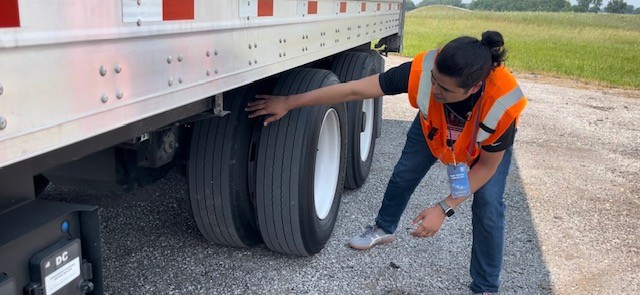
The system, including the ZF electric axle and battery packs mounted underneath the trailer, add about 6,000 lb. of weight to the unit.
Which is why MacGregor feels the system is best suited for less-than-truckload and regional/urban delivery fleets that do not max out trailer capacity.
But perhaps the most compelling aspect of the system is that it asks very little of fleets.
Rather than requiring new charging depots, revised operating schedules or wholesale equipment replacement, the powered trailer fits within existing freight operations.
Trailers can be retrofitted, existing tractors remain in service and the technology should be compatible regardless of what ultimately powers tomorrow’s trucks.
MacGregor said Range Energy can boost the performance of any heavy-truck powertrain. He said the company engineers have found that an electric truck mated to a Range Energy trailer gains about 100 miles of additional battery range. And that, he added, is a conservative estimate.
Whether fleets adopt diesel, hybrid, battery-electric or even hydrogen-powered tractors in the future, the powered trailer concept holds great promise to continue improving overall vehicle efficiency.

Have your say
This is a moderated forum. Comments will no longer be published unless they are accompanied by a first and last name and a verifiable email address. (Today's Trucking will not publish or share the email address.) Profane language and content deemed to be libelous, racist, or threatening in nature will not be published under any circumstances.