AI, telematics adoption increases as fleets prioritize savings, efficiency, safety

As fleets work on improving safety, offset inflation and make better data-driven decisions, artificial intelligence (AI)-powered tools and telematics are now becoming an integral part of operations, instead of an optional add-on they once used to be.
The 2026 Fleet Technology Trends Report from Verizon Connect found that nearly half (46%) of surveyed fleets are now using AI-enabled video telematics, up from 36% in 2023, and GPS fleet tracking adoption is now at 80%, an 11-point increase year over year. The report was conducted mid-2025 and is based on the survey of 830 fleet professionals across different sectors.
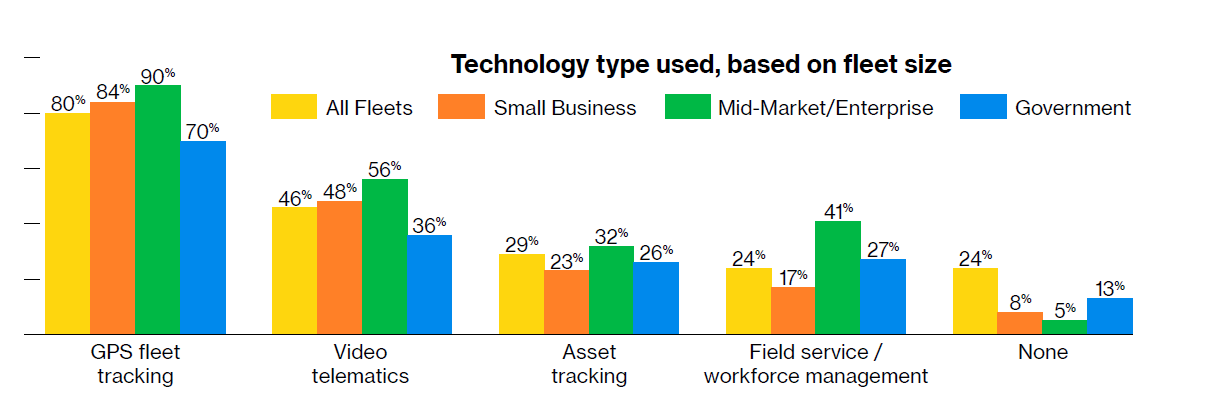
“Fleet management is entering a new chapter, one defined by rapid intelligence, connectivity and action,” said Peter Mitchell, senior vice president and general manager at Verizon Connect, in a related news release. “As this year’s report shows, AI-powered fleet technology is no longer about just collecting data. It’s about turning insight into safer roads, stronger operations and better outcomes for drivers and businesses alike.”
Safety as one of key focuses
Safety gains might be one of the leading causes of escalating technology adoption.
Among carriers using video telematics, 74% reported improved driver safety, while 41% cited benefits with driver coaching sessions. Nearly 45% said it extremely or very impactful in efforts of increasing distracted driving awareness, which translated into 48% reporting that the technology helped reduce accident-related costs when coupled with GPS fleet tracking. Over 30% of GPS users saying they achieved their goal of decreasing accidents.
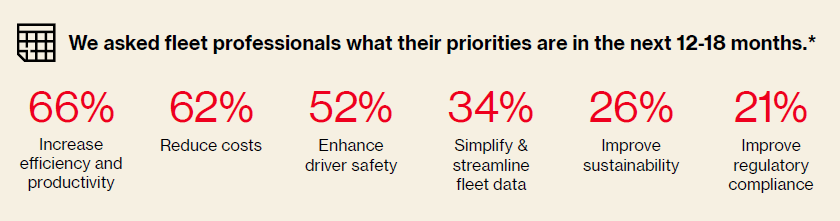
Improving driver safety and decreasing collisions is one of the priorities of fleet mangers’ to-do list for the next year and a half. When asked about top priorities for the next 12–18 months, 52% of all survey respondents indicated driver safety. Of video telematics users specifically, 71% said improving driver safety will be their primary focus in the near future. Other key challenges cited by video users include reducing accident costs (58%), improving protection from false claims (57%) and lowering insurance costs (42%).
Efficiency and cost control top overall priorities
However, efficiency and cost management dominated the list of priorities among all surveyed fleets, with 66% identifying increasing efficiency and productivity as their main task, and 62% cited reducing costs.
Inflation, rising labor costs and higher maintenance costs are pushing fleets to get as much value from existing assets as possible, Verizon found.
GPS tracking users reported average decreases of 12% in fuel and labor costs, and 11% in insurance premiums. On average, accident costs fell 19% and maintenance costs declined 15% after implementation.
Thirty-one percent of GPS users said the technology is extremely or very beneficial for improving daily operational efficiency. Among fleets with electric vehicles, 30% said fleet technology helped them achieve their goal of improved efficiency/management of daily operations.
When it comes to asset tracking, 53% of users said the technology helped reach the goal if improving asset, equipment and trailer utilization, while 51% reported improved security. Twenty-one percent of asset tracking users said it significantly reduces downtime-related costs, while over 40% reported improved productivity among drivers and other workers, as well and maintenance outcomes.
Challenges vary by segment
The report also breaks down the top challenges fleets faced in 2025.
Increasing costs ranked as the top challenge overall, cited by more than half of all fleets. Small fleets, mid-market and enterprise operators seem to be struggling more, compared to government operators.
Driver shortage and driver quality ranked second, flagged by 35% of fleets overall and 38% of both small businesses and mid-market operators.
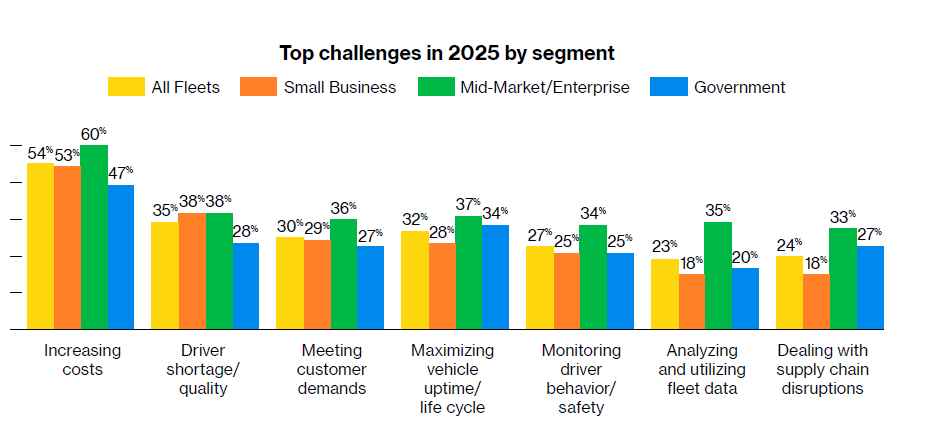
Overall, mid-market and enterprise fleets reported elevated pressure in several areas of operations: 36% cited meeting customer demands — compared to 30% overall — and 37% pointed to maximizing vehicle uptime and lifecycle management. Data analysis and utilization emerged as a big concern 35%, versus 23% overall.
Supply chain disruptions remain part of the landscape as well, cited by 24% of fleets overall.
The full report can be found here.

Have your say
This is a moderated forum. Comments will no longer be published unless they are accompanied by a first and last name and a verifiable email address. (Today's Trucking will not publish or share the email address.) Profane language and content deemed to be libelous, racist, or threatening in nature will not be published under any circumstances.