CargoNet observes thefts declining in Q1, but it’s not the full story

Cargo theft incidents declined in early 2026, but criminals became more organized, targeting higher-value shipments, according to new data from Verisk CargoNet.
The company recorded 767 supply chain crime events across the U.S. and Canada in the first quarter of 2026, down 5.3% year over year and 12.2% from Q4 2025.
However, despite fewer incidents, losses reached $131.58 million, essentially unchanged from Q1 2025, and confirmed cargo theft reports rose by 41 incidents to 596 of 767 total events.
“The overall drop in incident volume is encouraging, but the underlying data tells a more complex story,” said Keith Lewis, vice president of operations at Verisk CargoNet, in a news release. “We’re watching transnational organized crime groups become the dominant force in the cargo theft landscape, with a clear preference for goods that move easily through online resale channels. The geography is following the criminals.”
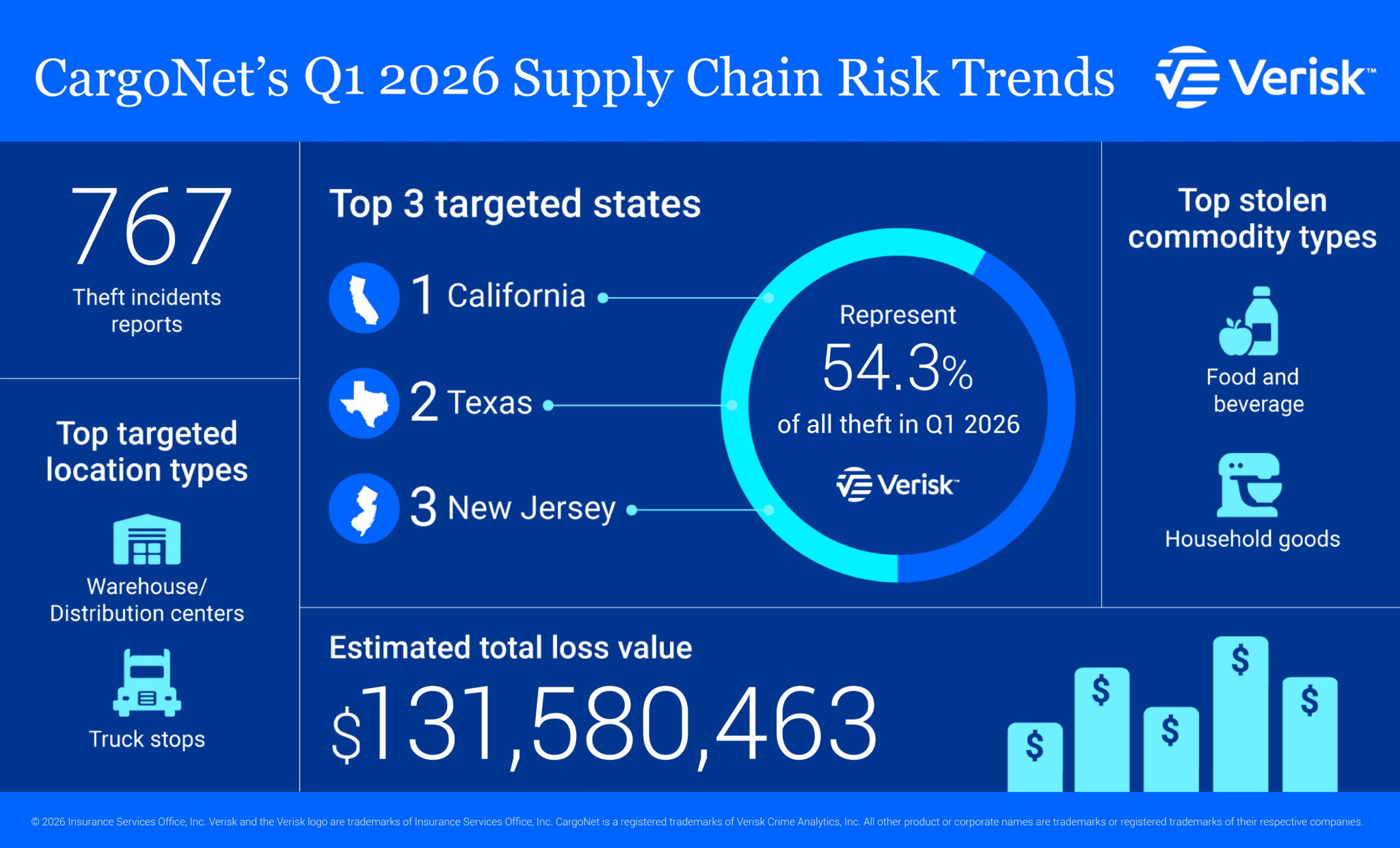
Among the top eight states for cargo theft, most saw year‑over‑year declines, with two notable exceptions. California remained the most targeted state, with incidents rising from 255 to 277, while New Jersey recorded one of the sharpest increases, jumping 119% year over year, up to 59 incidents. CargoNet explains that both states are primary operating environments for organized crime networks, offering dense logistics infrastructure and proximity to major consumer markets.
Theft in Texas, meanwhile, dropped 22%, from 102 to 80. The types of opportunistic theft historically common in the Dallas–Fort Worth and Houston logistics corridors appear to be giving way to more targeted operations elsewhere in the country.
When it comes to most targeted commodities, criminals concentrate their efforts on high-value items that are easy to resell, with food, bevarages and household items topping the list. But within the food category, theft patterns shifted, with seafood becoming a more frequent target while beverage theft declined.
At the same time, personal care and beauty products saw one of the sharpest increases, rising 178% year over year, driven by cosmetics and fragrances, predominantly in the Northeast.
Bulkier and less standardized goods such as building materials, apparel and vehicle-related shipments saw declines, reflecting a preference for items that are easier to move and monetize at scale. Theft of building materials, for example, fell from 21 events to 8, a category historically dominated by domestic groups operating seasonally in North Texas.
Fraud, impersonation driving new theft tactics
CargNet says the most significant tactical development in Q1 2026 is how impersonation‑based theft matures into a systematic, scalable criminal methodology. Criminal networks are increasingly posing as legitimate carriers or brokers to secure loads, using stolen credentials or compromised systems to gain access to freight.
The report says that because the anti-fraud tools previously deployed by the industry have been effective, thieves are now forced to innovate further. In some cases, criminal networks are purchasing legitimate carriers through social media, peer‑to‑peer marketplaces, and specialized brokerage services. Despite warnings from regulators, these sales remain frequent and largely unregulated.
“But the shift toward credential theft and carrier impersonation means the industry needs to think beyond tender‑phase controls. We need robust identity verification throughout the lifecycle of a shipment, from booking to delivery,” Lewis said.

Have your say
This is a moderated forum. Comments will no longer be published unless they are accompanied by a first and last name and a verifiable email address. (Today's Trucking will not publish or share the email address.) Profane language and content deemed to be libelous, racist, or threatening in nature will not be published under any circumstances.