Fraud, burnout and tech gaps define new cargo theft risks: Geotab

Nearly half of fleet professionals say cargo theft is now contributing to driver burnout and turnover, while a growing share identifies fraud and identity-based schemes as the industry’s biggest threat, according to a new Geotab whitepaper.
The whitepaper titled A 2026 Blueprint for Countering Smarter Theft found that incidents rose 27% year over year in 2024 and annual losses reached as much as $35 billion. Geotab then said in a related news release that total cargo theft losses were estimated at $6.6 billion in 2025, a 18% year-over-year increase, with average theft values climbing 36% to nearly $274,000 per incident, adding that food and beverage loads were among the most targeted, with thefts in that category rising 47%.
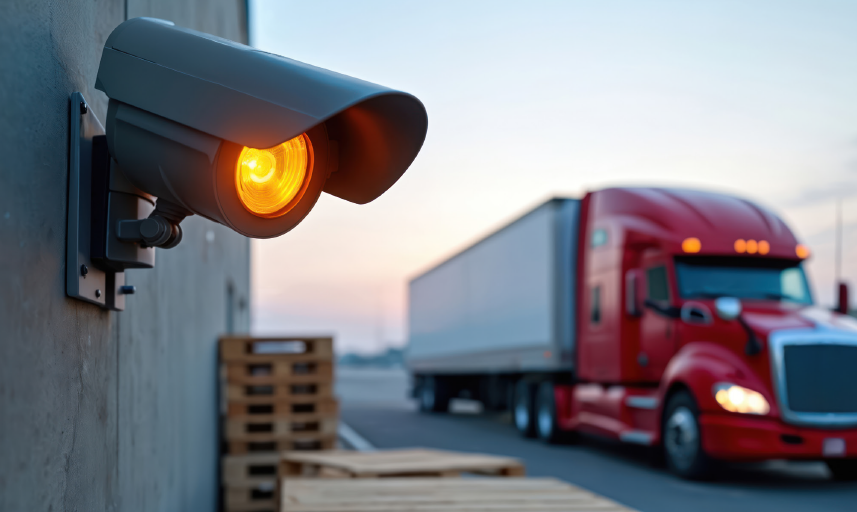
All this is because what was once largely opportunistic “smash-and-grab” activity is now evolving into more strategic operations involving digital deception, identity fraud and fictitious pickups. While 52% of fleet professionals still point to unsecured parking locations as the primary risk, nearly a quarter now identify fraud-based schemes as the most significant threat.
“This isn’t the same cargo theft problem the industry was dealing with even two years ago,” said Emily Williams, assistant vice president of transportation business development at Geotab, in the release. “We’re seeing a convergence of physical and cyber threats. Criminals are accessing fleet tracking portals with stolen credentials, spoofing GPS to mask route diversions, and using AI to automate phishing at scale. It demands a fundamentally different response.”
The report also highlights the growing human impact of cargo theft across fleets. Nearly half of U.S. respondents — 47% — said the stress and personal safety risks associated with theft are significant contributors to driver burnout and turnover. Drivers are being asked to act as logistics experts and security guards at the same time, and many are responding by leaving the industry, Geotab says.
At the same time, about 30% of consumers believe they ultimately bear the financial burden of cargo theft through higher prices, while fleet managers point to reputational damage and loss of customer trust as among the most significant secondary impacts. Geotab added in its release that 51% of American consumers reported experiencing some form of cargo theft in the past year — often perceived as deliveries that simply “disappeared” — and 37% now associate theft with rising prices.
Uneven technology adoption
When asked about their security philosophy, 23% of respondents stated that “a strong lock and a vigilant driver” are the most important security elements. But 58% of respondents agree that an effective cargo security strategy requires multiple layers of technology.
That gap is reflected in uneven technology adoption. While 41% of fleets report using GPS tracking, only 23% have implemented camera or video-based monitoring systems, limiting visibility into who is accessing equipment and how loads are being handled.
Fleets say cost barriers as the biggest barrier to adoption, with 37% of respondents citing the upfront cost of hardware and subscriptions as the main obstacle. Integration complexity and driver concerns are some of the other hurdles cited by the respondents.
At the same time, insurers are tightening requirements as theft becomes more organized, increasingly demanding proof of digital security measures and automated monitoring before offering favourable coverage terms, Geotab said.
Multi-layered security approach
The whitepaper outlines what it describes as a five-layer defence model, arguing that no single tool is a silver bullet against increasingly coordinated, technology-enabled theft.
At the foundation is physical security, including hardened locks and secure parking practices. Building on that is real-time asset tracking, using GPS and geofencing to monitor vehicles, trailers and loads, and to trigger alerts when assets deviate from planned routes or enter high-risk areas.
A third layer focuses on intelligent monitoring, particularly through video-based systems that activate based on events such as door openings or unexpected movement, creating both real-time alerts and a visual record for investigations. The report also emphasizes verified access controls, including identity-based systems that ensure only authorized drivers or personnel can pick up the freight.
More than half of respondents (52%) said video or photo verification of drivers at the point of pickup is essential to preventing identity fraud.
Tying these elements together is what the report describes as a unified data hub. By integrating multiple systems through a centralized platform, fleets can gain end-to-end visibility across their operations, detect anomalies more quickly and, when needed, share real-time data with law enforcement or partners to improve recovery chances. About 31% of respondents said sharing live tracking data directly with law enforcement is the most critical factor in recovering stolen cargo.
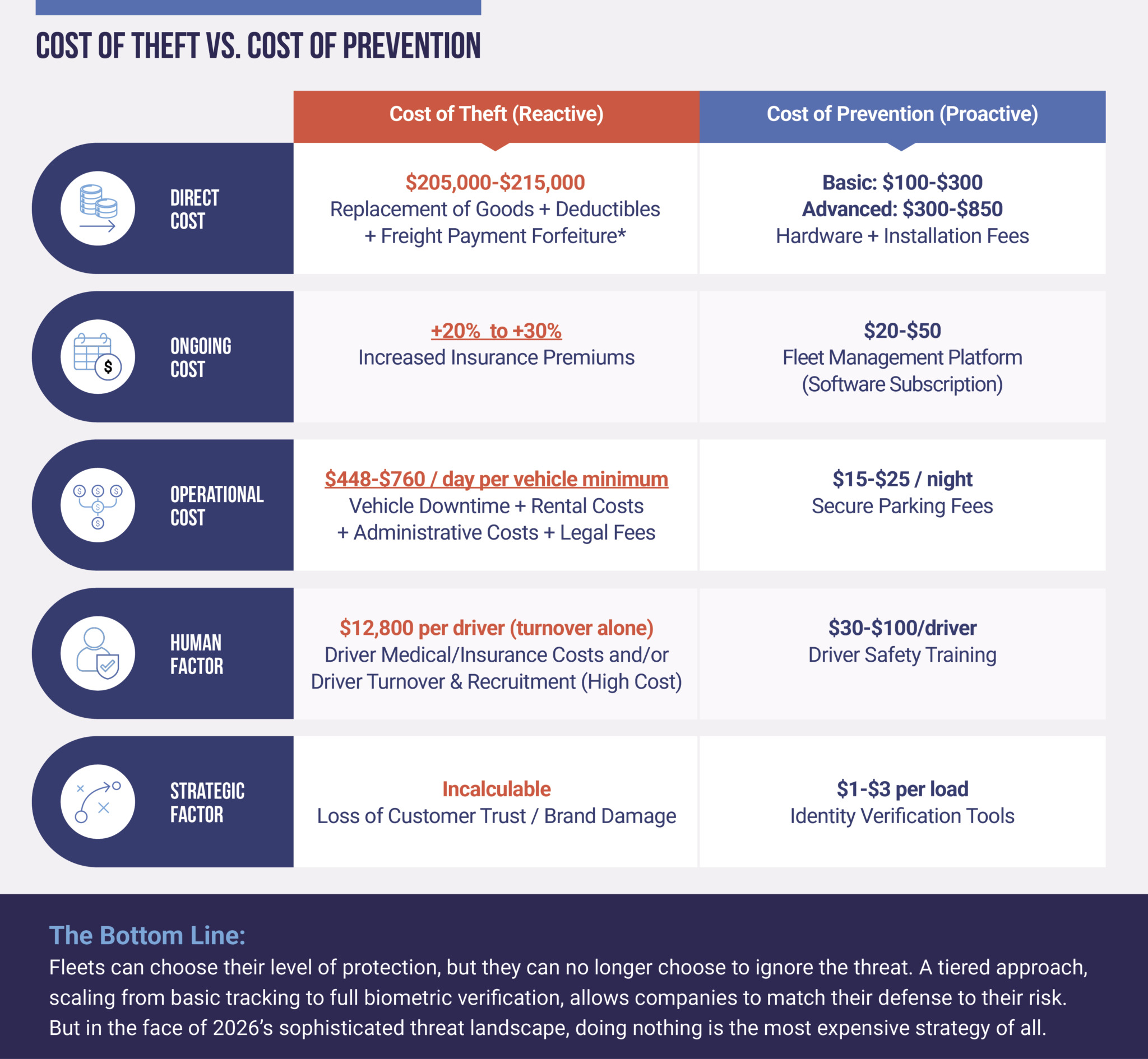
As to the high upfront costs of those prevention systems, Geotab argues that the cost of prevention is significantly lower than the cost of reacting to a theft.
While preventative investments include hardware, software and subscription services, reactive costs can include full cargo replacement, increased insurance premiums — often rising 20% to 30% after an incident — vehicle downtime, administrative costs and legal fees. Driver turnover further worsens the costs, as the report estimates that replacing a driver can cost fleets as much as $12,800.
The full report can be accessed here.

Have your say
This is a moderated forum. Comments will no longer be published unless they are accompanied by a first and last name and a verifiable email address. (Today's Trucking will not publish or share the email address.) Profane language and content deemed to be libelous, racist, or threatening in nature will not be published under any circumstances.