Myths still hold back retread use despite cost, safety, environmental benefits

High-quality casings, regular tire maintenance and multiple retreads deliver the lowest total cost for fleets, along with strong safety performance and significant environmental benefits. This is the key to making retreads work, panelists said during the Truck World show in Mississauga, Ont.
While about 90% of US fleets with more than 100 trucks use retreads in their operations, there are still fleets out there hesitating about retreaded tires, said David Stevens, managing director of the Tire Retread and Repair Information Bureau (TRIB), who added that the economics consistently favor retreading when fleets track lifecycle costs rather than purchase price.
That hesitation comes from the misconceptions about retreading, and much of the panel discussion focused on debunking the myths.
Retreading makes sense. And here is why
The most common one is that retreads are responsible for most of the tire debris seen on highways. That is not true, according to Trevor Schotsman, vice president of RTS Canada.
“A study was done in the U.S., and it is very, very well documented that most of the tires on the side of the road are a combination of both brand new tires and retread tires,” he said. “Not saying that a retread tire has more chances of failing than a new tire. It all has to do with how that tire is taken care of.”
Pointing to research analyzing thousands of tire fragments collected from U.S. highways, he said findings revealed that failures occurred in equal proportion between new and retreaded tires and are typically linked to underinflation, overloading, or impact damage.

“What I often say to those people that say we should ban retreads [is], ‘Well, if you took every single retread off the road today, you would still have the same amount of rubber on the road,’” TRIB’s Stevens added.
He also pointed to safety concerns as another common misconception.
“If there was an issue with safety and reliability, would we allow our school buses to take our kids to and from school on retreaded tires? We wouldn’t,” Stevens said, adding that about 80% of commercial aircraft tires are retreaded, and emergency vehicles — including those fire trucks and ambulances that responded to 9/11 — have also relied on retreads.
Mileage is another point of hesitation, said Ken Vezina, key retread account manager with Tirecraft Ontario. He often hears customers say they believe that retreads wear out faster than new tires.
To that, Vezina says, “I know in the MRT (Michelin Retread Technologies) process, the exact same compounds that we use in a Michelin retread is the exact same compounds used in a Michelin new tire. So basically, you should get the same wear ratio.”
Vezina said the perception often comes down to starting tread depth rather than performance. Even though new tires typically begin with deeper tread – like 27/32 compared to 25/32 on a retread – he says they wear at a similar rate to new tires.
Maintenance matters
Panelists argued that regardless of whether fleets run new or retreaded tires, maintenance remains the single most important factor when it comes to tire performance, safety, and cost.
Running tires underinflated, overloaded, or mismatched in dual positions can lead to excessive heat buildup and structural damage, reducing both tire life and retreadability.
Vezina explained the impact of poor inflation: “If you have a tire that’s running a little bit low on air pressure, picture your tire like a coat hanger. And if the tire is full of air, the air that it’s supposed to be, the coat hanger is just bending a little bit back and forth as the tire goes up and down the road.
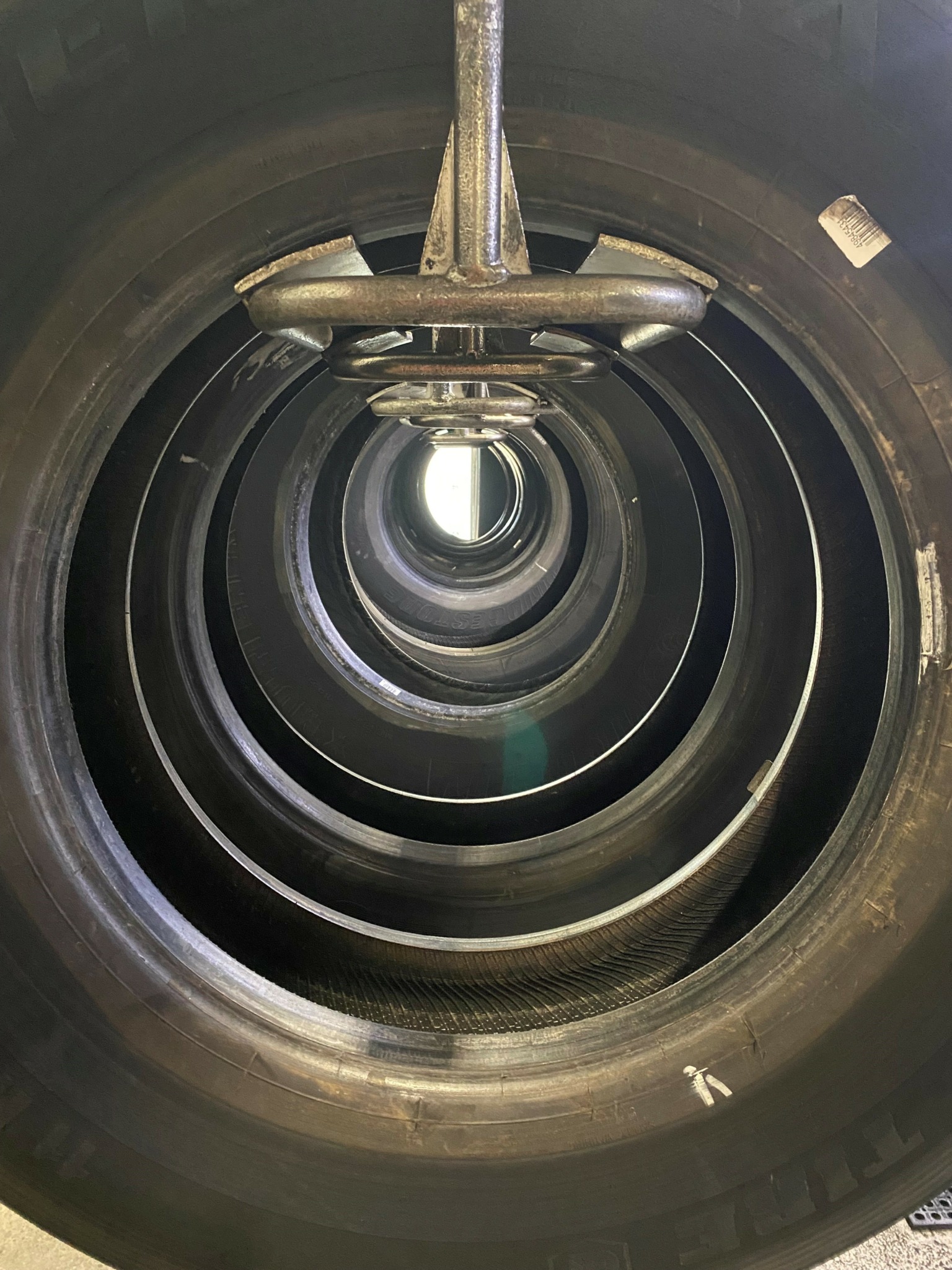
“But if it’s running low on air pressure, that coat hanger — that side wall of the tire — is bending back and forth, back and forth. And we all know what happens when you bend the coat hanger back and forth. It gets really hot in the middle and breaks.”
He added that improper maintenance not only damages one tire but can also overload adjacent tires, accelerating wear across the entire axle.
RTS Canada’s Schotsman noted that improperly matched dual tires are among the most common issues in fleets. He said running duals with mismatched tread — sometimes with tread depth differences of up to 5/32 of an inch — or mixing brands and casing types can lead to uneven load distribution, increased heat, and premature failure, he added.
“If you can, when we do retreading, we like to encourage customers to do matched even brands. So, if you do two Michelin side by side that are the same casing, you’re going to have the same circumference on the tire. And they’re going to run matched side by side and get the best mileage.”
That same attention to matching and inflation is critical not just for performance, but for preserving the casing, which is the foundation of any successful retread program.
TRIB’s Stevens cautioned fleets against relying on outdated inspection methods, such as using a tire thumper to check inflation.
At one trade show demonstration, where participants were asked to assess four tires ranging from overinflated to severely underinflated using thumpers, everybody was wrong, he said, adding that the method is no more reliable than “checking engine oil with a hammer.”
Instead, he said fleets should use proper gauges or adopt tire pressure monitoring systems and telematics tools to ensure accurate readings.
Schotsman said fleets that have implemented sensors to track tire pressure and temperature are gaining a clearer understanding of how their tires perform in real-world conditions.
“You can see your tires going up to 75 degrees Celsius in the summer… and understand why you’re wearing rubber really quickly,” he said, noting that data can help identify whether issues stem from driver behavior, braking, or equipment.
Extending casing life
Those maintenance practices have the power to affect the economic case for retreading, as retreading typically costs about half — or less — than purchasing a new tire, but the real savings come from extending the life of a casing through multiple retreads.
Fleets that invest in high-quality casings and maintain them with due diligence can run those casings through multiple life cycles, significantly reducing cost per mile compared to repeatedly purchasing low-cost, single-use tires. Stevens said that’s why large fleets increasingly rely on data to manage their tire programs, tracking casing performance, removal timing, and reasons for rejection.
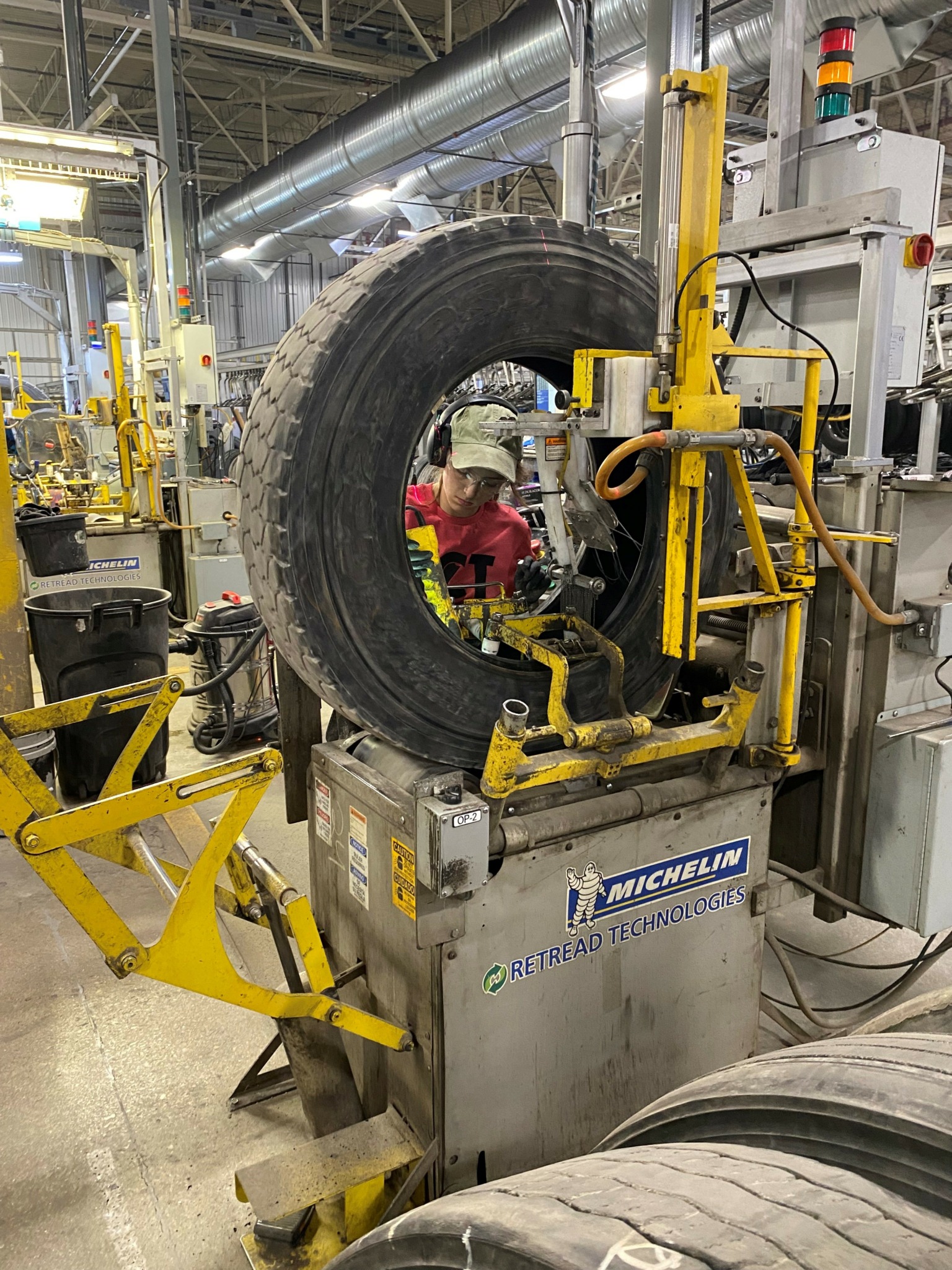
Taking care of that casing quality also matters when the tire makes it to retread plants.
“As many as 60% of the casings that come into a retread plant don’t make it through the process,” Stevens said when he addressed the question of safety and quality of retreads. He explained that the retreading process itself involves multiple inspection stages — including advanced imaging technologies — to detect internal damage that may not be visible from the outside.
“Some plants are using shearography, which is basically like a giant X‑ray. The casing goes into this X‑ray, they take photos of it, they pull a vacuum and put it under stress, then they take other photos, and so they can see damage to the casing which would prevent it from being retreaded,” he said.
Even at the final retreading stage, technicians can still pull a tire from production if defects are identified.
Environmental and broader economic benefits
Making the case for retreading, Tirecraft’s Vezina said the technology can help fleets achieve their ESG goals faster. Every new tire needs 24 gallons of oil, while there are only seven gallons of oil that go into every retread, he said, adding that by extending the life of a casing through multiple retreads, fleets can reduce raw material consumption and keep tires out of landfills longer.
Panelists also warned that the growing use of low-cost imported tires can undermine both the economic and environmental benefits of retreading.
While much cheaper upfront, those tires are often not designed for multiple retread cycles, limiting their lifespan and increasing the long-term costs of re-purchasing.
“How do you know what’s inside that tire?” Stevens said, referring to differences in internal construction and durability. Even though the tires might look the same on the outside, they might have a similar tread design and tread pattern; it is what’s inside the tire that matters.
Pointing to the screen, he explained.
“We peeled apart a couple of low‑cost, what we even consider low‑quality and single‑use Asian imported tires. The belt package is different. There is not as much crossover in those belt packages, so the integrity and strength of that casing is compromised, also harming its longevity and stability…
“And then if you look at the belt layer itself, so inside that tiny circle that was drilled, you can see a tight, consistent grouping of steel belts, which also makes that tire casing a lot stronger. If you look at that single‑use, low‑quality tire on the bottom, there’s — the belt package is really loose, and there’s gaps in between the steel, and that creates less strength in the tire.”
He added that fleets need to treat tires as assets and investments rather than expenses. Carriers that focus on the total cost of ownership rather than the upfront cost consistently see better results.

Have your say
This is a moderated forum. Comments will no longer be published unless they are accompanied by a first and last name and a verifiable email address. (Today's Trucking will not publish or share the email address.) Profane language and content deemed to be libelous, racist, or threatening in nature will not be published under any circumstances.