Preventive maintenance, compliance at the top of fleet managers’ minds: report

The 2026 State of Fleet Management Study from the J. J. Keller Center for Market Insights found fleet managers are increasingly shifting from reactive problem-solving toward preventive maintenance, early intervention and real-time training and regulation compliance monitoring.
The study is based on responses from 550 professionals, with most representing fleets with fewer than 100 trucks. J.J. Keller found that more than half of respondents (54%) said effectively managing preventative maintenance to avoid breakdowns or accidents was a top concern, followed by staying current on changing regulations (49%) and ensuring drivers are fully qualified and compliant (47%).
Concerns related to new technology, driver knowledge, as well as overall safety dominated the rankings, too.
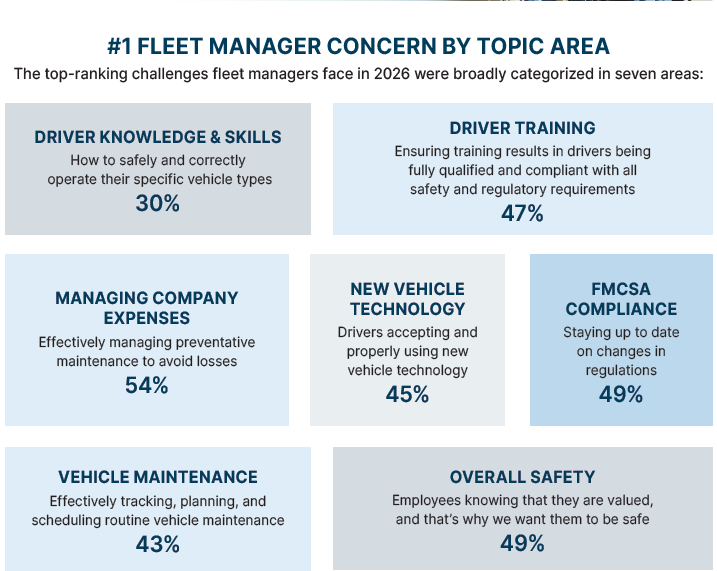
The report further found a growing focus on prevention rather than reacting to issues after they occur, with managers reporting notable year over year increases spread over three categories.
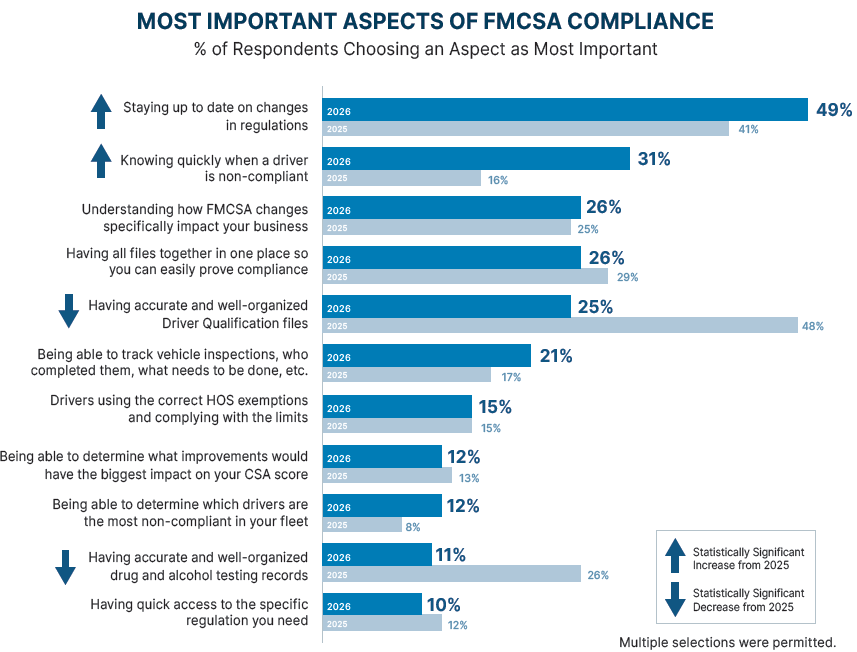
The importance of quickly identifying non-compliant drivers increased 15 percentage points year over year, rising from 16% in 2025 to 31 this year. Meanwhile, the importance of tracking changing regulations increased eight percentage points, while identifying repairs before breakdowns rose seven points.
“Fleets are shifting from reacting to issues to preventing them,” said Daren Hansen, senior compliance expert at J. J. Keller & Associates, in a related news release. “With tighter margins and higher risk, there’s a clear focus on catching problems early, whether that’s identifying non-compliant drivers or addressing maintenance needs before they lead to breakdowns or violations.”
Driver skills and training
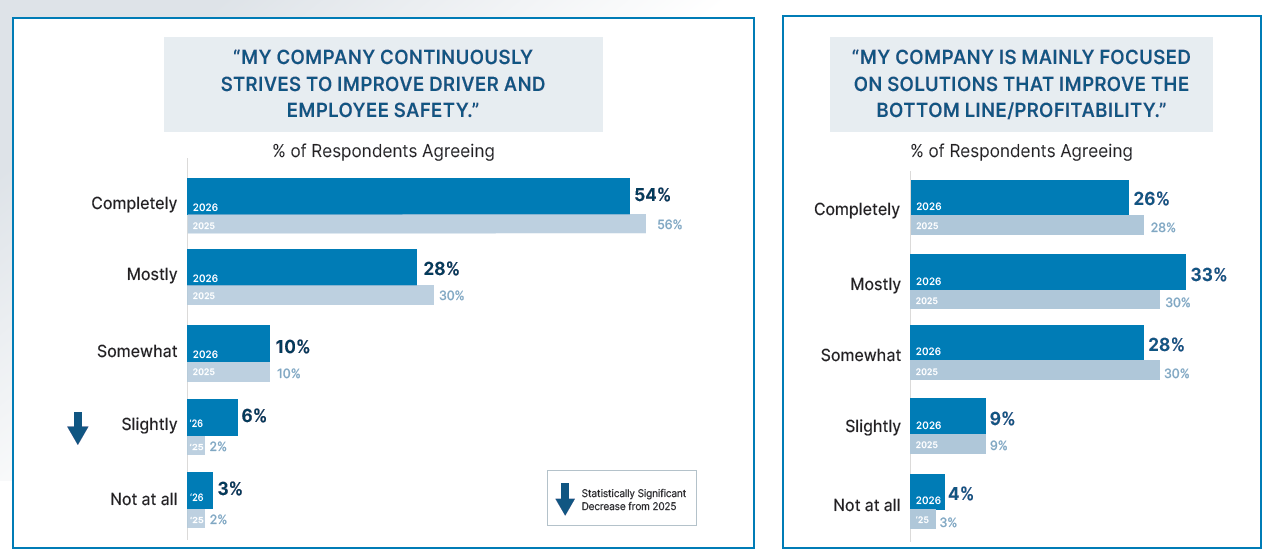
More than half of respondents said safety is prioritized above all else within their organizations, while 47% identified making employees feel valued as an important contributor to safety performance. However, 19% of fleet managers say their company only somewhat or not at all strives to improve driver and employee safety.
When it comes specifically to driver safety, behaviors and skills, fleet managers said that the ability to safely and correctly operate their specific vehicle type remains the single most important driver competency (30%), though its importance fell notably this year as attention is shifting toward distraction avoidance (29%) and injury prevention (26%).
The pattern suggests fleets are doubling down on practical, high-frequency risks and reinforcing core habits that reduce incidents, the report reads.
Driver training is increasingly becoming outcome-focused, too. For the first time, the top priority — cited by 47% of respondents — is ensuring training results in drivers being fully qualified and compliant with all safety and regulatory requirements.
Tailored training also remained a major priority, with 45% of respondents saying training should reflect the specific needs of their drivers, operations, vehicles or industry segment.
The study noted a measurable decline in emphasis on drivers actively applying what they learned following training sessions, and how engaging and interesting the training actually is, and having accurate and well-organized training records, despite the categories remaining important for many fleets.
When it comes to training methods and delivery, 68% said the training is mostly delivered in-person by an instructor, and 52% cited online delivery as their go-to method. Just a third of respondents said they deliver training mostly informally or as needed, and 23% cited manuals and employee handbooks.
Overall, more than half (65%) of fleet managers reported that their company either mostly or completely emphasizes continuous learning.
Compliance priorities
The report found fleet managers increasingly make an effort to identify compliance issues.
The leading FMCSA compliance concern in 2026 was staying current on changing regulations, cited by 49% of respondents, up from 41% in 2025. The importance of quickly identifying non-compliant drivers nearly doubled year over year, rising from 16% in 2025 to 31% in 2026, ranking second on the priorities list.
Concern over maintaining accurate drug and alcohol testing records increased sharply, too, climbing from 11% to 26% this year.
At the same time, the study recorded a statistically significant decline in emphasis on maintaining Driver Qualification files, which dropped from 48% last year to 25% in 2026.
Prevention, early detection key maintenance practises
Vehicle maintenance priorities have also shifted on year to year basis.
The study found 43% of fleet managers prioritized identifying repair needs before breakdowns or accidents occur, up from 36% in 2025.
Another 43% identified routine tracking, planning, and scheduling of preventive maintenance as a leading concern.
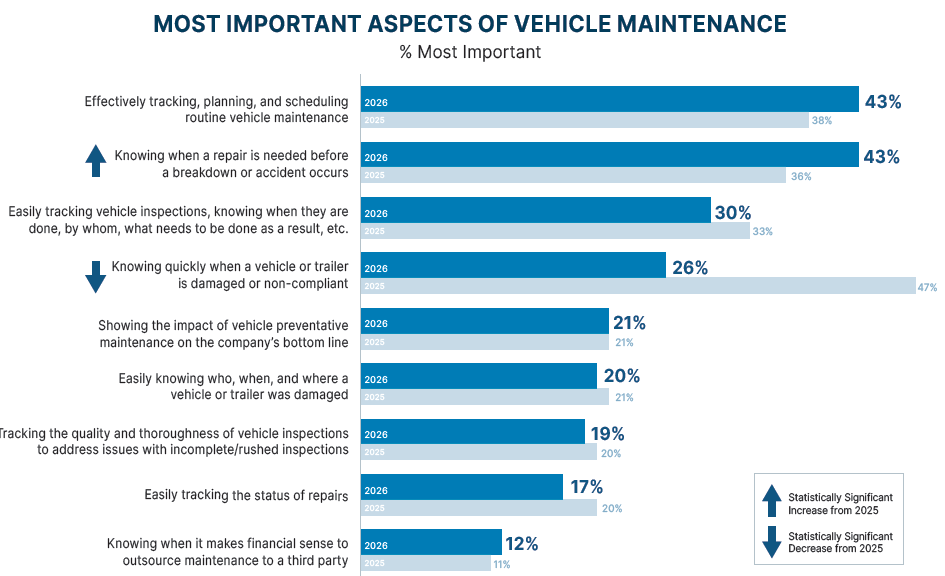
Easily tracking vehicle inspections, knowing when they are done, by whom, and what needs to be done as a result, ranked third on the list of most important maintenance aspects, cited by nearly a third of respondents.
At the same time, emphasis on quickly identifying vehicle or trailer damage declined from 47% to 26%, reflecting what the report described as a shift away from reactive maintenance toward long-term reliability planning.
Download the full report here for free for more insights.

Have your say
This is a moderated forum. Comments will no longer be published unless they are accompanied by a first and last name and a verifiable email address. (Today's Trucking will not publish or share the email address.) Profane language and content deemed to be libelous, racist, or threatening in nature will not be published under any circumstances.