Registrations fell across drivetrains in 2025, but fleets pivoted to diversified strategies: report

Fleets increasingly turned to powertrain diversification as a financial and risk management strategy to navigate the volatile freight market and regulatory uncertainties of 2025.
Rather than waiting for a single dominant technology, carriers started increasingly adopting a mix of diesel, natural gas, battery-electric, and other technologies, based on their operational fit.
This was a core tendency observed by TRC in its seventh annual State of Sustainable Fleets report, revealed at ACT Expo in Las Vegas on May 4. The report draws its findings from a survey of more than 200 fleet managers, supported by industry data and expert input.
In 2025, fleets dealt with the third year of a freight recession, which had dampened demand, while tariffs, fuel price spikes, and policy changes had driven up costs and complicated long-term planning. Most of the uncertainty is tied to scaled-back federal incentives for zero-emission vehicles and the rescinding of the 2009 Endangerment Finding, all while fuel price spikes tied to the U.S. war in Iran have added another layer of volatility in 2026. That all has contributed to 2025 becoming a challenging year for fleets running all types of equipment across the board.

During the media briefing, TRC vice president of market development Nate Springer said vehicle sales and registrations were down across nearly all drivetrains and weight classes, as the freight recession “sandwiched” fleets between decreased demand and extreme cost uncertainty.
Class 8 tractor registrations declined 16% last year, with the report noting that nearly all manufacturers supplying the freight market experienced significant order and sales declines, leading to production scale-backs and layoffs.
Total medium- and heavy-duty natural gas vehicle registrations declined 15% in 2025, while hydrogen fuel cell vehicle registrations fell 12%. Even within the battery-electric market, where overall medium- and heavy-duty (MHD) registrations rose 21%, reaching 50,095 units, Class 8 electric tractor registrations fell 24% to 671 units for the year.
BEVs
TRC’s Springer said that the 21% increase in electric MHDVs was largely driven by pickups and delivery vans, which accounted for about 80% of that volume. He added that the number of available medium- and heavy-duty BEV models dropped from 62 to 33, as manufacturers are now pulling back from broad model offerings and concentrating their efforts on applications where the technology is already proving viable.
The report found that 57% of fleets operating medium-duty electric vehicles are already seeing cost savings compared to the diesel units they replaced, making it one of the clearest areas of near-term viability.
Large fleets like Walmart reported that EVs are their “cheapest option” in many last-mile delivery cases when factoring in vehicle price, charging, maintenance, and fuel costs.
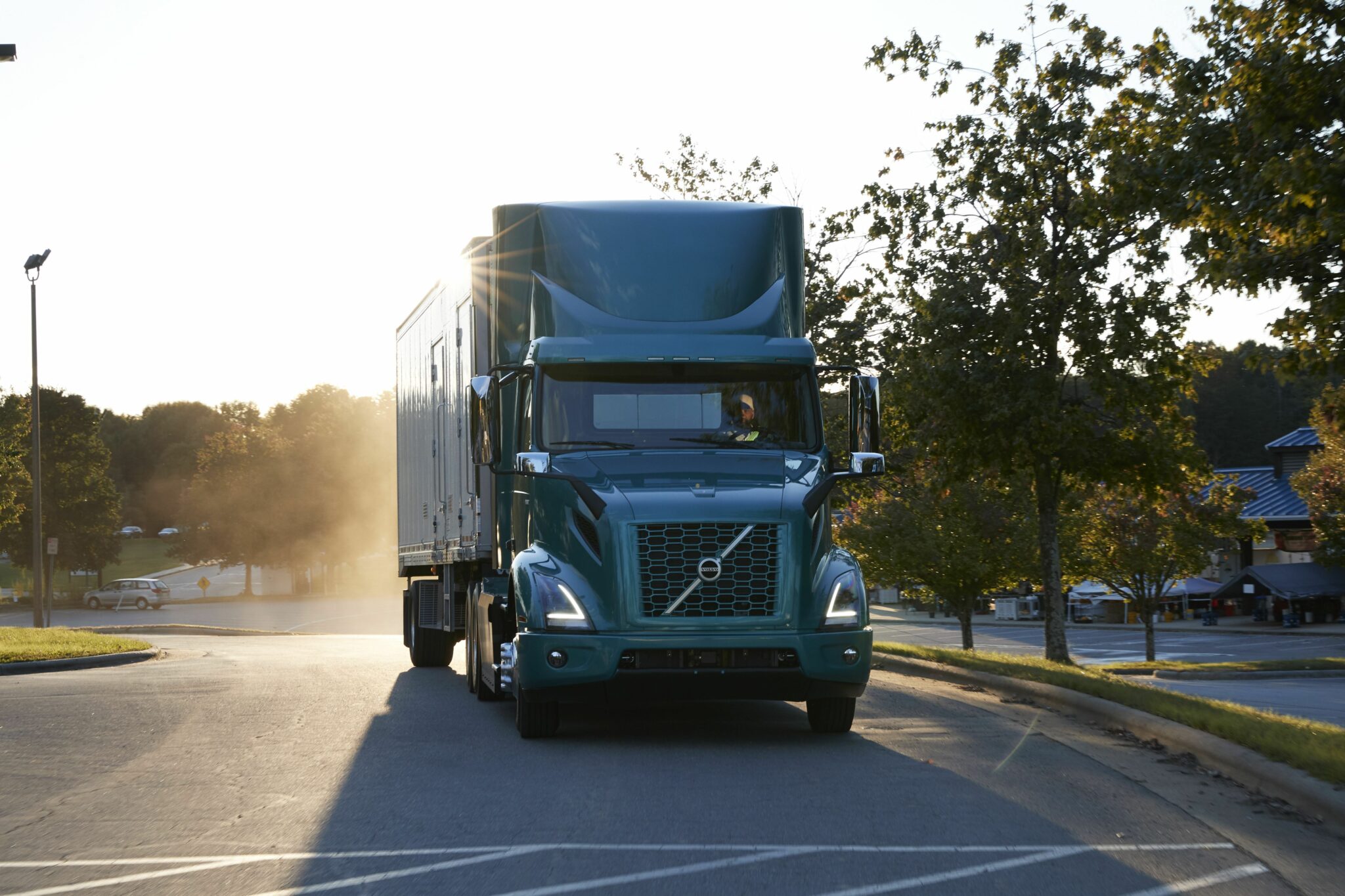
In heavy-duty applications, however, the picture is different, as Class 8 registrations declined 24%. Yet, Tesla captured 28% of California’s Hybrid and Zero Emission Truck and Bus Voucher Incentive Project (HVIP) vouchers in late 2025, adding up to more than 1,000 Tesla Semi registrations in late 2025. “Since State of Sustainable Fleets launched, we have not seen electric classic tractor deliveries exceed 1,000 units in any given year, and we expect that to happen in 2026 or 2027,” Springer said.
He added that the Class 8 electric yard tractor market has been ‘quietly maturing’, too, with data showing that maintenance costs can be reduced by as much as 75% while also improving uptime and utilization.
Hydrogen-powered vehicles
Hydrogen had its most challenging year to date.
Unlike other alternative fuels, hydrogen remains heavily dependent on coordinated government investment, and the cancellation of major hydrogen hub funding programs removed a critical source of support for infrastructure and development, the report said.
The sector was also hit by two prominent Class 8 fuel cell startups exiting the market, adding further uncertainty around near-term availability and scaling, which forced fleets to stall the adoption, leading to fuel cell truck registrations dropping 12% in 2025.
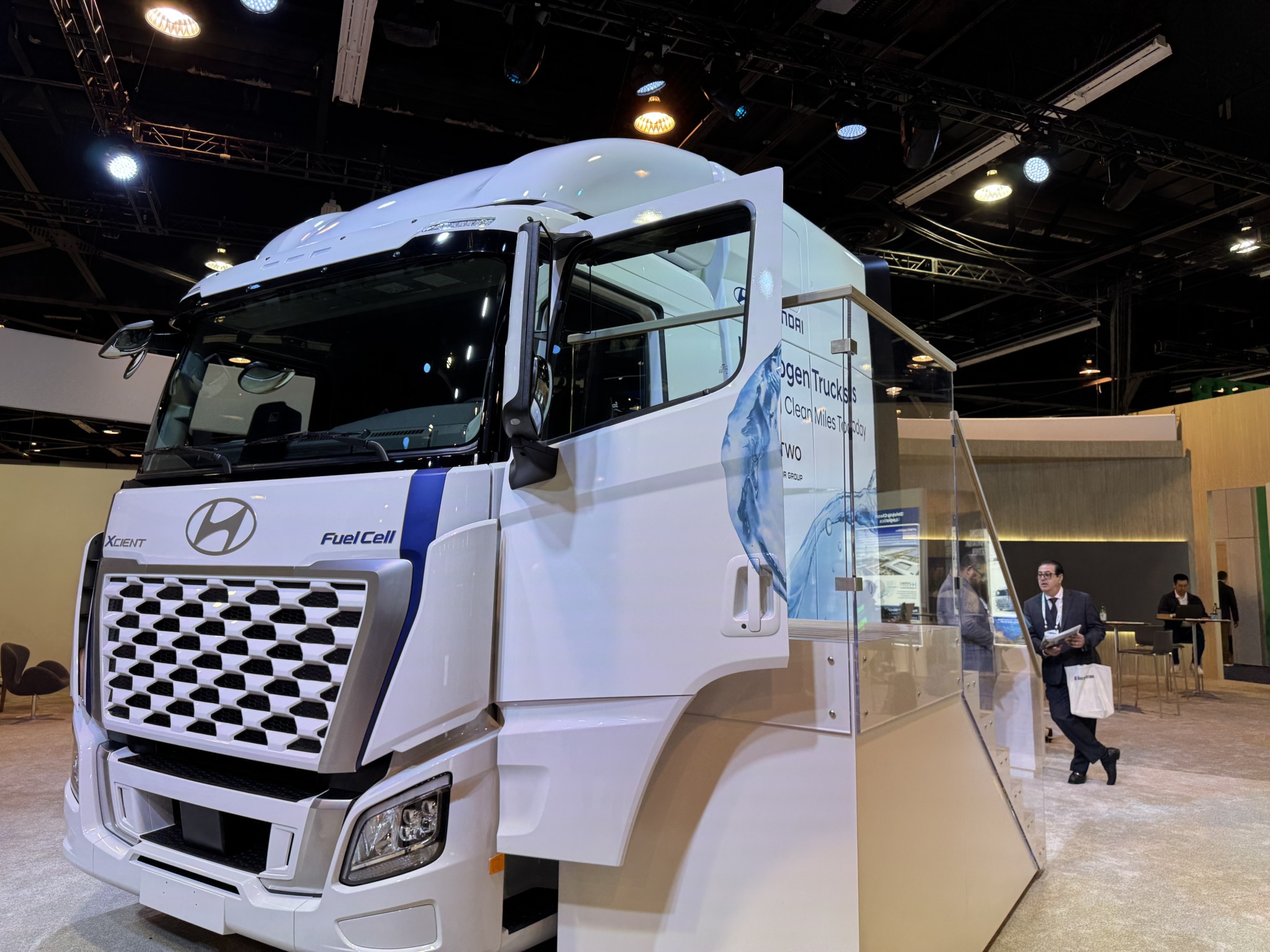
Despite those setbacks, major OEMs like Volvo, Daimler, Hyundai and Cummins continue to invest in hydrogen as a long-term solution.
This is because hydrogen technology does show long-term potential in long haul applications. This includes environmental benefits, particularly in markets like California, where hydrogen delivered a 64% lifecycle greenhouse gas reduction compared to diesel in 2025, rising to 78% when using renewable hydrogen. Nearly half of the surveyed fleets using hydrogen reported incorporating renewable fuel, reinforcing its role as a low-carbon pathway.
However, cost remains a major pain point. In 2025, fleets reported paying an average of $18.86 per kilogram, representing an 89% to 135% premium over diesel.
Renewable, biodiesel
While zero-emission technologies continue to evolve, other ultra-low emission technologies continue to evolve.
Such as renewable diesel and biodiesel, which are already being deployed at scale.
Springer described 2025 as “another big year for renewable fuels,” pointing to their rapid uptake, particularly in California. Combined, renewable diesel and biodiesel displaced 74% of conventional diesel used in the state’s transportation sector in 2024 and 71% through Q1-Q3, 2025.
The share of fleets using renewable diesel increased, with 56% of surveyed carriers reporting using renewable or biodiesel in the last year, up from 27% in 2023.
Renewable prices in states with Low Carbon Fuel Standard (LCFS) programs, such as California, remain competitive, and in many cases, at cost parity with conventional diesel, the report reads, with Springer adding that the option becomes more attractive with diesel prices above $5 per gallon since the Iran war began.
Beyond cost, renewable diesel’s cleaner combustion has been linked to reduced maintenance — and associated savings of approximately $0.015-0.02 per mile — including fewer diesel particulate filter changes.
Natural gas
Natural gas also stood out as one of the stronger-performing segments in 2025, delivering cost savings and stable fuel pricing despite the broader freight downturn. Some fleets reported big savings from natural gas, with WM estimating it saved at least $93.5 million in 2024 alone by using natural gas vehicles instead of diesel.
Natural gas prices averaged about $3.43 per diesel gallon equivalent in 2025, offering an 8% savings over diesel, with the advantage widening to as much as 36% by early 2026 as diesel prices rose.
Springer said the transition to the Cummins X15N 15-liter engine temporarily weighed on overall registrations in 2025, as fleets delayed purchases ahead of its release. As a result, total MHD natural gas vehicle registrations declined 15% in 2025.

However, early adoption results have been strong, with major fleets like Walmart, Amazon, UPS, and FedEx all placing orders during its first full year on the market.
Those deploying the engines reported diesel-like power and efficiency, with about 71% seeing cost savings compared to diesel, with one fleet announcing that they expect a 1.5-year return on investment due to their very high tractor utilization and consumption of compressed natural gas (CNG).
Renewable natural gas (RNG) continues to drive much of the segment’s growth.
“RNG continues a trend that we’ve reported on since 2019: increased availability, increased use by fleets, and lower emissions. At least in California, the largest market for its use, nearly two-thirds of CNG fleets use RNG, and they estimate that it accounts for 78%, almost four-fifths of their fueling by volume. Lifecycle emissions were 13% lower in 2025 than in 2024,” Springer said.
The report notes that in California, RNG replaced 97% of conventional natural gas used in transportation through the first three quarters of 2025, while nationally it accounted for the majority of CNG used in the sector.
You can find and download the full report here.

Have your say
This is a moderated forum. Comments will no longer be published unless they are accompanied by a first and last name and a verifiable email address. (Today's Trucking will not publish or share the email address.) Profane language and content deemed to be libelous, racist, or threatening in nature will not be published under any circumstances.