Routine paperwork errors remain top hazmat compliance risk, study shows

Preventable human errors in documentation and labeling are the leading causes of non-compliance in the hazmat transportation, along with training complexity and process gaps.
This is according to a new survey, conducted late last year, which gathered responses from 253 hazardous materials professionals representing shippers, carriers, manufacturers and other organizations involved in hazmat transportation. Highway transportation sector represented 83% of the respondents.
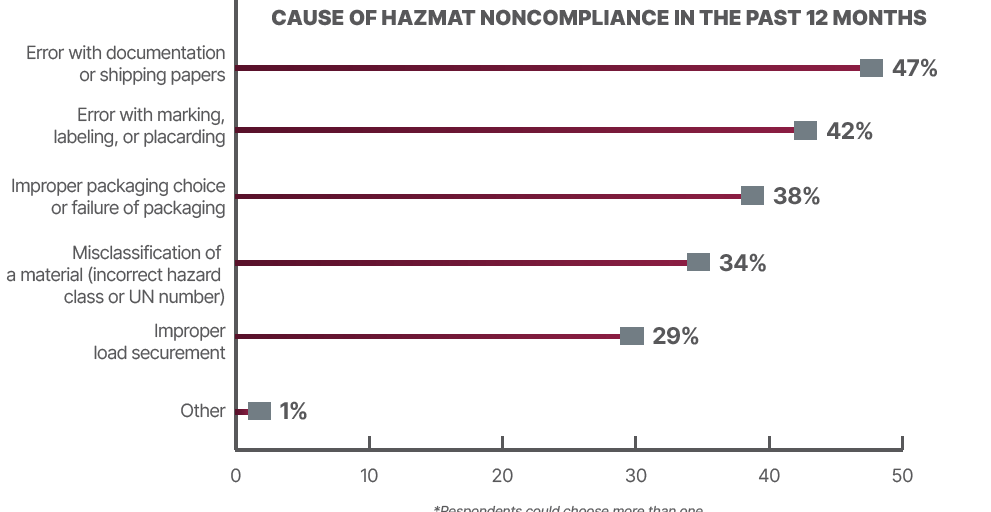
The report released by Costha and J.J. Keller reads that errors with documentation/shipping papers, marking, labeling, placarding, packaging, misclassification and improper load securement were most common over the past 12 months.
While those are preventable mistakes, many of those occur during routine, repetitive tasks performed under time pressure.
“Most hazmat compliance issues aren’t caused by a lack of regulatory knowledge. They tend to show up when routine tasks are rushed, repeated, or handled a little differently each time,” the report reads. “Instead of focusing only on interpreting regulations, companies usually see better results by reinforcing consistent, repeatable processes. Things like standard checklists, clear job aids, and simple verification steps before a shipment goes out can catch issues early, when they’re easiest to correct. Taking a short pause to match the paperwork to the package and markings can go a long way in preventing disconnects.”
Complex training is another issue that needs to be addressed.
More than half (54%) of respondents said the biggest challenge is keeping training content current with changing regulations, while 40% struggle to track renewal dates. Other issues cited by more than a third of respondents included identifying all employees who require hazmat training based on their job functions, as well as addressing different requirement for different transportation modes.
The report says that effective training goes beyond meeting regulatory requirements and there should not be a “one size fits all” approach. Training has to be tailored to what employees actually ship, the specific duties they perform in their roles. Using training methods that actively engage employees is recommended over relying solely on online training.
Among the surveyed companies, two-thirds (65%) of respondents said they primarily use instructor-led classroom sessions, followed by online self-paced training (60%), hands-on practical exercises (54%) and on-the-job shadowing or mentoring (54%). Half also rely on work instructions or shipping guides, while just 36% use instructor-led webinars and only 9% have adopted virtual or augmented reality training.
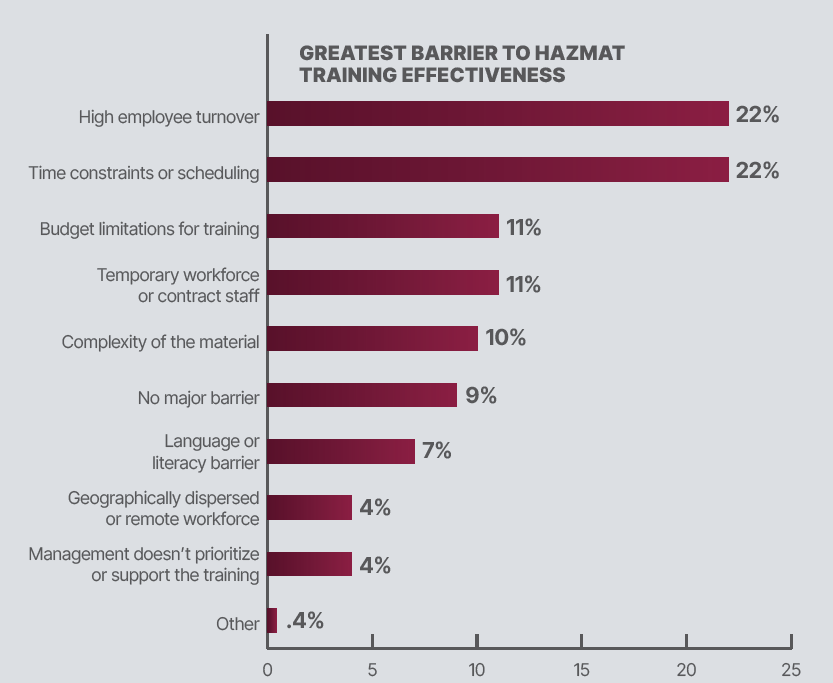
And while the report found that most employees apply safety practices they learn during the training, barriers such as turnover and time constraints limit the effectiveness of that training.
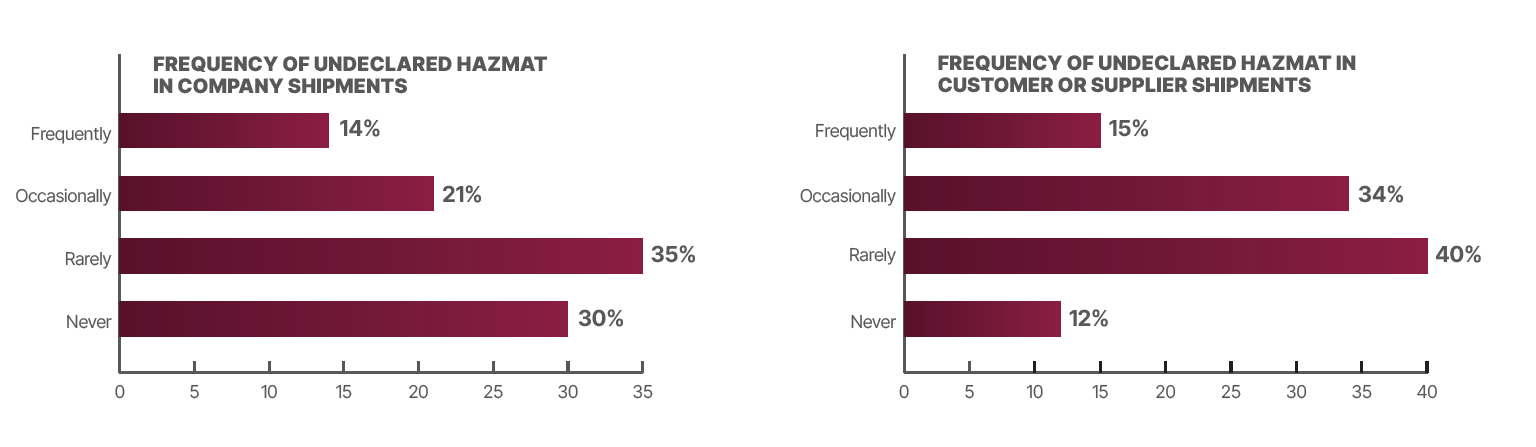
The report also found that undeclared hazardous materials remain a risk, particularly in inbound shipments. It recommends carriers work on the relationships with suppliers and 3PLs and establish clear expectation, come up with standardized shipment questionnaires and review safety data sheets for new products.
That means clearly communicating what information is required, asking the right questions during procurement, and not assuming that a supplier understands hazmat rules just because they ship product, the report reads.
When it comes to the role that technology plays in hazmat compliance, many companies already use shipping software and digital documentation.
More than half of respondents using shipping software with built-in compliance checks (54%) and digital document management systems (51%). But companies say broader technology adoption is stalled by the cost and integration, not resistance to technology itself.
The industry believes AI-powered tools are most likely to transform hazmat transportation in the near future through automated paperwork, compliance verification, route optimization and predictive risk analysis. But some respondents are expressing concern that overreliance on AI could erode employee knowledge and decision-making in critical safety situations.

Have your say
This is a moderated forum. Comments will no longer be published unless they are accompanied by a first and last name and a verifiable email address. (Today's Trucking will not publish or share the email address.) Profane language and content deemed to be libelous, racist, or threatening in nature will not be published under any circumstances.